
BUSINESS
Finance Ministry Blames NNPCL for Failure to Answer $3b, $722m NEITI Queries

By Eze Okechukwu, Abuja
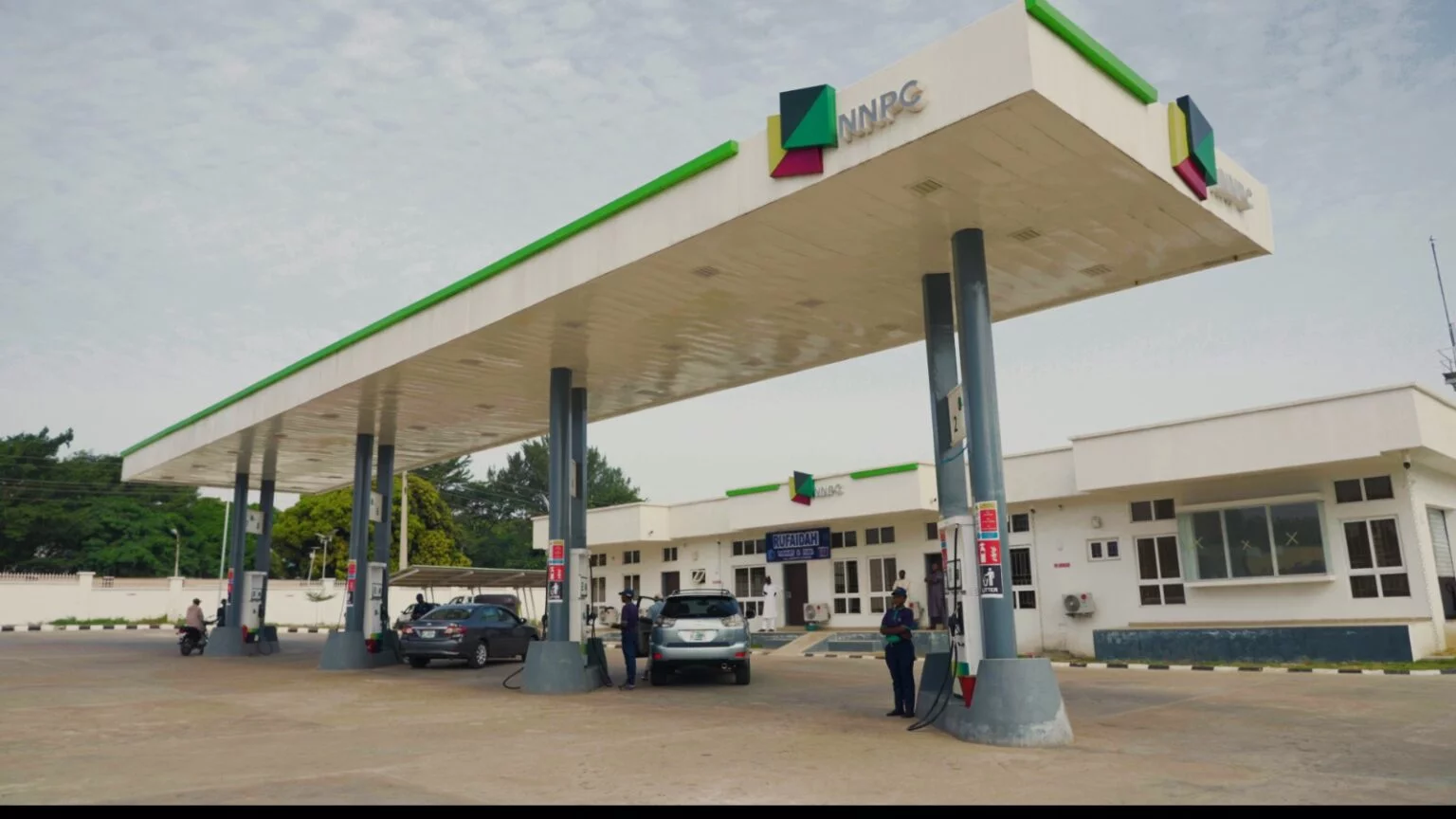
The Federal Ministry of Finance has heaped blames on the Nigerian National Petroleum Company Limited (NNPCL) over its inability to answer queries raised against it in the 2021 to 2023 Oil and Gas Sector Audit report by the Nigeria Extractive Industry Transparency Initiative (NEITI), saying the Oil Company could not make available the necessary financial records it would have used to respond to the queries.
Declaring this yesterday during an interrogation by the Senate Committee on Public Accounts at the National Assembly following several financial infractions raised against the Ministry in the NEITI audit findings, the Permanent Secretary of the Ministry, Raymond Omachi said that if the Nigeria National Petroleum Company Limited (NNPCL) had availed them the documents, he would have been in a better position to answer the questions with ease.
However, one of the infractions contained in the report was the pre – export financing for $3billion loan taken in 2012 to settle subsidy payment which according to NEITI, the recovery of the loan from monthly Federation revenue proceeds under pre -export financing and project eagle agreement remained unclear.
Another query raised against the Ministry by NEITI was that “In 2021, the sum of $722.6 million was paid to NNPC by Nigeria Liquified Natural Gas (NLNG) as dividend and interest earned by the federation but was neither remitted to the federation account nor properly accounted for.
In the report also, NEITI observed that in 2021 none of the refineries was operational despite N200 billion spent on them. The ministry couldn’t answer it and couldn’t also give a clean bill to the $221.283million overhead costs incurred by NAPIMS in 2021.
In his response to the queries , the Permanent Secretary said the Ministry was not directly involved in all the dealings or transactions and that the agencies involved, particularly the NNPCL has refused to cooperate with it in terms of accurate records.
“We don’t have direct involvement in all the issues raised and required provision of financial records from the affected agencies, particularly NNPCL, NUPRC etc but we couldn’t get them.
“In resolving the financial issues, we have engaged a reputable external audit firm; Arthur Andersen LLP, to carry out a forensic audit on all the transactions for the required reconciliation “, he said.
But the Committee chaired by Senator Ibrahim Hassan Dankwabo (Gombe North) took him up on when the report on the forensic audit would be ready after extending it twice; 6 months to one year but he insisted that NNPCL and NUPRC should be made to be at the same session with Ministry of Finance over the issues, to enable all parties chart a common cause in relation to the issue.
“I know you have enormous powers that you can use to compel these agencies to appear before us. We are having challenges bringing them to the table so that we can resolve these issues.
“We in the Federal Ministry of Finance are ready to come and sit with them here, so that you can hear directly from them and obtain the necessary explanations and clarifications”, he stated.
But the Chairman of the Committee told the permanent secretary to arrange the meeting with the affected agencies as issues involved are not only being followed in Nigeria but internationally.
“I will like you to review the internal report and arrange a meeting involving the Ministry of Finance, the NUPRC, NNPC and any other agency whose participation is necessary to resolve the issues we have raised.
“As you are aware, these issues are being followed by the international community. They are not matters confined to Nigeria; they are in the public domain and are being monitored by people across the world.
“Therefore, if there are records or issues that need to be clarified and properly put in order, we should do so in the interest of our country. All of us have no other country except Nigeria”, he said.
Nigeria’s crude oil production fell by four per cent month-on-month in July, but the country still met its Organisation of Petroleum Exporting Countries quota for the third consecutive month, latest data from the Nigerian Upstream Petroleum Regulatory Commission has shown.
The commission’s latest production figures showed that Nigeria pumped an average of 1.
505 million barrels per day of crude oil in July, slightly above its OPEC quota of 1.5 million barrels per day.When condensate production of about 170,000 barrels per day is included, the country’s total crude and condensate output stood at 1.
67 million barrels per day during the month.The July performance, however, represented a decline from the 1.735 million barrels per day recorded in June, translating to a reduction of about 65,000 barrels per day, or 3.75 per cent.
The NUPRC disclosed the figures in a statement issued on Wednesday by its Head of Media and Corporate Communications, Eniola Akinkuotu.
The statement read, “Nigeria has for the third consecutive month met and exceeded its OPEC quota of 1.5mbpd. In the month of July 2026, Nigeria produced 1.505mbpd of crude oil and 0.17mbpd of condensate, bringing the combined daily production to 1.67mbpd.
“Although Nigeria met its OPEC quota in the month of July, the statistics show that on a month-on-month basis, production fell by 4 per cent.”
According to the commission, daily combined crude and condensate production fluctuated between a low of 1.57 million barrels per day and a peak of 1.78 million barrels per day in July.
“Daily average production was 1.67 million barrels per day, comprising both crude oil (1.505 million bopd) and condensate (0.17mbpd),” the commission said.
Despite the July decline, Nigeria has maintained crude production above its 1.5mbpd OPEC quota for three consecutive months.
The country’s combined crude and condensate production has increased since the beginning of the year, according to NUPRC’s month-on-month data.
Production stood at 1.459 million barrels per day in January, before rising to 1.483mbpd in February. It subsequently increased to 1.564mbpd in March, 1.663mbpd in April, 1.701mbpd in May and 1.735mbpd in June.
July therefore marked the first monthly decline after the steady increase recorded in the first half of the year.
Compared with January, however, July’s combined production of 1.67mbpd was about 211,000 barrels per day, or 14.5 per cent, higher.
The NUPRC attributed the July decline principally to operational challenges at the Erha and Akpo fields, which affected production during the month.
“These disruptions constrained production volumes and contributed significantly to the overall reduction in national crude oil output,” the commission said.
It added that production activities at other oil-producing assets remained relatively stable despite the disruptions.
“Despite the challenges encountered, production operations across other producing assets remained relatively stable, with operators implementing measures aimed at maintaining production efficiency and minimising the impact of operational constraints,” the regulator said.
It said routine production and crude evacuation activities were also largely sustained across the industry.
The commission added that operators and other stakeholders were working to resolve the affected production facilities and restore lost capacity.
“Industry stakeholders remain focused on addressing the identified operational issues, restoring affected production capacity and strengthening asset reliability to support improved performance in subsequent months,” it said.
The breakdown of production by terminals and streams showed that Forcados Terminal recorded an average output of 322.34kbpd in July, making it the largest producing stream listed by the commission.
It was followed by Bonny Terminal, which recorded 303.72kbpd.
Qua Iboe Terminal ranked third, with average production of 158.02kbpd of crude oil and condensates, while Escravos Oil Terminal recorded 131.41kbpd.
The Bonga stream ranked fifth among the leading producing terminals, with an average of 100.23kbpd of crude oil.
The Federal Government and NUPRC have identified increased crude oil production as important to government revenue, foreign exchange earnings and investment in the upstream sector.

The Managing Director of Chevron Nigeria Limited, Jim Swartz, has highlighted key areas that would sustain Nigeria’s energy transition growth pathway.
Swartz, is of the opinion that strong collaboration and partnership are key to sustain the country’s energy needs.
Speaking at the just-concluded 49th Nigerian Annual International Conference and Exhibition (NAICE) in Lagos, Swartz, said no one player can deliver the scale of projects required to achieve the goals set by the country alone.
He declared that Collaboration is essential because no single company, institution, or stakeholder can address the opportunities and challenges of the intersector alone.
And technology will remain a key driver of safer operations, stronger performance, and the future that we will deliver. For Nigeria, the opportunity is significant.The conference with the theme “Thriving in the Evolving Global Energy Landscape: Collaborative Growth and Resilience,” focused on how Nigeria can compete for capital and sustain production amid global volatility.
The managing director listed four pillars he believed are essential to define a resilient energy future.
These include continued investment, enabling long-term policies, competitive local capacity development, and strong partnerships.
He continued, “Building a resilient energy future requires continued investment, enabling policies that are resilient for the long-term, local capacity development that’s competitive and durable as well, and strong partnerships across governments, regulators, industry, and the technical community,”.
He said Chevron has invested in Nigeria for more than six decades, noting the company’s role in building the foundation of the industry and in developing technical capacity.
The firm therefore called for stronger collaboration across government, regulators and industry operators as the foundation for building a resilient oil and gas sector that can deliver growth, jobs and energy security for Nigeria.
The Federal Government, through the Rural Electrification Agency, is set to inject a cumulative 60.82 megawatts of renewable power into the national grid following the rollout of decentralised mini-grid projects across the country.
The milestone was reached on Wednesday with the groundbreaking of a 13.
92-megawatt-peak interconnected hybrid solar project in Yobe State. The latest project brings the total capacity of recent REA renewable energy projects launched across six states to 60.82MW.Before the Yobe project, the agency had commenced 46.9MW of power infrastructure across five states, including a 20MW mini-grid in Egume, Kogi State; an 11.
9MWp project in Ogu-Bolo, Rivers State; and a 10MW installation in Kofare, Adamawa State, a statement by the REA said.The earlier projects also include a 3.5MW mini-grid in Ambursa, Kebbi State, and a 1.5MW project in Pankshin, Plateau State.
The 13.92MWp Yobe project, supported by the World Bank, is equipped with 40 distribution transformers and is spread across major commercial and residential areas to improve electricity supply, stabilise power and stimulate local economic activities.
The capacity comprises a 3.20MWp installation in Nguru, another 3.20MWp plant at Yarimaram in Potiskum, a 2.98MWp system in Gashua, a 2.78MWp project at Rugan Fulani in Potiskum, and a 1.76MWp solar installation serving the Waziri Ibrahim Estate in Damaturu.
Speaking during the groundbreaking ceremony, Yobe State Governor, Mai Mala Buni, praised the REA’s commitment, noting that the project aligned with his administration’s vision for resilient infrastructure to boost local industrial capacity and agricultural productivity.
The REA Managing Director and Chief Executive Officer, Dr. Abba Abubakar Aliyu, explained that interconnected hybrid mini-grids were designed to integrate seamlessly with existing distribution networks.
“We are not merely connecting communities to electricity. We are connecting them to opportunity. We are creating an environment where businesses can grow, young people can innovate, farmers can process more of what they produce, healthcare facilities can provide better services, and local economies can flourish,” Dr. Aliyu said.
The REA boss disclosed that beyond the 60.82MW covered by the current nationwide groundbreakings, the agency had 14 additional pipeline projects underway in Yobe State alone.
He said the projects, which followed a strategic roundtable held in June 2025, would add another 15.3MWp of combined capacity when completed.
According to him, the planned projects are expected to provide electricity access to 23,870 new connections across communities, including Jawur Katamma, Federal Polytechnic Damaturu and Dibbwol.




Finance Ministry Blames NNPCL for Failure to Answer $3b, $722m NEITI Queries
ShareBy Eze Okechukwu, Abuja The Federal Ministry of Finance has heaped blames on the Nigerian National Petroleum Company Limited (NNPCL)...


Nollywood: Villain Roles My God-given Niche, Says Patience Ozokwor
ShareVeteran Nollywood actress, Patience Ozokwor, popularly known as Mama G, says she believes God gave her a niche to effectively...


Ruger Fumes as TikToker Wishes Him Dead over Song Lyrics
ShareNigerian musician Ruger has reacted to a TikTok user who wished him dead. It all started when the female user...

No Nigerian Singer has More Hits than Me, Davido Boasts
ShareAfrobeats singer, David Adeleke, popularly known as Davido, has claimed that no Nigerian artiste has more hit songs than him....


Kenneth Okonkwo Slams Claims Regarding His Financial Ties to Peter Obi
ShareNollywood veteran-turned-politician, Kenneth Okonkwo has reacted to claims that he asked the Nigeria Democratic Congress (NDC)presidential candidate, Peter Obi, for...


Niniola Bounces Back Months after Partner’s Passing with New Single
ShareNigerian singer, Niniola Apata, has announced her return back to the music industry months after grieving the death of her...


Nigerian Songs Dominate Spotify’s Global Impact List
ShareSpotify has released its Global Impact List for the first half of 2026, highlighting the Nigerian songs that recorded the...

NAICOM Confirms Seven Additional Insurance Companies for Recapitalization
Share The National Insurance Commission (NAICOM) said seven additional insurance companies have been verified for the minimum capital requirements under...

Osun Poll: Tension Mounts as Parties Clash over Alliance
ShareFrom Ayinde Akintade, Osogbo With the August 15 Osun State governorship election only one day away, political tensions have intensified...


State Police Bill: Presidential Panel Extends Deadline for Memoranda
ShareBy David Torough, Abuja The Presidential Working Group on the National Policing Bill has extended the deadline for the submission...