
POLITICS
Dialogue as antidote to House minority leadership crisis

By Orkula Shaagee, Abuja
For the first time since Nigeria returned to democratic rule in 1999, the House of Representatives was engulfed in crisis over the leadership of the minority parties in the lower chamber of the nation’s National Assembly.
Though it is common sight to see lawmakers engage in mace snatching and open fight right in the hallowed chamber over political differences, it was the first time in the history of the third arm of government to witness lawmakers engage in open confrontation over the election of minority principal officers in the green chamber.
Penultimate Wednesday, the House of Representatives was thrown into crisis that led to attempt by some aggrieved members to snatch the mace.
The action followed the alleged rejection of a letter by House Speaker Femi Gbajabiamila from by the leadership of the main opposition Peoples Democratic Party (PDP) nominating Kingsley Chinda (PDP, Rivers State) as the Minority Leader, Chukwuma Onyema from Anambra as Deputy Minority Leader, Yakubu Barde from Kaduna State as Minority Whip and Muriano Ajibola from Oyo State as Deputy Minority Whip.
Gbajabiamila however read a letter he said was sent to him by minority parties in the House signed by 99 out of the 147 members nominating Ndudi Elumelu from Delta State as Minority Leader, Toby Okechukwu from Enugu State as Deputy Minority Leader, Gideon Gwani as Minority Whip and Adesegun Adekoya as Deputy Minority Whip.
Despite intense protests from the opposition lawmakers, citing the various House rules to support their position, Gbajabiamila ruled them out and thereafter declared Elumelu and the others in his group as the House’s minority leaders.
Leading the protest, Chinda said the nomination of Elumelu and his gang as House minority leaders would not stand. He said series of inter-party meetings were held among the oppositio9n parties where all the issues of nomination were ratified.
“The issue is that of Minority leadership. It is the standard practice in parliament that minority leadership comes from among minority parties and the correspondence is always sent by the major minority party, in our case that was followed,” he said.
Reacting, Speaker Femi Gbajabiamila sets up a committee to probe attempt at mace snatching.
At the resumption of plenary the following day, Chinda and his colleagues took over the designated seats for the minority officers, and this delayed the commencement of plenary traditionally billed for 11 in the morning. Gbajabiamila’s procession, including his deputy, Idris Wase, and other minority officers, led by Elumelu, did not enter the chambers until 12:10.
The Peoples Democratic Party also condemned the action, saying, “Gbajabiamila exhibited personal hostility, with threats that Chinda would ‘regret’ taking his rightful seat as the bona fide Leader of the Minority in the House.
“This vicious outburst by Gbajabiamila is a direct threat and affront to our democratic order. The rights of the minority members in the House of Representatives, the people of Obio/Akpo Federal
“The PDP, in the strongest terms, condemns this outburst and demands the Speaker retract his inciting threats against Chinda within the next 24 hours,” its Spokesman Kola Ologbondiyan said.
He also called on Nigerians to hold Gbajabiamila directly responsible should any harm suddenly come upon Chinda, any member of his family or any member of the PDP in the House of Representatives.
Ologbondiyan said, “The PDP also invites the police and the Department of State Services to summon Gbajabiamila to explain the intents of his threats.”
He stated that the PDP remained committed to rules and the sanctity of the parliament.
Consequently, the Peoples Democratic Party later suspended Ndudi Elumelu and six other members of the party in the House of Representatives for “indiscipline, insubordination and disobedience”.
The representative of Oriade/Obokun Federal Constituency, Osun State, Wole Oke; representative of Onitsha North and Onitsha South Federal Constituency, Anambra State, Lynda Ikpeazu; representative of Ezza North/Ishielu Federal Constituency, Ebonyi State, Anayo Edwin; representative of Kaura Federal Constituency, Kaduna State, Gideon Gwani; representative of Aninri/Awgu/Oji River Federal Constituency, Enugu State, Toby Okechukwu; and representative of Ijebu-North/Ijebu-East/Ogun Waterside Federal Constituency, Adekoya Abdul-Majid, were the six other members of the party suspended.
The PDP National Publicity Secretary, Kola Ologbondiyan, told reporters at a press conference in Abuja that the suspension was the outcome of the meeting of the PDP National Working Committee over the crisis that resulted from the struggle for the House of Representatives Minority Leader.
Ologbondiyan, who read the resolution of the NWC, said the committee reviewed the issues affecting the minority leadership of the House of Representatives.
He said the party noted the roles played by the affected Reps which resulted in the Speaker of the House of Representatives, Femi Gbajabiamila, announcing the list of the minority leadership of the House different from the one submitted by the opposition party.
He said, “After the preliminary examination by the NWC, it was evident that the roles played by the above mentioned members, bordered on indiscipline, insubordination and disobedience, contrary to Section 58 (1)(b)(c)(f)(h) of the PDP Constitution (as amended in 2017).”
The Peoples Democratic Party also criticized the Speaker, Mr Femi Gbajabiamila, for allegedly threatening the representative of Obio/Akpor Federal Constituency in the House, Mr Kingsley Chinda.
The main opposition party asked the police and Department of State Services to summon the Speaker to explain himself.
The PDP National Publicity Secretary, Kola Ologbondiyan, in a statement on Friday said Gbajabiamila had no justification to allegedly threaten the factional Minority Leader of the House after overruling him when he wanted to raise a point of order during Thursday’s plenary.
Gbajabiamila had blocked moves by some Peoples Democratic Party members, including Chinda, to raise issues relating to the parallel principal officers produced by the minority parties on Wednesday.
Ndudi Elumelu and Chinda had emerged as factional Minority Leaders, with the House recognizing the former.
Still not backing down on its stand to have Chinda and other nominees from the PDP to assume offices as House minority leaders, the Board of Trustees (BoT) of Peoples Democratic Party (PDP) set up a five-member committee to intervene in the dispute over the emergence of Rep. Ndudi Elumelu as the Minority Leader of the House of Representatives.
The Chairman of the BoT, Mr Walid Jibrin, announced the decision in Abuja after the board’s meeting at the party’s national headquarters.
Jibrin said that the committee, to be chaired by a former President of the Senate, Dr. Iyorchia Ayu, had seven days to submit its report,
“We have decided to wade into the fracas in the House of Representatives as regards the minority leadership.
“To that effect, a committee has been formed under the chairmanship of Ayu. Other members of the committee include Sen. David Mark, Sen. Ibrahim Mantu, Sen. Adolphus Wabara and Hon. Austin Opara as Secretary of the Committee.
“They have been given a week to submit their report to the BoT and National Working Committee (NWC) thereafter, a decision would be taken”.
Jibrin said that the BoT as the conscience of the party would always work with the NWC to avoid any form of conflict within the party.
He said the board passed a vote of confidence on the judiciary and expressed the hope that court decisions would deepen democracy in the country.
“We agreed again that our party will play the role of opposition. We are in support of the process going on at the Supreme Court and thirdly we congratulate the judiciary for a job well done.
“We are very encouraged with the judges and if they continue, our democracy in Nigeria will be better.”
As the logjam persists despite prolong protests, media war and threats, we advise the nominees and the opposition political parties in the House to explore the option of engaging the Femi Gbajabiamila led leadership in the House to a dialogue to find the way forward and a lasting solution to the wrangling.
We are aware that being the first time since 1999 that the PDP is taking the position of the opposition party in the House leadership, it will be a bitter pill for the party to swallow the garbage being thrown at them by the APC-led leadership.





From Sylvia Udegbunam, Enugu
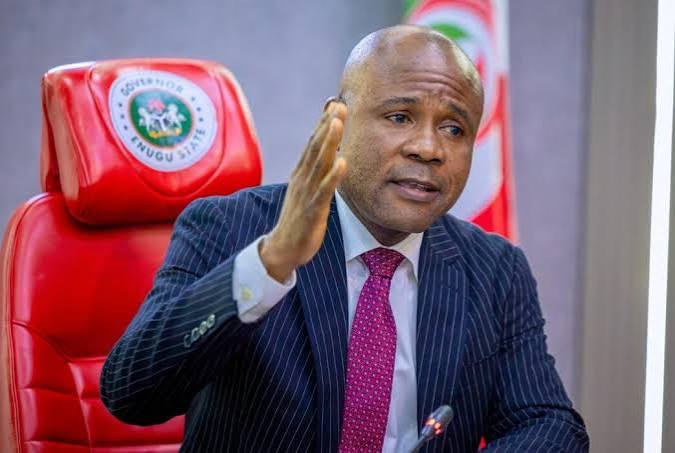
Enugu State Governor, Dr. Peter Mbah, has urged the South East Development Commission (SEDC) to prioritise the development of a regional gas pipeline, railway network and initiatives to accelerate industrialisation in the region.
Mbah said the proposed infrastructure would boost economic activities, improve connectivity among the five SouthEast states and strengthen regional integration.
He also urged the National Assembly to ensure adequate funding for the Commission, describing it as a strategic platform for addressing the region’s development needs.
The governor made the calls on Monday when he received the Senate Committee on the South East Development Commission led by its Chairman, Senator Orji Uzor Kalu.
The delegation, which paid a courtesy call to the governor on the sidelines of its oversight visit to have a firsthand assessment of the projects and programmes of the SEDC, was also accompanied by the management of the Commission, led by its Managing Director, Mark Okoye.
The governor identified a high-pressure gas pipeline connecting major cities across the South East as a critical intervention that could provide industries with reliable access to gas and stimulate large-scale industrial development.
He argued that the region should benefit from gas resources produced within the wider southern part of the country, noting that pipeline infrastructure already transports gas to other parts of Nigeria.
Mbah also proposed an inter-state railway network linking major cities across the five South East states to facilitate trade, improve transportation and reduce pressure on the region’s road network, urging the states to work together on a common design for the proposed railway system, with the SEDC providing a platform for coordination and regional collaboration.
“We are hoping that, given the coming into effect of the SEDC, we will be able to use it as a platform to bring all the other states together to have a common design on the South East railway line,” he said.
The governor further highlighted the commission’s role in supporting agriculture and technology-driven enterprises, citing the flag-off of a 200-hectare integrated Agro Development Programme at Nomeh Unateze, Enugu State, as one of its interventions in the agricultural sector.
He assured the commission of the state government’s support in providing an enabling environment for the project.
Mbah also stressed the need for the SEDC to provide funding opportunities for young entrepreneurs whose businesses had attained the minimum viable product stage, enabling them to expand their operations and contribute to economic growth.
He called on the senators to support the Commission in securing the funding required to undertake the project, describing it as a potential catalyst for an industrial revolution in the region.
Earlier, Kalu commended the Mbah administration for its interventions in infrastructure, education, healthcare, water supply and transportation.
He cited the development of Smart Green Schools, more than 7,000 classrooms, Type II primary healthcare centres across the state’s 260 electoral wards, and the state’s multimodal transportation system.
The senator also acknowledged Mbah’s efforts to strengthen engagement between the South East and the Federal Government, expressing appreciation to President Bola Tinubu for facilitating the establishment of the SEDC.
Kalu disclosed that the issue surrounding the location of the Commission’s headquarters had been resolved, following the Enugu State Government’s provision of temporary office accommodation and a site for its permanent headquarters.
“We wanted to make sure that the commission locates to Enugu State as soon as possible, and this has been a subject of disagreement. But today, I can assure you that the issue is settled,” he said.
He thanked the governor for the support provided to facilitate the commission’s take-off and assured him of the committee’s continued support for its activities.

The Independent National Electoral Commission (INEC) said Permanent Voter Cards (PVCs) for persons who registered between Jan. 5 and July 26, 2026, are not yet available for collection.
Prof. Ayobami Salami, INEC Resident Electoral Commissioner (REC) in Lagos State, disclosed this at a news conference on Tuesday in Lagos on preparations for the 2027 General Elections.
Salami said the commission would announce the collection dates for the affected registrants through its official communication channels.
He urged eligible voters to collect their available PVCs promptly and safeguard them, noting that the cards remained essential for accreditation on Election Day.
“For clarity, PVCs are currently available for persons who registered between 25th August and 10th December, 2025, as well as those who registered between 2011 and 2022 but have yet to collect their cards, subject to the Commission’s records.
The REC said the distribution of PVCs commenced nationwide on Oct. 9, with all 245 Registration Areas (RAs) in Lagos serving as collection centres across the state’s 20 Local Government Areas (LGAs).
He said INEC Lagos had introduced a Quick Response (QR) code initiative to help voters identify designated PVC collection centres.
Salami also urged registered voters to verify their details during the ongoing display of the Register of Voters, which commenced on Oct. 9 and would end on Oct. 15.
He said the exercise was being conducted across the state’s 245 registration areas in accordance with Section 19(1) of the Electoral Act 2026.
The REC said Lagos remained central to Nigeria’s electoral landscape, with 7,488,633 registered voters, which he described as the highest number in the country.
He said the state had 20 LGAs, 245 registration areas and 13,325 polling units, requiring extensive planning and coordination for the elections.
Salami said preparations were progressing nationwide, with nine of the 14 statutory milestones in the revised timetable and schedule of activities completed as of Oct. 6.
He added that the national register of voters stood at approximately 103 million, adding the commission was advancing procurement and quality assurance for critical electoral infrastructure.
According to him, the infrastructure includes 57,000 new Bimodal Voter Accreditation System (BVAS) devices, information and communication technology facilities, storage facilities and improvements to electoral offices.
Salami said a mock accreditation and election simulation exercise was scheduled for November to further assess the commission’s readiness.
He said nationwide logistical preparations covered 176,846 polling units and 8,809 registration areas, supported by more than 100,000 vehicles and approximately 4,000 boats.
Salami added that sensitive materials were expected to reach LGAs 72 hours before Election Day, while deployment to Registration Area Centres and Super Registration Area Centres would be completed by 4.00 p.m. on the eve of the election.
The REC said INEC’s priorities in Lagos included strengthening logistics, security coordination, personnel deployment, voter education and contingency arrangements to address the state’s unique operational challenges.
“Attention is being given to transportation, storage, electoral facilities, personnel deployment and contingency arrangements to ensure that Polling Units are ready to commence activities as scheduled.
Salami said the Nigeria Police, as the lead agency, was coordinating with other security and intelligence agencies through the Inter-Agency Consultative Committee on Election Security (ICCES).
He added that the commission was strengthening election risk-management measures and collaborating with the Economic and Financial Crimes Commission (EFCC), Independent Corrupt Practices and Other Related Offences Commission (ICPC), Nigerian Financial Intelligence Unit (NFIU) and Federal Ministry of Justice.
According to him, the collaboration is aimed at addressing vote buying, illicit campaign financing and other electoral offences.
He said engagements with political parties on financial reporting, auditing and campaign finance compliance would be intensified between Oct. 28 and Jan. 1, 2027.
The REC said voter education and inclusive participation remained key priorities, particularly among women, young people and persons with disabilities.
He added that accessibility measures included Braille materials, EC30 posters, magnifying glasses and sign-language interpretation at state collation centres.
Salami expressed concern about the spread of misinformation, disinformation, deepfakes and artificial intelligence-generated content, warning that they could undermine public confidence in elections.
He urged media organisations to verify electoral information through official INEC channels before publication, particularly information concerning electoral procedures, commission decisions and election results.
The REC said the Media Accreditation Portal was expected to become operational before the end of October, with further guidelines to be communicated through official channels.
He added that recruitment, training and deployment of electoral personnel were also progressing, with the INEC recruitment portal opened on Sept. 18 and scheduled to close on Nov. 18.
Salami said training and readiness assessments would continue to ensure that electoral personnel were adequately prepared for their responsibilities.
He said the commission had also completed readiness assessments in the South-West and North-West geopolitical zones.
The REC urged residents to take interest in the electoral process by verifying their registration details, collecting their PVCs when available and relying on official INEC information.
He also called on political parties, civil society organisations, traditional and religious leaders, youth groups and other stakeholders to promote peaceful participation and responsible civic conduct.
“As we approach the elections, I call on Lagos residents to take an active interest in the process; verify their registration details before the display exercise closes, collect their PVCs when available, and rely on official INEC information.
“I particularly encourage citizens to use the QR codes provided by INEC Lagos Office to identify designated locations for the display of the Register of Voters and PVC collection.
By Laide Akinboade Abuja
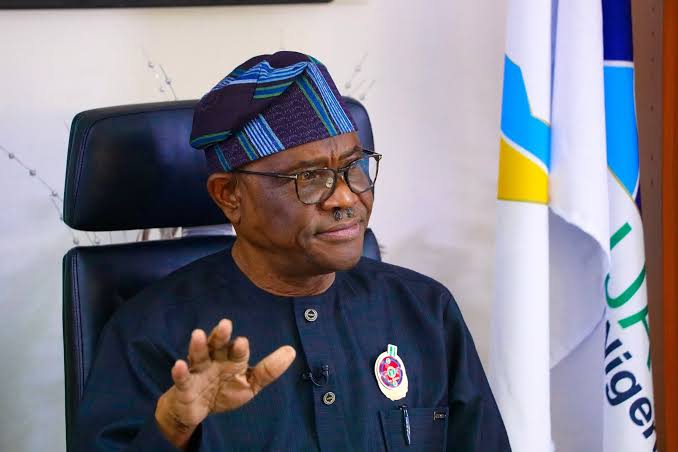
Minister of the Federal Capital Territory (FCT), Nyesom Wike, has defended the emerging political coalition supporting President Bola Tinubu’s re-election, insisting that the initiative is designed to strengthen the president’s electoral chances rather than undermine the All Progressives Congress (APC).
Wike, who spoke during a media parley in Abuja on Tuesday, dismissed concerns that the Rainbow Coalition could create divisions within the ruling party, arguing that the president’s re-election should attract support beyond APC membership.
The minister, who coordinates the coalition’s activities in Rivers State and the FCT, explained that the initiative accommodates both APC members and supporters of Tinubu from other political parties.
According to him, the arrangement recognises the political realities in different states while providing a common platform for those who believe the president deserves another term.
He cited Borno State Governor, Babagana Zulum, and Osun State Governor, Ademola Adeleke, as examples of political figures associated with the coalition’s state-level coordination, alongside himself.
Wike argued that the initiative was not intended to displace the APC but to mobilise support for Tinubu across political affiliations.
He maintained that the APC remained the platform through which the president would seek re-election, while supporters outside the party could contribute to the same objective.
The minister also dismissed suggestions that the coalition had unsettled APC governors or could encourage defections from the ruling party.
Using the FCT as an example, Wike recalled his appeal to political stakeholders to support Tinubu and APC candidates for the National Assembly while allowing supporters of other parties to back candidates of their choice at other levels.
He said political peculiarities differed from one state to another, making it necessary to accommodate local interests while pursuing a common national objective.
The former Rivers State governor argued that political leadership involved the ability to persuade supporters to embrace a shared goal.
He added that the coalition reflected an effort to move beyond the traditional boundaries of party politics and build broader support for the president.
Wike also rejected suggestions that the arrangement represented an entirely new development in Nigerian politics, saying political figures had previously supported presidential candidates outside their parties while maintaining separate interests at the state level.
However, he said the current political environment had made such cooperation more visible and formalised.
The minister maintained that the coalition’s objective was straightforward: to secure Tinubu’s re-election and sustain what he described as the president’s achievements.
He urged Nigerians to assess the president’s performance on its merits rather than allow partisan considerations to determine their judgment.


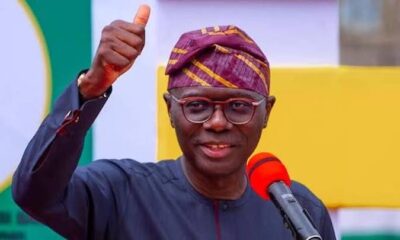

Sanwo-Olu Celebrates Prince Olusi at 90
ShareLagos State Govornor Babajide Sanwo-Olu of has described Prince Tajudeen Olusi, Chairman of the Governance Advisory Council of the Lagos...


Akwanga Set to Host Dignitaries for Spotlight Magazine Launch
ShareBy Tambaya Julius, Abuja Akwanga, Nasarawa State, is set to host prominent personalities from within and outside the state as...
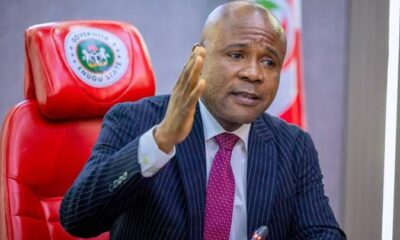

Mbah Tasks SEDC on Gas Pipeline, Support for Industrial Revolution
ShareFrom Sylvia Udegbunam, Enugu Enugu State Governor, Dr. Peter Mbah, has urged the South East Development Commission (SEDC) to prioritise...

PVCs of 2026 Registrants Not Available Yet — INEC
ShareThe Independent National Electoral Commission (INEC) said Permanent Voter Cards (PVCs) for persons who registered between Jan. 5 and July...
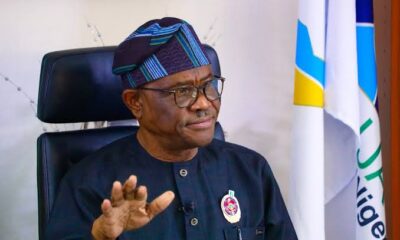

Rainbow Coalition: Wike Assures APC Governors Have Nothing to Fear
ShareBy Laide Akinboade Abuja Minister of the Federal Capital Territory (FCT), Nyesom Wike, has defended the emerging political coalition supporting...
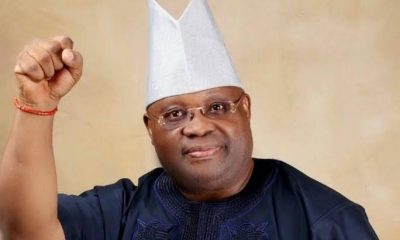

Group Welcomes Appointment of Adeleke as Tinubu’s Campaign Coordinator
ShareFrom Ayinde Akintade, Osogbo The Imole Campaign Council (TICC) has welcomed the appointment of Governor Ademola Adeleke as the Osun...


FG Raises Pensions from N12.15bn to N14.83bn for 241, 000 Retirees
ShareBy Tony Obiechina, Abuja The Director-General of the National Pension Commission (PenCom), Omolola Oloworaran, on Tuesday disclosed that more than...

Wike Accuses NLC of Politicizing FCT Teachers’ Strike
Share By Tambaya Julius, Abuja The Minister of the Federal Capital Territory (FCT), Nyesom Wike, has accused the Nigeria Labour Congress...

APC Unveils Revised 2027 Presidential Campaign Council, Retains Yari, DG
ShareBy Tambaya Julius, Abuja The All Progressives Congress (APC) has unveiled its revised Presidential Campaign Council for the 2027 general...

Tinubu’s Re-election: Don’t Allow Repeat of 2023, Tompolo Tells Lagos
ShareLeader of the PBAT Door-to-Door Movement, Government Ekpemupolo, has advised the people of Lagos State not to allow a repeat...