
Foreign News
Fate of Nigerian Medical Students from Sudan Hangs in Balance


A group of 47 Nigerian medical students who escaped war-torn Sudan in May 2023 are now struggling to register for the Nigerian Medical and Dental Council (MDCN) examination due to a document snag.The students, many of who fled or were evacuated by the Federal Government without exit visas, are currently racing against time to meet the registration deadline, with their future careers hanging precariously in the balance.
Report says that these students, who were enrolled at Sudan International University (SIU), were evacuated to Nigeria during the 2023 conflict in Sudan while in final year of study. According to the students, with the approval of the National Universities Commission (NUC), they were permitted to continue their academic programme at Usmanu Danfodiyo University Teaching Hospital (UDUTH) in Sokoto.Speaking to NAN on Sunday in Abuja, one student said: “We successfully completed our studies and graduated in 2024, receiving our certificates as students of SIU.”He added that they were currently preparing to sit for the MDCN examinations.The student, however, added that one of the requirements was presenting a first entry visa and a last exit visa.“Unfortunately, none of us have these documents as most of our passports remained in Sudan due to the emergency evacuation.“We respectfully request permission to sit for the examinations scheduled for June 2025,” he said.The President of the Nigerian Students Association at SIU, Najid Hassan, confirmed that due to the war in Sudan, Nigerian students were evacuated by the Federal Government.Hassan explained that with NUC approval, the affected students were allowed to continue their academic programme at UDUTH following a Memorandum of Understanding (MoU) between SIU and UDUTH.“After the MoU, we resumed studies at UDUTH in December 2023 and spent one year there.“We completed clinical rotations, lectures in gynaecology, pediatrics, surgery, and medicine, and graduated in October 2024.“We took examinations supervised by consultants at UDUTH,” Hassan said.He added that after graduation, students were awarded certificates bearing the SIU name.Hassan, however, said that when they approached MDCN for registration, the process, expected to be seamless, became challenging.“We are currently preparing for the MDCN exams, but one requirement is the submission of a ‘first entry visa and a last exit visa.’“Unfortunately, none of us have these documents because most passports remain in Sudan due to emergency evacuation,” Hassan said.He appealed to the Federal Government to intervene.NAN reports that MDCN is the regulatory body for Medicine and Dentistry in Nigeria and was established by the Medical and Dental Practitioners Act.The Act had been operational since Dec. 18, 1963, and updated under the Laws of the Federation of Nigeria 2004.The council’s statutory functions include setting and reviewing standards for medical and dental education.Section 9(3) and (4) of the Act empowers the council to conduct assessment exams for holders of foreign medical or dental qualifications recognised by their countries of origin.Candidates expected to sit for these examinations are trained outside Nigeria at institutions listed in the World Directory of Medical Schools.One of the application requirements is submitting relevant portions of international passports, including visa and arrival/departure stamps.In a 2024 publication addressing students returning from conflict zones, MDCN Registrar Dr Fatima Kyari, reaffirmed these rules but expressed sympathy for students affected by COVID-19 and conflicts in Ukraine and Sudan.“The council has held extensive consultations and developed remediation pathways to facilitate integration.”“Students graduating in 2023 or later were advised to return to a designated campus of their foreign university to complete studies physically.“They can also transfer to an accredited Nigerian university, subject to NUC approval; or integrate into a Nigerian university per NUC guidelines.“Many students from Sudan and Ukraine have successfully integrated through these pathways, exempting them from the foreign-trained medical and dental graduates (FTMDG) exams if graduating from Nigerian institutions,” Kyari said.She explained that the MoU with UDUTH was an academic collaboration and did not equate to clinical training for medical qualification recognised by MDCN.She noted that students who properly transferred and graduated from Nigerian universities approved by MDCN had been indexed, graduated, and registered as doctors.The Federal Ministry of Education, through the Director of University Education, Hajiya Rakiya Ilyasu, acknowledged the situation.She advised the affected students to formally write to the Minister of Education, including their names, and to copy the Director of Education Support Services to help facilitate a resolution.Similarly, NUC Deputy Executive Secretary, Chris Maiyaki, confirmed awareness of the development and advised students to contact the Ministry of Education to resolve the issues.However, all efforts by NAN to obtain a response from Mrs Abike Dabiri-Erewa, Chairman/CEO of the Nigerians in Diaspora Commission (NiDCOM), regarding the students’ plea proved unsuccessful.Similarly, all efforts to get a reaction from Usmanu Danfodiyo University Sokoto (UDUS) failed.The Deputy Provost of the Medical School, said he had no authority to speak on the issue, while the Vice Chancellor, Prof. Bashir Garba, said he was on transit and would respond appropriately.(NAN)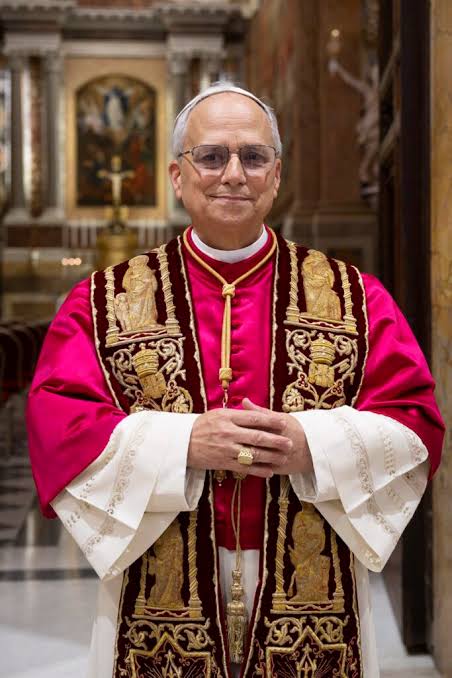
Pope Leo XIV has announced he will be operated “in the coming days” after a nodule was found on his lung during a medical checkup.
“The doctors found an early, well-localised nodule on my lung,” he told the public during his weekly Sunday prayers in St Peter’s Square in Rome.
The 71-year-old pontiff said his medical team “believe it would be right to intervene” and he had agreed to the operation.
Pope Leo reassured pilgrims that the mass was “well-contained” and caught “at an early stage”.
He concluded his Angelus prayer by thanking everyone for their “spiritual closeness” and said he entrusted himself to their prayers.
Holy See Press Office spokesperson Matteo Bruni told the media that “the operation is scheduled for the first days of next week”.
Bruni added that the Pope is expected to take about a week to recover.
Vatican News, the Holy See’s news portal, said the operation will take place at Gemelli Hospital in Rome.
The hospital set up a special Papal suite following the failed assassination attempt on Pope John Paul II’s life in May 1981, which is still in use today.
Italy’s Prime Minister Giorgia Meloni expressed her “personal solidarity” to the Pope in a post on X as he “faces the ordeal ahead in the coming days”.
Pope Leo, born Robert Francis Provost, succeeded Pope Francis in 2025. He is the 267th occupant of the throne of St Peter – and is the first American.
He was ordained in 1982 and spent years as a missionary in Peru, where he is remembered as a figure who worked with marginalised communities and helped build bridges.
During Sunday’s service, the Pope confirmed his visit to Uruguay, Argentina and Peru later in October will still go ahead.
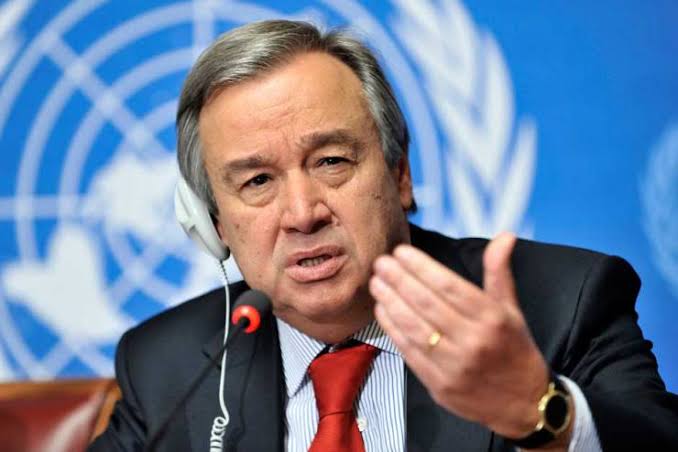
UN Secretary General António Guterres on Monday called for a peaceful future for Israelis and Palestinians ahead of the third anniversary of the Oct. 7 attacks by the militant organisation Hamas on Israel.
“Let this anniversary mark not only another year of mourning, but also a renewed determination to build a different future,” Guterres said in New York.
He said Israelis and Palestinians should be able to “live side by side in peace and security, with their rights, dignity, and aspirations fulfilled. “These horrors must never be repeated, “He added.On October 7, 2023, Hamas and other armed groups killed more than 1,200 Israelis and foreign nationals and abducted 251 people to Gaza.The attacks triggered the Gaza war, in which more than 74,000 Palestinians have since been killed, according to the Hamas-controlled health authority in Gaza.
A ceasefire has been in place since October 2025, although deadly attacks have continued.
Relations between the Israeli government and the United Nations remain deeply strained, with Israel accusing Guterres of bias and the UN chief repeatedly criticising Israel’s conduct in Gaza.
Guterres also paid tribute to the victims of the Oct. 7 attacks.
“Nothing can justify these atrocities,” he said.
“Their suffering, and the enduring grief of their families, must never be forgotten.”
The UN chief also highlighted the suffering of Palestinians in Gaza following the war.
“Their suffering, too, demands an end, now,” he said.
Guterres said the ceasefire had brought some relief but had yet to deliver security, adequate humanitarian assistance or a credible path to recovery and peace.
He urged all sides to fully implement their commitments and move to the next phase of the ceasefire.
“It is time for the ceasefire to become permanent. It is time to allow humanitarian assistance at scale.
“And it is time to respect international law,” he said.
“We must build the political path to lasting peace across the whole region.”
Kenya has confirmed its first case of Ebola, a Kenyan citizen who has been living in the Democratic Republic of Congo for the past seven years.
Health Minister Aden Duale said the patient, who fell ill a month ago, and was treated in several hospitals in DR Congo, died days after arriving in Nairobi.
Duale said the patient boarded a flight on Saturday and underwent normal public screening at the main airport in Nairobi before he was transferred by a relative to a hospital in the city.
More than 4,000 people have died from Ebola in DR Congo this year, in what is the second most deadly known outbreak of the disease.
Shortly after DR Congo declared an outbreak of Ebola in May, it was also reported in Uganda, where two people have died. However, the World Health Organization (WHO) declared the county free of the disease in August.
Since then, all cases of the disease have been declared in DR Congo.
The current outbreak has been caused by the Bundibugyo species of Ebola, which is relatively rare, with no known vaccine.
Duale confirmed that the Kenyan national had tested positive for the Bundibugyo species.
According to the minister, the patient first travelled by road from DR Congo to the Ugandan capital Kampala, where he boarded a flight to Nairobi
Duale said that after being taken to the Nairobi Hospital, the patient was transferred to an isolation facility which was built during the Covid-19.
It was there that the patient “developed fever, chills, intense fatigue and weakness, painful swallowing, muscle pain and bleeding under the skin”.
The patient died at 23:30 (20:30 GMT) on Monday and his burial is planned for later on Tuesday in line with public health safety protocols.
At least 28 contacts, including family members and healthcare workers, have been identified, while health authorities are tracing a further 23 passengers and four crew members who travelled on the same flight.
So far, WHO has recorded 4,082 deaths out of 8,463 cases since the emergence of the Bundibugyo species of the virus.
There are currently no approved vaccines or treatments for the species, which is highly infectious.



Pope Leo to Have Surgery after Lump Found on Lung
SharePope Leo XIV has announced he will be operated “in the coming days” after a nodule was found on his...


Motorists Express Worry over Non-access to NNPC Petrol Discount
ShareMany motorists said in spite of the discount in pump price of petrol at the Nigerian National Petroleum Company Ltd...

Tuberculosis: Benue Assembly Passes Law, to Protect Patients from Discrimination
ShareBy Laide Akinboade, Abuja The Benue State House of Assembly has passed into law a landmark legislation aimed at eliminating...

President Tinubu’s 30-Day Fuel “Discount” Cannot Repair the Damage of Subsidy Removal
ShareBy Daniel Nduka Okonkwo The Federal Government has issued a stark warning: restoring petrol subsidies could push the exchange rate...


Troops Neutralize Explosive Devices planted in Zamfara Community
ShareFrom Ifeanyichukwu Nwannah, Gusau The troops of Operation Fansan Yamma (OPFY) have neutralised Explosive Devices Planted along Magami–Hannutara–Dansadau road, Maru,...


Mbah Reaffirms Enugu’s Commitment to Trade, Investment, Industrial Growth
ShareFrom Sylvia Udegbunam, Enugu Enugu State Governor, Dr. Peter Mbah, has reaffirmed his administration’s commitment to creating an enabling environment...


Concerns About the 2027 General Elections
ShareBy Jibrin Ibrahim As the countdown to the 2027 elections reached 100 days this week Tuesday, Joash Amupitan, chairman of...

World Bank Report Confirms Economic Reforms Yielding Results – Tinubu
SharePresident Bola Tinubu said the World Bank’s October 2026 Nigeria Development Update confirms his administration’s economic reforms are yielding results...

Bandits Burn Houses, Business Premises in Niger Border Community
ShareFrom Dan Amasingha, Minna Suspected bandits have attacked Kigbera village in Konkoso Ward, Borgu Local Government Area of Niger State,...

Fuel Price Discount and Monetary Policy Recalibration: Communicating Policy Change Without Undermining Reform Credibility
ShareBy Uche Joe Uwaleke Economic reforms are rarely judged solely by their immediate outcomes. They are also assessed by the...