
OPINION
World Bank Report Confirms Economic Reforms Yielding Results – Tinubu

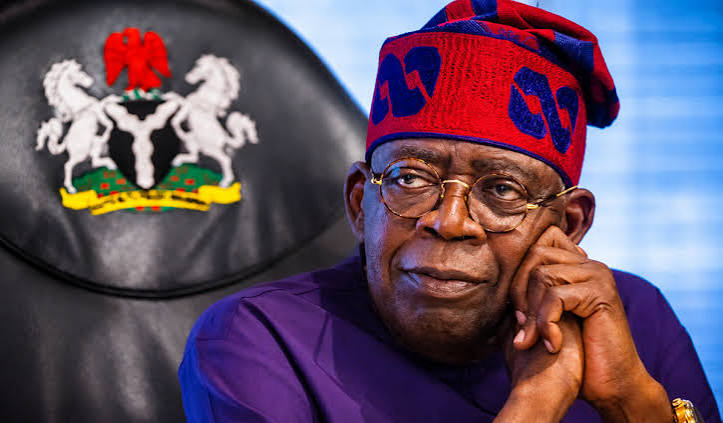
President Bola Tinubu said the World Bank’s October 2026 Nigeria Development Update confirms his administration’s economic reforms are yielding results and strengthening the economy for sustained growth.
This was contained in a statement by the Presidential Spokesperson, Bayo Onanuga, on Sunday in Abuja.
Tinubu welcomed the report, titled ‘Beyond the Federal Purse: How Higher Revenues Reshaped State Priorities’, highlighting improvements in economic growth, revenue generation and fiscal management.
The President noted the World Bank’s finding that Nigeria’s poverty rate had stabilised for the first time since 2019.
He said poverty was expected to decline gradually as economic growth outpaced population growth.
According to the report, the economy grew by 4.2 per cent in the first half of 2026, compared with 3.9 per cent in 2025.
The growth occurred despite the impact of the Middle East conflict, while the World Bank projected average growth of at least 4.4 per cent between 2026 and 2028.
The report showed that inflation declined from 27.6 per cent in January 2025 to 15.2 per cent in December 2025.
However, higher global fuel prices linked to the Middle East conflict slowed the decline, although inflation was projected to ease to about 12 per cent by 2028.
Nigeria’s external position also improved, with its current account surplus reaching 12 billion dollars, representing 7.0 per cent of GDP, in the first half of 2026.
This compared with 8.6 billion dollars recorded in the corresponding period of 2025.
Gross external reserves increased from 45.5 billion dollars at the end of 2025 to 53.8 billion dollars at the end of August 2026.
The report attributed the gains to reforms introduced since 2023, which increased federation revenues by 69 per cent in real terms between 2023 and 2025.
State governments emerged as the largest beneficiaries, with capital expenditure increasing by 151 per cent in real terms over the period.
Much of the additional spending went towards roads, transport, agriculture, energy and housing.
The report noted that 29 of the 33 states shifted spending towards economic infrastructure, while real social spending per capita increased in all but one state.
It also found that internally generated revenue grew in real terms in 31 of 35 states.
Meanwhile, 21 states reduced their debt-to-GDP ratios between 2021 and 2025.
Nigeria’s overall public debt was projected to decline from 40.0 per cent of GDP in 2025 to 38.1 per cent in 2026.
Tinubu said the findings demonstrated the impact of his administration’s decisions to remove the petrol subsidy, unify the foreign exchange market and strengthen fiscal discipline.
“The difficult but necessary decisions to remove the petrol subsidy, unify the foreign exchange market and strengthen fiscal discipline have raised revenues.
“The decisions have also stabilised the economy and created fiscal space for every tier of government to invest in its people. The dividends of reform are becoming visible.
“But more work remains to ensure they fully translate into better living standards for every household, starting with lower food prices and decent jobs for our young people.
“Our administration will stay the course of reform and redouble its focus on inclusive growth under the Renewed Hope Agenda,” he said.
The President said the administration would expand targeted cash transfers, accelerate Compressed Natural Gas (CNG) deployment, raise agricultural productivity and improve access to affordable healthcare and quality education.
“We will continue to expand targeted cash transfers, which have already reached more than 10 million households.
“We will accelerate the deployment of CNG, raise agricultural productivity, and improve access to affordable healthcare and quality education.
“I urge state governments to use their higher revenues more prudently and prioritise projects that improve the living standards of Nigerians, and the health and education of our people,” Tinubu said.
The President commended the Economic Management Team, led by the Minister of Finance and Coordinating Minister of the Economy, state governors and other stakeholders for supporting the reforms.
“I assure Nigerians that the best is yet to come under the Renewed Hope Agenda 2.0, which will accelerate the delivery of shared prosperity for all Nigerians,” he said. (NAN)
Road Crashes: Adamawa to Dualise Girei-Yola Road
The Adamawa Government has set in motion plans to dualise the Girei-Yola road to save lives and properties following increased accidents along the axis.
The Commissioner for Works and Housing, Muhammad Suleiman, who disclosed this in an interview on Sunday in Yola, said the dualisation of the road was among other measures the government planned to curb the frequent crashes on the road.
Suleiman said a committee, comprising the Federal Road Safety Corps (FRSC), Vehicle Inspection Officers (VIOs) and other relevant agencies, was constituted to get to the root of the problem and proffer lasting solutions.
The commissioner said appropriate measures would be implemented following the conclusion of the committee’s report.
According to him, the proposed measures will focus on reducing accidents, while the dualisation of the remaining section of the road will be considered as a long-term solution.
The commissioner said the government had demonstrated commitment to improving road infrastructure and public safety through the construction of major projects in the state capital and local government headquarters
Suleiman said the ministry had also intervened on some federal highways, bridges and other road networks within the state.
On traffic violations around the flyover and the road linking Army Barracks Roads in Yola, the commissioner called for increased public sensitisation to discourage motorists from driving against traffic.
He explained that the road design deliberately reduced the number of U-turns to improve safety, prevent accidents, reduce congestion and ensure the smooth flow of traffic.
He, however, expressed concern that some motorists were abusing the arrangement by driving against traffic instead of using designated U-turns.
“We are starting with sensitisation, and very soon, enforcement will follow. Stringent measures will be taken against traffic violators, particularly those driving against traffic,” he said.
The commissioner further stated that motorists caught driving against traffic could be subjected to psychiatric evaluation to determine their mental fitness to drive.
He said the measure would be introduced after public sensitisation, adding that offenders would also face fines as part of efforts to enforce traffic regulations.
He stressed that the measures were designed to protect road users, reduce accidents and ensure safer movement of vehicles across the state.
Suleiman urged the FRSC and the media to intensify public enlightenment on the dangers and consequences of traffic violations.
The commissioner then appreciated the FRSC for recognising the ministry’s contributions to road safety by presenting an award to him. (NAN)
OPINION
Fuel Price Discount and Monetary Policy Recalibration: Communicating Policy Change Without Undermining Reform Credibility
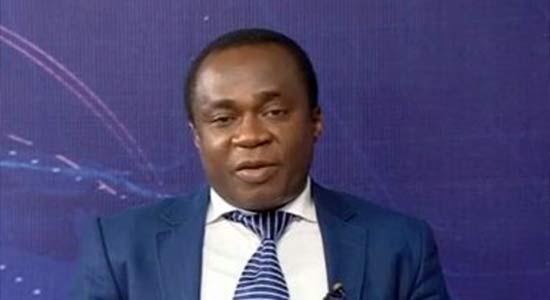
By Uche Joe Uwaleke
Economic reforms are rarely judged solely by their immediate outcomes. They are also assessed by the consistency of the policies that underpin them, the credibility of the institutions responsible for their implementation and, perhaps most importantly, the signals that governments send to investors, businesses, households and the international community.
In an economy such as Nigeria’s, where years of macroeconomic distortions have necessitated difficult but unavoidable policy adjustments, the language used by policymakers to explain their decisions can be almost as consequential as the decisions themselves. This explains why the Federal Government and the Central Bank of Nigeria must be deliberate in communicating recent policy actions that, although intended to alleviate economic pressures, could otherwise be misconstrued as a retreat from the reform agenda.
The September 2026 meeting of the CBN’s Monetary Policy Committee (MPC), at which the Monetary Policy Rate (MPR) was reduced to 23 percent, provides a compelling illustration of this challenge. The reduction, which represents a significant shift in the monetary policy stance, was accompanied by an explanation that the decision should not be interpreted as monetary policy easing but rather as a recalibration intended to bring the policy rate closer to prevailing market realities.
The distinction is crucial not least because a conventional interpretation of a reduction in the policy rate is that the monetary authorities are easing financial conditions to stimulate borrowing, investment and economic activity. By describing the decision as a recalibration, the CBN sought to communicate that the adjustment should be understood within the broader framework of its continuing commitment to price stability and macroeconomic discipline, rather than as evidence of abandonment of the restrictive monetary stance adopted to combat inflation.
There is, of course, an economic dimension to the decision that cannot be ignored. Nigeria’s elevated interest rates have imposed substantial costs on businesses, constrained private-sector investment and made access to credit particularly difficult for small and medium-sized enterprises. A reduction in the MPR can, over time, contribute to lowering borrowing costs, improving credit conditions and supporting productive economic activity. In that sense, the decision has implications for growth and investment that go beyond a technical adjustment to the monetary policy framework. Yet, given the importance of expectations in monetary policy, the CBN has good reason to avoid allowing a reduction in the benchmark rate to be interpreted as an unconditional declaration of victory over inflation or an invitation to resume the kind of monetary expansion that could undermine the progress already achieved.
The challenge for the CBN is therefore to communicate a delicate balance between maintaining the credibility of its anti-inflationary commitment and acknowledging that monetary policy must respond to changing economic conditions. The language of recalibration helps to convey that balance. It suggests an adjustment within an established policy framework rather than a reversal of direction. This is particularly important because the effectiveness of monetary policy depends not only on the level of interest rates but also on the expectations of investors, consumers and financial institutions regarding the future course of policy. If market participants conclude that the CBN is abandoning its commitment to price stability, the resulting change in expectations could weaken the effectiveness of the policy framework, even before any measurable deterioration in inflation occurs.
A similar consideration underlies the Federal Government’s recent announcement of a temporary fuel price discount for commercial vehicles through the Nigerian National Petroleum Company Limited (NNPCL), in response to the rising cost of petrol and the consequent increases in transport fares. Under the arrangement, NNPCL is expected to sell fuel to eligible commercial vehicle operators at cost price, effectively surrendering its margin on the relevant sales.
The Government has been careful to insist that the initiative should not be interpreted as a return to fuel subsidy, which it abolished in May 2023. The removal of the subsidy represented a major departure from a longstanding system of government intervention that imposed substantial fiscal costs, encouraged market distortions and created opportunities for arbitrage and smuggling.
Reintroducing a general fuel subsidy, even under the pressure of legitimate public demands for relief, could raise difficult questions about the durability of that reform. By presenting the new initiative as a targeted discount rather than a restoration of subsidy, the Government seeks to distinguish temporary, narrowly defined relief from a return to the previous system of broad-based price support. The distinction will, however, be credible only if the design, financing, eligibility criteria and implementation of the arrangement are consistent with the explanation being offered.
It would be unfair to suggest that every adjustment to a reform programme constitutes a retreat from reform. Sound economic management requires governments to respond to changing circumstances, correct unintended consequences and protect vulnerable groups against excessive hardship. Reforms are not ends in themselves; their ultimate purpose is to create a more stable, productive and prosperous economy. A monetary authority that refuses to adjust interest rates when economic conditions warrant it would be no more prudent than a government that insists on allowing every increase in transport costs to fall entirely on households, irrespective of the social consequences. The relevant question is not whether policy adjustments are permissible, but whether they are well designed, economically justified, transparent and consistent with the long-term objectives of reform.
This distinction is particularly vital at a time when Nigeria’s economic policy direction is receiving renewed attention from international financial institutions and credit-rating agencies. The World Bank, the International Monetary Fund and global rating agencies have acknowledged the significance of Nigeria’s macroeconomic reforms, including exchange-rate unification, tighter monetary policy and the removal of the petrol subsidy. Fitch Ratings’ recent favourable assessment of Nigeria has also contributed to the wider discussion about the country’s reform trajectory and improving investor confidence.
Such assessments should not be interpreted as a declaration that Nigeria’s economic challenges have been resolved. Inflationary pressures, the high cost of living, elevated financing costs, exchange-rate vulnerabilities and the constraints facing domestic production remain substantial concerns. Nevertheless, positive assessments matter because they influence how international investors, lenders and development partners evaluate Nigeria’s policy credibility and economic prospects.
For an economy that needs substantial domestic and foreign investment to expand productive capacity, create employment and improve living standards, credibility is an economic asset. Investors are more likely to commit capital when they believe that policy decisions are guided by a coherent framework rather than short-term political expediency. They need reasonable assurance that difficult reforms will not be abandoned and that changes in policy will be supported by clear economic reasoning. The confidence generated by reform is therefore not merely a public-relations achievement; it can affect investment decisions, financing conditions and the economy’s ability to attract the capital needed for sustainable growth.
This is why the manner in which recent policy decisions are communicated matters. The CBN’s description of its interest-rate reduction as a recalibration and the Federal Government’s insistence that the fuel discount does not constitute a return to subsidy can be understood as efforts to preserve continuity in the narrative surrounding Nigeria’s reforms.
The proposed fuel discount deserves particular scrutiny because the coexistence of discounted NNPCL sales and market-determined prices at independent filling stations creates conditions that could undermine the programme if implementation is not carefully managed. Price discrimination, in the economic sense, occurs when different buyers are charged different prices for the same or substantially similar product under specified conditions. Such an arrangement can be justified where the beneficiaries are clearly identifiable, the price differential serves a defined public purpose and the seller can prevent those purchasing at the lower price from reselling the product to those who would otherwise pay the higher market price. Without these conditions, a targeted discount can quickly become an opportunity for arbitrage rather than an effective instrument of social protection.
The central risk is that commercial vehicle operators may have an incentive to purchase discounted petrol at NNPCL stations and divert some or all of it to other vehicle owners at prices above the discounted rate. Where the difference between the NNPCL price and the prevailing market price is substantial, the potential gain from resale could become attractive enough to distort the intended pattern of consumption. The beneficiary may find it more profitable to resell discounted fuel than to use it for the commercial transport service for which the discount was designed.
In such circumstances, the Government would be incurring the economic cost of the foregone NNPCL margin without ensuring that the benefit reaches passengers through lower fares. The programme could then become an indirect transfer to intermediaries and opportunistic traders rather than a meaningful intervention in transport costs.
Preventing this outcome requires the Government to design the programme around the realities of Nigeria’s fuel distribution system and the incentives facing market participants. Eligibility must be established through a reliable, verifiable mechanism that identifies legitimate commercial vehicles and distinguishes them from private vehicles and other ineligible users.
Registration should be linked, as far as practicable, to vehicle identification, number plates and the relevant transport or operating permits. A digital verification system could help NNPCL filling stations confirm eligibility at the point of sale and record the quantity purchased against each registered vehicle. The system should also be designed to prevent the same vehicle from obtaining repeated discounted allocations beyond reasonable limits within a specified period.
The discount should be tied to actual fuel consumption for commercial transport rather than treated as an unrestricted entitlement to purchase cheap petrol. Reasonable quantity limits, calibrated to vehicle type and expected operating requirements, would help reduce the risk of bulk purchases and diversion. The details would need to reflect the practical realities of public transport operations, including the needs of buses, taxis and other qualifying commercial vehicles, without creating an unnecessarily cumbersome process that excludes legitimate beneficiaries.
Equally important is the need for effective monitoring and enforcement. NNPCL must be able to account for the volume of discounted fuel supplied, the identity of the beneficiaries and the extent to which the programme is reaching its intended users. The government should conduct regular audits, investigate unusual purchase patterns and impose proportionate penalties for diversion or fraudulent claims. There must also be a clear channel for the public and transport operators to report abuse.
The Government must also consider the geographical distribution of NNPCL filling stations relative to the locations where commercial vehicles operate. If eligible operators must travel considerable distances to obtain discounted fuel, the additional time, fuel consumption and operating costs could erode the benefit of the discount. It could also create congestion at participating stations and provide opportunities for informal resale.
It goes without saying that a programme that reduces the price of petrol at selected locations but imposes significant additional costs on beneficiaries may achieve far less than its headline price suggests. The availability of discounted fuel must therefore be assessed against the actual transport routes, refuelling patterns and operating requirements of the intended beneficiaries.
Another critical issue is the relationship between the discount and transport fares. A reduction in the input cost of commercial transport does not automatically translate into lower fares for passengers. Operators may face other cost pressures, including vehicle maintenance, spare parts, tyres, insurance and financing costs. They may also be reluctant to reduce fares given that the discount is expected to be temporary.
The Government should therefore establish a clear and credible framework for measuring whether the intervention is producing the intended relief, taking account of the different types of commercial transport and the routes on which they operate. Engagement with transport unions, fleet operators and passenger representatives can help establish reasonable expectations, while monitoring prevailing fares before and during implementation can reveal whether the benefits are being passed through to passengers.
The possibility of supply distortions also deserves attention. If discounted fuel is available only at NNPCL stations while independent marketers continue to sell at market-determined prices, demand may become concentrated at participating stations. Long queues, stockouts and delays could increase the effective cost of obtaining the discounted product. Meanwhile, some customers may be tempted to buy at the discounted price and resell elsewhere, particularly where independent marketers’ prices remain higher. These developments could create shortages at participating stations without reducing the overall cost of transport by a corresponding amount. NNPCL will therefore need adequate supply planning, clear procedures for prioritizing eligible commercial vehicles and safeguards against the diversion of discounted stock.
The Government should also be transparent about the fiscal and commercial implications of the arrangement. Selling at cost price and foregoing a commercial margin may not be identical to a conventional budget-funded subsidy, but the intervention still has an economic cost. The foregone margin represents revenue that NNPCL would otherwise have earned, and the opportunity cost should be acknowledged in assessing the programme. The Federal Government should specify the criteria for reviewing it and the circumstances under which it will be modified. Without such clarity, a measure introduced as temporary relief could become an indefinite commitment, gradually weakening the distinction the Government is seeking to preserve between targeted assistance and the former subsidy regime.
All said, Nigeria’s economic reform agenda must be judged by its capacity to restore stability while creating the conditions for inclusive growth. Monetary discipline, exchange-rate reform and the removal of unsustainable subsidies are not valuable simply because they attract favourable assessments from international institutions or rating agencies. Their real justification lies in the prospect of a more efficient economy, a stronger fiscal position, better investment conditions and more sustainable opportunities for employment and production.
But these reforms cannot be sustained indefinitely without attention to the hardship they impose during the adjustment period. The Government must therefore find ways to cushion the most damaging effects of economic change without undermining the incentives, price signals and fiscal discipline that the reforms are intended to establish.
Undoubtedly, Nigeria has invested considerable economic capital in reversing long-standing policy distortions. Preserving the credibility of that effort requires the government to explain adjustments carefully, implement them consistently and demonstrate that short-term relief is compatible with long-term reform. The real challenge is to ensure that the language of policy is matched by the substance of policy, and that every adjustment strengthens rather than weakens confidence in Nigeria’s economic future.
Prof Uche Uwaleke is the Director of the Nasarawa State University Institute of Capital Market Studies and President of the Capital Market Academics of Nigeria

By Uddin Ifeanyi
I am not an accountant, so my opinion on the NNPCL’s recently released 2025 annual financial report is a qualified one. It matters, therefore, that PwC, the audit and assurance firm which signed off on the report, has no doubt that it represents a true and fair view of the corporation’s performance under the country’s reporting standards.
Far more comforting was my former colleague’s response to the report’s release: “Wonderful! While I was working in the bank, as the Corporate Banking Group’s relationship manager for the NNPC, the ‘most recent’ financials we had was about 15 years old”.
That was some 15 years ago. In terms of accountability and public disclosure, then, Nigeria’s most important corporation over the last 49 years is making steady progress.That said, significant parts of the picture of a profitable company undergirded by improving production, which the report tries so convincingly to take, are out of focus. It is a fair argument that the report’s headline profit growth figure appears to overstate the improvement in the corporation’s underlying trading performance. Why this blur? The NNPC Group’s net profit rose by about 33 per cent to ₦7.2 trillion last year, despite a 23 per cent drop in revenue from ₦45.1 trillion in 2024, to ₦34.5 trillion last year.
Gross profit was down by equivalent percentage points to ₦9.4 trillion in the same period. While two different lines, a ₦5 trillion rise in other income, and a ₦1 trillion fall in general and administrative expenses, explain this seeming contradiction, the resulting problem is not that the increase in the corporation’s profit last year did not come from increased sales or gross profits. It is instead included in the answer to the question, “How repeatable will the ‘other income’ performance be in future accounting periods?”
The corporation’s balance sheet is a smorgasbord of paints off a similarly nuanced canvas. With a current ratio of about 0.85, the NNPCL’s short-term assets (₦28.1 trillion) do not quite make up for its short-term liabilities (₦33.2 trillion). With the right timing, depending on the nature of its account payables, and the makeup of its receivables, the corporation ought to be able to easily meet its obligations. This balance sheet structure has one other purpose: it helps make sense of the corporation’s cash pressure.
The group’s cash balance was down from ₦10.3 trillion in 2024 to ₦6.4 trillion by financial year end 2025. This, despite an increase in cash generated from operations to ₦12.9 trillion in 2025 from ₦11.0 trillion the previous year. Trade and other receivables fell from the ₦31.4 trillion at which it printed in 2024, but even at ₦19.7 trillion, last year, it remained substantial.
On the upside, there is plentiful evidence of a production recovery. Still the chorus of “Hallelujahs” are pressed in on two sides by the narrative section of the report’s claim of average crude and condensate production of 1.77 million barrels per day – a five-year high, and the financial highlights’ listing of 565.8 million barrels of crude oil production. On the face of it, annualised, the latter number translates into about 1.55 million barrels per day of production.
My guess is that these two figures address different scopes — i.e. national production as against the NNPCL’s own or equity production. Any which way, the report could have helped make this reconciliation easier. Equal levels of clarity could have been facilitated by tying natural gas production directly to segment revenue, investment returns, and cash generation.
Overall, the NNPCL report indicates considerable operating progress. Operating cash generation is especially impressive. Nonetheless, the dip in revenue and gross profit, the facts that profit growth is almost entirely the result of large other income performance, and that current liabilities swamp current assets, make the headline profit an incomplete gauge of the organisation’s financial strength.
For more than a decade now, the dominant presence in the room when the NNPC’s accounts are discussed is the extent of outgoings on the subsidy for the pump-gate price of petrol. And this is the main reason I paid this much attention to the corporation’s annual report for last year – to see how far the corporation’s numbers corroborate the federal government’s insistence that it has removed the subsidy completely.
How do the numbers stack up? The corporation’s financial statements continue to use categories such as “energy security” and “under-recovery.” These are not exactly identical terms. Energy security expenses may include more than petrol price support.
Interestingly, the NNPCL’s financial statement for 2024 reports ₦8.67 trillion as an “under-recovery” balance. Other coverage in the 2025 statement describes ₦8.67 trillion as a “federation receivable.” Both labels and reporting periods are not interchangeable, but if either means that the corporation continues to cover a gap between petrol’s supply cost and a managed selling price, and records the amount as recoverable from the federation, the economic burden from the fuel subsidy has not disappeared. It has simply been absorbed by the NNPCL or the federation, rather than fully passed on to consumers.
Uddin Ifeanyi, a journalist manqué and retired civil servant, can be reached @IfeanyiUddin.

By Mark Longyen
West Africa’s climate crisis is becoming harder to separate from the region’s familiar struggles with poverty, displacement, food insecurity, resource competition and violent conflict.
That convergence framed the ECOWAS Parliament’s Second 2026 Extraordinary Session and Second Parliamentary Seminar in Accra, Ghana.
It was themed “Climate Change as a Driver of Environmental Degradation, Population Displacement and Growing Insecurity in the ECOWAS Region.
”Beyond the speeches and warnings, the week-long meeting posed a harder question: can ECOWAS convert long standing climate commitments into funded, coordinated and measurable action?
The Parliament’s adopted resolutions offered one answer, urging ECOWAS leaders to consider establishing a regional fund dedicated to climate resilience and human security.
The lawmakers also called for climate resilience to be integrated into national budgets, development plans, land-use policies, conflict-prevention mechanisms and disaster-risk reduction strategies.
They further called for the ECOWAS Commission to develop a five-year implementation roadmap for translating the recommendations into practical measures.
These proposals attempt to move the regional climate conversation from declarations towards institutional mechanisms capable of producing measurable results.
Yet, the Parliament’s own assessment exposed the obstacles.
Speaker Hadja Mémounatou Ibrahima was blunt in her closing address.
“Our region doesn’t lack strategies nor instruments.
“What West Africa lacks are the financing and political will required to implement existing frameworks and transform them into visible and tangible assets for citizens,” she said.
That diagnosis goes to the heart of the region’s climate dilemma, where policies exist, but implementation frequently falls behind ambition.
Earlier, in her opening address, Ibrahima urged lawmakers to view climate disruption through its consequences for ordinary people rather than through statistics alone.
“Climate disruption can no longer be measured only in degrees, statistics or projections,” she said, citing declining land productivity, retreating coastlines, flooded neighbourhoods and displaced families.
For her, the fundamental question was how governments could protect citizens when environmental change was occurring faster than their capacity to adapt.
Ghana’s Vice-President, Prof. Jane Opoku-Agyemang, reinforced that perspective, saying climate change and environmental degradation were compounding pressures on livelihoods and food security.
“Climate change is both a development and a security challenge,” she said, urging ECOWAS states to move from reactive crisis management towards proactive resilience-building.
Her prescription included stronger early-warning systems, resilient agriculture, water management, coastal protection and clean-energy investment.
She also linked climate resilience to youth opportunities, arguing that education, skills and economic empowerment could help prevent environmental pressures from becoming drivers of insecurity.
The financial dimension emerged starkly in a presentation by Dr Derek Sarfo-Yiadom of Ghana’s Environmental Protection Authority.
He disclosed that Ghana would require an estimated 22.6 billion dollars by 2030 to implement its climate actions and strengthen resilience.
“When we put our climate reports together, we found out that we needed 22.6 billion dollars to accomplish our climate actions by the year 2030,” he said.
Sarfo-Yiadom argued that vulnerability assessments must identify not merely climate hazards, but the people exposed, barriers to recovery, responsible institutions, available budgets and measurable outcomes.
He called for stronger early-warning systems, improved drainage, resilient infrastructure and measures supporting rural livelihoods through climate services, crop diversity and better soil-water management.
At the regional level, ECOWAS climate expert Raoul Kouamé highlighted the challenge of translating commitments into implementation, especially where institutional capacities and financing remain uneven.
His argument reinforced a central lesson from the Accra conference; climate governance cannot succeed through isolated national interventions when rivers, ecosystems, migration routes and environmental risks cross borders.
Guinean parliamentarian Bademba Baldé said lawmakers identified effective implementation, financing and national ownership among the principal obstacles confronting regional climate action.
The Parliament consequently connected climate vulnerability with displacement, competition over land and water, pastoral mobility and resource-related conflicts.
That connection is especially important for West Africa, where environmental stress can amplify existing economic, social and security vulnerabilities.
The recommendations therefore went beyond environmental protection, seeking to embed climate resilience within development planning, conflict prevention and disaster-risk management.
For Nigeria and other vulnerable member states, the implications are substantial, given recurring floods, droughts, land degradation, food insecurity and competition over natural resources.
The Accra resolutions also raise an institutional question; how effectively can the ECOWAS Parliament drive implementation when its role remains principally consultative?
Nigerian lawmakers, including Sen. Ali Ndume and Awaji Abiante, argued that strengthening the Parliament’s legislative powers would enhance its ability to scrutinise regional and national responses.
That debate gives the climate question a governance dimension: ambitious recommendations require institutions with sufficient authority to monitor compliance, demand accountability and sustain political attention.
The Parliament itself recognised this when it stressed that its credibility would depend on decisions producing concrete and measurable improvements in citizens’ lives.
Its closing position was both ambitious and cautionary, noting that resolutions must not become another archive of unimplemented regional commitments.
The adoption of the seminar’s outcome document gave the climate agenda an institutional pathway.
The proposed regional resilience fund offers a potential financing mechanism, and the five-year roadmap, if effectively developed and monitored, could provide the continuity often missing from regional climate initiatives.
Stakeholders insist, however, that money alone will not resolve the crisis.
They say political ownership, institutional coordination, national legislation, community participation and credible monitoring will be equally decisive in translating commitments into action.
The Accra deliberations therefore shifted the focus from whether West Africa understands its climate crisis to whether governments and regional institutions are prepared to govern against it.
The real test now lies in whether governments, ECOWAS institutions and national parliaments will finance, implement and monitor the commitments reached.
For West Africa, the climate crisis is no longer waiting for another declaration. It is demanding decisions, resources and action.
Accra has provided the diagnosis and a framework.
The credibility of the ECOWAS Parliament’s climate push will ultimately be measured by what follows after the conference. (NAN)



World Bank Report Confirms Economic Reforms Yielding Results – Tinubu
SharePresident Bola Tinubu said the World Bank’s October 2026 Nigeria Development Update confirms his administration’s economic reforms are yielding results...


Bandits Burn Houses, Business Premises in Niger Border Community
ShareFrom Dan Amasingha, Minna Suspected bandits have attacked Kigbera village in Konkoso Ward, Borgu Local Government Area of Niger State,...


Fuel Price Discount and Monetary Policy Recalibration: Communicating Policy Change Without Undermining Reform Credibility
ShareBy Uche Joe Uwaleke Economic reforms are rarely judged solely by their immediate outcomes. They are also assessed by the...


Oyedele Leads FG Delegation to World Bank, IMF Meetings in Thailand
ShareBy Tony Obiechina, Abuja The Minister of Finance and Coordinating Minister of the Economy, Taiwo Oyedele, has arrived in Bangkok,...


2027: Tinubu ‘ll Deliver Prosperity If Re-elected, First Lady Assures
ShareBy Tambaya Julius, Abuja The First Lady, Senator Oluremi Tinubu, has assured Nigerians that President Bola Tinubu will deliver on...

Xenophobia: FG Brings Home 111 More Nigerians from South Africa
ShareBy Tambaya Julius, Abuja The Federal Government has evacuated another 111 Nigerians from South Africa amid renewed concerns over xenophobic...

ASUSS Opposes NUT Strike in FCT, Urges Teachers to Ignore Stay-at-home Directive
ShareBy Laide Akinboade, Abuja The Academic Staff Union of Secondary Schools (ASUSS), Federal Capital Territory (FCT) Chapter, has dissociated itself...
Edo Varsity Lecturer Dies after Sex Romp in Hotel
ShareA senior lecturer at the Ambrose Alli University, Ekpoma in Edo State, Dr. Matthew Uwuigbe, has died under mysterious circumstances...
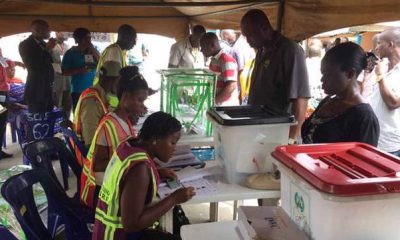

Over 84 Per Cent Nigerians willing to Vote During 2027 Elections – Yiaga
ShareYiaga Africa said 84 per cent of Nigerians intend to vote during the 2027 general elections, urging political parties to...


PNC 2026: NCDMB, DMG Affirm Collaboration with Bayelsa, Unveil New Activities
ShareFrom Mike Tayese, Yenagoa As preparations intensify for the 2026 edition of the Practical Nigerian Content (PNC) Forum, slated for...