
Foreign News
Israeli Forces Vow Response to Iran’s Attack Despite Calls for Restraint

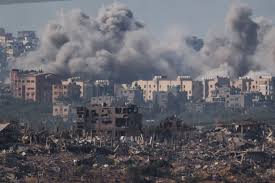
Israelis awaited word on how Prime Minister Benjamin Netanyahu would respond to Iran’s first-ever direct attack as international pressure for restraint grew amid fears of an escalation of conflict in the Middle East.
Netanyahu on Monday summoned his war cabinet for the second time in less than 24 hours to weigh a response to Iran’s massive weekend missile and drone attack, a government source said.
While the attack caused no deaths and little damage, thanks to the air defences and countermeasures of Israel and its allies, it has increased concerns that violence rooted in the Gaza war is spreading, and fears of open war between the long-time foes.
Israeli military chief of staff Herzi Halevi said on Monday that “this launch of so many missiles – cruise missiles and drones – into Israeli territory will be met with a response” but gave no details.
Iranian Deputy Foreign Minister Ali Bagheri Kani told state TV on Monday night that Tehran’s response to any Israeli retaliation would come in “a matter of seconds, as Iran will not wait for another 12 days to respond”.
But the prospect of Israeli retaliation has alarmed many Iranians already enduring economic pain and tighter social and political controls since protests in 2022-23.
Iran launched the attack in retaliation for an airstrike on its embassy compound in Damascus on April 1 attributed to Israel, and signalled that it did not seek further escalation.
U.S. President Joe Biden told Netanyahu at the weekend that the United States, which helped Israel blunt the Iranian attack, would not participate in an Israeli counter-strike.
Since the war in Gaza began in October, clashes have erupted between Israel and Iran-aligned groups based in Lebanon, Syria, Yemen, and Iraq.
Israel said four of its soldiers were wounded hundreds of metres inside Lebanese territory overnight, the first known Israeli ground penetration into Lebanon since the Gaza war erupted, although it has traded fire with the Lebanese Hezbollah militia.
“We’re on the edge of the cliff and we have to move away from it,” Josep Borrell, the European Union’s foreign affairs chief, told Spanish radio station Onda Cero.
French President Emmanuel Macron, German Chancellor Olaf Scholz and British Foreign Secretary David Cameron made similar appeals.
Washington and UN Secretary-General Antonio Guterres also have called for restraint.
White House national security spokesman John Kirby declined on Monday to say if Biden had urged Netanyahu in talks on Saturday night to exercise restraint in responding to Iran.
“We don’t want to see a war with Iran. We don’t want to see a regional conflict,” Kirby told a briefing, adding that it was for Israel to decide “whether and how they’ll respond”.
Foreign Minister Israel Katz said he was “leading a diplomatic attack” alongside Israel’s military response, writing to 32 countries to place sanctions on Iran’s missile programme and proscribe its Revolutionary Guards Corps as a terrorist organisation.
U.S. Treasury Secretary Janet Yellen said Iran’s actions threatened stability in the Middle East and could cause economic spillovers.
The U.S. would use sanctions, and work with allies, to keep disrupting Iran’s “malign and destabilising activity”, she added.
However, some analysts said the Biden administration was unlikely to seek to sharpen sanctions on Iran’s oil exports due to worries about boosting oil prices and angering top buyer China.
In a call between the Chinese and Iranian foreign ministers, China said it believed Iran could “handle the situation well and spare the region further turmoil” while safeguarding its sovereignty and dignity, according to Chinese state media.
Russia has refrained from publicly criticising its ally Iran but has also warned against further escalation.
Iran’s retaliatory attack, involving more than 300 missiles and drones, caused modest damage in Israel and wounded a 7-year-old girl.
Most missiles and drones were shot down by Israel’s Iron Dome defence system and with help from the U.S., Britain, France and Jordan.
In Gaza itself, where more than 33,000 Palestinians have been killed in the Israeli offensive according to Gaza health ministry figures, Iran’s action drew applause.
Israel began its campaign against Hamas, the Iranian-backed Palestinian militant group that runs Gaza, after Hamas attacked Israel on Oct. 7, killing 1,200 people and taking 253 hostages, by Israeli tallies.
British Prime Minister Rishi Sunak said the Group of Seven major democracies were working on a package of coordinated measures against Iran.
Italy, which holds the rotating G7 presidency, said it was open to new sanctions and suggested any new measures would target individuals.
Iran’s attack prompted at least a dozen airlines to cancel or reroute flights, with Europe’s aviation regulator still advising caution in using Israeli and Iranian airspace. (Reuters/NAN)
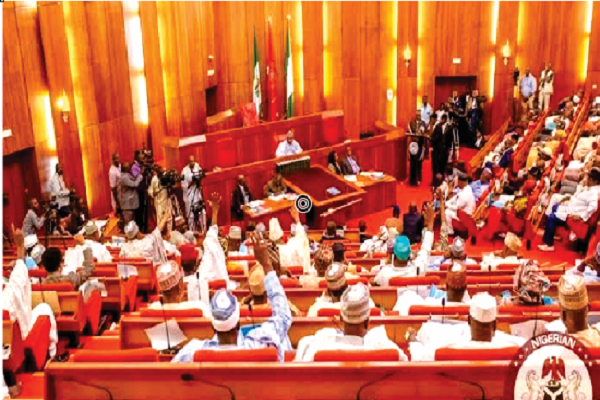
By Eze Okechukwu, Abuja
The Senate yesterday ordered mandatory health screening for every international passenger arriving Nigeria airports, seaports, land borders as Ebola resurfaces in the Democratic Republic of Congo with a scare case reported in the FCT.
The resolution followed an urgent motion by Senator Francis Fadahunsi, who warned that with Lassa fever already ravaging states, Nigeria cannot afford another outbreak.
“Protecting our entry points is far cheaper than managing Ebola,” Fadahunsi told the chamber.
Lawmakers insisted screening must be total and indiscriminate — no exemptions based on nationality or departure country because infected travellers can transit through safe-listed nations.
Senator Diket Plang raised the stakes further, demanding immediate funding for NCDC and Port Health Services, including release of withheld funds and emergency budget.
Senate President Godswill Akpabio said the Federal Government has started releasing Ebola response funds but ordered relevant committees to track every kobo.
“Ascertain whether the funds were released and judiciously utilised. Any outstanding debt must be released by the Finance Ministry without delay,” Akpabio directed.
At least 72 civilians who had been prospecting for gold in a border region of Sudan have been killed in air strikes, a regional rights group said.
Emergency Lawyers, based in the Sudanese capital, Khartoum, said jets targeted the so-called artisanal miners at a popular gold mining site on Saturday.
Neither the Egyptian government nor the de facto Sudanese authorities have so far commented.
Cairo has previously faced accusations of deadly strikes on gold prospectors as part of a crackdown on illicit activity along its southern border.
Emergency Lawyers noted the previous alleged attacks and said they represented not only a violation of Sudan’s sovereign territory but demonstrated the government’s lack of control over the region.
“The deliberate targeting of unarmed civilians violates international humanitarian law and the right to life,” it said in a statement on Sunday. “These acts may constitute war crimes.”
It noted that its death toll was provisional and could rise.
The Paris-based Sudan Tribune reported that the death toll could far exceed the number reported by Emergency Lawyers, citing a survivor of Saturday’s attack who said many more people had been injured.
Eyewitnesses said the attack began around 06:00 local time (04:00 GMT), with the aircraft firing more than five missiles directly at the miners’ camps, destroying them and excavation pits with people still inside, the newspaper wrote.
The Sudan Tribune reported claims in June that Egyptian forces had used drones and artillery to target artisanal mining sites in the same region, killing several, after sporadic incidents of Egyptian border guards of burning equipment, torching temporary shelters, and firing live ammunition to disperse mine workers.
Days later, Egypt’s border agency announced that it and the military had begun a sweeping security campaign along the border to foil illegal migration, drug smuggling and illegal mining.
At the same time, Sudan’s de facto leader announced an investigation into the alleged strikes, which were said to have killed dozens.
Gold lies at the core of the border tensions.
Sudan’s ongoing civil war has led to a surge in artisanal mining – and often risky practice conducted by civilians with rudimentary tools and without official permission – particularly in remote areas near its borders.
Gold-rich areas lie along porous borders in terrain historically associated with cross-border smuggling routes, with artisanally mined gold potentially feeding into those channels.
Egypt’s border force said in June that it had seized 86 tonnes of gold ore along with amateur prospecting equipment.
Artisanal mining has also reportedly continued in Sudan’s conflict zones and smuggled gold may be a source of income for armed insurgent groups.
This has raised concerns of illicit Sudanese gold undermining the legitimate Egyptian gold market.
Several German fighter jets will take part in the Northern Atlantic Treaty Organisation (NATO) annual nuclear defence exercise this week as troops from 17 countries take part in the Steadfast Noon drill.
The German Air Force said three Tornado jets will take part in the exercise hosted by Italy, which starts Tuesday and runs for about a week and a half.
The jets are normally stationed in Büchel in the German state of Rhineland-Palatinate.
NATO has not revealed the exercise scenario but said its scale would be comparable to last year’s drill, which involved around 2,000 personnel and more than 70 aircraft.
Last week, NATO’s head of nuclear policy, Nassima Barrows, said the exercise was designed to demonstrate the alliance’s readiness and ability to defend its territory.
No real nuclear weapons will be used, she added.
NATO said the exercise was not linked to current events or directed at any specific country.
Military experts say the drills, held regularly in October, include practising the safe transport of weapons from underground storage facilities to aircraft and mounting them on fighter jets.
Only practice bombs without real nuclear warheads are used during the drills.




FG Urged to Engage Bishop Oyedepo, Spiritual Sons Leadership Models on National Development
ShareBy David Torough, Abuja A call has been made on the Nigerian Government to engage prominent Nigerian Christian leaders, including...
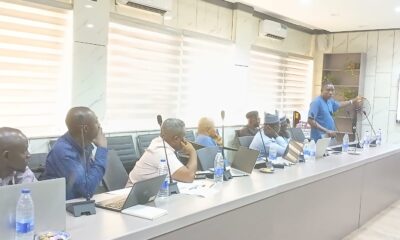

Regional Devt Ministry Trains Commissions’ Officers on Digital Quarterly Reporting Template
ShareBy David Torough, Abuja The Ministry of Regional Development has commenced a capacity-building training programme for desk officers from the...


Actress Ademoye Rejects Apology over Movie Demonetization
ShareNollywood actress and filmmaker, Bimbo Ademoye, has rejected an apology from a man who filed a copyright claim against her...


Army Rescues 21 Kidnap Victims after Gun Battle with Terrorists in Niger
ShareBy David Torough, Abuja Troops of the Nigerian Army’s 18 Brigade have rescued 21 kidnapped victims following a fierce gun...


CBN Digitalises Fiscal Data Reporting Across 36 States, FCT
ShareBy Tony Obiechina, Abuja The Central Bank of Nigeria (CBN) has commenced the digitalisation of sub-national fiscal data reporting across...


NNPC Audit: Kyari Denies N210trn Missing Funds
ShareBy David Torough, Abuja Former Group Chief Executive Officer of the Nigerian National Petroleum Company Limited (NNPCL), Mele Kyari, has...
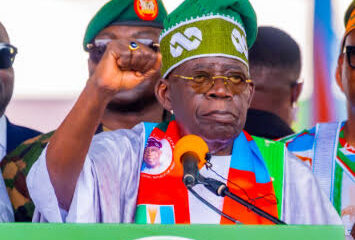

2027: APC Bets on Reforms, Unveils Tinubu’s Blueprint
ShareBy Eddy Ochigbo, Abuja The All Progressives Congress (APC) has unveiled an ambitious four-pillar manifesto for President Bola Tinubu’s proposed...


Troops Neutralise over 60 Terrorists, Rescue70 Kidnap Victims in One Week
Share By David Torough, Abuja The Armed Forces of Nigeria (AFN) have neutralised more than 60 terrorists and rescued at...


Accident Victims’ Remembrance Day: FRSC Records 7,156 Crashes, 3,445 Deaths
ShareThe Federal Road Safety Corps (FRSC) has recorded 7,156 road traffic crashes, resulting in 3,445 deaths and 22,292 injuries across...


Mutfwang Inaugurates State-owned Security Outfit, Operation Rainbow
ShareFrom Jude Dangwam, Jos Plateau State Governor, Caleb Manasseh Mutfwang, has inaugurated 353 operatives of the state-owned security outfit, Operation...