
POLITICS
We Won’t Tamper with LG Funds, Diri Assures

From Mike Tayese, Yenagoa
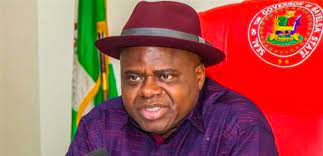
Governor of Bayelsa State, Senator Douye Diri, on Monday, swore in 14 new commissioners, newly-elected chairmen of the eight local government councils, their vice chairmen as well as the chairman of the Bayelsa State Board of Internal Revenue, Daniel Iniekezimene.
The ceremony took place inside the Executive Council Chambers of Government House, Yenagoa.
The re-appointed cabinet members, who served in the governor’s first term and retained their portfolios, include Biriyai Dambo SAN (Attorney-General and Commissioner for Justice), Moses Teibowei (Works and Infrastructure), Maxwell Ebibai (Finance), Dr. Gentle Emelah (Education), Daniel Igali (Sports Development) and Preye Brodricks (Special Duties, Bayelsa East).
Others who returned but were re-deployed are Dr Ebieri Jones, who was assigned to Trade and Industry from Mineral Resources while Flint George, who served as Special Duties, Bayelsa Central, was assigned to Budget and Economic Planning.
The newly appointed commissioners are Mrs Ebiwou Koku-Obiyai (Labour and Productivity), Michael Magbisa (Special Duties, Bayelsa West), Elizabeth Bidei (Women Affairs), Peter Afagha (Mineral Resources), and Komuku Kharim (Power).
Senator Diri said the ceremony marked a pivotal moment in the state’s journey as he commences his second term.
He said during the first tenure, the administration laid the groundwork for a prosperous Bayelsa across various sectors, noting, however, that there was still much work to be done.
According to him, “this event underscores your dedication to fostering inclusive prosperity for all Bayelsans. On behalf of the government and the people of our state, I extend my sincere congratulations to each of you.
“As we embark on this journey, let us remember that our success will be judged not by individual accomplishments but by the collective impact we make.
“Your selection and election among a pool of highly qualified persons inspire confidence in your ability to serve with utmost commitment and distinction, fulfilling the aspirations of all Bayelsans.”
He charged them to initiate legacy projects and programmes in their various ministries as their role carried significant responsibilities to accelerate development of the state.
The governor equally charged them to exercise prudent financial management to ensure efficient resource utilisation and foster collaboration among their peers for effective synergy, as their functions complement each other.
He added that his administration would define measurable indicators to evaluate the periodic performance of each ministry and track progress towards set objectives.
The governor further urged the commissioners to establish strong connections with the grassroots, understand their needs, and incorporate them into government policies.
To the newly sworn-in local government chairmen and vice chairmen, Diri stressed that the Prosperity Government was poised to strengthen the third-tier of government to foster development in communities.
“I want you to uphold the tenets of transparency, consultation and keep in touch with the people as you are the closest to the grassroots. Ensure that you live a peaceful and quiet life. We want to see peace and development in your local governments.
“We will not tamper with local government funds. Rather we will assist you with your development. And l reiterate that local government chairmen should desist from obtaining loans with interest.”
The new council chairmen are Lucky Febo (Brass), Isaac Oniye (Ekeremor), Tariye Isaac (Kolokuma/Opokuma ), David Alagoa (Nembe), Golden Jeremiah (Ogbia), Mrs. Alice Tangi (Sagbama), Target Segibo (Southern Ijaw) and Boludisiye Ndiwari (Yenagoa).
The state’s helmsman also encouraged the chairmen to maintain the reforms initiated during the administration’s first term and reaffirmed the importance of operating from their council headquarters as well as prioritising the prompt payment of salaries.
He equally enjoined them to leverage on their recent four-day orientation programme to enhance governance and improve service delivery in their various local government areas.
While inaugurating chairman of the Bayelsa State Board of Internal Revenue, Diri charged Mr. Eniekezimene to devise strategies to enhance the state’s internally generated revenue and partner with relevant agencies to strengthen the tax/revenue generation process as well as promptly address loopholes in the system.
Describing internal revenue as very crucial to achieving the objectives of the government, he noted that the board plays a critical role in the financial well-being of the state.
“We acknowledge the challenges with revenue generation, stemming from federal laws and our relationships with IOCs and business operators within the state. I believe our revenue still falls short of expectations.”
By Raphael Atuu, Abuja
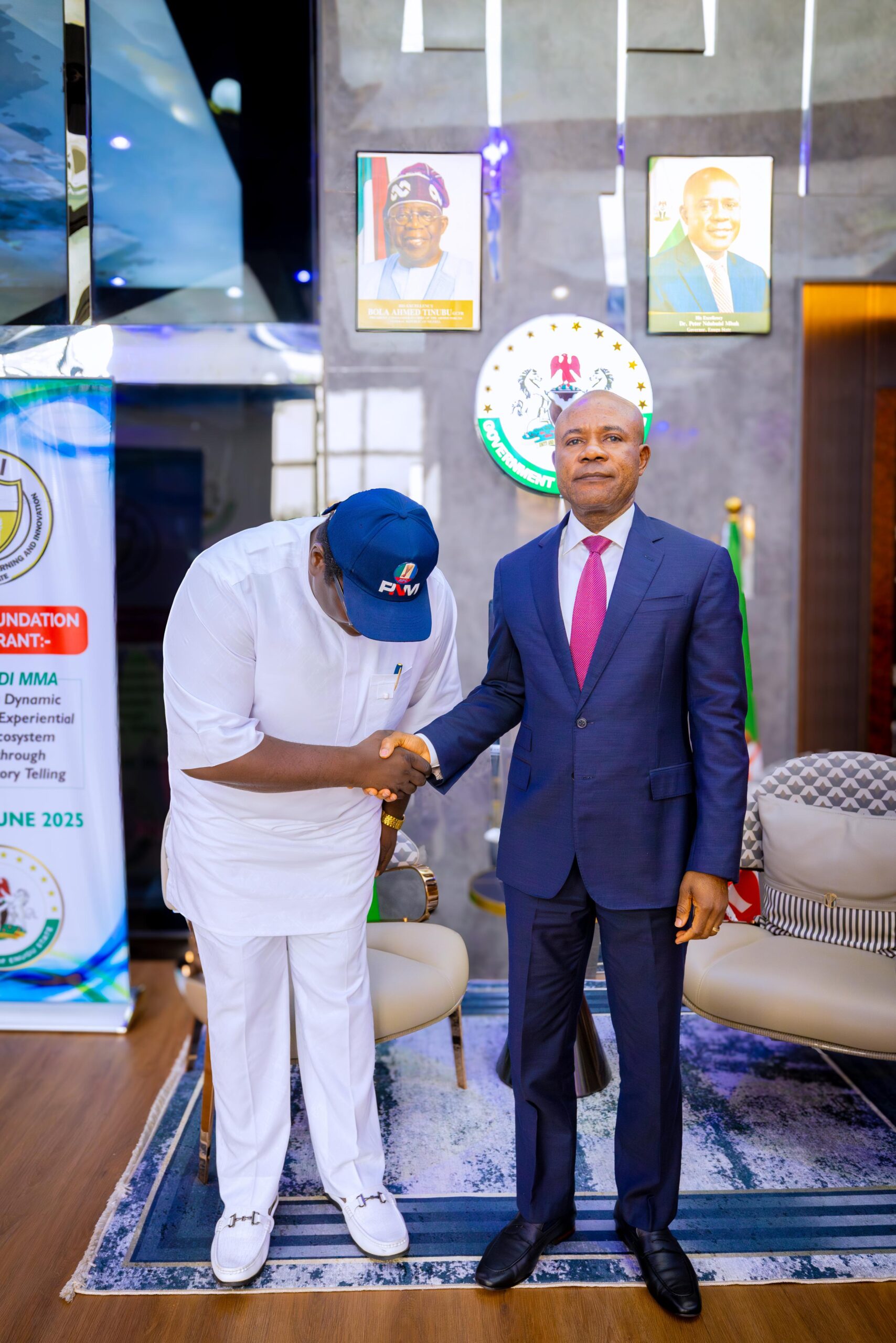
Barrister Henry Nnanna Okeke, a member of the Governing Council of Enugu State Polytechnic, Iwollo, has commended. Enugu State Governor ,His Excellency ,Dr Peter Ndubuisi Mbah for clearing verified pension backlogs and approved a ₦32 billion package to settle legacy gratuity arrears dating back to the year 2000 outstanding pension arrears owed to pensioners in Enugu State.
Okeke described the reported development as a significant step towards improving the welfare of retired civil servants who devoted their productive years to the service of the state.
He praised Governor Mbah for fulfilling his promise to pensioners, noting that the payment would bring relief to retirees who depend on their pensions and other entitlements to meet their daily needs.
According to him, pensioners deserve to enjoy the benefits of their years of service without unnecessary hardship, particularly after contributing to the growth and development of Enugu State.
The polytechnic governing council member noted that addressing pension arrears was an important demonstration of responsible leadership and a commitment to the welfare of citizens.
He said the reported clearance of the arrears would help ease the financial burden on affected pensioners and their families, while restoring confidence among retirees who had been awaiting their entitlements.
Okeke further urged the state government to sustain the progress by ensuring regular pension payments and preventing the accumulation of fresh arrears.
He stressed that the welfare of pensioners should remain a priority, adding that retirees deserve dignity, financial security and timely access to their entitlements after years of dedicated public service.
The commendation reflects the importance of policies that place the welfare of citizens at the centre of governance and ensure that government commitments translate into tangible benefits for the people.
Okeke reaffirmed his support for initiatives aimed at promoting good governance, accountability and sustainable development in Enugu State.
He expressed optimism that the Mbah administration would continue to implement policies and programmes that improve the living conditions of residents and strengthen the state’s development agenda.

By Tambaya Julius, Abuja
The Trade Union Congress of Nigeria (TUC) has rejected the Federal Government’s proposed N70,000 wage award, demanding an immediate salary increase for workers and the implementation of outstanding agreements with health workers under the Joint Health Sector Unions (JOHESU).
The congress said temporary wage awards were inadequate to address the growing economic hardship facing Nigerian workers, insisting that the government should prioritise permanent salary increases over relief measures that might not be implemented consistently.
In a statement issued on Wednesday, TUC President, Festus Osifo, and Secretary-General, N.
A. Toro, accused the Federal Government of failing to fully implement the 2023 wage award and honour a seven-month-old agreement on the adjustment of the Consolidated Health Salary Structure (CONHESS) for health workers.The statement followed a National Administrative Council meeting held in Abuja on October 8, 2026.
The congress disclosed that it had written to the Federal Government through the Office of the Secretary to the Government of the Federation, seeking an immediate salary review to cushion the impact of rising living costs.
According to the TUC, the government does not need to wait for negotiations on the national minimum wage before increasing workers’ salaries, arguing that there is no legal ceiling on how much employers can pay their employees.
“The Federal Government should review increasing workers’ salaries. This was hinged on the fact that the government does not require the minimum wage to be negotiated before increasing workers’ pay, as there is no maximum wage law in the country,” the statement said.
The congress proposed that the government increase the salary of the lowest-paid worker to N300,000 from the current N70,000, with appropriate consequential adjustments across other salary grades.
It maintained that negotiations on the national minimum wage should not be used to delay urgent salary increases for workers struggling with rising food, transportation, healthcare and other essential expenses.
The TUC said its leadership had held consultations with government officials, including the Secretary to the Government of the Federation, during which it rejected the proposed wage award.
Explaining its position, the congress said the previous wage award negotiated in October 2023 had not been fully implemented, raising concerns about the government’s commitment to another temporary relief arrangement.
“The wage award agreed between FGN and organised labour on the 2nd of October 2023 was to be implemented until a minimum wage was agreed in 2024 but was never implemented holistically,” it said.
The congress alleged that some workers were still owed one or two months’ payments, while others had not received the allowance at all.
It added that payments were irregular even for beneficiaries, with some workers experiencing delays of one or two months and having to make repeated demands before receiving their entitlements.
The TUC further claimed that more than 80 per cent of states and workers in the informal sector had not benefited from any form of wage award.
“How do we go back to the same wage award that never benefited all workers? How can workers be expected to trust fresh promises when previous obligations remain outstanding?” the congress asked.
It insisted that permanent salary increases would provide more dependable relief than temporary allowances, which it said had failed to reach workers uniformly.
“Negotiations of a new national minimum wage must not become an excuse for postponing urgent pay increment,” the statement added.
Beyond salary increases, the congress called on federal, state and local governments to introduce measurable interventions to reduce the cost of essential goods and services.
It also urged the authorities to ensure timely payment of salaries and pensions, protect existing jobs, curb exploitative labour practices and revitalise the productive sector to create decent employment opportunities.
According to the TUC, economic hardship affects not only federal workers but also state and local government employees, pensioners, private-sector workers and people in the informal economy.
It called for adequately funded interventions with clear implementation timelines, stressing that government announcements must translate into tangible improvements in Nigerians’ living conditions.
The congress also accused the Federal Government of failing to honour an agreement reached with JOHESU following months of industrial action.
It said Osifo led a delegation of organised labour, including JOHESU leaders and a representative of another labour congress, in negotiations aimed at resolving the dispute.
The negotiations culminated in a conciliation meeting at the Federal Ministry of Labour and Employment, where both parties agreed on a communiqué.
The Federal Government delegation was led by the Minister of Labour and Employment, Dr Muhammad Maigari Dingyadi, alongside the Coordinating Minister of Health and Social Welfare, Prof. Muhammad Ali Pate, and the then Minister of Finance and Coordinating Minister of the Economy, Wale Edun.
The TUC said JOHESU suspended its industrial action in good faith after the agreement was signed but accused the government of failing to fulfil its own commitments.
According to the congress, the agreement provided for the resolution of outstanding issues relating to the adjustment of CONHESS. However, it alleged that the adjustment remained unimplemented seven months after the agreement.
“While the workers have kept their side of the bargain, the government hasn’t kept its side of the agreement,” the statement said.
The TUC described the delay as a breach of good faith, warning that failure to honour agreements could undermine confidence in collective bargaining between the government and organised labour.
It demanded the immediate implementation of the CONHESS adjustment, publication of a clear implementation timetable, provision of the necessary budgetary allocations and resolution of all outstanding issues in consultation with the relevant unions.
The congress maintained that health workers should not be expected to continue providing essential services while commitments made to them remained unfulfilled.
“The TUC demands tangible action, not further assurances,” it said, pledging to support the affected unions and pursue lawful measures to compel the government to honour the agreement.
Reaffirming its position, the congress said workers were not seeking favours but demanding improved living conditions and respect for their rights.
“Workers’ welfare is not a privilege. Agreements must be honoured. Workers’ rights must be respected. Government must comply,” the statement added.
The TUC said it was awaiting the outcome of its scheduled meeting with the Federal Government before deciding on its next course of action. It did not announce an immediate nationwide strike.
The dispute comes amid Nigeria’s prolonged cost-of-living crisis, which has intensified pressure on organised labour to secure higher wages and measures to protect workers’ purchasing power.
In July 2024, President Bola Tinubu signed the new national minimum wage law, raising the statutory minimum monthly wage from N30,000 to N70,000 following negotiations between the Federal Government and organised labour.
The agreement followed months of disagreement over workers’ earnings amid the effects of petrol subsidy removal and other economic reforms on transportation, food and household expenses.
Although the N70,000 minimum wage established a new statutory floor for eligible workers, it did not automatically resolve demands for adjustments across salary grades or address the broader rise in the cost of living.
The 2023 wage award was introduced as an interim relief measure during negotiations over the new minimum wage. The TUC’s latest position has renewed concerns about the implementation of that arrangement, with the congress insisting that future relief should focus on permanent salary increases.
The JOHESU dispute presents a separate but related challenge involving remuneration and the implementation of agreements in the health sector.
The congress said it would decide on its next steps after receiving the outcome of its scheduled meeting with the Federal Government.
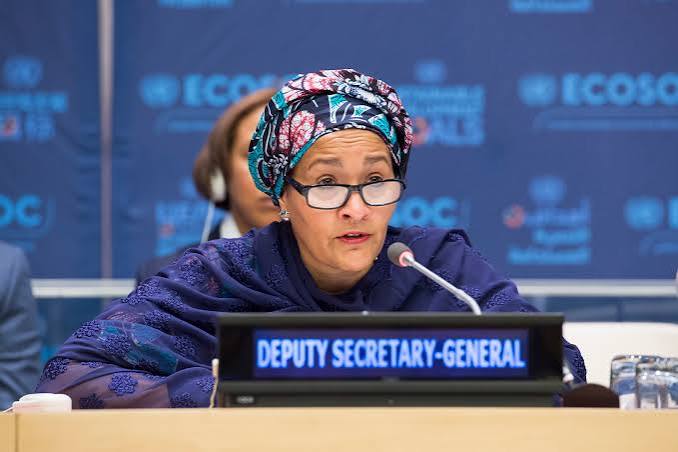
UN Deputy Secretary-General Amina Mohammed, has called for stronger intelligence sharing, public trust and responsible use of emerging technologies to strengthen Africa’s fight against terrorism and violent extremism.
Mohammed made the call in virtual remarks at the High-Level African Lessons Learned Forum on Counter Terrorism Cooperation, Intelligence Sharing and Emerging Technologies in Abuja on Monday.
She said terrorism continued to devastate families and communities across Nigeria’s North-East, the Lake Chad Basin, the Sahel and parts of East and Southern Africa.
“In Nigeria we know the cost of this scourge, the toll it is taking on families and communities across the North-East and the Lake Chad Basin,” she said.
Mohammed said the violence was claiming lives, displacing communities, disrupting economic activities and undermining development in vulnerable areas.
“Behind each of these numbers are people whose hopes for their children are no different from our own,” she said.
She welcomed the forum’s practical approach to examining successful counter-terrorism strategies, identifying failures and sharing lessons across countries.
The UN deputy secretary-general identified trust, emerging technology and community-centred interventions as critical priorities for strengthening counter-terrorism cooperation.
“Intelligence sharing begins with trust. That means trust between agencies, between nations and countries, and between the state and its people,” she said.
She said communities were more likely to share information when security institutions were accountable, justice was accessible and human rights were respected.
She stressed that trust was essential to building effective partnerships between citizens and security agencies in preventing terrorist attacks.
On emerging technologies, Mohammed warned that terrorist groups were adapting rapidly and exploiting artificial intelligence and synthetic media for recruitment and propaganda.
She noted that the same technologies could support early warning and prevention if deployed with appropriate safeguards and effective oversight.
She cautioned that military operations alone would not bring an end to terrorism, urging governments to complement security measures with rehabilitation, reintegration, justice and community support.
She cited Nigeria’s Operation Safe Corridor and similar programmes as examples of efforts to help individuals leave armed groups and rebuild their lives.
According to her, sustainable reintegration requires justice for victims and adequate support for communities receiving former associates of armed groups.
The UN official also called for greater investment in young people through education, decent employment and accessible public services.
She said addressing the needs of vulnerable populations was particularly urgent, with only four years remaining to achieve the 2030 Agenda for Sustainable Development.
“The United Nations stands with you. We will continue supporting solutions that Africa designs and leads,” she said.
Mohammed expressed hope that the lessons shared at the forum would strengthen cooperation and produce tangible improvements in the lives of communities affected by terrorism.
In his remarks, the European Union (EU) Ambassador to Nigeria, Mignot Gautier, announced 20 million euros in non-lethal military equipment to support the Nigerian Armed Forces in the fight against terrorism.
Gaitier said the support approved under the European Peace Facility (EPF), was designed to respond to Nigeria’s needs in tackling terrorism.
“Last week, the EU announced its decision to use for the first time the EPF to support the Nigerian armed forces in their fight against terrorism with 20 million euros of non-lethal equipment,” the ambassador said.
He added that the latest support complemented the EU’s longstanding assistance to the Multinational Joint Task Force (MNJTF) operating around the Lake Chad Basin.
According to him, the EPF has provided a total of 285 million euros in support of the multinational force over several years.
The ambassador reaffirmed the EU’s commitment to strengthening counter-terrorism cooperation with Nigeria, the African Union and other African partners.
He said terrorism and violent extremism required coordinated international responses, stronger intelligence sharing and sustained partnerships among security agencies and judicial institutions.
“Intelligence sharing is crucial and involves secure channels between agencies and the judicial system,” he emphasised.
The Country Representative, United Nations Office on Drugs and Crime (UNODC), Cheikh Touré, called for African-led counter-terrorism strategies, warning that terrorist groups were increasingly exploiting cross-border networks, organised crime and emerging technologies.
Touré said Africa had become a major centre of global terrorism, with the Sahel accounting for more than half of all terrorism-related deaths worldwide.
He said four of the five countries responsible for nearly 70 per cent of global terrorism deaths in the previous year were African: Burkina Faso, Nigeria, Niger and the Democratic Republic of the Congo.
Touré said terrorist groups were strengthening cross-border operations, collaborating with organised criminal networks and exploiting improvised explosive devices, drones, digital platforms and artificial intelligence.
He cautioned against adopting international counter-terrorism practices without considering the specific needs and institutional capacities of African countries.
“The groups we confront cross borders with a fluency that too often exceeds our own. Our response therefore must be equally fluent and be African-led,” he said.
He reaffirmed UNODC’s commitment to working through African institutions and regional frameworks, including the African Union, ECOWAS and the Abuja Process.
The forum brings together African and international stakeholders to discuss intelligence sharing, emerging technologies, counter-terrorism financing and strategies for preventing and countering violent extremism.



Henry Okeke Commends Mbah for Clearing Pension Arrears in Enugu
ShareBy Raphael Atuu, Abuja Barrister Henry Nnanna Okeke, a member of the Governing Council of Enugu State Polytechnic, Iwollo, has...


2027: ADC Urges ECOWAS to Insist on Credible Elections in Nigeria
ShareThe National Chairman of the African Democratic Congress (ADC), Sen. David Mark, has urged the Economic Community of West African...
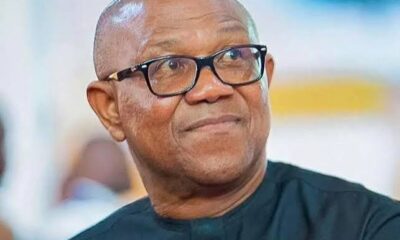

Obi Promises Emergency Measures on Security, Corruption, Poverty
SharePresidential candidate of the Nigeria Democratic Congress (NDC), Peter Obi, has promised emergency measures to tackle insecurity, corruption, hunger and...


Why I Chose Music over Football – Mr Eazi
ShareAfrobeats star Mr Eazi has claimed that English club Chelsea FC wanted to sign him before they signed former Super...


Court Grants Odumodublvck’s Lawyer Prayer for Adjournment
ShareAn Abuja High Court sitting in Life Camp on Thursday, granted another adjournment in the assault trial of a rapper,...


RMD Makes History as PAO Conference Keynote Speaker
ShareVeteran Nollywood actor Richard Mofe-Damijo, popularly known as RMD, is set to become the first male motion-picture practitioner to deliver...
Telecom Vandalism: The Human Cost of Nigeria’s Network Disruptions
ShareBy Usman Aliyu Going into labour in Benin City, Edo, Grace Osagie anticipated calling her husband, but unexpected phone issues...

Over 74.4 Per Cent of Households Back Govt’s Right to Collect Taxes, says NESG
ShareBy Tony Obiechina, Abuja The Nigerian Economic Summit Group (NESG) has said that 74.4 per cent of households recognise the...
NAFDAC Moves Against Fake Products, Destroys N8bn Seizure
ShareBy Elijah Oguche, Abuja The National Agency for Food and Drug Administration and Control (NAFDAC) has destroyed counterfeit, banned, adulterated...
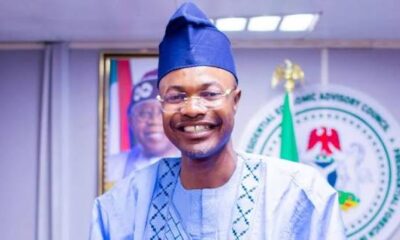

ICPC Accuses Fake Investment Agency DG of N30.8bn Request From FG
ShareBy Tambaya Julius, Abuja The Independent Corrupt Practices and Other Related Offences Commission (ICPC) has arraigned Adeniyi Adeyemi, who allegedly...