
DEFENCE
A Look at Buratai’s Rebranded Nigerian Army

By Dan Amor
This year’s Armed Forces Remembrance Day took place on January 15, about a month ago. It is usually an annual event during which the country and her citizens remember our fallen heroes -those who paid the supreme price to protect the territorial integrity of our beloved country.
Nigerians use the date to celebrate not only members of our armed forces who died during the Nigerian Civil War (1967 – 1970), but also Nigerian soldiers who died during the Second World War or World War 2, a global war that lasted between 1939 and 1945 when the principal belligerents also known as the Axis powers – Germany, Italy and Japan – and the Allies – France, Great Britain, the United States of America, the Soviet Union, and to a lesser extent, China, fought themselves with modern weapons.
It is also an event used to remember Nigerian soldiers who died during the United Nations peace-keeping operations since 1945 and peace-keeping operations in Africa like the Congo crisis of the 1960s, the Liberian and Serra Leonian civil wars in which ECOMOG soldiers led by Nigeria played a very significant role. This year’s Armed Forces Remembrance Day was also used to commemorate the 50th anniversary of the end of the Nigerian Civil War.
As a Nigerian child whose father also fought in the World War 2, I chose to use this piece to celebrate the Nigerian Army and its leadership, especially in these trying times. It is heart-warming to note that the Army, under the able leadership of Lt. Gen. Tukur Yusuf Buratai, has been rebranded beyond words.
Leadership is about using people and resources to achieve maximum results. A leader’s history of successes and failures makes a big difference in his credibility. To build trust, a leader must exemplify these qualities: competence, connection and character.
People will forgive occasional mistakes based on ability, especially if they can see that you’re still growing as a leader. But they won’t trust someone who has slips in character. In that area, even occasional lapses are lethal. No leader can break trust with his people and expect to keep influencing them. Trust makes leadership possible. This is what the Chief of Army Staff, Lieutenant General Tukur Yusuf Buratai, exemplifies.
At the emergence of the Muhammadu Buhari administration on May 29, 2015, the fear of Boko Haram, the Islamist terrorist organization which had crippled economic and social activities in the North East geopolitical zone of the country was the beginning of wisdom. To stem the tide of this menace, President Buhari announced the relocation of Army Headquarters from Abuja to Maiduguri, the theatre of war. This was indubitably based on the necessity to intensify the fight against the terrorists. In fact, through alleged official negligence, conspiracy or collusion of previous leadership of the military, Boko Haram became a terrifying force taking tens of thousands of lives, destroying property worth billions of naira and capturing several towns and villages and even local government areas thereby rendering hundreds of thousands of Nigerians homeless.
Consequently, Lieutenant General Tukur Yusuf Buratai, the 26th Chief of Army Staff (COAS) who was appointed on July 13, 2015, galvanized himself and swung into action. Launching his campaign on an enduring philosophy and vision of an army which could inculcate the ideals of discipline, professionalism, esprit de corps and hard work, Buratai told his officers, rank and file that his administration would instil and imbibe the ideals of a professionally responsive army which must have respect for and be loyal to the constitution of the Federal Republic of Nigeria. Under him and in just four years, renewed vigour and a rare sense of direction have been introduced to the Nigerian Army. Aside from a potent manifestation of professionalism amongst the rank and file and the officers Corp, there is a high degree of human rights observance in the army. Also, there is a monumental degree of infrastructural development across all the formations of the Nigerian Army.
There is, indeed, a remarkable increase in the Army equipment holdings and improved maintenance culture. The army is no more on the defensive, as the organization now defines the territory of combat and the battle taken to the doorsteps of the aggressors. Under Buratai the Nigerian Army is a consummate praetorian guard of the nation’s inviolability.
As a practical leader, Buratai travels to war fronts in the North East to pray and felicitate with his highly motivated troops during Eid-el-Fitr. During Christmas, he visits several units and formations, and personally assesses their operations. Through specific directives, he proactively addresses some of the identified challenges of the troops.
This is how it should be. Using the template tagged Operation “Lafiya dole”, the Nigerian Army, under his command, has identified the challenges in the dynamics of modern warfare which requires constant innovation, research, intelligence gathering mechanism, advancement of technology and the building of local capacity. In consequence, therefore, the COAS has set in motion a deliberate programme for the immediate repair and refitting of all the abandoned and unserviceable weapons and equipment in the Army inventory. In fact, about 178 armoured fighting vehicles of various types are completely refurbished by the Army electrical and mechanical engineers at various workshops across the country. This has put paid to the over-reliance on foreign equipment and spares which was a huge setback in the immediate past. In fact, what the Army could not achieve in thirty years has been achieved within just four years of Gen. Buratai in the saddle as Chief of Army Staff.
Expectedly, this feat has attracted odium from his detractors who have repeatedly tried to haul mud on him. But he has refused to be distracted by such invidious campaign of calumny and media trials. Rather, he has kept his head above waters culminating in the recent victory of our gallant troops over the Boko Haram insurgents. Indeed, fifth columnists can go to town with their verbiage and vituperation that the insurgents are still not totally defeated given their occasional strikes at targeted objects and ambush attacks. But they fail to understand that this is a nonconventional war in which the terrorists do not wear uniforms. How many times have the insurgents infiltrated Abuja, the Federal Capital Territory as was the case in the past when detonation of bombs in Abuja was almost predictable?
A man of few words, Buratai blended words with actions, and by December 2015, barely five months into his appointment, Boko Haram was technically decimated leading to their total defeat in December 2016. Unarguably, the last vestiges of the Boko Haram insurgency were displaced from the Sambisa Forests at “Camp Zero”.
The gallant Nigerian troops also dismantled the official flag of the terrorists and have liberated nearly 20 local government areas hitherto seized by the anarchists. An accomplished senior infantry officer who was commissioned in 1983 and has had multiple command, administrative and institutional appointments in his illustrious military career, Buratai gained admission into the prestigious Nigerian Defence Academy (NDA), Kaduna as a member of the 29 Regular Combatant Course on January 3, 1981. A highly decorated senior military officer with several local and international awards, Gen. Buratai has a barrage of both military and academic qualifications and has served in various military formations in Nigeria.
Under him, all information regarding the activities of the Army is known to the Nigerian public as against the past in which everything was shrouded in secrecy and cover ups leading to massive frauds. Nigerian troops are now properly motivated, all thanks to his eclectic leadership.
Amor is on the Editorial Board of The Nigerian Tabloid.






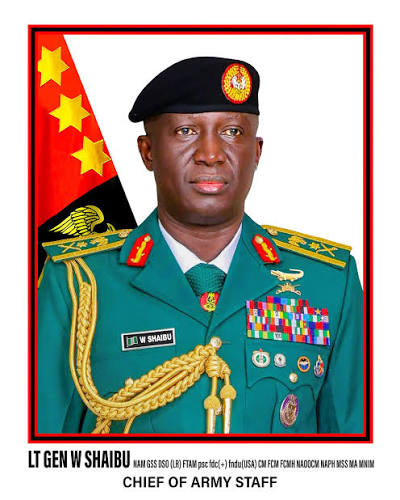
The Nigerian Army is strengthening its aviation quality management systems to improve flight safety, aircraft reliability and operational readiness.
The Chief of Army Staff (COAS), Lt.-Gen. Waidi Shaibu, stated this at the opening of the Nigerian Army Aviation Command Workshop on Aviation Quality Management Systems on Monday in Abuja.
Represented by the Chief of Standard and Evaluation, Maj.
-Gen. Thompson Ugiagbe, the COAS said the effectiveness of army aviation depended on robust quality management systems.“The effectiveness and sustainability of these capabilities depend not only on the availability of aircraft and trained personnel, but also on robust quality management systems that ensure safe, standardised and reliable aviation operations,” he said.
Shaibu said aviation operations required the highest standards of discipline, professionalism, standardisation and continuous improvement.
He said the systems would help identify risks, ensure compliance with approved standards and prevent recurring deficiencies.
“As Nigerian Army Aviation continues to expand its operational and technical capabilities, institutionalising such a system is essential to building a resilient aviation organisation and sustaining operational readiness,” he said.
The army chief noted that since the re-establishment of Nigerian Army Aviation in 2014, efforts had been made to develop the platforms, personnel, infrastructure and systems required to support land operations.
He said the workshop would provide an opportunity for participants to examine practical approaches to quality assurance, safety management, maintenance practices, documentation and standardisation.
Shaibu expressed confidence that the deliberations would produce actionable recommendations for institutionalising an effective quality management system across Nigerian Army Aviation.
He urged participants to develop sustainable measures to strengthen aviation safety culture, improve operational processes and enhance the reliability of aviation assets.
The Commander, Nigerian Army Aviation Command, Brig.-Gen. Al-Amin Ibrahim said quality management was fundamental to aviation safety, aircraft availability, mission effectiveness and combat readiness.
“For the Nigerian Army Aviation Command, quality is not merely an administrative requirement; it is fundamental to operational safety, aircraft availability, mission effectiveness, accountability and sustained combat readiness,” Ibrahim said.
He said the workshop was designed to establish a structured framework for standardisation, accountability, disciplined documentation, effective monitoring and continuous improvement across the Command.
The commander stressed that quality management should be embraced as a shared responsibility by all personnel involved in aviation operations.
“Quality must also be embraced as a culture. It is not the sole responsibility of an inspectorate or quality assurance office.
“Rather, it is the responsibility of every officer, soldier and civilian staff member involved in planning, flying, maintenance, logistics, administration, training and support,” he said.
Ibrahim said the Command must prioritise preventing deficiencies rather than waiting for them to occur before taking corrective action.
He urged participants to develop practical recommendations with measurable outcomes that could be implemented and monitored across the Command.
“Our emphasis must be on prevention through discipline, effective supervision, risk awareness, adherence to approved procedures, timely reporting and organisational learning,” he said.
Ibrahim added that the proceedings and recommendations would be compiled into a compendium to guide the implementation, monitoring and periodic review of quality management initiatives.
The five-day workshop, which began on Monday, ends on Friday, brought together stakeholders to strengthen quality management and promote a culture of operational excellence in Nigerian Army Aviation. (NAN)
From Ifeanyichukwu Nwannah, Gusau
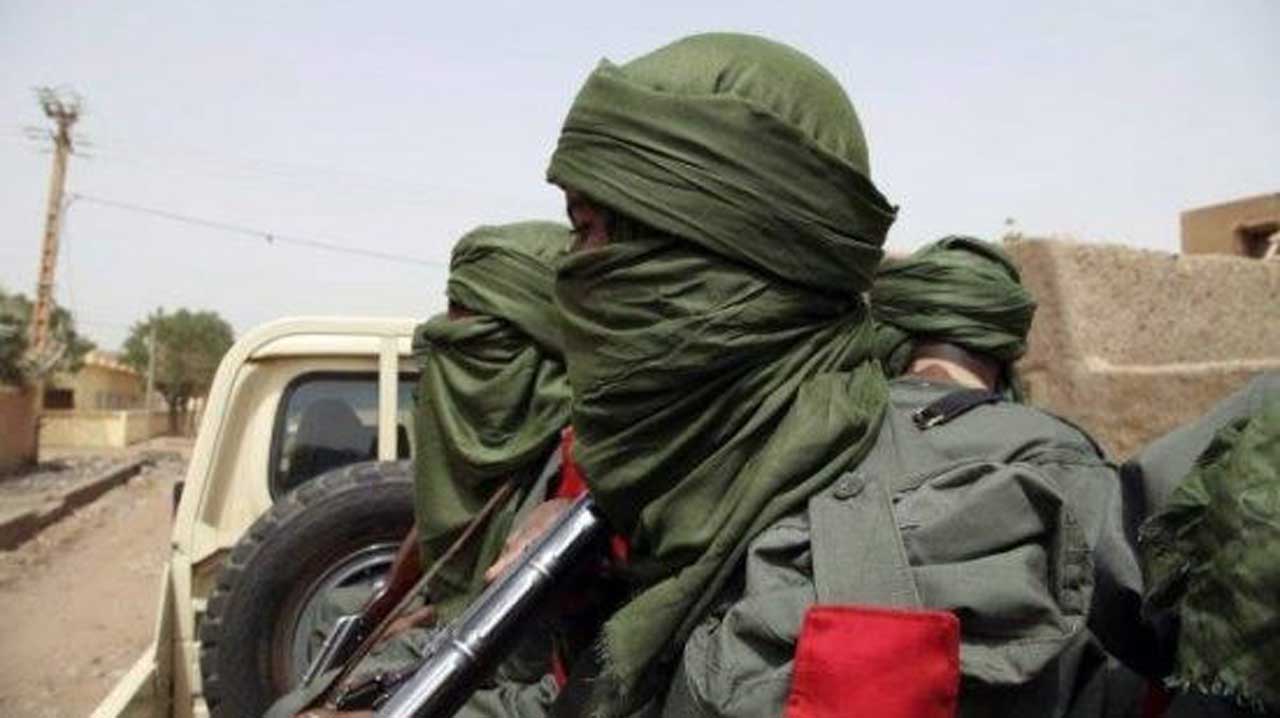
No fewer than 22 persons including four soldiers have been killed by ravaging bandits along Gwashi- Nassarawa axis on Bukkuyum local government area of Zamfara State.
This medium also gathered that three communities in Dansadau axis of Maru Local Government Area of the State have been displaced after several terror attacks were unleashed on them by the notorious bandits.
It was gathered that over 400 community members of the affected Communities have deserted the area for the safety of their lives, after a series of separate attacks on the three villages and setting ablaze over 12 vehicles.
This medium also gathered that the ravaging bandits imposed a N50 million levy on communities in the area, even though the bandits burnt over 12 vehicles and displaced three villages.
The killing of 22 people including 4 soldiers, along Gwashi- Nassaawa axis, the lawmaker, representing Bukkuyum in the Zamfara State House of Assembly, Hon. Hamisu Faru, confirmed that the terrorists ambushed the victims, saying that the bandits unleashed terror attack on the people on Sunday while the soldiers were on duty in the area.
According to him, the bodies of some of the victims were yet to be recovered as at the time of filing this report.
The Media Information Officer of Operation Fansan Yamma OPFY, Lt. Col. Aliyu Danja, also confirmed this to newsmen in Gusau, the State capital on Monday.
Reacting to the attacks, Zamfara State chapter of the National Democratic Congress (NDC), condemned the attacks, saying that the security situation in the State is deteriorating.
In a statement issued by State publicity secretary of the party, Kassim Almustapha Kayatawa, said the party commiserated with the families of the victims, including the fallen soldiers.
“The NDC Zamfara State chapter, under the leadership of Alhaji Surajo Garba Maikatako, condemns in strong terms the barbaric attacks in Dansadau and Bukkuyum and mourns the victims,” the statement said.
The State chapter of the party called on the federal government and the Zamfara State Government to urgently deploy more security personnel to vulnerable communities in Dansadau, Bukkuyum and other flashpoints in the State.
Speaking further, the party also urged both federal and State governments to adopt a comprehensive strategy to address banditry and prevent further attacks in the State.
The party criticised Governor Dauda Lawal over his reported trip to Ethiopia, while the State was mourning the victims, urging him to cut short the visit and return to address the security situation.
“While the people are being attacked, the governor is said to be in Ethiopia as part of a federal government delegation. We call on him to cut short the trip and return to address the security challenges,” the party said.
The party further urged security agencies to intensify operations to restore peace and prevent further loss of lives and property.
All efforts to get the reaction of the Zamfara State Police Command’s spokesman, DSP Abubakar Yazid proved abortive at the time of filing this report.
From Ifeanyichukwu Nwannah, Gusau
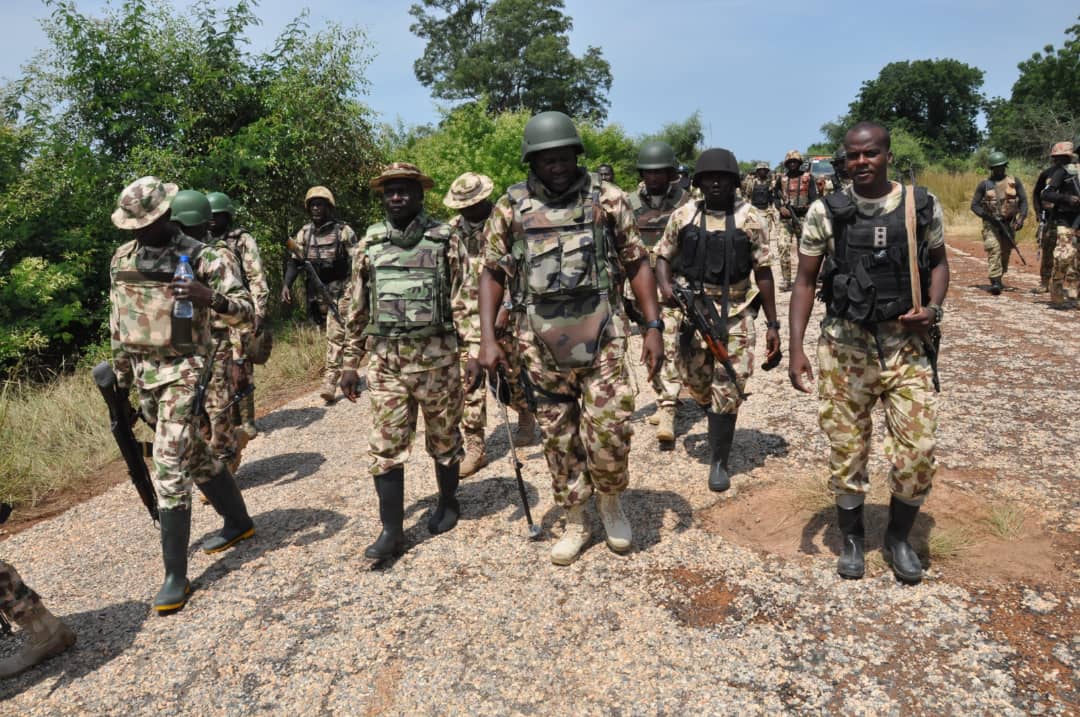
The troops of Operation Fansan Yamma (OPFY) have neutralised Explosive Devices Planted along Magami–Hannutara–Dansadau road, Maru, in Zamfara State.
Reliable military sources revealed that the troops of Sector 2, Operation Fansan Yamma, have recovered and neutralised explosive devices planted by terrorists in the axis.
It was gathered that the devices were reportedly planted to kill and endanger the commuters plying the busy route.
According to the sources, the troops, acting on credible intelligence, secured the affected area and conducted a thorough search, and identified two locations where explosive devices were said to have been planted.
It was also learnt that an Explosive Ordnance Disposal (EOD) team was quickly deployed to handle the threat, saying that the team successfully destroyed one of the devices and safely recovered and rendered the second device useless.
The sources noted that the troops have intensified patrols and surveillance along the road and surrounding communities to secure the lives and properties of the residents, ensure the safety of commuters and prevent further insecurity in the area.
The management of Operation Fansan Yamma has urged members of the public to remain vigilant and timely report suspicious objects or activities to the nearest security agency.
The operation underscores the importance of timely intelligence and proactive security measures in preventing attacks and safeguarding lives and property in Zamfara State.



Tinubu’s Re-election: Don’t Allow Repeat of 2023, Tompolo Tells Lagos
ShareLeader of the PBAT Door-to-Door Movement, Government Ekpemupolo, has advised the people of Lagos State not to allow a repeat...
Bayelsa Starlets Academy Set for FC Prague Test
ShareFrom Mike Tayese, Yenagoa Bayelsa Starlets Academy will like to strengthen their campaign in the ongoing N-Youth League when they...


FG Strengthens Mortgage, Land Systems for Affordable Housing
ShareBy Raphael Atuu, Abuja The Federal Ministry of Housing and Urban Development has advocated for stronger land, mortgage and institutional...


Osun Signs MoU with Companies to Boost Industrialization
ShareFrom Ayinde Akintade, Osogbo The Osun State Government under the leadership of Governor Ademola Adeleke has signed two separate Memoranda...


Abuja Motorists Decry Continuous Increase in Petrol Price
ShareSome motorists in the Federal Capital Territory (FCT) have raised concerns over the continuous increase in the price of Premium...


CBN Maintains Deadline for Local Data Storage
ShareThe Central Bank of Nigeria has ruled out an extension of the 1 January 2027, deadline for financial institutions to...
FG, Norway Partner on Satellite Surveillance to Combat Illegal Fishing
ShareThe Federal Government has assured Norway of Nigeria’s participation in the Blue Justice Initiative to strengthen satellite surveillance of its...


Niger Delta Deserves More than 13 Per Cent Derivation, Says Obasanjo
ShareFrom Mike Tayese, Yenagoa Former President of Nigeria, Chief Olusegun Obasanjo, on Monday, advocated an increase in the 13 per...


PDP Lawyers Give INEC Three-day Ultimatum to Publish Pantami’s Name
ShareLawyers to the Peoples Democratic Party and its Gombe State governorship candidate, Professor Isa Ali Ibrahim, have given the Independent...
FG Urges Defence Correspondents to Project Nigeria Positively
SharePermanent Secretary, General Services, Office of the Secretary to the Government of the Federation (OSGF), Dr. Ibrahim Kana, has urged...