
Education
A SHARED LIFE: THE ALUMNUS AND ALMA MATER CO-DEPENDENCY

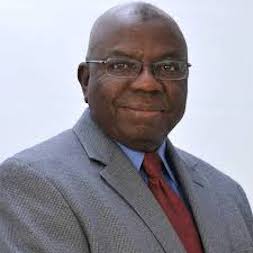
A GUEST SPEECH AT THE ANNUAL CONVENTION OF MT. ST. GABRIEL MAKURDI OLD BOYS
28TH SEPTEMBER 10AM
BY PROF IYORWUESE HAGHER Introduction
Firstly, addressing the Convention of the Old Boys of Mt.
St. Gabriel’s Secondary School is a privilege. This school, which was relatively young compared to older schools like Government Secondary School Katsina-Ala, Mt. St. Michael’s Secondary School Aliade, and W. Bristow Secondary School Gboko, has now stood shoulder to shoulder with the older schools and even surpassed them. My relationship with this Alma Mater has been through some of your celebrated alumni, whom I have studied with, and enjoyed working with as colleagues at the universities and on the political stage. I also had a robust relationship with your legendary principal, Rev. Father Angus Fraser, who the people of Benue State have recognized as the Bellwether of qualitative education. Four times, Mt. St. Gabriel won the Iyorwuese Hagher, Benue Academic Excellence Awards as the best Secondary School. And four times, I handed the giant trophy to Principal Angus Fraser. But my relationship with the late legend gets more profound and fascinating. Today, I am the Chairman of the Board of Angus Fraser College; my boss (the proprietor), Dr. Achado, is the son of one of your celebrated Alumni, the Honourable Dr. Arch. Asema Achado.I wish to discuss A Shared Life: The Alumnus and Alma Mater Co-dependency. It will be very brief, so bear with me. Everybody knows the Latin word Alma Mater, which means nourishing mother. In Nigeria, the popular song, “Sweet Mother” best illustrates this Alma Mater, matter. A highlight song by the Cameroon Nigerian singer Prince Nicombarga and his Rocafil Jass Band. The Alma Mater is the Sweet Mother, and your remembering sweet Mother Mt. St. Gabriel today exemplifies your firm refusal to forget your relationship with your college. “Sweet Mother, I never forget you for the suffer which you suffer for me.” This is why you are here in reverence to the sweet mother, Mt. St. Gabriel, gave nourishment to you and now you are everywhere. The products of this college, the alumni, are all over the world pursuing various careers. Little did you envisage that happening when you were here as young adults, fortifying yourselves with the knowledge to confidently face the future and the world?All over the world, grateful alumni become benefactors to the Alma Mater by providing infrastructural development, cash donations, endowments, scholarships, and even insights into curriculum development. The success of any school can be measured by the amount of contribution of the alumni to the development of the school and the nation. Standing in this hall alone articulates the co-dependency role of your alumni who are everywhere extending the influence of the Alma Mater. It is no secret that a product of this school became a senator and senate president, was minister many times, as well as the Chairman, of one of Nigeria’s ruling parties. Senator Dr. Iyorchia Ayu is a worthy alumnus and a source of pride to the Alma Mater, but many more alumni have also made valuable contributions. All these efforts cohere towards inspiring both the staff and students (future alumni) towards more incredible strides to achieve more in life and also to never forget the Alma Mater. The non-terminal task and duty of the alumni is to raise money for the development of the Alma Mata throughout the life of the Alma Mater is a glorious responsibility.Your return to Mt. St. Gabriel is the return to home and nourishment. It is a nostalgia trip, which is good for your spirits. The tremendous emotional and social significance of MSG cannot be overemphasized. To many of you who have reached dizzy heights of achievements, a trip to this home is a reality check. It is a place where you remember your small beginnings and locate deep inside yourselves those qualities and attitudes where you gained innovation, resilience, and a solid will to march forward no matter the challenges. Coming here and relating to one another as siblings of the same Alma Mata helps build a community spirit in all of you. You are not alone and must face challenges in fellowship with kind words from fellow alumni and even a helping hand in times of need.Many of you may think you need more to compete with the other alumni who are more successful. The fact is that your coming here alone and being alive, and well, alone, is enough. No alumni cannot give thanks and share a carton of water with some staff and students. Doing your part is nothing to feel ashamed about. When we are home with our mother, we can express vulnerability without feeling inferior. Nothing is too small to give to a loving mother in this hallowed moment of grace. This is home, and even if you don’t have a bottle of water to share, please sing “Sweet Mother” to MSG and wear her school badge as a brand promotion. This could also help recruit some new students. Everybody has something to contribute to raising the self-esteem, alliances, and community of former Students and children of Sweet Mother MSG. It is often said that if you do not know where you are coming from, any place could be your destination. Never forget MSG as your solid educational base and your roots. The strength of your alumni must be loyalty to yourselves and to each other. Let us now examine whether, in the sixty years since this college was established, we have achieved the goals and aims of the founding fathers: the missionaries who founded and located this school to be built. Evidently, with your massive attendance, what we see, and the testimonies of continuous exceptionalism in academic excellence, we can say the aims and goals were achieved and even exceeded.But let us tarry awhile. The whole purpose of education is to instigate change. As Nelson Mandela said, “Education is the most powerful weapon you can use to change the world.” As a product of a sister missionary school, I can attest that Mt. St. Gabriel, like Bristow Secondary School, my Alma Mata, was established to teach children the values of kindness, humility, love, and sacrifice. Secondary education is aimed at teaching us how to work in teams quickly and efficiently. While I was at William Makel Bristow Secondary School, I found my vocation as a writer. Most of us found our voices as distinct human beings during the secondary school year. If we meet any alumni of Mt. St. Gabriel anywhere, what we expect of him is a certain moral quotient, a certain humility, and a particular love of others. The big-picture aim of all the Christian Mission Schools was to love and serve God. The alumni who are proud to keep returning to this home, this Alma Mata, are those who got passports for the future they are in now. The present belongs to those who prepared for it yesterday, and the future belongs to those who are preparing for it today. This should be the recurring theme and motivation to inspire the alumni and present students of MSG to work harder.As students of MSG, you were involved in a learning process with your teachers, some of whom became your personal friends and mentors. While here, you were engaged in a two-way dialogue about problems and the sharing of learning, laughter, and virtues of Christian attributes of love, forgiveness, humility, and being a good Samarian to a hurting world.Those young adults who found no stimuli for the activities of Mt. St. Gabriel and refused to be involved in this dialogical learning system have also gone on to be successful, mainly because they are attracted to and desire to possess things. But those to whom Mt. St. Gabriel entered into them have gone to render invaluable services to mankind and in diverse fields. The main hope of a nation does not just lie in education; it lies in the proper education of its youth. A good education can change anyone and a good teacher like Fr. Angus Fraser can change everything.Rev. Angus Fraser was a good teacher. He was a Bellwether of Education in Nigeria. He instigated massive change at Mt. St. Gabriel and led the staff and students from low self-esteem and a victimhood mentality to become heroes and champions of academic excellence. Angus Fraser was responsible for creating legacies that took generations of Alumni to levels they could only imagine.Education has often been said to be a preparation for life. This is not totally the case. Education is life. Many of the unfortunate 23 million Nigerian youth who are not enrolled in any educational institution today can tell you that they are the living dead. Mt. St. Gabriel’s education collected all the young students from various backgrounds, and through collaboration, interdependence, and the collective show of gifts from different cultures, roots, and backgrounds, enriched the Alma Mata.I congratulate you all on being enriched in this environment to face the challenges that you see in front of you every day. Life is happening, and there is so much humanity and so many beautiful ideas to change the world. Please be the change we have been waiting for. Change yourself, your home, and your community, one child at a time, and Nigeria will be a better place.I must now bring us to an uncomfortable reality that the educational system of yesterday has hardly served us in contemporary Nigeria. While we were studying so hard, a section of our country put a palm to our face and said, “Ba Turanci.” They constitute more than 70% of those who don’t speak the English language, and now Nigeria is faced with a dreaded terrorist group, Boko Haram, whose battle cry is “Book knowledge or Western Education is a curse” and “Boko Haram.”While Mt. St. Gabriel is toiling to change Nigeria, 23 million Nigerian children are out of school. Mt. St. Gabriel is among the 27,047 secondary schools in Nigeria, producing about 5.2 million school graduates annually. Less than one million will be absorbed in higher education. Each year, over four million secondary school graduates will become unemployed or unskilled laborers, bandits, or dependent youth engaged in antisocial activities.There is a crisis in Nigeria’s educational sector. Nigeria’s Alma Mata is no longer capable of providing nourishment. The Alma Matas are failing young adults at a miserable time when globalization has changed everything. The children are obviously getting the wrong type of education, and Nigeria is going to be the worse for it. Changes in the world and education have been so rapid in the past 20 years that our children feel dizzy. They must continually unlearn old methods and modes of thinking. They now must innovate to learn in a steady stream of change that is relentlessly saturating us with new inventions, systems of thought, and new learning environments, including street corners.Advances in Science and Technology have made it imperative for the alumni and the Alma Mata to find viable answers to educational questions and new knowledge to face existential challenges. Something drastic has happened to Nigeria. We are witnessing the latest generation, which is different from anything the country and the world have seen. We are seeing the rise of the global Generation Z for the first time. This new generation is appropriating a planetary civilization, and our educational system must find an educational system that is international enough to address global issues of change and yet be patriotic enough to embrace Nigerian traditions, innovations, and space.The Alma Mata must provide an education that aligns with the new things happening in the world we are part of, a single planetary civilization in which the most remote people and the most minor children are seamlessly connected. Our loyalties to villages, tribes, and nations have broken down. We must enlarge our small loyalties to embrace global concerns about the economy, the environment, and health. The recent experience of the COVID-19 pandemic shows how the whole world is now so small and connected by mutuality. Alma Mata may even now find the Gen Z students in session rebellious and even downright ungrateful. I beg you to withhold judgment. Their attitude might be rebelling and failing examinations because our education system is archaic. Maybe we are teaching them as we were taught. We need to learn how to incorporate what the young have learned but which we still need to. We need to be nourished by our children and grandchildren. We need reverse mentoring by them.It is now ironic, oxymoronic, and even pathetic to hear us call our Gen Z children the leaders of tomorrow. They smile, smirk, and laugh at us. They know that they are leaders of today, not tomorrow! We must accept that we have become immigrants into the new age where the education that prepared us for life is no longer adequate for living fulfilled lives. We are aliens vastly outnumbered by Gen Z and must adjust to survive. Nigeria is failing the world due to the lack of attention to its educational sector, which is no longer nurturing. Poorly performing Nigerian youth who migrate abroad perform excellently because the nurture of the Western Alma Mata gives nourishment that enables our deprived youth to become exceptional. As we gather here today, we must be aware of the tragedy that has befallen Nigerian educational institutions, including, unfortunately, our Alma Mata. We must address the following challenges in the educational sector.1. There needs to be better funding for the educational sector. Year after year, Nigeria’s educational budgets have been far below the UNESCO stipulation of 29% of the gross budget. This year, Nigeria’s budget is 6.39%, which is lamentable. Nigeria’s education budget hovered between 6 and 8 percent throughout Buhari’s eight years. Let us compare with Ghana’s 14.5%, Kenya’s 30%, Namibia’s 27.3%, South Africa’s 19.75%, Lesotho’s 18.4%, and Rwanda’s 14%. Even Togo and Liberia have budgeted higher than Nigeria, above 15% among the West African countries. Nigeria’s global status as critically weak and tottering to state collapse is the high price we have paid to harvest ignorance instead of a good education. 2. Besides funding, Nigeria’s secondary schools need more qualified teachers. This is notably lacking in Mathematics and English, which are the building blocks of academic success. The teaching profession is despised, and only the very weak students apply to read education, knowing they will settle for a miserable life. 3. Teachers in Nigerian Secondary Schools seldom engage in continuous training. They fail to update their knowledge and skills to prepare today’s youth to live meaningful lives. 4. Nigeria is failing to accommodate the rising population demand for more and better schools. This is why we have the world’s highest number of out-of-school children. The Youth Bulge population is a Time Bomb. Let us expect the explosion in a civil war, bloody revolution, or another pandemic.5. Nigeria has a low university admission capacity. In this year, 2024 alone, of the 1.9 million students who wrote JAMB, more than 1.4 million scored below the 200 average. Nigerian universities dismiss more than a million applicants yearly for various reasons. This poor educational performance is critical to our manpower development and productivity shortages. We cannot be a prosperous nation when our productivity is so low because we have fallen into a poverty trap mentality and pay more to buy arms than to purchase books. Little wonder about our security challenge. 6. There is rampant academic fraud, corruption, indiscipline, cultism, and drug abuse at all levels of our educational system. Our children cheat during examinations, impersonate, falsify academic records, pay for certificates or grades, or give money and grant sexual favors for pass marks. They terrorize their examiners and assault their invigilators. We must deal with these with action, prayers, and good teachers. 7. Bad governance and low standards of living militate against good education. 8. Politicization of education in appointments and admissions into courses. The rich get the professional courses, and the poor and downtrodden get non-essential courses, which fail to guarantee their survival in the world today, not to mention a more challenging tomorrow.9. The secondary school system must respect the adolescent’s needs and right to work. Students should earn credits working on farms, selling in shops, or learning a skill as they study on our school grounds; we must be creative.10. Nigerian Secondary Schools should open up to their catchment communities and become community centers, where all adults are given a focus, protection, and opportunity to learn to be full human beings. The curriculum should be innovative, and students should be taught relevant skills.In conclusion, I wish to call on the Alma Mata and alumni to join hands in the wonderful opportunity of creating history together to benefit our children and grandchildren. We need to declare Nigeria’s educational system a National Disaster and rebuild it from below, from crèche to the tertiary, if Nigeria hopes to survive as a viable country in the first half of this 21st century.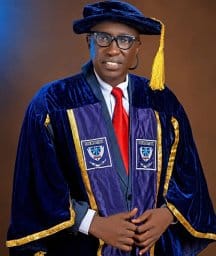
From Joseph Amedu, Lokoja
A Professor of Entrepreneurship and Corporate Strategy at the Federal University, Lokoja, John Alabi has called for more investment in the entrepreneurship/innovation sector to tackle Nigeria’s dwindling economy.
Professor Alabi who made the call while delivering the 46th Inaugural Lecture series of the University at its Felele Campus in Lokoja,on Wednesday, also stressed the need for government at all levels to prioritize investment in the sector to take care of the rising unemployment situation in Nigeria.
In his Lecture titled “Entrepreneurship Leadership through Entrepreneurial Education and Empowerment: Building an Entrepreneurial Economy in Vuca World” Professor Alabi advised that governments must provide enabling policies, universities must produce innovative graduates, industries must become active partners, financial institutions must support enterprise growth, and entrepreneurs themselves must embrace continuous learning, resilience, ethical leadership, and technological adaptation.
He explained that through entrepreneurial education and empowerment, nations can transform uncertainty into opportunity and build inclusive, resilient, and globally competitive economies.
“Governments should position entrepreneurship as a national development strategy rather than an employment intervention.
“Align entrepreneurship policies with national industrial and digital transformation agendas and investment in entrepreneurship ecosystems at federal, state, and local government levels.
“Building an entrepreneurial economy in a VUCA world requires more than increasing the number of entrepreneurs; it demands developing entrepreneurial leaders who can envision opportunities amid uncertainty, inspire innovation, mobilize resources, and create sustainable value
Professor Alabi also advocated that universities should focus on producing job creators rather than job seekers, establish functional entrepreneurship centres linked to industry, reward commercialization of research and innovation and encourage faculty-industry collaboration.
Other recommendations advanced by Professor Alabi includes, “Integration of entrepreneurship education across all levels of education, from primary to tertiary institutions.
“Shift from certificate-oriented learning to competency and problem-solving-based education.
“Promotion of interdisciplinary learning combining entrepreneurship, digital technology, leadership, and sustainability.
“Strengthen experiential learning through internships, incubators, business simulations, and enterprise projects.
“Developing a National Entrepreneurial Leadership Policy as well as establishment of a coordinated national framework for entrepreneurial leadership development.
“Encouragement of collaboration among government, academia, industry, and civil society”
In his welcome address, the Vice Chancellor of the Federal University, Lokoja, Professor Gbenga Ibileye gave an assurance that his administration would continue to encourage delivery of inaugural Lecture to ensure sustainability in the academic system.
Professor Ibileye said that the essence of the academic tradition is an opportunity for the academic staff to showcase their intellectual capacity in their field of study.
The Vice Chancellor described the topic of the lecture as timely and a welcome development that would go a long way in addressing the current economic reality in Nigeria.
He extolled Professor John Alabi, the Inaugural Lecturer, for his choice of contemporary topic that would add value to the people and the nation at large.

The Joint Admissions and Matriculation Board (JAMB) said its Central Admissions Processing System (CAPS) has been fully restored and is now operational after being unavailable for 96 hours.
The board made this known in its weekly Bulletin issued on Monday in Abuja.
It said the platform was restored on Sunday, Sept.
27, and urged tertiary institutions to speed up their admission processes to recover the time lost during the disruption.“The Board consequently urges all institutions to immediately accelerate their admission processes to recover the time lost during the period of the disruption and ensure compliance with the admission deadlines agreed at the 2026 Policy Meeting on Admissions,” it said.
It said the temporary unavailability of CAPS was caused by an administrative challenge involving its hosting organisation.
The board said it had worked with relevant service providers to restore the platform and ensure its stability.
It also apologised to candidates, institutions and other stakeholders for the inconvenience caused by the disruption.
“The Board sincerely regrets the inconvenience the temporary unavailability of the platform may have caused candidates, institutions and other stakeholders,” it said.
It said institutions should now intensify their admission processes, while candidates should promptly accept admission offers made to them.
It recalled that stakeholders at the 2026 Policy Meeting agreed that admissions for the 2026/2027 academic session should be concluded within specified deadlines.
According to the board, public universities are expected to conclude admissions on or before Oct. 31, private universities by Nov. 30, while other tertiary institutions have until Dec. 31.
“Consequently, all admissions for the 2026/2027 academic session are expected to be concluded by Dec. 31, 2026,” it said.
It particularly urged public universities to intensify their admission processes following the release of the 2026 Senior School Certificate Examination (SSCE) results by the National Examinations Council (NECO).
It said the development had provided institutions with the results needed to process more admissions before the Oct. 31 deadline.
“Following the release of the 2026 NECO results, the Board urges universities, especially public universities, to intensify admissions and meet the Oct. 31 deadline,” it said.
JAMB also advised candidates who had been waiting for their NECO results to immediately upload or verify their results on the appropriate platform.
It assured stakeholders that it would also speed up the consideration and approval of admission recommendations submitted by institutions through CAPS.
It said the Board was also working on measures to make CAPS more stable and reliable and reduce the impact of possible future disruptions.
It said the measures would include having alternative systems and arrangements to ensure that the admission process could continue if one hosting or service environment experienced problems.
“The Board remains committed to building systems that work reliably for the people we serve,” It said. (NAN)
From Dan Amasingha, Minna
The National Examinations Council (NECO) has released the results of the 2026 Senior School Certificate Examination (SSCE) Internal, with 804,948 candidates, representing 58.67 per cent of those who sat for the examination, obtaining at least five credits including English Language and Mathematics.
The figure represents a 1.
59 percentage-point decline from the 60.26 per cent recorded in 2025, when 818,492 candidates met the same benchmark.Announcing the results yesterday at the council’s headquarters in Minna, Niger State, NECO Registrar and Chief Executive, Prof.
Dantani Ibrahim Wushishi, said 1,378,048 candidates registered for the 2026 examination, comprising 682,352 males and 695,696 females.He said 1,371,992 candidates eventually sat for the examination, including 678,903 males and 693,089 females.
Wushishi, however, disclosed that the overall five-credit performance improved slightly, with 1,162,118 candidates, representing about 84.67 per cent, obtaining five credits and above irrespective of English Language and Mathematics.
The figure compares with 1,144,496 candidates, or 84.26 per cent, recorded under the same benchmark in 2025.
In absolute terms, the number of candidates who secured five credits including the two core subjects fell by 13,544, from 818,492 in 2025 to 804,948 in 2026. By contrast, the number who obtained five credits irrespective of English and Mathematics increased by 17,622.
The number of candidates who sat for the examination also rose by 13,653, from 1,358,339 in 2025 to 1,371,992 in 2026.
Malpractice records sharp decline
The council also reported a substantial reduction in examination malpractice, with 1,406 candidates implicated in various forms of malpractice in 2026, compared with 3,878 candidates in 2025.
The latest figure represents a 63.74 per cent decline from the previous year’s record. NECO had recorded 10,094 malpractice cases in 2024.
Wushishi attributed the reduction to improved examination processes, strengthened monitoring and collaboration with security agencies and other stakeholders.
He specifically acknowledged the support of the Nigeria Security and Civil Defence Corps and the Department of State Services, saying their involvement helped reinforce discipline, deter malpractice and safeguard the examination process.
Kano leads state figures
Kano State recorded the highest number of candidates who obtained five credits and above, including English Language and Mathematics, with 74,413 candidates.
Lagos followed with 72,496, while Oyo recorded 55,543 candidates under the same benchmark.
At the geopolitical-zone level, the Southwest accounted for the largest share of candidates with five credits and above irrespective of English and Mathematics, at 24.60 per cent. It was followed by the Northwest with 22.10 per cent, North Central with 19.00 per cent, Northeast with 14.70 per cent, South-South with 10.53 per cent and Southeast with 9.07 per cent.
The council also released separate state, geopolitical-zone and gender rankings based on the different performance benchmarks.
In the North Central, Benue led with 3.82 per cent, followed by Nasarawa with 3.66 per cent. Anambra led the Southeast with 2.92 per cent, ahead of Enugu with 2.14 per cent.
Rivers topped the South-South ranking with 3.03 per cent, followed by Edo with 2.17 per cent, Delta with 1.84 per cent, Akwa Ibom with 1.61 per cent and Cross River with 1.30 per cent.
Wushishi also disclosed that candidates at NECO examination centres in Saudi Arabia and Niger Republic recorded no candidate with five credits and above under the stated benchmark.
Exam held in Nigeria, six countries
The 2026 SSCE Internal examination was conducted from June 15 to July 23 across the 36 states, the Federal Capital Territory and six foreign countries—Benin Republic, Equatorial Guinea, Niger Republic, Côte d’Ivoire, Togo and Saudi Arabia.
The nationwide marking exercise was conducted between August 17 and September 4.
A total of 1,334 candidates with special needs participated in the examination, with the council maintaining that measures were put in place to promote inclusiveness.
Wushishi thanked the Federal Government, education authorities, the NECO Governing Board, National Assembly, security agencies, state governments, schools and other stakeholders for their support.
He declared the results released and said candidates could access them through the NECO website using their examination registration numbers.
The registrar urged candidates to remain focused on their academic pursuits, assuring stakeholders that the council would continue to uphold the credibility, fairness and integrity of its examinations.



FG Moves to Automate Teachers’ Awards, Ends Manual Selection Process
ShareBy Tony Obiechina, Abuja The federal government has digitalised the selection process for the 2026 President’s Teachers’ and Schools’ Excellence Awards (PTSEA),...

Utsev Leads Nigerian Delegation to World Water Congress in Glasgow
ShareBy David Torough, Abuja Minister of Water Resources and Sanitation, Engr. Prof. Joseph Terlumun Utsev, will on Saturday, October 3,...


BBNaija Season 11: Keivo Becomes Second Housemate to be Disqualified
ShareKeivo has become the second Big Brother Naija housemate to be disqualified from Season 11. This follows his physical altercation...


Mofe-Damijo Envisions Bright Future for Nigeria at 66
ShareVeteran actor and public speaker, Richard Mofe-Damijo, has expressed optimism about Nigeria’s future, describing the country as a work in...


My Wife Paid $20k for Her Surgery Herself, Peller Fires Back at Carter Efe
ShareNigerian content creator and streamer, Peller, has fired back at Carter Efe after the streamer compared their relationships while praising...


I Didn’t Want to be in the Spotlight – Tems
ShareGrammy-winning Nigerian singer Temilade Openiyi, popularly known as Tems, has revealed that despite wanting musical success, she was uncomfortable with...
Nigeria at 66: Which Way Nigeria?
ShareBy Tochukwu Jimo Obi Sixty six years after independence, Nigeria should be asking itself a question that can no longer...

Nigeria at 66: Booming Banks, Struggling Nation, Where Is the Promised Prosperity?
ShareBy Blaise Udunze As Nigeria celebrates 66 years of independence, it must ask whether the country has delivered the prosperity...

Nigeria at 66: Leaders are Human, But Accountability is Non-negotiable
ShareBy Aderonke Ojediran As Nigeria marks its 66th Independence anniversary, the debate over leadership, public trust and accountability remains central...


Oborevwori Orders Julius Berger to Fix Washed-Out East-West Road at Agbarho
ShareFrom Francis Sadhere, Delta Delta State Governor, Rt. Hon. Sheriff Oborevwori, has directed Julius Berger Nigeria Plc to immediately commence...