
POLITICS
Abdulrazaq Calls for Unity in Kwara South


From Samuel James, Ilorin
The Governor Abdulrahman Abdulrazaq has advised stakeholders in the southern senatorial district of the Kwara state to unite in advancing the interests of their people. He made the call at a one-day summit on the socio-economic development of Kwara South Senatorial District, organised by the Kwara South Development Initiative (KSDI) in Abuja.
Mallam Abdurazak who participated in the summit via Zoom, reiterated his full support to the initiative while canvassing for the unity among stakeholders.
He also explained his administration’s efforts towards transforming the state from a consumption-based economy to a production-based economy.“I thank Dr Adewumi for bringing up this programme alongside our reliable Raheem Adedoyin Oloriewe and I can only say that I fully support the meetings and programmes in the future, as It aligns with our vision to take our State to a higher level.
“It’s not gaining traction yet, but I believe that such an economic agenda will gain traction because it’s an economic emancipation that is essential for us.
“If you look at the noise going about Tax Reforms, the noise comes from States that are not producing but consuming, therefore, we have to change our State from a consuming to a productive State so that we will not be beggars waiting for handouts from Abuja.
“That is part of why this is essential, as it will let us be a productive State, tackling issues of security threats, and fostering unity among ourselves to progress forward.
“This meeting has my full endorsement, and I apologise for being unable to attend due to my trip and if I am back this week, hopefully, I will be able to attend the next engagement personally,” he said.
This organized summit followed the earlier conferences held on October 29, 2022 and that of 2023, 13, May at Thomas Adewumi University Oko-Irese, in Ifelodun local government. At those conferences, issues ranging from empowerment to job creation, security, and infrastructure development in the zone were at the centre stage.
In his earlier welcome address, chief convener of the initiatives, Dr Johnson Adewumi, reassured of his commitment to the development of the zone while canvassing for collaboration to improve people’s fortunes.
Those attending the summit reviewed the scorecard of the present administration in the state regarding the development of the zone that was carried out by the cabinet members of the Governor Abdulrazaq administration, the Hon. Bolanle Olukoju and Dr. Mary Arinde, commissioners for Communications Tertiary Education, respectively, and the Hon. Femi Whyte.
The scorecards was also given to the seven local government chairmen in the zone, and the summit further stated it appreciation to the state governor for his sterling performance in Kwara South, particularly the completion of the Osi Campus of Kwara State University and other impressive road construction projects in the zone which includes Omu – Aran – Oko – Oro Ago, Oro – Esie-Agbonda – Arandun (transversing four wards in Irepodun LGA).
Others include Ajase-Okeya-Igbaja, Esie Museum Road, Okerimi Oro Junction- NITEL, Oro road, and the Obbo Aiyegunle road that had been abandoned for over 50 years.
The summit also talked on several other projects by the state government in other ongoing sectors, particularly of note in the Improvement of security situation across the Kwara south of which they accredited to combined efforts of the State and local governments in the zone.
It’s also noted in the summit with satisfaction that KSDI had established functional co-operative societies in Irepodun, Ekiti and Ifelodun local government areas as well as encouraged every Local Government to do the same at ward level as a veritable tool for the empowerment of their people.
By Mike Odiakose, Abuja
The Amir and National Head of the Ahmadiyya Muslim Jama’at of Nigeria, Alatoye Abdulazeez, has urged Nigerian youths to unite politically and strategically, identifying Adewole Adebayo as a potential leader capable of driving national transformation if given collective support.
Speaking during an interview, Abdulazeez emphasized that Nigeria’s progress hinges largely on the ability of young people to organize themselves beyond tribal, religious, and financial inducements, and to rally behind credible leadership.
According to him, while several young candidates have emerged in past elections, their failure to build strong alliances allowed older political forces to maintain dominance.
He noted that the case of Adebayo, a lawyer and businessman who contested under the Social Democratic Party (SDP), presents an opportunity for a different political direction if youths can act in unity.
“If the younger generation is sure that Adewole Adebayo can deliver, they should team up with him, get things right, and encourage other youths across tribes to see themselves as one,” Abdulazeez said.
He stressed that Nigeria is currently in what he described as a “storming stage” of nationhood, where divisions along ethnic and regional lines continue to hinder development.
He warned that unless a “national norm” is established—where citizens prioritize unity over sectional interests—the country may struggle to reach its full potential.
The cleric further advised youths to avoid electoral inducement and reject divisive politics, urging them instead to focus on long-term nation-building.
“We must move from where we are to the next stage. Otherwise, we will keep moving in the same direction,” he added.
Beyond politics, Abdulazeez reiterated the Ahmadiyya motto, “Love for All, Hatred for None,” as a guiding principle for national cohesion, stressing that religion should be a force for peace rather than division.
He condemned terrorism and violence carried out in the name of religion, insisting that such acts contradict Islamic teachings.
On governance, he acknowledged efforts by President Bola Ahmed Tinubu, noting that while progress has been made in some areas, more attention is needed in critical sectors such as power and economic management.
Abdulazeez concluded with a call for collective responsibility among citizens, particularly the youth, to reshape Nigeria’s future through unity, moral discipline, and active participation in governance.
“Leadership is not just about those in office,” he said. “It is also about those who choose them.”
End
From Sylvia Udegbunam, Enugu
The Enugu State Independent Electoral Commission (ENSIEC) have released a revised timetable for the 2026 local government elections.
ENSIEC Chairman, Prof. Christian Ngwu, presented the updated schedule to journalists in Enugu.
Ngwu said the framework outlines activities leading to elections on Sept.
26 and re-run polls on Oct. 10.He explained the adjustments followed the repeal of the Electoral Act 2022 and enactment of the Electoral Act 2026.
“The revised timetable aligns with the new law and other relevant statutes guiding elections in the state,” he said.
He recalled ENSIEC earlier issued a notice on Aug. 20, 2025 alongside an initial timetable.
According to him, party primaries will be held from Jan. 23 to May 26.
“Campaigns will begin on April 29 and end on Sept. 25, 24 hours before polling,” Ngwu added.
He said submission of nomination forms closes on May 29, while candidates’ particulars will be published on June 19.
“The final list of candidates will be released on July 27,” he stated.
Ngwu added that submission of polling agents ends on Aug. 31, while the official notice of poll comes on Sept. 11.
He confirmed elections will be held on Sept. 26, with voting from 8:00 a.m. to 3:00 p.m. using the open secret ballot system.
“In case of inconclusive results, re-run elections will be conducted on Oct. 10,” he said.
Ngwu stressed the timetable was issued under the commission’s constitutional mandate and in compliance with the Electoral Act 2026.
By David Torough, Abuja
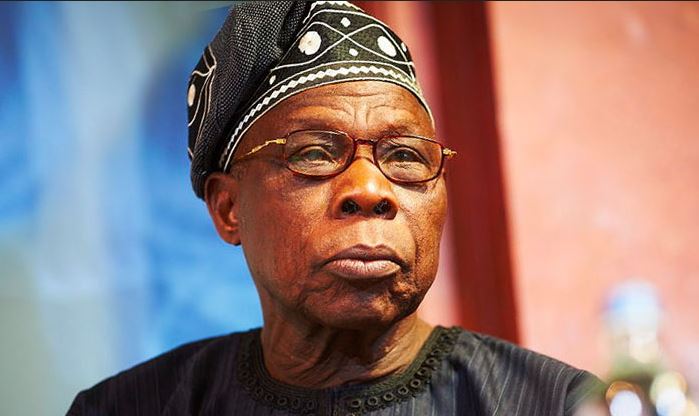
Former Presidents Olusegun Obasanjo and Goodluck Jonathan have issued a strong call for national unity, institutional reforms, and economic transformation, warning that Nigeria’s future depends on collective responsibility and a democracy that delivers tangible results.
Both leaders, who spoke at separate high-level engagements on Thursday, converged on a common message: Nigeria stands at a critical crossroads and requires urgent, coordinated action from citizens, leaders, and institutions.
At the 6th Annual Colloquium marking the 65th birthday of Itua Ighodalo, Obasanjo stressed that no external force would fix Nigeria’s problems unless Nigerians themselves unite across divides.
Represented by Prof. Adedeji Daramola, he emphasised that nation-building is a shared duty requiring contributions from all segments of society.“Until we come together to work and fix Nigeria, nobody will fix it for us,” Obasanjo declared, urging citizens—from grassroots traders to political elites—to take ownership of the country’s development.
He highlighted the importance of youth inclusion, describing young people as central to Nigeria’s future, and called for greater investment in technology and innovation to harness the country’s demographic advantage.
Echoing reformist sentiments, economist Eghosa Osagie advocated for increased local production, while Opeyemi Adamolekun of Enough is Enough Nigeria criticised the commercialization of politics. Technology investor Iyinoluwa Aboyeji pointed to infrastructural imbalances, noting that digital connectivity remains heavily concentrated in Lagos.
Meanwhile, at a policy convening in Abuja organised by the Goodluck Jonathan Foundation, Jonathan underscored the need to align democracy with economic growth to ensure its sustainability.
He warned that democracy, both globally and in Nigeria, faces increasing pressure from economic hardship, insecurity, and declining public trust. According to him, elections alone are insufficient without transparent institutions and policies that foster innovation and enterprise.
Jonathan raised concerns about governance effectiveness, comparing Nigeria’s democratic system with alternative models in countries like China and the United Arab Emirates, where structured leadership selection and economic progress have been notable.
Despite this, he maintained that freedom and justice remain democracy’s defining strengths, cautioning that any system that fails to uphold these values loses its legitimacy.
“Our democracy has endured, but endurance alone is not enough,” Jonathan said, stressing that economic performance is key to sustaining public confidence.
Both leaders agreed that Nigeria must not choose between democracy and development but instead ensure that both reinforce each other. They urged policymakers, civil society, and the private sector to act decisively in bridging governance gaps and delivering inclusive growth.
The convergence of views from the two former presidents reflects a growing consensus among stakeholders that Nigeria’s progress hinges on unity, accountable leadership, youth empowerment, and a democratic system capable of improving the lives of its citizens.

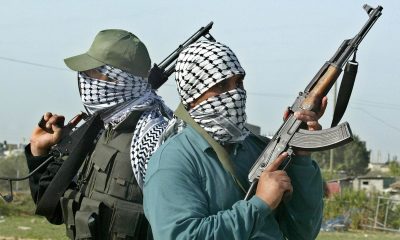

Armed Herders Kill Five, Displaced Many in Renewed Attack on Benue Community
ShareFrom Attah Ede, Makurdi Suspected armed herdsmen has launched a renewed attack on Tse Ameen community in Mbapa Council Ward of Gwer West Local Government Area in Benue State, killing at...

Schools Compete for Honours at Lagos Volleyball Championship
ShareLagos State will host the second edition of the National School Volleyball Championships from April 21 to April 24 at the Teslim Balogun Stadium....
Over 25 Die in Firecracker Factory Blast in India
ShareAt least 25 people have been killed in an explosion at a firecracker factory in the southern Indian state of Tamil Nadu, with four...
FG begins Nationwide Review of Outdated Agric Curricula
ShareThe Federal Government has commenced a comprehensive review of agricultural curricula in polytechnics and colleges of education to address widening skills gaps and revive...
NCS First Female Pilot Gets U.S. Commercial Licence
ShareThe first female pilot of the Nigeria Customs Service (NCS), Nafisat Balogun, has secured a commercial multi-engine pilot licence in the United States of...


FirstBank Backs GTR West Africa 2026 Conference in Lagos
Share FirstBank has confirmed its sponsorship of the Global Trade Review (GTR) West Africa 2026 conference scheduled for Wednesday and...

Forensic Audit Dismisses Social Media Claims on INEC Chair
ShareBy David Torough, Abuja The Independent National Electoral Commission has confirmed it will pursue the arrest of individuals behind the...
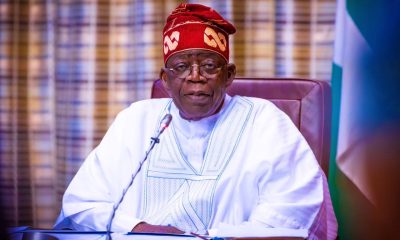

Tinubu Expands Police Academy, Approves N15bn Take-Off Grant
ShareBy David Torough, Abuja President Bola Tinubu has approved a sweeping expansion and restructuring of the Nigeria Police Academy, signalling...


FCT Primary School Teachers Commence Indefinite Strike Today
ShareBy Laide Akinboade, Abuja The Nigeria Union of Teachers (NUT) FCT Wing, at the weekend said it has concluded an arrangement to commence indefinite strike over...
U-17 WWCQ: Guinea Thrash Niger to Set up Clash with Flamingos
ShareGuinea will face Nigeria’s Flamingos in the final qualifying round for the 2026 FIFA U-17 Women’s World Cup. The Guineans defeated...