
Education
Abia, Imo Residents Decry High Fees in Private Schools

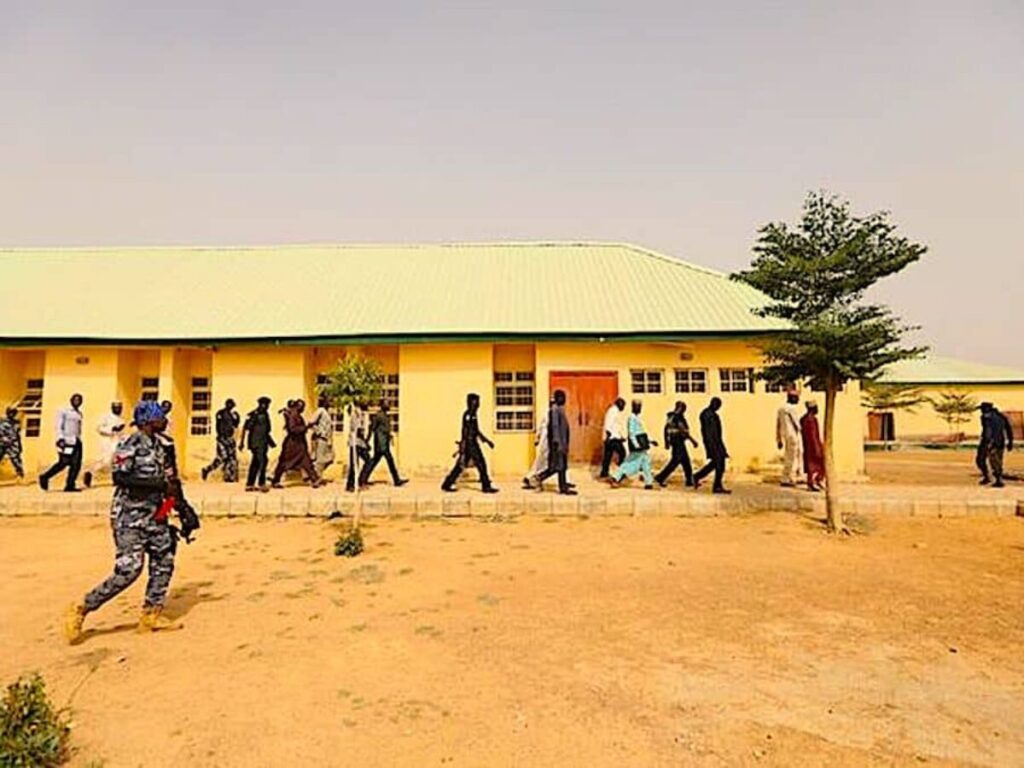
Education stakeholders in Abia and Imo have expressed deep concern over the exorbitant fees charged by private schools in the country.
A cross-section of the respondents blamed the phenomenon on the lack of effective monitoring of the schools by the regulatory agencies of government at all levels.
In Abia, the people blamed the commercialisation of education by private schools on ineffective regulatory policy framework and weak monitoring mechanism by agencies of the government.
They spoke in separate interviews, saying that the onus was on government to check the unhealthy phenomenon.
They called on the State Government to evolve an effective monitoring mechanism to
ensure that private schools deliver quality service to their pupils and students.
Mr Osondu Kalu, a father of two, said that effective monitoring of private schools by the relevant authorities would help keep them in check for the purpose of quality education.
Kalu said that issues of unqualified teachers, substandard curricula, and uneven education quality had become a disturbing trend in private schools..
He said that most parents developed preference for private schools because of the failure of the government to upgrade the educational facilities in public schools.
Kalu said that the school fees in highly rated private schools are high and beyond the reach of an average Nigerian parent.
According to him, this unfortunate trend among private schools with exorbitant fees ought to be addressed by the government.
Kalu, therefore, called for effective monitoring of the private schools by the relevant authorities to ensure that the standard for quality education was maintained.
A civil servant, Mrs Dorine Ahamefule, said that some private schools were set up with the primary objective of making money rather than imparting knowledge to young minds.
Ahamefule said that the unusual focus on money instead of imparting knowledge had become a serious challenge, especially given their inability to hire qualified teachers or pay well.
She said that parents should feel the effect of the high fees they pay on their children’s academic performance.
Ahamefule also said that paying teachers well translates to building a highly motivated teachers staff and better productivity.
“However, this comes with a downside, where the fees do not always correlate with the quality of education delivered, especially when schools employ unqualified teachers.
“This practice can lead to substandard education, undermining the value parents expect from their investment.
“The employment of unqualified teachers is often a cost-saving measure, which can compromise the educational quality and outcomes.
“This scenario raises concerns about the commercialisation of education, where profit sometimes outweighs educational quality,” she said.
A disability advocate, Mr Ikenna Ebiri, urged parents and guardians not to equate high fees with high quality, saying that some affordable schools might offer quality education.
Ebiri said that in spite of the high fees, not all private schools invest adequately in infrastructure or human resources, leading to disparity in the quality of education.
He said that with the proliferation of private schools, maintaining a competitive edge, while ensuring affordability and quality, is challenging.
Ebiri, therefore, called for enhanced regulatory framework to ensure all schools meet a minimum standard in teacher qualifications, facilities, and curriculum.
He called on the government to make education less elitist, through scholarships, waivers to private schools and remodelling of public school system.
Some parents and education experts also urged the Federal and State Governments to support private schools in order to lessen the financial burden they transfer to parents.
They further called on the government to introduce free education in public schools.
They urged the government to make public schools more attractive in order to discourage parents and guardians from patronising substandard and expensive private schools.
The Chairman of Parent-Teacher Association, Holy Rosary Secondary School, Umuahia, Mr Edward Okoro, said the high operational costs contribute to exorbitant fees charged by private schools.
Okoro said that most private schools with population between 50 and 100 students might not be able to cover their expenses in running the school, including payment of teachers’ salaries.
“Government has a lot to do and one of them is to make education free in primary and secondary schools.
“If the public schools are renovated and equipped with qualified teachers, many parents will begin to patronise them, instead of taking their children and wards to private schools.
“And when that is done, the exorbitant fees by private schools will no longer be there, which might cause some of them to close down,” he said.
Also, Prof. Rose Uzoka, the Dean, College of Education, Michael Okpara University of Agriculture, Umudike, urged the government to subsidise private schools to check high charges.
Uzoka said that most of the private schools “pay tangible amount” of taxes to the government and needed to recover the money through school fees and other charges.
She said : “I doubt if there is any private secondary school in the South-East that charges as much as N3 million or N4 million as school fees.
“The government is not doing enough to help these private schools, but that should not be an excuse to exploit parents in the name of school fees.
“There are different ways that the government can support the private schools to lessen the burden of exorbitant school fees”.
A parent, Mr Kalu Ukpai, lamented that some of the private schools charge exorbitant fees but employ unqualified teachers, whom they pay poor salaries.
Ukpai said that the issue of high cost of education has become a serious concern, especially now that things are generally tough in the country.
“Many families are finding it extremely difficult to make ends meet.
“How then can they cope with the high school fees, especially for those with many children?
“But, I am happy for what Gov. Alex Otti is doing in the education sector now in Abia, especially with the remodeling of public schools and his plans to introduce free basic education next year.
“The governor’s move will bring back the lost glory in public schools and pull people out from the private schools,” he said.
In Imo, some private secondary school teachers lamented that they were being underpaid, saying that their salaries and other emoluments were not commensurate with their output and school fees paid by the students.
Mrs Oluchukwu Ferdinand, who holds a Higher National Diploma in Education and teaches in a private secondary school, said that her employer always referred to the HND/BSc dichotomy as his reason for underpaying his teaching staff.
Ferdinand said that the attitude explained why the proprietor employed only HND and Ordinary National Diploma holders, adding that this was affecting the teachers’ approach to their duties.
Another teacher, Miss Uchechi Okoro, said that the lack of government measures to checkmate the activities of private schools was also a factor.
Okoro said: “I’m one of the 15 teachers in the secondary school where I teach, seven are regular staff members, while eight are youth corps members, who get a paltry allowance to augment what they receive from the Federal Government.
“But because nobody checkmates these things, they just keep happening and there is little or nothing the teachers can do about it,“ she said.
She argued that changing corps members annually was affecting the students performance negatively and called on government not to allow inexperienced corps members take over the core duties of teachers as assigned in the curriculum.
A head teacher, Mr George Ojiaku, blamed the low remuneration of teachers in private schools on government’s failure to provide adequate remuneration for teachers in public schools.
Ojiaku said that since government sets the standard for the private sector, “it would be difficult to expect perfection” from the latter.
The Proprietress of Sound Foundation Academy, Emekuku, Owerri, Mrs Chinwendu Osuji, said that the location of a school determines the fees charged which, in turn, determines the remuneration of teachers.
Osuji called on government to establish modalities for equitable school fees charged by private schools. (NAN)
From Joseph Amedu, Lokoja
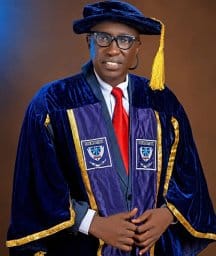
A Professor of Entrepreneurship and Corporate Strategy at the Federal University, Lokoja, John Alabi has called for more investment in the entrepreneurship/innovation sector to tackle Nigeria’s dwindling economy.
Professor Alabi who made the call while delivering the 46th Inaugural Lecture series of the University at its Felele Campus in Lokoja,on Wednesday, also stressed the need for government at all levels to prioritize investment in the sector to take care of the rising unemployment situation in Nigeria.
In his Lecture titled “Entrepreneurship Leadership through Entrepreneurial Education and Empowerment: Building an Entrepreneurial Economy in Vuca World” Professor Alabi advised that governments must provide enabling policies, universities must produce innovative graduates, industries must become active partners, financial institutions must support enterprise growth, and entrepreneurs themselves must embrace continuous learning, resilience, ethical leadership, and technological adaptation.
He explained that through entrepreneurial education and empowerment, nations can transform uncertainty into opportunity and build inclusive, resilient, and globally competitive economies.
“Governments should position entrepreneurship as a national development strategy rather than an employment intervention.
“Align entrepreneurship policies with national industrial and digital transformation agendas and investment in entrepreneurship ecosystems at federal, state, and local government levels.
“Building an entrepreneurial economy in a VUCA world requires more than increasing the number of entrepreneurs; it demands developing entrepreneurial leaders who can envision opportunities amid uncertainty, inspire innovation, mobilize resources, and create sustainable value
Professor Alabi also advocated that universities should focus on producing job creators rather than job seekers, establish functional entrepreneurship centres linked to industry, reward commercialization of research and innovation and encourage faculty-industry collaboration.
Other recommendations advanced by Professor Alabi includes, “Integration of entrepreneurship education across all levels of education, from primary to tertiary institutions.
“Shift from certificate-oriented learning to competency and problem-solving-based education.
“Promotion of interdisciplinary learning combining entrepreneurship, digital technology, leadership, and sustainability.
“Strengthen experiential learning through internships, incubators, business simulations, and enterprise projects.
“Developing a National Entrepreneurial Leadership Policy as well as establishment of a coordinated national framework for entrepreneurial leadership development.
“Encouragement of collaboration among government, academia, industry, and civil society”
In his welcome address, the Vice Chancellor of the Federal University, Lokoja, Professor Gbenga Ibileye gave an assurance that his administration would continue to encourage delivery of inaugural Lecture to ensure sustainability in the academic system.
Professor Ibileye said that the essence of the academic tradition is an opportunity for the academic staff to showcase their intellectual capacity in their field of study.
The Vice Chancellor described the topic of the lecture as timely and a welcome development that would go a long way in addressing the current economic reality in Nigeria.
He extolled Professor John Alabi, the Inaugural Lecturer, for his choice of contemporary topic that would add value to the people and the nation at large.

The Joint Admissions and Matriculation Board (JAMB) said its Central Admissions Processing System (CAPS) has been fully restored and is now operational after being unavailable for 96 hours.
The board made this known in its weekly Bulletin issued on Monday in Abuja.
It said the platform was restored on Sunday, Sept.
27, and urged tertiary institutions to speed up their admission processes to recover the time lost during the disruption.“The Board consequently urges all institutions to immediately accelerate their admission processes to recover the time lost during the period of the disruption and ensure compliance with the admission deadlines agreed at the 2026 Policy Meeting on Admissions,” it said.
It said the temporary unavailability of CAPS was caused by an administrative challenge involving its hosting organisation.
The board said it had worked with relevant service providers to restore the platform and ensure its stability.
It also apologised to candidates, institutions and other stakeholders for the inconvenience caused by the disruption.
“The Board sincerely regrets the inconvenience the temporary unavailability of the platform may have caused candidates, institutions and other stakeholders,” it said.
It said institutions should now intensify their admission processes, while candidates should promptly accept admission offers made to them.
It recalled that stakeholders at the 2026 Policy Meeting agreed that admissions for the 2026/2027 academic session should be concluded within specified deadlines.
According to the board, public universities are expected to conclude admissions on or before Oct. 31, private universities by Nov. 30, while other tertiary institutions have until Dec. 31.
“Consequently, all admissions for the 2026/2027 academic session are expected to be concluded by Dec. 31, 2026,” it said.
It particularly urged public universities to intensify their admission processes following the release of the 2026 Senior School Certificate Examination (SSCE) results by the National Examinations Council (NECO).
It said the development had provided institutions with the results needed to process more admissions before the Oct. 31 deadline.
“Following the release of the 2026 NECO results, the Board urges universities, especially public universities, to intensify admissions and meet the Oct. 31 deadline,” it said.
JAMB also advised candidates who had been waiting for their NECO results to immediately upload or verify their results on the appropriate platform.
It assured stakeholders that it would also speed up the consideration and approval of admission recommendations submitted by institutions through CAPS.
It said the Board was also working on measures to make CAPS more stable and reliable and reduce the impact of possible future disruptions.
It said the measures would include having alternative systems and arrangements to ensure that the admission process could continue if one hosting or service environment experienced problems.
“The Board remains committed to building systems that work reliably for the people we serve,” It said. (NAN)
From Dan Amasingha, Minna
The National Examinations Council (NECO) has released the results of the 2026 Senior School Certificate Examination (SSCE) Internal, with 804,948 candidates, representing 58.67 per cent of those who sat for the examination, obtaining at least five credits including English Language and Mathematics.
The figure represents a 1.
59 percentage-point decline from the 60.26 per cent recorded in 2025, when 818,492 candidates met the same benchmark.Announcing the results yesterday at the council’s headquarters in Minna, Niger State, NECO Registrar and Chief Executive, Prof.
Dantani Ibrahim Wushishi, said 1,378,048 candidates registered for the 2026 examination, comprising 682,352 males and 695,696 females.He said 1,371,992 candidates eventually sat for the examination, including 678,903 males and 693,089 females.
Wushishi, however, disclosed that the overall five-credit performance improved slightly, with 1,162,118 candidates, representing about 84.67 per cent, obtaining five credits and above irrespective of English Language and Mathematics.
The figure compares with 1,144,496 candidates, or 84.26 per cent, recorded under the same benchmark in 2025.
In absolute terms, the number of candidates who secured five credits including the two core subjects fell by 13,544, from 818,492 in 2025 to 804,948 in 2026. By contrast, the number who obtained five credits irrespective of English and Mathematics increased by 17,622.
The number of candidates who sat for the examination also rose by 13,653, from 1,358,339 in 2025 to 1,371,992 in 2026.
Malpractice records sharp decline
The council also reported a substantial reduction in examination malpractice, with 1,406 candidates implicated in various forms of malpractice in 2026, compared with 3,878 candidates in 2025.
The latest figure represents a 63.74 per cent decline from the previous year’s record. NECO had recorded 10,094 malpractice cases in 2024.
Wushishi attributed the reduction to improved examination processes, strengthened monitoring and collaboration with security agencies and other stakeholders.
He specifically acknowledged the support of the Nigeria Security and Civil Defence Corps and the Department of State Services, saying their involvement helped reinforce discipline, deter malpractice and safeguard the examination process.
Kano leads state figures
Kano State recorded the highest number of candidates who obtained five credits and above, including English Language and Mathematics, with 74,413 candidates.
Lagos followed with 72,496, while Oyo recorded 55,543 candidates under the same benchmark.
At the geopolitical-zone level, the Southwest accounted for the largest share of candidates with five credits and above irrespective of English and Mathematics, at 24.60 per cent. It was followed by the Northwest with 22.10 per cent, North Central with 19.00 per cent, Northeast with 14.70 per cent, South-South with 10.53 per cent and Southeast with 9.07 per cent.
The council also released separate state, geopolitical-zone and gender rankings based on the different performance benchmarks.
In the North Central, Benue led with 3.82 per cent, followed by Nasarawa with 3.66 per cent. Anambra led the Southeast with 2.92 per cent, ahead of Enugu with 2.14 per cent.
Rivers topped the South-South ranking with 3.03 per cent, followed by Edo with 2.17 per cent, Delta with 1.84 per cent, Akwa Ibom with 1.61 per cent and Cross River with 1.30 per cent.
Wushishi also disclosed that candidates at NECO examination centres in Saudi Arabia and Niger Republic recorded no candidate with five credits and above under the stated benchmark.
Exam held in Nigeria, six countries
The 2026 SSCE Internal examination was conducted from June 15 to July 23 across the 36 states, the Federal Capital Territory and six foreign countries—Benin Republic, Equatorial Guinea, Niger Republic, Côte d’Ivoire, Togo and Saudi Arabia.
The nationwide marking exercise was conducted between August 17 and September 4.
A total of 1,334 candidates with special needs participated in the examination, with the council maintaining that measures were put in place to promote inclusiveness.
Wushishi thanked the Federal Government, education authorities, the NECO Governing Board, National Assembly, security agencies, state governments, schools and other stakeholders for their support.
He declared the results released and said candidates could access them through the NECO website using their examination registration numbers.
The registrar urged candidates to remain focused on their academic pursuits, assuring stakeholders that the council would continue to uphold the credibility, fairness and integrity of its examinations.



Atiku Abubakar: Perhaps it is Time to Give Him a Fair Hearing
ShareBy Ishaya Inuwa Durkwa There comes a time when a people must decide whether yesterday’s grievances will continue to determine...

Zamfara at 30: At Last, Zamfara Has Begun to Fly
ShareBy Suleman Ahmad Tudu On October 1, 1996, Zamfara State was carved out of the old Sokoto State by the...

FG Moves to Automate Teachers’ Awards, Ends Manual Selection Process
ShareBy Tony Obiechina, Abuja The federal government has digitalised the selection process for the 2026 President’s Teachers’ and Schools’ Excellence Awards (PTSEA),...

Utsev Leads Nigerian Delegation to World Water Congress in Glasgow
ShareBy David Torough, Abuja Minister of Water Resources and Sanitation, Engr. Prof. Joseph Terlumun Utsev, will on Saturday, October 3,...


BBNaija Season 11: Keivo Becomes Second Housemate to be Disqualified
ShareKeivo has become the second Big Brother Naija housemate to be disqualified from Season 11. This follows his physical altercation...


Mofe-Damijo Envisions Bright Future for Nigeria at 66
ShareVeteran actor and public speaker, Richard Mofe-Damijo, has expressed optimism about Nigeria’s future, describing the country as a work in...


My Wife Paid $20k for Her Surgery Herself, Peller Fires Back at Carter Efe
ShareNigerian content creator and streamer, Peller, has fired back at Carter Efe after the streamer compared their relationships while praising...


I Didn’t Want to be in the Spotlight – Tems
ShareGrammy-winning Nigerian singer Temilade Openiyi, popularly known as Tems, has revealed that despite wanting musical success, she was uncomfortable with...
Nigeria at 66: Which Way Nigeria?
ShareBy Tochukwu Jimo Obi Sixty six years after independence, Nigeria should be asking itself a question that can no longer...

Nigeria at 66: Booming Banks, Struggling Nation, Where Is the Promised Prosperity?
ShareBy Blaise Udunze As Nigeria celebrates 66 years of independence, it must ask whether the country has delivered the prosperity...