
NEWS
Abiodun Launches Electric Motorcycles to Address Transportation Costs


From Ekundayo Idowu,Abeokuta
The Ogun State Government yesterday launched e-bikes and tricycles under the Ogun State E-Mobility Programme.The programme, which aims to reduce the cost of transportation in the state, would also ensure a cleaner environment by reducing carbon emissions.
Speaking at the launch of the first phase of 2,000 electric motorcycles held at the Arcade Ground, Governor’s Office, Oke-Mosan, Abeokuta, the state governor, Prince Dapo Abiodun, said the E-Mobility initiative marks another milestone toward a sustainable and green future for the state. He stated: “Our administration is committed to mitigating the impact of the subsidy removal and the high cost of diesel fuel while reducing transportation costs for our citizens.”We will be releasing about 2,000 e-bikes in the first phase. These commercial motorbikes can ride up to 75-80 kilometres on a full charge, and the vehicles can travel up to 200 kilometres, thus reducing transportation costs by 40 per cent.”We aim to reduce our carbon footprint and bring about a significant change in how we think about transportation in our daily lives. This aligns with our energy transformation program for a cleaner and healthier environment for future generations.”The governor noted that the state has led the country in energy transition, being the first state to launch and deploy Condensed Natural Gas (CNG) buses about a year ago.Abiodun stated that the buses were currently deployed on the Ita-Oshin-Adatan route in Abeokuta, as well as the Mowe-Ibafo to Lagos routes, serving residents in that corridor and drastically reducing transportation fares.The governor also announced the groundbreaking of a new facility, named Giga Facility, at the Special Agro Processing Zone located in Iperu-Remo, noting that the facility, with a total investment of $40 million, would serve as an assembly plant for electric bikes, two-wheelers, tricycles, commercial buses, electric cars, and swap stations.While expressing the commitment of his administration to continue encouraging Public-Private Partnerships for the economic prosperity of the people, Abiodun called on investors to take advantage of the peaceful and conducive business environment to invest in all sectors of the state’s economy.The governor also appealed to the people, particularly the youth, to engage the government constructively instead of embarking on unnecessary protests, which often do not yield positive results.Also, the Minister of Transportation, Alhaji Sa’idu Alkali, lauded the state for being the first to launch the E-Mobility initiative, adding that with this development, Ogun has joined other African countries that are currently using more than 15,000 e-bikes in their transportation sectors.He said the programme would revolutionize the transportation sector not only in the state but in the country as a whole, as it would provide an alternative to fuel at reduced costs.Alkali appealed to other state governments to take a cue from Ogun State in partnering with the federal government in CNG usage, just as he encouraged the public to support the programme to create jobs and make transportation cheaper, more efficient, and environmentally friendly.In his remarks, the Group Managing Director of the Nigerian National Petroleum Corporation Limited (NNPCL), Mele Kyari, represented by the Executive Vice President of NNPCL, Lekan Ogunleye, lauded the state for always being the first in any innovation that would benefit the people.He said the E-Mobility Programme is capable of cutting transportation costs for both passengers and operators, as well as saving the environment from pollution, assuring that NNPCL would have three charging points in its stations across the country while supporting the state government by making swap stations available in its stations in the state.Commissioner for Transportation, Olugbenga Dairo, in his welcome address, said the launch of the programme was a follow up to the conversion of the CNG buses last year which is aimed at addressing the increase in transportation fare occasioned by the subsidy removal.The Alake and Paramount Ruler of Egbaland, Oba Adedotun Gbadebo, lauded the governor for initiating the programme, which he said, is environmentally friendly.He expressed the hope that it would bring down transportation costs and improve the standard of living of the people.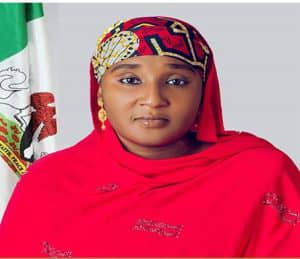
By Tony Obiechina, Abuja
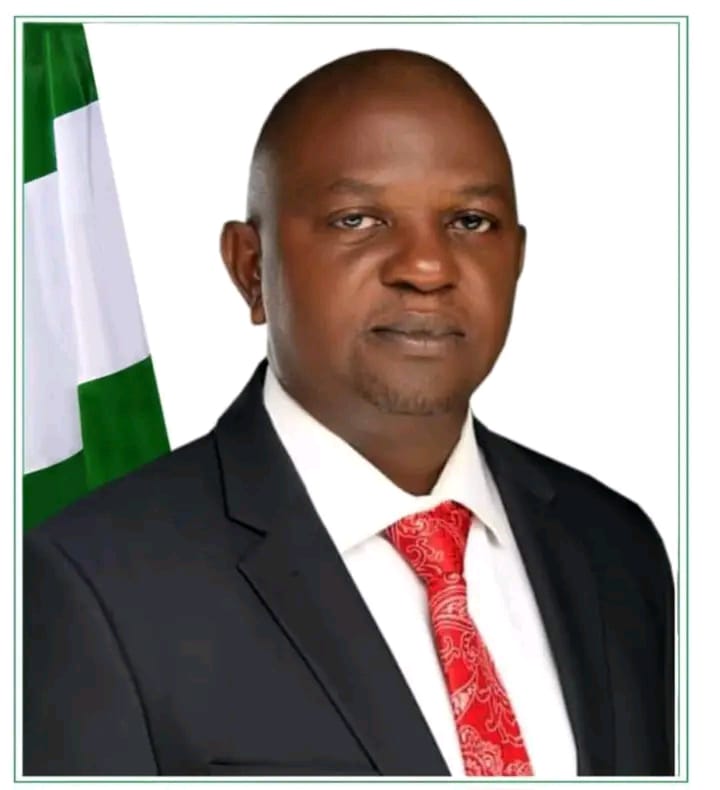
The federal government has digitalised the selection process for the 2026 President’s Teachers’ and Schools’ Excellence Awards (PTSEA), ending the manual process previously used in selecting outstanding teachers and schools.
The Minister of State for Education, Prof Suwaiba Said Ahmad, disclosed this in Abuja on Friday during a press briefing ahead of the 2026 World Teachers’ Day celebration scheduled for Monday, October 5.
World Teachers’ Day is observed annually on October 5 and has been celebrated since 1994.
The 2026 edition also marks 60 years of the 1966 ILO/UNESCO Recommendation concerning the Status of Teachers, which established international standards relating to teachers’ rights, responsibilities, preparation, recruitment, employment and working conditions.Prof Ahmad said the digital selection process was introduced in line with African Union guidelines to promote transparency, accountability, security and proper documentation in the selection of awardees.
She said, “For the first time, the selection process coordinated by the Federal Ministry of Education was digitalised in line with the African Union guidelines to ensure certainty, accountability and reference”.
The minister said the annual celebration, organised by the Federal Ministry of Education in collaboration with the Nigerian Union of Teachers (NUT), would focus on transforming the teaching profession and preparing teachers for the demands of a rapidly changing world.
According to her, the celebration would focus on five interconnected pillars; innovation, mobility, artificial intelligence, inclusion and professional excellence.
The minister said 14 teachers, schools and other education stakeholders would be recognised under the 2026 awards, with the first, second and third-best teachers receiving prizes, while other awardees would receive laptops.
She said teachers from the 36 states and the Federal Capital Territory would participate in the October 5 celebration, including a march-past featuring state flags and cultural attire to showcase unity, diversity and cooperation.
Speaking on behalf of Nigeria Union of Teachers (NUT) President, Comrade Titus Amba, the union’s Deputy National President, Kizito Kalu, said the changing nature of education made it necessary to TV strengthen rather than diminish the professional role of teachers.
Kalu said technology and artificial intelligence were transforming education, but teachers must remain at the centre of the learning process.
“The NUT believes that a strong education system cannot be built without a strong, respected and adequately supported teaching profession,” he said.
He added that teachers needed to be equipped to navigate technological changes with confidence and competence.
“The future of education must therefore be a future in which teachers are empowered to adapt, innovate and continue to exercise their professional judgement,” Kalu added
By David Torough, Abuja
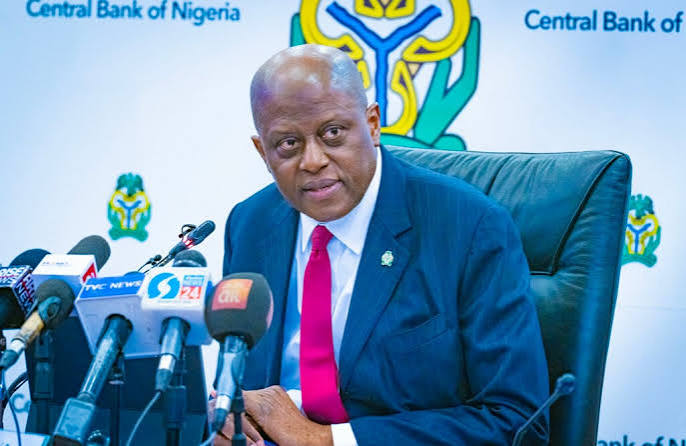
Minister of Water Resources and Sanitation, Engr. Prof. Joseph Terlumun Utsev, will on Saturday, October 3, lead a Federal Government delegation to the 15th World Water Congress and Exhibition in Glasgow, United Kingdom.
The biennial congress, organised by the International Water Association (IWA), is expected to bring together about 10,000 stakeholders from across the global water sector, including policymakers, researchers, water professionals, development partners and technology innovators.
The 2026 edition, themed “The Path to Resilience and Prosperity,” will focus on practical solutions to regional and global water challenges.
Discussions will cover areas including water utility management, wastewater recovery, drinking water reuse, water resilience and sustainable management of water resources.The gathering will also feature high-level discussions on the financing challenges affecting the achievement of Sustainable Development Goal 6, which aims to ensure the availability and sustainable management of water and sanitation for all.
According to the Ministry, Prof. Utsev is expected to present Nigeria’s ongoing water-sector reforms and initiatives under the administration of President Bola Ahmed Tinubu, particularly efforts aimed at expanding access to clean, safe and sustainable water.
Among the initiatives to be highlighted is the National Water Compact, which is being developed in collaboration with state governments and development partners. The initiative is aimed at accelerating access to safe water, improving coordination within the sector and attracting investment to Nigeria’s water industry.
The minister is also expected to showcase other government interventions and reforms which, according to the ministry, have contributed to improved access to safe water for more than 32 million Nigerians.
The ministry said Nigeria’s participation in the global congress would provide an opportunity to share its experiences while engaging with international stakeholders on strategies for strengthening water security and advancing the country’s progress towards SDG 6.
By Blaise Udunze
As Nigeria celebrates 66 years of independence, it must ask whether the country has delivered the prosperity and opportunities its people were promised. Beyond the official celebrations, political speeches and repeated claims of national achievement, Nigerians must confront a more important question about the country’s actual progress.
Is Nigeria becoming an economy in which its people can increasingly determine their own economic future, or are we merely becoming better at managing the symptoms of longstanding structural weaknesses?The banking industry provides a useful lens through which to assess whether Nigeria’s economic progress is translating into meaningful benefits for its citizens.
Yes, it may not be out of place to argue that banks are not the entire economy, but they occupy a strategic position within it. They mobilise savings, allocate credit, facilitate payments, finance trade, support investment and transmit monetary policy to businesses and households. Their performance can therefore illuminate the strengths and weaknesses of the wider economy.Nigeria’s banks are raising capital, reporting substantial earnings and operating within a financial system undergoing significant regulatory and structural changes. Meanwhile, beyond the banking halls and financial statements, millions of Nigerians continue to confront the pressures of food prices, transport costs, housing, healthcare, education, unemployment and the struggle to sustain small businesses.
The contrast demands scrutiny. If the financial system is expanding, what is happening to the productive economy? If banks are becoming stronger, are businesses becoming more capable of creating jobs? If national output is growing, are household incomes and living standards improving at a comparable pace? And if reforms are restoring macroeconomic stability, how quickly are their benefits reaching ordinary citizens?
These are not questioning that can be answered by banking results alone. But the banking industry provides an important starting point for assessing whether Nigeria’s economic growth is translating into economic independence and shared prosperity.
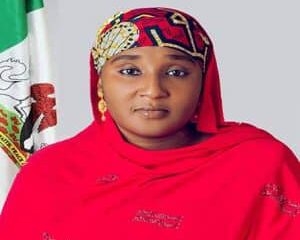
The recapitalisation exercise is a major turning point for Nigeria’s banking industry because it could reshape the strength, structure and future direction of banks. Nigerian banks raised about $3.4 billion in new equity, with 33 of 37 banks meeting the revised capital requirements by the March 2026 deadline. The exercise is designed to strengthen financial institutions, improve their capacity to absorb economic shocks and enhance their ability to finance productive activities across the economy, according to the Central Bank of Nigeria.
No doubt, the scale of capital raised is significant and this is because stronger capital buffers can help banks absorb losses, withstand shocks, support larger transactions and maintain confidence in the financial system. The truth is that in an economy exposed to exchange-rate volatility, inflationary pressures and changing global financial conditions, the importance of a resilient banking sector cannot be overstated.
But it is necessary to understand that recapitalisation is a means, not an economic destination. Its ultimate value will depend on what the stronger institutions help the country achieve. A bank can meet its capital requirement, improve its balance sheet and report higher earnings without necessarily transforming the productive capacity of the economy around it.
That distinction is central to Nigeria’s economic independence. Political independence established the country’s sovereignty, but economic independence requires the capacity to mobilise domestic resources, finance development, produce competitively, create opportunities and withstand external shocks. From all indications, it requires an economy in which citizens and businesses have the tools to participate meaningfully in wealth creation rather than remain spectators to growth that has continued to serve only a few individuals.
A country that depends heavily on imported essentials, external financing, foreign technology and volatile commodity receipts remains exposed to developments beyond its control. Strong banks can help reduce that vulnerability by financing domestic production, expanding access to capital and supporting enterprises that create value locally. The challenge here is that they cannot do so effectively in isolation from the wider policy and infrastructure environment.
Nigeria’s economic growth figures also invite a broader assessment. This brings to fore the figure obtained from the National Bureau of Statistics, which reported that real GDP grew by 3.89 percent year-on-year in the first quarter of 2026, compared with 3.13 percent in the corresponding quarter of 2025. Manufacturing grew by 3.29 percent, while trade expanded by 2.08 percent.
Definitely, it would be said that these figures point to an expanding economy. However, the quality of growth matters as much as its rate. Unarguably, growth should be assessed by the productive capacity it creates, the jobs it supports, the incomes it generates, the sectors it strengthens and the extent to which its benefits reach households across different income groups and regions, across the board.
The truth is that an economy can grow without becoming sufficiently productive. It can expand while employment opportunities remain inadequate, while businesses struggle with high operating costs, and while households experience declining purchasing power. Unbeknownst, growth can also be concentrated in sectors that generate substantial output or financial returns but have limited direct effects on employment and household welfare.
Clearly, this is why the distinction between growth and prosperity must remain central to the national conversation. Growth describes an increase in economic activity, while from all indications, prosperity is expected to be reflected in the ability of people to live with security, opportunity and dignity. It includes access to meaningful work, reliable services, affordable essentials, productive assets and the capacity to plan beyond immediate survival.
The banking industry reveals the challenge of connecting the two. Banks are expected to intermediate between savings and investment, directing funds towards businesses and individuals capable of using capital productively. Yet the IMF’s 2026 assessment found that, despite private-sector credit growing by about 20 percent in 2025 after adjusting for exchange-rate valuation effects, credit remained equivalent to only 12 per cent of GDP. The Fund also noted that domestic savings were not being sufficiently channeled into productive investment and that lending remained concentrated in a few sectors.
That finding raises an important question about the role of financial deepening in Nigeria’s development. And this is a clear, stark contradiction because a banking system may be profitable and well capitalised, but if credit remains inaccessible to a broad range of productive enterprises, its contribution to economic transformation will be constrained.
In many situations that have played out in the past, consider the manufacturer seeking financing to purchase machinery, the farmer requiring working capital before harvest, the food processor trying to expand capacity, the technology entrepreneur developing a locally relevant solution, or the small business owner hoping to employ additional workers. Each represents a potential source of production, income and employment. Each also faces the practical question of whether financing is available at a cost and on terms the business can sustain.
When viable enterprises cannot obtain suitable financing, investment is delayed, expansion is limited and employment opportunities are lost. The consequence is not simply a missed lending opportunity for a bank. Beyond what is mentioned, it becomes a clear case of a missed opportunity for the economy to increase output, deepen local supply chains and broaden the sources of household income.
One truth is that it does not mean banks should lend recklessly or abandon prudent risk management. Financial stability is essential to economic development. A banking system weakened by bad loans cannot provide sustainable credit. The challenge is to create conditions in which responsible lending to productive businesses becomes commercially viable.
That requires more than exhortations to banks. Banks need a stable economy, dependable institutions and a supportive business environment before they can confidently expand lending to productive businesses. The fact is that where electricity is unreliable, transport costs are high, security is uncertain and policy changes are difficult to anticipate, the risks and costs of doing business rise. With these developments, banks also respond to those risks through lending decisions, pricing and collateral requirements.
Consequently, the quality of the business environment influences the reach of bank credit. It is a clear fact that when the economy is weak, banks often prefer lending to large, established businesses rather than taking risks on smaller or less-established enterprises. Smaller enterprises and emerging sectors can find themselves excluded, even when they have the potential to contribute to economic diversification.
The CBN’s September 2026 decision to reduce the Monetary Policy Rate to 23 percent is one part of the effort to shape financial conditions. The CBN retained a 45 percent Cash Reserve Requirement for deposit money banks, alongside other reserve requirements. These decisions reflect the complex task of balancing price stability, liquidity management and support for economic activity.
However, it must be taken into cognizance that the reduction in the benchmark interest rate does not automatically translate into affordable credit for businesses and households. At this juncture, the transmission depends on banks’ funding costs, liquidity, credit-risk assessments, inflation expectations and the financial condition of prospective borrowers. One must also come to the understanding that the wider economic environment matters. A business cannot repay a loan sustainably if its operating costs rise faster than its revenue or if demand for its products remains weak.
Come to think of it, for ordinary Nigerians, who make up the larger population, the test of economic progress is more immediate than monetary policy announcements. In a situation of this nature, it is whether wages and business incomes can meet the cost of living. Again, it is whether a young graduate can find meaningful employment, whether a family can afford nutritious food, whether a trader can replenish stock without exhausting working capital and whether a small enterprise can grow beyond subsistence.
Of more concern is the IMF’s June 2026 assessment which estimated that poverty had reached 63 percent under Nigeria’s national poverty line and that 27 million Nigerians faced food insecurity in the autumn of 2025. This also presents a painful contradiction, as it projected economic growth of 4.1 per cent for 2026 while warning that higher food and transport costs could weigh on activity and worsen hardship.
These estimates underscore the need to distinguish macroeconomic improvement from household recovery. Improving indicators can signal that policy adjustments are beginning to stabilise parts of the economy. But stabilisation is not the same as prosperity, and the benefits of reform are not necessarily immediate or evenly distributed.
For households whose incomes are consumed largely by food, transport and rent, even a moderation in the rate of price increases may not restore lost purchasing power. A slower increase in prices does not mean prices have returned to levels families can comfortably afford. Similarly, a growing economy does not guarantee that the new opportunities are accessible to those who need them most.
This is where the banking sector’s contribution to national development must be assessed more broadly. At this point, it should be seen from the angle that its performance should not be reduced to profit figures, capital ratios or balance-sheet expansion. No doubt, those measures are important indicators of institutional strength, but the wider question is whether the financial system is helping to create a more productive and inclusive economy, which remains the concern of the larger populace, especially those who are adversely affected.
This is where the banks can come in by contributing to and supporting viable businesses across agriculture, manufacturing, logistics, technology, healthcare, housing and export-oriented sectors. Also, they can help mobilise domestic savings, improve payment systems, expand responsible digital financial services and provide financing that enables enterprises to invest, innovate and employ more people.
The ultimate measure of banking sector progress must extend beyond what banks earn to what the wider economy is enabled to produce.
But the responsibility is shared. Government must provide the enabling environment, while regulators must preserve financial stability and encourage effective intermediation. Businesses must improve governance, record-keeping and financial discipline. Financial institutions must continue developing credit models that can assess viable enterprises beyond the narrowest measures of conventional collateral.
The objective should not be to compel banks to finance every business proposal. It should be to build an economy in which more businesses become bankable because they operate in a more predictable, productive and competitive environment.
The same principle applies to economic diversification. Diversification is not achieved simply by announcing new sectors as priorities. It requires sustained investment in skills, infrastructure, technology, market access and enterprise development. It requires domestic firms to move beyond trading and basic distribution into processing, manufacturing, innovation and higher-value services.
A stronger banking system can help finance that transition. But if capital continues to circulate primarily within established activities while emerging productive sectors struggle to attract investment, the economy’s underlying structure may change more slowly than its financial indicators suggest.
Where some individuals at the policymaking level get it wrong is when they think that true economic independence is only about producing more wealth domestically. No, it is also about becoming less vulnerable to events outside Nigeria’s control. Domestic production of food, essential goods, industrial inputs and technology can strengthen resilience, provided such production is efficient and competitive. Again, it would be absolutely wrong to consider that local production must be treated as an end in itself; it must deliver quality, affordability and productivity. But an economy that builds its capacity to produce competitively is better positioned to create employment, retain more value domestically and respond to disruptions in global supply chains.
The banking industry has a role in financing this capacity. Yet the success of that role depends on the ability of enterprises to produce at scale, reach markets and generate sustainable returns. This is why economic policy cannot be fragmented. Monetary policy, fiscal policy, trade policy, infrastructure investment, education and industrial development must reinforce rather than undermine one another.
At 66, Nigeria should also examine the relationship between financial prosperity and social prosperity. A banking sector can be financially sound while large segments of the population remain financially vulnerable. The expansion of digital payments and financial services is valuable, but inclusion should mean more than opening accounts or increasing transaction volumes. This must be taken into account, as it should also mean that individuals and businesses can use financial services to save securely, manage risks, access appropriate credit and build assets.
For a household, financial inclusion may mean having a safe place to save and a reliable payment channel. For a small business, it may mean access to working capital, affordable payment services and financial records that help establish creditworthiness. For a young entrepreneur, it may mean the ability to turn a viable idea into a sustainable enterprise. These are the practical connections through which financial development can improve economic opportunity.
The country’s anniversary conversation should therefore move beyond the question of whether Nigeria is growing. It should ask what kind of economy that growth is building, who is participating in it and whether it is expanding the choices available to citizens.
Are businesses becoming more productive? Are jobs being created in sufficient numbers and with sustainable incomes? Is credit reaching a wider range of viable enterprises? Are domestic savings financing more productive investment? Is the economy becoming less vulnerable to external disruptions? Are households gaining the capacity to save, invest and plan for the future?
These questions do not diminish the importance of reforms or the achievements of institutions that have strengthened their financial position. They place those achievements within the larger national purpose they are meant to serve.
At 66, Nigeria does not need to choose between financial stability and shared prosperity. It needs to connect them. Recapitalised banks, stronger regulation and improved macroeconomic management can provide important foundations. In truth, the real test of economic progress should be whether Nigerians who work, save, pay taxes and build businesses actually experience better opportunities and a higher quality of life.
Let it be clear that the banking industry is not the whole economy, but it is a mirror held up to its ambitions and limitations. This is how it is expected to function, which depicts that if stronger banks finance stronger businesses, if those businesses create sustainable jobs and raise productivity and if the resulting gains improve household incomes and living standards, then financial-sector reform will have contributed meaningfully to economic independence.
Nigeria could end up with stronger banks and a bigger economy without becoming a more prosperous country for ordinary Nigerians.
Nigeria’s measure at 66 should not be how much capital its banks have raised or how impressive their earnings look in financial statements. It should be whether the country is building the capacity to produce, compete, create jobs and give its citizens greater command over their economic future. That is the distance between an economy that is growing and a nation becoming prosperous.
Blaise, a journalist and PR professional, writes from Lagos and can be reached via: blaise.udunze@gmail.com



FG Moves to Automate Teachers’ Awards, Ends Manual Selection Process
ShareBy Tony Obiechina, Abuja The federal government has digitalised the selection process for the 2026 President’s Teachers’ and Schools’ Excellence Awards (PTSEA),...

Utsev Leads Nigerian Delegation to World Water Congress in Glasgow
ShareBy David Torough, Abuja Minister of Water Resources and Sanitation, Engr. Prof. Joseph Terlumun Utsev, will on Saturday, October 3,...


BBNaija Season 11: Keivo Becomes Second Housemate to be Disqualified
ShareKeivo has become the second Big Brother Naija housemate to be disqualified from Season 11. This follows his physical altercation...


Mofe-Damijo Envisions Bright Future for Nigeria at 66
ShareVeteran actor and public speaker, Richard Mofe-Damijo, has expressed optimism about Nigeria’s future, describing the country as a work in...


My Wife Paid $20k for Her Surgery Herself, Peller Fires Back at Carter Efe
ShareNigerian content creator and streamer, Peller, has fired back at Carter Efe after the streamer compared their relationships while praising...


I Didn’t Want to be in the Spotlight – Tems
ShareGrammy-winning Nigerian singer Temilade Openiyi, popularly known as Tems, has revealed that despite wanting musical success, she was uncomfortable with...
Nigeria at 66: Which Way Nigeria?
ShareBy Tochukwu Jimo Obi Sixty six years after independence, Nigeria should be asking itself a question that can no longer...

Nigeria at 66: Booming Banks, Struggling Nation, Where Is the Promised Prosperity?
ShareBy Blaise Udunze As Nigeria celebrates 66 years of independence, it must ask whether the country has delivered the prosperity...


Nigeria at 66: Leaders are Human, But Accountability is Non-negotiable
ShareBy Aderonke Ojediran As Nigeria marks its 66th Independence anniversary, the debate over leadership, public trust and accountability remains central...


Oborevwori Orders Julius Berger to Fix Washed-Out East-West Road at Agbarho
ShareFrom Francis Sadhere, Delta Delta State Governor, Rt. Hon. Sheriff Oborevwori, has directed Julius Berger Nigeria Plc to immediately commence...