
Uncategorized
Abuja Residents Criticise Motorcycle Crushing, Suggest Auctioning, Fines

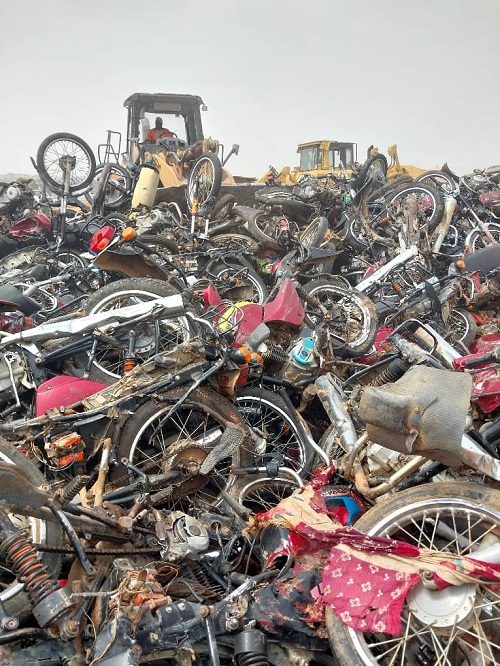
Some Abuja residents have kicked against the incessant crushing of motorcycles impounded by the Federal Capital Territory Authority(FCTA) and security forces.
Reports says that the authorities have consistently crushed motorcycles seized from traffic offenders, especially those caught in areas the bikes are banned.
Records from the FCTA show that hundreds of thousands of motorcycles have been destroyed in the last two years alone.
The residents, while reacting to the recent round of destruction, said this in a separate interviews in Abuja on Sunday that the destruction should be replaced with stiffer fines or the auctioning of the motorcycles for use in areas they are not banned.
Some opined that the heavy fines would discourage riders from veering into areas where their presence was outlawed.
They argued that the practice of crushing vehicles and motorcycles was rather “extreme” and could potentially result into an escalation of crime rates, particularly due to the potential loss of jobs in the nation’s capital.
While noting the FCT Directorate for Road Traffic Services’ claim that scraps from crushed bikes are recycled and the proceeds used to fund social services, they pointed out that crushing them had not deterred the riders, hence the need for a different approach.
A civil servant, Mr Joseph Edeh, wondered why the FCTA would resort to crushing the items, saying that they were the main source of income for the owners.
According to him, imposing stiffer penalties and huge fines would go a long way to discourage those disobeying the traffic laws in the nation’s capital.
Edeh said that many vehicle or motorcycle seizures had affected the disproportionately low income families, with many left in hunger and economic hardship.
“Owners of seized vehicles and motorcycles should be forced to choose between paying a higher fine or forfeiting their property.
“We all know that the hardship of the land affects every person, crushing these items is too extreme.”
A journalist, Uche Annune, spoke in the same vein.
“Auctioning and imposing stiff penalties will be more appropriate than crushing these items. Government must operate with a ‘human face.”
According to him, government must be considerate by putting the people first in all its policies and decisions.
“The best way to promote inclusive development is to consider the plight of the desperate poor. Anything outside that can lead to chaos.”
A lawyer, Ms Emilo Atana, also expressed reservations over the crushing of impounded vehicles.
“It is not economically good to destroy social assets like cars or motorcycles. They may be banned in Abuja, but they are very useful in the rural settlements.
“My suggestion is that the impounded could be taken to rural hospitals or schools. There is no doubt that they will be very useful there,” he said.
Offering a divergent perspective, however, a public Servant, Mr Gregory Maduakolam, expressed support for FCTA’s decision to crush all impounded vehicles and motorcycles.
He deemed the action timely, especially considering the ongoing challenges associated with the perpetuation of insecurity involving motorcyclists.
Maduakolam said, “I support the crushing of impounded vehicles and motorcycles because the menace that they cause in the city centre is worrisome.
“Many of the crimes committed here are carried out on bikes; something must be done to prevent these crimes from happening,” he said.
Meanwhile, Dr Abdulateef Bello, the Director of the Department of Road Traffic Services (DRTS), has said that plans are underway to crush more than 130 impounded vehicles that failed integrity tests.
He revealed that the vehicles would undergo standard verification with those below minimum standards crushed, while the owners could face mobile courts and penalties in accordance with the law.
He said that some vehicles, deemed unfit for the road, would be crushed after inviting owners to retrieve valuable belongings.
“Those arrested for crimes committed under the guise of commercial operations will also be prosecuted,” he said.
According to him, the impounding, conducted during evening raids in the last two weeks, aims to combat criminal activities carried out by vehicles pretending to be engaged in legitimate commercial activities.
“The DRTS, aligning with the administration’s vision of zero tolerance for insecurity in the FCT, plans to continue operations until all substandard vehicles involved in criminal activities are removed from the city.
“Efforts have also been made to reduce criminality associated with ‘one chance’ incidents, with a focus on ensuring that taxi operators conduct their businesses within authorised parks rather than on the roads.
“Residents are advised against patronising vehicles outside authorised parks to enhance safety and security.”
Reacting also, Mr Kalu Emetu, the spokesperson of DRTS, called on motorists in the nation’s capital to comply with all traffic laws and vehicle registration requirements, dispelling any notion of animosity between them.
He said that stiff measures were being taken to address the lackadaisical attitude many motorists had adopted that were hurting the country and its policies.
He noted that the DRTS operates under the mandate of the Transport Secretariat of the FCTA, and affirmed the agency’s commitment to contributing to road safety efforts.
He highlighted the crucial role of the task force in maintaining order in the city, lamenting that Nigerians often found it challenging to obey traffic laws.
According to Emetu, the demonstration of patriotism for the country should include timely renewal of vehicle registration papers and viewing the DRTS as collaborative partners in ensuring compliance with regulations.
The PRO disclosed that 13,719 vehicles have been impounded from January 2023 to date for various traffic offenses.
“That is why we call on all motorists to obey traffic rules and renew their vehicle registration on time.
“People drive cars and buy fuel daily, why is it difficult to be patriotic and renew vehicle papers? Why should they wait until they are apprehended?
“Motorists are our key stakeholders; without them, we would not have work, so, we treat them with respect, we will only encourage people, Nigerians to be bold, we don’t kill anybody, we don’t kill people.
“We don’t have power to arrest any human being, we can arrest your vehicle, but not you. You will only drive it to where you will park it and leave it, when you settle whatever you need to settle, you take the vehicle.”
Emetu noted that the task force, despite not being based in DRTS, functions under the purview of the FCT Minister’s office and has diverse uniformed organisations in it.
He outlined the primary functions of DRTS which included ensuring the free flow of traffic, handling vehicle administration such as registration and renewal of documents, and generating revenue for the FCT.
Responding to allegations, Emetu encouraged the public to report any misconduct by DRTS personnel, assuring that such cases would be thoroughly investigated.
He reiterated the importance of public collaboration, emphasising that motorists are key stakeholders and treated with respect.
Responding to suggestions that fines be increased instead of crushing impounded vehicles, Emetu emphasised that fines were already being implemented within the legal framework.
He pointed out that the effectiveness of fines had been limited, with many traffic violators failing to comply.
The spokesperson emphasised the commitment of DRTS to its primary goal of ensuring safety on the roads and urged the public to engage constructively with the agency to address concerns.
On allegations of corruption and misconduct of its personnel, Emetu acknowledged that enforcement entities often face public skepticism.
He encouraged the public to report concerns about staff behavior instead of confronting them, highlighting the readiness of the office to address public inquiries through its SERVICOM channel. (NAN)



From Abel Zwanke, Lafia
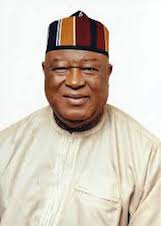
The Nasarawa State Commissioner for Women Affairs and Humanitarian Services, Barr. Hauwa Samuel Jugbo, has called for sustained investment in women and girls as a strategic pathway to achieving sustainable development and economic prosperity.
Jugbo made the call on Tuesday in Lafia during the 2026 International Women’s Day celebration, with the theme, “Give To Gain.
”She said the annual celebration provides an opportunity to assess the condition of women, review their progress, and address lingering challenges affecting their growth and development.
“I welcome you very warmly, our esteemed dignitaries and guests, and indeed all who identify with us, on this important event as we observe the 2026 International Women’s Day celebration in Nasarawa State,” she said.
According to her, the event symbolises unity and shared purpose among women across cultures and countries.
She noted that Nigerian women have continued to demonstrate resilience, innovation, and leadership across key sectors, including agriculture, commerce, education, and public service.
However, she lamented that many women still face significant challenges such as limited access to finance, restricted economic opportunities, and socio-cultural barriers.
“The theme for this year’s celebration, ‘Give To Gain,’ underscores the importance of investing in women and girls as a strategic pathway to achieving sustainable development and economic prosperity.
“This is based on the belief that when we empower women, we empower families, communities, and the nation at large,” she added.
The commissioner commended women in Nasarawa State for their contributions to development, describing their efforts as invaluable to the growth of the state and the country.
She also praised the First Lady of Nasarawa State, Hajiya Silifat Abdullahi Sule, for her commitment to women empowerment through programmes and initiatives aimed at uplifting vulnerable groups.
Jugbo further highlighted the impact of the Renewed Hope Initiative championed by the First Lady of Nigeria, Senator Oluremi Tinubu, noting that it has created opportunities for women’s economic empowerment, social inclusion, and improved livelihoods.
She equally commended Governor Abdullahi Sule for his administration’s commitment to advancing women’s rights, promoting gender equality, and protecting women and girls in the state.
“As a ministry, we shall continue to advocate and strengthen legal frameworks against gender-based violence, while promoting equitable access to education, healthcare, economic opportunities, and political participation for women and vulnerable groups,” she stated.
Jugbo urged women to take advantage of available opportunities, especially in skills acquisition, to improve their livelihoods and contribute meaningfully to society.
“Every woman has the capacity to make a difference in her home, community, workplace, and the society at large,” she said.
She called for collective action to ensure that every woman and girl enjoys her full rights and lives in dignity.
“Let us unite in collective action to build a more just, inclusive, and equitable society. Together, we can accelerate progress and build a brighter future for all citizens of Nasarawa State,” she added.
Uncategorized
ADVERTORIAL: The 42nd Annual General Meeting of the Association of Public Health Physicians of Nigeria (APHPN).

Wednesday, March 11, 2026
COMMUNIQUÉ ISSUED AT THE END OF THE 42ND ANNUAL GENERAL MEETING AND SCIENTIFIC CONFERENCE OF THE ASSOCIATION OF PUBLIC HEALTH PHYSICIANS OF NIGERIA (APHPN) HELD FROM 9TH–13TH FEBRUARY 2026 MUHAMMAD INDIMI
CONFERENCE CENTRE, UNIVERSITY OF MAIDUGURI, BORNO STATE
Conference Theme:
“Healing in the Crossfire: Health Under
Threat – Delivering Health Services in
Conflict and Crisis.”
PREAMBLE
The Association of Public Health Physicians of Nigeria
(APHPN) convened its 42nd Annual General Meeting
and Scientific Conference in Maiduguri, Borno State,
bringing together over 300 public health physicians,
policymakers, humanitarian actors, development partners,
and academics from across Nigeria.
The conference theme reflects both global and national realities: fragile and conflict-affected settings account for a disproportionate burden of maternal and child mortality, infectious disease outbreaks, malnutrition, gender-based violence, and mental health disorders. In Nigeria, overlapping insecurity in the North-East, North- West, North-Central and other regions has resulted in displacement, weakened health systems, and widening inequities.
Through plenary lectures, keynote address, policy dialogues, and scientific abstract presentations, participants examined strategies for delivering Reproductive, Maternal, Newborn, Child, Adolescent, Elderly Health plus Nutrition (RMNCAEH+N) services, strengthening health systems, addressing gender-based violence, integrating mental health and psychosocial support, responding to epidemics, and protecting healthcare workers in conflict and crisis settings.
KEY OBSERVATIONS
1. Conflict as a determinant of poor health outcomes:
Conflict and insecurity continue to undermine health
system functionality across several regions of Nigeria.
Destruction of infrastructure, disruption of supply chains,
displacement of health workers, and weakened surveillance
systems have contributed to increased maternal and
neonatal mortality, low immunization coverage in insecure
areas, rising malnutrition, outbreaks of communicable
diseases, escalating mental health disorders and increasing
incidence of emerging and re-emerging diseases.
2. Women, children, adolescents, the elderly, and internally displaced populations bear a disproportionate burden of poor health outcomes in crisis settings, including heightened exposure to gender-based violence and psychosocial distress.
3. Delivering RMNCAEH+N in conflict settings remains fragile: The North-East remains emblematic of a protracted humanitarian health crisis. States in the North-East continue to report some of the poorest RMNCAEH+N indicators nationally. In several LGAs previously affected by insurgency, over half of health facilities were rendered non-functional at the peak of the crisis.
Although recovery efforts are ongoing, service delivery remains dependent on mobile outreach, task-shifting, community health volunteers, and humanitarian partnerships. Innovative interventions such as the Safer Birth Bundle of Care in Borno State demonstrate the potential of continuous quality improvement even in fragile settings.
4. Mental Health Crisis in Conflict and Fragile Settings: There is a substantial but under-recognised burden of trauma, depression, anxiety, and post-traumatic stress
disorders in conflict-affected populations. Mental health services remain underfunded and poorly integrated into primary health care.
Health workers themselves experience burnout and secondary trauma in insecure environments
5. Violence Against Health Workers: Violence against healthcare workers and attacks on health facilities continue to undermine service delivery, threatening service continuity. Insecurity limits workforce retention, discourages rural posting and compromised emergency response capacity.
6. Weak Health Information Systems in Crisis Contexts: Poor data systems at national, subnational, and local government levels limit evidence-based planning, resource allocation and epidemic response in fragile settings.
Conflict-sensitive surveillance systems remain inadequate
7. Climate change as a health risk multiplier: Climate change is compounding insecurity-related vulnerabilities, contributing to malnutrition, vector-borne diseases, Lassa fever outbreaks and other epidemic risks, and displacement.
The health sector’s adaptation strategies remain insufficient
8. Emerging and context-specific public health concerns— including Lassa fever outbreaks reported in Bauchi State, Buruli ulcer outbreaks in Benue State, HIV burden in certain states, like Taraba, and increasing recognition of Vitamin D deficiency as silent epidemic among the upper class with increasing risk of bone disorders, metabolic diseases, immune dysfunction, depression, and cardiovascular conditions—require public health advocacy, public enlightenment, strengthening surveillance and coordinated policy response.
9. Health Governance and Workforce Policy Concerns: Recent workforce policy developments like the creation of a Public Health Officer (PHO) cadre in Lagos State without adequate stakeholder consultation risks fragmentation, duplication of roles, and disruption of established public health structures if not guided by broad stakeholder consultation.
RECOMMENDATIONS
The Association makes the following recommendations:
A. Strengthening Health Systems in Conflict Settings
1. Federal and State Governments should
institutionalise conflict-sensitive health planning and
integrate humanitarian-development approaches into
state health strategies.
2. Increase investment in rebuilding and protecting
health infrastructure in conflict-affected regions.
3. Establish mechanisms to safeguard healthcare
workers and enforce protections consistent with
international humanitarian principles.
4. Develop retention incentives and security support
systems for frontline health workers.
B. RMNCAEH+N Continuity in Crisis
5. Scale up adaptive service delivery models, including
mobile outreach, community-based interventions, and
task-shifting frameworks.
6. Expand quality improvement initiatives such as the
Safer Birth Bundle of Care in high-mortality states.
7. Ensure uninterrupted immunisation and nutrition
services in hard-to-reach communities.
C. Gender-Based Violence and Mental Health
Integration
8. Integrate comprehensive GBV services — including
clinical management of rape, psychosocial support, and
referral pathways — into primary health care.
9. Mainstream Mental Health and Psychosocial Support
(MHPSS) into state health plans and humanitarian
response frameworks.
10. Provide structured psychosocial support and
trauma care for health workers in insecure environments.
D. Data, Surveillance, and Epidemic Preparedness
11. Strengthen health information systems and
conflict-sensitive surveillance mechanisms at all levels.
12. Establish multi-sectoral Technical Working Groups
(TWGs) for Lassa fever and other emerging epidemics
in high-burden states.
13. Improve integration of genomic, spatial, and
environmental data for diseases such as Buruli ulcer.
E. Climate-Resilient Health Systems
14. Recognise climate change as a public health
emergency and integrate climate adaptation into health
infrastructure planning.
15. Develop climate–health early warning systems and
promote renewable energy transition in health facilities.
F. Public Health Workforce Governance
16. Withdraw the circular establishing the PHO cadre
in Lagos State and engage stakeholders in developing
coherent public health workforce reforms.
G. Emerging Public Health Priorities
17. APHPN should engage in intensive public health
enlightenment, screening and supplementation for
high-risk populations and advocacy towards policy
formulation to address the silent epidemic of vitamin D
deficiency in Nigeria.
18. Strengthen cross-border and migratory surveillance
for neglected tropical diseases and infectious disease
threats
CONCLUSION
Nigeria cannot achieve health equity or Universal Health
Coverage without addressing the realities of conflict,
insecurity, climate vulnerability, and systemic fragility.
Healing in the crossfire demands resilient systems,
protected health workers, integrated services, and
sustained political commitment.
The Association of Public Health Physicians of Nigeria reaffirms its commitment to advancing evidence-based policies and collaborative action to safeguard the health of all Nigerians, even in times of crisis.
APPRECIATION
The Association expresses profound gratitude to the
Government and people of Borno State, development
partners, humanitarian agencies, academic institutions,
and all participants who contributed to the success of the
conference.
Dr. Terfa Simon Kene Dr. Augustine Ajogwu
President Secretary General
Date: 9/03/26
An economist, Prof. Sherifdeen Tella, has supported the Federal Government’s decision to sell some state assets, stating that the move would enhance the country’s fiscal revenue position.
Tella, of the Department of Economics at Babcock University, Ogun, made the remarks in separate interviews with the News Agency of Nigeria in Lagos on Wednesday.
He stressed that the government should be commended for ensuring that some state assets were sold to become more productive for the overall economy.
“Since the government has invested a lot of public funds in these national assets, they should not be sold outright.
“Rather, regulators should consider partnering with foreign firms that have proven track records and possess adequate financial and technical know-how to manage such enterprises,” Tella said.
He emphasised that allowing more private investment in selected state assets would reposition them to grow and generate more revenue for the country.
“This will boost the government’s revenue position and support the full implementation of the capital component of the budget.
“Issues relating to the country’s reliance on foreign loans may also decline due to the availability of funds,” Tella added.
He noted that the government should be more transparent and thorough in choosing the most suitable partners in order to avoid the mistakes of the past.
Similarly, Okechukwu Unegbu, former President of the Chartered Institute of Bankers of Nigeria, also supported the government’s actions regarding some state assets.
“The government should be commended for taking such a stand, because the authorities cannot continue expending scarce resources on such national edifices, which could be better harnessed and managed by the private sector, given past antecedents,” Unegbu said.
He stressed that the government’s decision to sell the assets was imperative in order to reduce waste, especially in light of current revenue challenges.
“This will ultimately free up funds to be injected into other sectors that will spur economic growth, including the expansion of existing seaports and the completion of railway tracks across the country to facilitate trade,” Unegbu added.
Recall that the federal government has announced plans to begin the sale of some state-owned assets to private investors starting in 2026, as part of efforts to strengthen the economy and attract more investment.
The Minister of Finance and Coordinating Minister of the Economy, Wale Edun, made this known on Monday during an interview with Bloomberg on the sidelines of the AlUla Conference for Emerging Market Economies held in Saudi Arabia.
Edun explained that the government was already working on identifying which public assets would be put up for sale and determining when the transactions would take place.



Let Eid Mark a National Reset — CAN
ShareCongratulates Muslims on Eid-el-Fitri, urges unity amid economic, security challenges By Laide Akinboade, Abuja The Christian Association of Nigeria (CAN),...


IWD:APWEN Bayelsa Celebrates Female Engineers, Launches Mentor-Mentee Pairing Program
ShareFrom Mike Tayese, Yenagoa The Association of Professional Women Engineers of Nigeria (APWEN), Bayelsà chapter has celebrated the International Women’s...

Julius Berger Delivers Landmark CSR Activities in Rivers State
ShareBy Mike Odiakose, Abuja Julius Berger Nigeria PLC, the nation’s premier engineering construction powerhouse, is not only building bridges and...

Adebayo: Age Not the Issue, Nigeria Needs Leaders Who Truly Love the Country — Archbishop Kanu
ShareBy Mike Odiakose, Abuja Former Prelate Emeritus of the Methodist Church of Nigeria, Archbishop Uche Kanu, has said that Nigeria’s...


Cleric, Followers Observe Eid despite Sultan’s Directive
ShareA Sokoto-based Islamic scholar, Sheikh Musa Lukuwa, yesterday led his followers in observing Eid al-Fitr prayers in defiance of a directive issued...

CAF Executive Member Calls for Rejection of Abject Afcon Decision
ShareThe decision to strip Senegal of the 2025 Africa Cup of Nations title is “abject” and “we have to denounce...

Oil Crosses $110 a Barrel after Gas Field Strike
ShareOil prices rose above $110 (£82.78) a barrel after Iranian media reported an airstrike hitting a facility on the world’s largest natural gas field. The...


Army Conducts Shooting Exercise, Kaduna Residents Told Not to Panic
ShareThe Headquarters, 1 Division Nigerian Army, says it will conduct its First Bi-Annual Range Classification Exercise for 2026 from March 23 to 27, at the Nigerian Air...


How God Changed My Story after 16 Years in Music, Says Spyro
ShareAfrobeats singer Spyro has revealed that 16 years of perseverance and struggle in the music industry finally paid off three...


Asake Reaffirms Loyalty to Olamide, Downplays Split Rumours
ShareAfrobeats star Asake has reiterated his unwavering loyalty to his former label boss and mentor, Olamide, amid speculation of a...