
POLITICS
ADC: Intimidation and Corruption Mark Bye-Elections, Says ADC

By Mike Odiakose, Abuja
The African Democratic Congress (ADC) on Sunday expressed grave concern over the conduct of the by-elections held on Saturday, August 16th, across 13 states and 16 constituencies of the federation.
According to the party, the exercise once again exposed how far Nigeria’s electoral process has deteriorated under President Bola Tinubu and the ruling All Progressives Congress (APC).
In a statement issued on Sunday morning by the ADC’s National Publicity Secretary, Mallam Bolaji Abdullahi, the country’s main opposition party noted that the elections were riddled with widely reported violence, vote buying, manipulation, and other administrative lapses.
The ADC noted that the party did not field candidates for most of the positions contested in the by-election.
“Therefore, with all its flaws and irregularities, this election should not be seen as a measure of the strength or capacity of the Opposition Coalition, but rather as a sad reflection of how far the system has been corrupted against the will of the people.”
The party declared that what Nigerians witnessed in Saturday’s by-elections is yet another reminder that under the current administration, democracy itself, just like the economy and our national security, continues to decline under President Bola Ahmed Tinubu and the APC.
“When elections are marred by widespread violence, when ballots are openly and brazenly exchanged for money, when opposition candidates are excluded without explanation, and when the very institutions entrusted to safeguard democracy become complicit, then the vote of the ordinary Nigerian ceases to have meaning.
“In some states, nearly 300 thugs armed with rifles, knives, and cutlasses were arrested on election day. Is this democracy—or banditry disguised as voting?
“In some states, whole polling units were cancelled due to ballot box snatching and the open intimidation of voters. If citizens cannot go to the polls without fear of assault, then the most basic covenant between the state and its people has already broken down.
“In one state, a vote-buyer was caught with N25.9 million intended to procure and corrupt the will of the people. In another, election officials were themselves implicated in similar inducements.
“This is no longer isolated malpractice; it is fast becoming the political culture of our electoral process under the APC.
“After so many years, the failure of the Bimodal Voter Accreditation System (BVAS) in some states has once again raised questions about the Commission’s competence, sincerity, and perhaps, complicity.
“Nigerians deserve elections that commands the implicit confidence of every citizen and respect of the rest of the world. INEC must not be allowed to turn excuses to a code of conduct.
“The bigger picture that we must all remember is that for better or worse, these by-elections represent the clearest indication of a dress rehearsal for 2027.
“If violence, vote buying, candidate intimidation and exclusion, and collusion between security forces and compromised election officials become the new normal, then Nigerians and the international community must brace themselves.
“The ADC therefore calls on President Bola Ahmed Tinubu to rise above his partisan interest and for once, demonstrate genuine leadership by ensuring that Nigerians can cast their votes freely and safely.
“The President must recognise that no government can claim legitimacy if it consistently presides over elections that citizens and the international community perceive as fraudulent.
“We call on INEC to immediately investigate the brazen and reckless irregularities that have been revealed and reported, sanction all compromised officials, and take the urgent and necessary steps to restore public confidence in our nation’s electoral process.
“If INEC cannot guarantee the integrity of a by-election, then Nigerians are right to question its institutional capacity and all-round readiness for a general election.
“In a similar regard, the ADC calls on the international community, especially Nigeria’s democratic partners and election observers, not to look away.
“Silence in the face of such brazen subversion of democratic norms will only embolden those who profit from this chaos. Nigeria is too important to Africa and the world to allow its democracy to collapse under the weight of complicit impunity.
“We urge civil society, the media, faith leaders, and indeed every Nigerian who believes in freedom to resist the slide into electoral banditry. If we do not defend the sanctity of the ballot today, there may be nothing left to defend tomorrow.”
The ADC further said it has noted the recent declaration of both the PDP and the APC as terrorist organisations by a Canadian court.
“This must have come as great embarrassment to all citizens. But evidence of this by-election makes it difficult to plead their case.”

By Tambaya Julius, Abuja
The Trade Union Congress of Nigeria (TUC) has rejected the Federal Government’s proposed N70,000 wage award, demanding an immediate salary increase for workers and the implementation of outstanding agreements with health workers under the Joint Health Sector Unions (JOHESU).
The congress said temporary wage awards were inadequate to address the growing economic hardship facing Nigerian workers, insisting that the government should prioritise permanent salary increases over relief measures that might not be implemented consistently.
In a statement issued on Wednesday, TUC President, Festus Osifo, and Secretary-General, N.
A. Toro, accused the Federal Government of failing to fully implement the 2023 wage award and honour a seven-month-old agreement on the adjustment of the Consolidated Health Salary Structure (CONHESS) for health workers.The statement followed a National Administrative Council meeting held in Abuja on October 8, 2026.
The congress disclosed that it had written to the Federal Government through the Office of the Secretary to the Government of the Federation, seeking an immediate salary review to cushion the impact of rising living costs.
According to the TUC, the government does not need to wait for negotiations on the national minimum wage before increasing workers’ salaries, arguing that there is no legal ceiling on how much employers can pay their employees.
“The Federal Government should review increasing workers’ salaries. This was hinged on the fact that the government does not require the minimum wage to be negotiated before increasing workers’ pay, as there is no maximum wage law in the country,” the statement said.
The congress proposed that the government increase the salary of the lowest-paid worker to N300,000 from the current N70,000, with appropriate consequential adjustments across other salary grades.
It maintained that negotiations on the national minimum wage should not be used to delay urgent salary increases for workers struggling with rising food, transportation, healthcare and other essential expenses.
The TUC said its leadership had held consultations with government officials, including the Secretary to the Government of the Federation, during which it rejected the proposed wage award.
Explaining its position, the congress said the previous wage award negotiated in October 2023 had not been fully implemented, raising concerns about the government’s commitment to another temporary relief arrangement.
“The wage award agreed between FGN and organised labour on the 2nd of October 2023 was to be implemented until a minimum wage was agreed in 2024 but was never implemented holistically,” it said.
The congress alleged that some workers were still owed one or two months’ payments, while others had not received the allowance at all.
It added that payments were irregular even for beneficiaries, with some workers experiencing delays of one or two months and having to make repeated demands before receiving their entitlements.
The TUC further claimed that more than 80 per cent of states and workers in the informal sector had not benefited from any form of wage award.
“How do we go back to the same wage award that never benefited all workers? How can workers be expected to trust fresh promises when previous obligations remain outstanding?” the congress asked.
It insisted that permanent salary increases would provide more dependable relief than temporary allowances, which it said had failed to reach workers uniformly.
“Negotiations of a new national minimum wage must not become an excuse for postponing urgent pay increment,” the statement added.
Beyond salary increases, the congress called on federal, state and local governments to introduce measurable interventions to reduce the cost of essential goods and services.
It also urged the authorities to ensure timely payment of salaries and pensions, protect existing jobs, curb exploitative labour practices and revitalise the productive sector to create decent employment opportunities.
According to the TUC, economic hardship affects not only federal workers but also state and local government employees, pensioners, private-sector workers and people in the informal economy.
It called for adequately funded interventions with clear implementation timelines, stressing that government announcements must translate into tangible improvements in Nigerians’ living conditions.
The congress also accused the Federal Government of failing to honour an agreement reached with JOHESU following months of industrial action.
It said Osifo led a delegation of organised labour, including JOHESU leaders and a representative of another labour congress, in negotiations aimed at resolving the dispute.
The negotiations culminated in a conciliation meeting at the Federal Ministry of Labour and Employment, where both parties agreed on a communiqué.
The Federal Government delegation was led by the Minister of Labour and Employment, Dr Muhammad Maigari Dingyadi, alongside the Coordinating Minister of Health and Social Welfare, Prof. Muhammad Ali Pate, and the then Minister of Finance and Coordinating Minister of the Economy, Wale Edun.
The TUC said JOHESU suspended its industrial action in good faith after the agreement was signed but accused the government of failing to fulfil its own commitments.
According to the congress, the agreement provided for the resolution of outstanding issues relating to the adjustment of CONHESS. However, it alleged that the adjustment remained unimplemented seven months after the agreement.
“While the workers have kept their side of the bargain, the government hasn’t kept its side of the agreement,” the statement said.
The TUC described the delay as a breach of good faith, warning that failure to honour agreements could undermine confidence in collective bargaining between the government and organised labour.
It demanded the immediate implementation of the CONHESS adjustment, publication of a clear implementation timetable, provision of the necessary budgetary allocations and resolution of all outstanding issues in consultation with the relevant unions.
The congress maintained that health workers should not be expected to continue providing essential services while commitments made to them remained unfulfilled.
“The TUC demands tangible action, not further assurances,” it said, pledging to support the affected unions and pursue lawful measures to compel the government to honour the agreement.
Reaffirming its position, the congress said workers were not seeking favours but demanding improved living conditions and respect for their rights.
“Workers’ welfare is not a privilege. Agreements must be honoured. Workers’ rights must be respected. Government must comply,” the statement added.
The TUC said it was awaiting the outcome of its scheduled meeting with the Federal Government before deciding on its next course of action. It did not announce an immediate nationwide strike.
The dispute comes amid Nigeria’s prolonged cost-of-living crisis, which has intensified pressure on organised labour to secure higher wages and measures to protect workers’ purchasing power.
In July 2024, President Bola Tinubu signed the new national minimum wage law, raising the statutory minimum monthly wage from N30,000 to N70,000 following negotiations between the Federal Government and organised labour.
The agreement followed months of disagreement over workers’ earnings amid the effects of petrol subsidy removal and other economic reforms on transportation, food and household expenses.
Although the N70,000 minimum wage established a new statutory floor for eligible workers, it did not automatically resolve demands for adjustments across salary grades or address the broader rise in the cost of living.
The 2023 wage award was introduced as an interim relief measure during negotiations over the new minimum wage. The TUC’s latest position has renewed concerns about the implementation of that arrangement, with the congress insisting that future relief should focus on permanent salary increases.
The JOHESU dispute presents a separate but related challenge involving remuneration and the implementation of agreements in the health sector.
The congress said it would decide on its next steps after receiving the outcome of its scheduled meeting with the Federal Government.
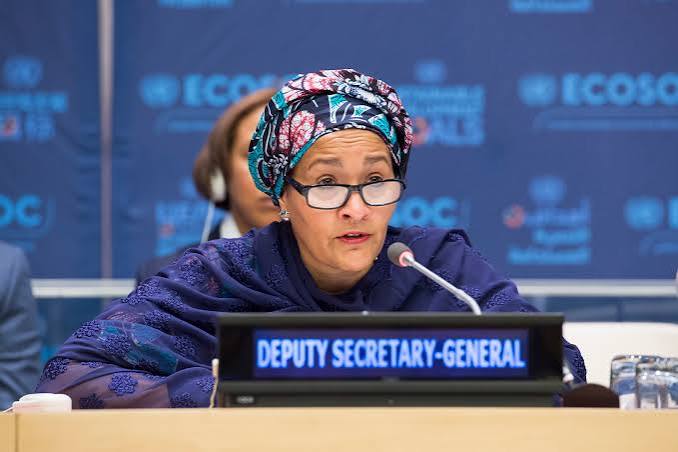
UN Deputy Secretary-General Amina Mohammed, has called for stronger intelligence sharing, public trust and responsible use of emerging technologies to strengthen Africa’s fight against terrorism and violent extremism.
Mohammed made the call in virtual remarks at the High-Level African Lessons Learned Forum on Counter Terrorism Cooperation, Intelligence Sharing and Emerging Technologies in Abuja on Monday.
She said terrorism continued to devastate families and communities across Nigeria’s North-East, the Lake Chad Basin, the Sahel and parts of East and Southern Africa.
“In Nigeria we know the cost of this scourge, the toll it is taking on families and communities across the North-East and the Lake Chad Basin,” she said.
Mohammed said the violence was claiming lives, displacing communities, disrupting economic activities and undermining development in vulnerable areas.
“Behind each of these numbers are people whose hopes for their children are no different from our own,” she said.
She welcomed the forum’s practical approach to examining successful counter-terrorism strategies, identifying failures and sharing lessons across countries.
The UN deputy secretary-general identified trust, emerging technology and community-centred interventions as critical priorities for strengthening counter-terrorism cooperation.
“Intelligence sharing begins with trust. That means trust between agencies, between nations and countries, and between the state and its people,” she said.
She said communities were more likely to share information when security institutions were accountable, justice was accessible and human rights were respected.
She stressed that trust was essential to building effective partnerships between citizens and security agencies in preventing terrorist attacks.
On emerging technologies, Mohammed warned that terrorist groups were adapting rapidly and exploiting artificial intelligence and synthetic media for recruitment and propaganda.
She noted that the same technologies could support early warning and prevention if deployed with appropriate safeguards and effective oversight.
She cautioned that military operations alone would not bring an end to terrorism, urging governments to complement security measures with rehabilitation, reintegration, justice and community support.
She cited Nigeria’s Operation Safe Corridor and similar programmes as examples of efforts to help individuals leave armed groups and rebuild their lives.
According to her, sustainable reintegration requires justice for victims and adequate support for communities receiving former associates of armed groups.
The UN official also called for greater investment in young people through education, decent employment and accessible public services.
She said addressing the needs of vulnerable populations was particularly urgent, with only four years remaining to achieve the 2030 Agenda for Sustainable Development.
“The United Nations stands with you. We will continue supporting solutions that Africa designs and leads,” she said.
Mohammed expressed hope that the lessons shared at the forum would strengthen cooperation and produce tangible improvements in the lives of communities affected by terrorism.
In his remarks, the European Union (EU) Ambassador to Nigeria, Mignot Gautier, announced 20 million euros in non-lethal military equipment to support the Nigerian Armed Forces in the fight against terrorism.
Gaitier said the support approved under the European Peace Facility (EPF), was designed to respond to Nigeria’s needs in tackling terrorism.
“Last week, the EU announced its decision to use for the first time the EPF to support the Nigerian armed forces in their fight against terrorism with 20 million euros of non-lethal equipment,” the ambassador said.
He added that the latest support complemented the EU’s longstanding assistance to the Multinational Joint Task Force (MNJTF) operating around the Lake Chad Basin.
According to him, the EPF has provided a total of 285 million euros in support of the multinational force over several years.
The ambassador reaffirmed the EU’s commitment to strengthening counter-terrorism cooperation with Nigeria, the African Union and other African partners.
He said terrorism and violent extremism required coordinated international responses, stronger intelligence sharing and sustained partnerships among security agencies and judicial institutions.
“Intelligence sharing is crucial and involves secure channels between agencies and the judicial system,” he emphasised.
The Country Representative, United Nations Office on Drugs and Crime (UNODC), Cheikh Touré, called for African-led counter-terrorism strategies, warning that terrorist groups were increasingly exploiting cross-border networks, organised crime and emerging technologies.
Touré said Africa had become a major centre of global terrorism, with the Sahel accounting for more than half of all terrorism-related deaths worldwide.
He said four of the five countries responsible for nearly 70 per cent of global terrorism deaths in the previous year were African: Burkina Faso, Nigeria, Niger and the Democratic Republic of the Congo.
Touré said terrorist groups were strengthening cross-border operations, collaborating with organised criminal networks and exploiting improvised explosive devices, drones, digital platforms and artificial intelligence.
He cautioned against adopting international counter-terrorism practices without considering the specific needs and institutional capacities of African countries.
“The groups we confront cross borders with a fluency that too often exceeds our own. Our response therefore must be equally fluent and be African-led,” he said.
He reaffirmed UNODC’s commitment to working through African institutions and regional frameworks, including the African Union, ECOWAS and the Abuja Process.
The forum brings together African and international stakeholders to discuss intelligence sharing, emerging technologies, counter-terrorism financing and strategies for preventing and countering violent extremism.

By Catherine Agbo
In the unfolding drama of Nigerian political discourse, few things excite the commentary circuit quite like a prominent figure stepping decisively into the political arena.
The recent media frenzy surrounding the activities of the High Chief Government Ekpemupolo-led PBAT Door-to-Door Movement is a classic study in selective outrage.
Ekpemupolo, popularly known as Tompolo, is the Grand Patron of the movement.
From editorial columns in national dailies to online commentary, critics have been relentless in dishing out opinions about the group’s activities targeted at mobilising support for President Bola Tinubu’s re-election campaign.
Yet, beneath the righteous indignation lies a fundamental misinterpretation of constitutional rights and democratic principles.
The narratives being spun across several opinion pieces, such as those asking why Tompolo should be actively involved in partisan politics or phoney groups labelling his endorsement as “deceptive,” are all built on shaky foundation.
Critics point to his role as a major security stakeholder in the Niger Delta and argue that a person of his background should remain politically passive or detached from party politics. Others question the deployment of operational vehicles and logistics to coordinators of the movement across states for the campaign, framing legitimate political mobilisation as an overreach.
However, this wave of criticism ignores a fundamental truth, that Nigeria is a constitutional democracy governed by the rule of law.
Section 39 and 40 of the 1999 Constitution of the Federal Republic of Nigeria (as amended) guarantee every citizen the right to freedom of expression and the right to peaceful assembly and association.
These rights are not reserved exclusively for career politicians, armchair intellectuals, or media commentators, they belong to every Nigerian citizen in equal measure.
Critics who have raised the alarm over campaign spending have also conveniently ignored the provisions of Nigeria’s statutory electoral framework.
The way I see it, High Chief Ekpemupolo has not gone against the Electoral Act 2026 in any way.
The Electoral Act 2026 sets clear financial caps on direct spending by individual candidates and limits on direct monetary donations to political parties or candidates’ accounts.
It also limits the amount a donor can make to a candidate or political party to N500 million.
The Electoral Act 2026 does not, however, specify, mandate, or place any financial spending ceiling for independent third-party support groups, non-governmental movements, or citizen-led mobilisation platforms.
Because the law contains no statutory cap on what an independent group can spend to mobilise voters, logistically equip its coordinators, or advocate for a candidate, Tompolo’s support group operates entirely within the legal limits of the Nigerian electoral law.
To invent non-existent legal infractions simply to tar a political support group is a disingenuous exercise in bad faith.
Tompolo has not been indicted by any court of competent jurisdiction, nor has he violated any law of the land by supporting a presidential candidate of his choice.
He has not been found wanting in any legal measure whatsoever for exercising his democratic suffrage and organising a political support group.
To, therefore, suggest that he should sit on the sidelines while other private citizens and influencers exercise their constitutionally guaranteed right to endorse and fund candidates is to demand a double standard that borders on hypocrisy.
Political association in a democratic society is rooted in choice, conviction, and interest.
If Tompolo believes that the current administration’s policies, particularly in stabilised oil production, maritime security, infrastructure, increased allocation to states, security, especially the State Police bill which 25 state Houses of Assembly have already approved, among others, align with the long-term prosperity of his constituency and the nation, he is within his full constitutional rights to persuade others to share that vision.
Mobilising grassroots support at the ward, household, and polling-unit levels through peaceful door-to-door engagement is the very essence of citizen participation in governance. It is political organising at its most fundamental level.
Those rushing to judge him prematurely are mistaking political enthusiasm for wrongdoing.
A citizen’s choice to donate campaign vehicles, set up organisational structures, and hold political rallies across different geopolitical zones is standard practice in presidential politics globally. In democratic climates, such actions are celebrated as evidence of civic investment and grassroots empowerment. Why should a different standard be constructed when the participant happens to be an influential opinion leader like Tompolo?
The online backlash and critical editorials reveal a deeper prejudice.
Nigeria’s democracy matures when citizens participate freely without fear of unwarranted public trial by the media.
The PBAT Door-to-Door Movement is operating entirely within the boundaries of civil political engagement and statutory electoral law. Rather than attacking the messenger, critics would do well to focus their energy on robust policy debates, engaging the electorate on ideas rather than seeking to curtail the lawful rights of individuals.
Tompolo has broken no law, breached no electoral act provision, and violated no constitutional mandate. He is simply exercising his fundamental right as a free citizen of Nigeria to associate, express his preference, and campaign for the candidate he trusts to lead the country. The misplaced outrage and hasty judgments filling opinion pages ought to be laid to rest.
In a free nation, the right to choose belongs to everyone and Tompolo is no exception.
Agbo, a strategic and development communication expert writes from Abuja.



WAHO, ECOWAS Stakeholders Move to Harmonise Nursing, Midwifery Accreditation Standards Across West Africa
ShareBy David Torough, Abuja The West African Health Organisation (WAHO) has convened a three-day regional workshop in Abuja to finalise...

Okorocha Hails Court Victory as APC Insists Uzodimma Remains Candidate
ShareBy Tambaya Julius, Abuja Former Imo State Governor, Rochas Okorocha, has described a Federal High Court judgment recognising him as...


TRIBUTE: CHIEF GABRIEL GBAYAN, A LEGACY OF SERVICE TO BADMINTON
Share The late Chief Gabriel Gbayan was a distinguished sports administrator who served as a Two times Chairman of the...


Court Dismisses Emeka Ike’s N10bn Suit against Wike’s Aide
ShareThe Federal High Court in Abuja on Wednesday dismissed a N10bn fundamental rights suit filed by Nollywood actor Emeka Ike...
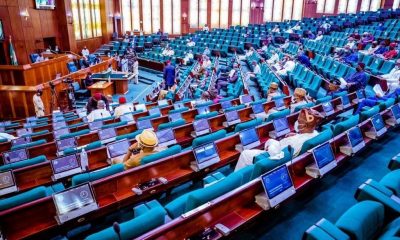

Reps Threaten to Arrest Telecom CEOs Over Poor Network Services
ShareBy Ubong Ukpong, Abuja The House of Representatives on Wednesday threatened to issue warrants of arrest against chief executives of...


A Guide to IFRS S1 and S2 Sustainability Implementation (4)
ShareBy Innocent Okwuosa The implementation of IFRS S1 and S2 must not be approached strictly from a regulatory compliance perspective....
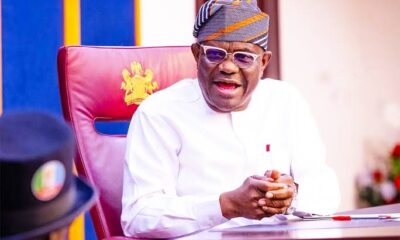

2027: Reward Tinubu with Votes for Federal University – Wike
ShareBy Laide Akinboade Abuja The Minister of the Federal Capital Territory, Nyesom Wike, has said the Ogoni people of Rivers...

FCSC, Soft Alliance Explore IPPIS Integration to Improve Civil Service Management
ShareThe Federal Civil Service Commission (FCSC) and Soft Alliance and Resource Ltd. are exploring ways to integrate the commission’s statutory...


Tinubu Presides over FEC Meeting
SharePresident Bola Tinubu is presiding over a meeting of the Federal Executive Council at the Council Chamber of the State...
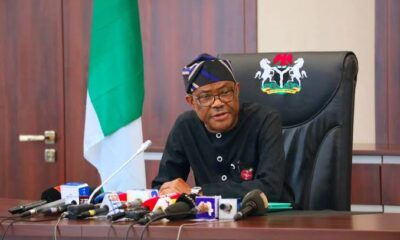

Wike Question Atiku, Obi, Contributions to Rivers State
ShareBy Laide Akinboade Abuja Minister of the Federal Capital Territory, Nyesom Wike, has challenged former Vice-President Atiku Abubakar and former...