
Agriculture
Adopting Modern Milk Production Technology will Increase Nigeria’s GDP – AFAN

The All Farmers Association of Nigeria (AFAN) says embracing and adopting new technologies for milk and meat production will increase Nigeria’s GDP, while ending farmer- herdsmen clashes.
Mr Farouk Rabi’u-Mudi, the President of AFAN, stated this on Tuesday in Abuja at the 1st edition of the National Symposium on livestock breed improvement and pasture development.
The News Agency of NIgeria (NAN) reports that NIgeria records two and a half litres per cow, but while Denmark hits a total of 35 litres milk production per cow.
“That’s more than 20 times our normal production here in Nigeria, only 400 cows in Denmark is equivalent to 5,000 cows in Nigeria.
“I was in Denmark last year and I saw a good improvement on how we can improve our livestock, milk and beef production in Nigeria.
“Meanwhile, Denmark has been able to increase their GDP through livestock and milk production. It is a very simple technology which NIgeria can key into.
“We are already in partnership with them, open grazing is not ideal for milk production,” Rabi’u-Mudi said.
According to him, about 5,000 youths are going to be empowered through the system of cattle breeder.
“We are going to empower the women through some private sectors that are willing to fund the business.
“With this private sector, we are looking at sustainability because government policies change from time to time,” he added.
Mr Akeem Ibilade, the Deputy Director, Department of Animal Husbandry, Federal Ministry of Agriculture, said that having partners that would help our livestock development in the country is a cheering development.
“If we are talking about Pasteur development, everyone will benefit. We expect it will reduce farmers/herdmen clash, because if the breeders have feed for their cattle, there will be no need roaming around the streets.
“This development will bring more milk and meat, we are planning on national livestock development plan to create more awareness in a few months, we have the media as partners too,” he said.
Also speaking, Mr Nasmir Nakas, Founder Livestock Genetics, said that they are happy to be partnering with Nigeria on livestock development, stressing that a great future awaits Nigeria on livestock development. (NAN)


The Kwara Government has partnered Olam Agri to curb post-harvest losses and boost farmers’ profitability across the state.
The development is contained in a statement issued on Sunday in Ilorin by Ashaolu Omotola, Press Secretary, Ministry of Agriculture.
The agreement was signed by Agriculture Commissioner, Dr Afees Alabi, and Olam Agri’s Vice President for Procurement, Noel Ferrao.
Alabi described post-harvest losses as a major constraint on farmers’ incomes and overall agricultural efficiency in the state.
He stressed the need for improved storage systems, describing them as practical tools to preserve produce and reduce avoidable waste.
The commissioner said activating storage facilities would improve preservation, support aggregation, and help farmers secure better market opportunities through flexible selling timelines.
Alabi reaffirmed the government’s commitment to strengthening agricultural support across the 16 local government areas, noting the initiative would directly benefit thousands of farmers.
“The engagement reflects the government’s focus on strengthening infrastructure, deepening private sector collaboration, and improving efficiency for long-term food security and rural development,” he said.
Ferrao said Olam Agri aimed to collaborate with the Federal Ministry of Agriculture, Kwara government, development agencies, and financial institutions.
He noted the partnership would deliver sustainable maize and soyabean outgrower programmes, providing inputs, training on best practices, and timely market access.
According to him, Olam Agri already operates a similar soyabean partnership and plans to expand with another programme this farming season.
Unstable electricity supply and rising fuel prices are placing significant strain on frozen food businesses in Lagos, as traders struggle to cope with higher operating costs and reduced customer patronage.
The traders, who spoke with in separate interviews on Wednesday, said the combined effect of unstable power supply and expensive fuel had increased their operating costs and reduced profit margins.
Frozen food businesses rely heavily on constant electricity to preserve items such as chicken, turkey, fish, and other perishable products.
However, irregular power supply has forced traders to depend on generators, which run on fuel, thereby increasing operational expenses.
There has been a nationwide drop in power generation due to insufficient gas supply.
Consequently, the country’s power sector, largely dependent on gas-fired plants, has been hit by disruptions in gas supply worsened by pipeline maintenance challenges and liquidity constraints.
Chika Oluehi, owner of Chika Frozen Foods at Ijora-Olopa, said he now factors electricity and fuel costs into his pricing to remain in business.
“Before now, a carton of turkey sold for about N85,000, but it now goes for between N105,000 and N110,000.
“A carton of chicken that used to sell for about N39,000 to N41,000, now sells for N46,000. We have to calculate our margins carefully to avoid losses,” he said.
Oluehi added that storage capacity determines how traders cope with electricity challenges.
“Suspending my frozen food business is not an option for me because of my storage facilities.
“When there is no electricity, we use fuel to power generators, but the generator does not fully carry the freezer. It only chills it and does not completely prevent spoilage,” he said.
Oluehi added that he had resorted to alternative energy sources to reduce losses.
“Where I live, I sometimes have light, and I also use a solar freezer. It helps, but it still depends on electricity, so it is not a complete solution,” he said.
According to him, the rising cost of fuel also affects the transportation of frozen foods from suppliers to markets.
“When fuel prices go up and there is no power, we spend more transporting these frozen foods.
“Once fuel increases, prices automatically rise, and customers cannot buy as much as they used to.
“Imagine having 10 customers and five stop buying, while the remaining five reduce the quantity they purchase. The business will eventually suffer,” he said.
Another trader, Mojisola Kazeem of MJ Frozen Foods in Surulere, said she had temporarily halted selling frozen items due to the cost of fuel and electricity.
“I had to pause it. I cannot cope with the electricity situation and the cost of fuel.
“Hopefully, when things return to normal, I can pick up from where I stopped,” she said.
Similarly, a fish seller in Mushin, Bose Adeyemi, said she now reduces the quantity she stocks to avoid spoilage.
“Without steady electricity, keeping large quantities is risky. If light goes off and fuel is expensive, you may lose everything.
“I now buy in small quantities even though it reduces profit,” she said.
A cold-room operator in Agege, Sulaiman Adebayo, said many traders now share storage space to cut electricity costs.
“Some traders cannot afford to run generators alone, so they rent space in cold rooms. But even cold-room owners are increasing prices because of fuel,” he said.
Adebayo noted that the situation had reduced customer patronage.
“Customers complain that frozen foods are too expensive. Many now buy smaller portions, and some switch to alternatives,” he said.
Yetunde Afolabi, a soft drink seller at Yaba Market, said poor electricity supply had affected her sales because customers prefer chilled drinks.
“People will not buy soft drinks when they are hot. Once there is no light, the drinks lose their chill, and customers walk away.
“Some of them even open the cooler, check the bottle, and drop it back when it is not cold enough.
“I spend money on fuel to run my generator, but I cannot keep it on all day because fuel is expensive. When I switch it off, the drinks become warm, and I lose sales,” she said.
The Federal Government has called for more partnerships with private sector operators in the transformation of the Correctional Farm Centres into highly productive agricultural hubs.
Minister of Interior Dr. Olubunmi Tunji-Ojo, stated yesterday in Abuja at a stakeholder dialogue on Optimising Correctional Farm Centres and Public-Private Partnership (PPP) Pathways for Inmate Reformation, organised by Hope Behind Bars Africa (HBBA), in collaboration with the Nigerian Correctional Service, with funding support from the European Union/International IDEA.
Tunji Ojo, represented by the Permanent Secretary, Federal Ministry of Interior, Dr.
Magdalene Ajani said these partnerships are the engines that would drive the scale of change needed, modernise infrastructure, and enrich rehabilitation programmes in the Nigerian Correctional Service (NCS).He said: “It is an undeniable reality that government resources alone cannot fully unlock the vast potential lying dormant within our correctional system.
“The chest scale of the vision we hold calls for a synergy of strength. This is where the Public Private Partnership (PPP) transitions from being a mere policy option to an indispensable strategic imperative.
“PPP is a powerful vehicle for sustaining development, allowing us to fuel government policy, leadership, and oversight with the private sector’s innovation, operational efficiency, and capital. When structured with intention and integrity, these partnerships create shared values.
“Nigeria is a nation blessed with immense agricultural potential; our correctional farm centres can and should be transformed into highly productive agricultural hubs.”
In her opening remarks, Funke Adeoye, Executive Director, Hope Behind Bars Africa (HBBA), said through one of the projects of the organisation-Farming Justice Project, that HBBA has been working to reposition correctional farm centres as structured, rehabilitation-focused agricultural hubs that contribute to food security within and outside prison while strengthening correctional productivity and reintegration outcomes.
Adeoye pointed out that her organisation has integrated reformation with agriculture to achieve multiple outcomes, such as addressing food insecurity within custodial centres, equipping inmates with practical skills, and reducing reoffending, which remains at the heart of the criminal justice system’s purpose.
Commenting on the implementation of the Farming Justice Project, she said, “We are currently working across multiple custodial centres, including Dukpa Custodial Centre, Kuje Custodial Centre, Kirikiri Female Custodial Centre, and Oko Custodial Centre.
“Within these facilities, residents are actively engaged in structured mind-reformation training, covering behavioural change, financial literacy, crop cultivation, and the cultivation of second chances.
“They are also participating in structured agricultural production, growing crops such as pepper, okra, watermelon, ugu, green pepper, and sweet corn.
“We have established fish ponds, the latest of which is at Kuje Custodial Centre.
“To date, the project has reached direct beneficiaries across multiple centres: in Edo State, 95 residents and 5 officers; in Abuja, 222 residents and 18 officers; and in Lagos, 448 individuals.
“Beyond these direct participants, the indirect impact is even more remarkable; families, local communities and supply chains are all experiencing the ripple effects of increased food production, skill transfer, and entrepreneurship.”
She disclosed that the goal of the project is to transform correctional agriculture from an under-utilised function into a structured pathway for rehabilitation, reintegration, and national development.
Adeoye, therefore, reiterated the need for partnerships that would drive innovative solutions, transform lives, and help in the realisation of the true essence of the correctional system.
In his welcome address, Sylvester Ndidi Nwakuche, Controller General, Nigerian Correctional Service (NCS), said the NCS currently operates 18 farm centres and 10 cottage industries, covering a total landmass of approximately 10,000 hectares across the country.
Nwakuche said the Service runs 12 agricultural projects, five piggery projects, nine fishery projects, and 11 poultry projects across its facilities in Nigeria.
He said: “These activities are not only vital for supporting inmate welfare and contributing to food production, but also serve as a practical platform for skills acquisition and vocational training.
“By aligning our programmes with market realities, we can ensure that inmates acquire relevant employable skills that will enable them to reintegrate successfully into society upon release.”



Palm Sunday Killings in Jos: Nigeria Cannot Keep Bleeding Like This, CAN, insist
ShareBy Laide Akinboade, Abuja The Christian Association of Nigeria (CAN),condemned, in the strongest possible terms, the horrific attack that took...

Nasarawa Accountant General Resigns Declares for 2027 Governorship
ShareFrom Abel Zwanke, Lafia The Nasarawa state Accountant General Rt. Hon. Musa Ahmed Mohammed, has resigned his position and declared his intention to contest the 2027 governorship election....

CAF Considers Africa Cup of Nations Expansion to 28 Teams
ShareConfederation of African Football (CAF) President Patrice Motsepe has said that the Africa Cup of Nations could be expanded from 24 to 28 teams. Motsepe made the...


Russian Oil Tanker Reaches Cuba after Trump Appears to Loosen Blockade
ShareA Russian tanker carrying oil to Cuba has entered the waters off the Communist-run Island, Russia’s Interfax. The oil shipment – the first to reach Cuba since January – comes hours after US...


Drivers Protest Fuel Price Hike, Block road in Edo
ShareCommercial drivers operating along Upper Sakponba Road in Benin, Edo State, on Monday blocked sections of the busy road in protest against the recent increase in petrol prices. The protesting drivers also...

WAEC Releases 2026 WASSCE Timetable
ShareThe West African Examinations Council has released the official timetable for the 2026 West African Senior School Certificate Examination for...
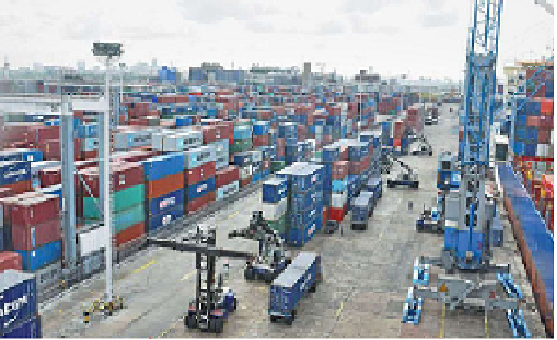
NPA Targets N1.489tn Revenue for 2026
Share The Nigerian Ports Authority (NPA) has set N1.489 trillion as its Internally Generated Revenue (IGR) target for the 2026...
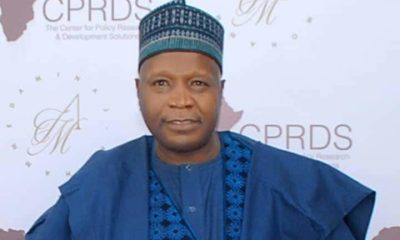

Northern Govs Approve N500m Each for Secretariat Project
ShareBy David Torough, Abuja The Chairman of the Northern States Governors’ Forum (NSGF) and Governor of Hombe State, Muhammadu Inuwa...


Plateau Attack: Mutfwang Orders Crackdown on Suspects, Imposes Curfew in Jos
ShareFrom Jude Dangwam, Jos and Laide Akinboade, Abuja Nigeria’s fragile security landscape came under renewed strain on Sunday and Monday...


OPay Strengthens Commitment to Financial Inclusion, Customer-First Service, Launches New Office in Jos
ShareOPay has officially launched its new office in Jos, Plateau State, marking another milestone in its mission to bring fast,...