
Agriculture
FG Seeks Partnerships to Transform Correctional Farms Into Productive Agricultural Hubs

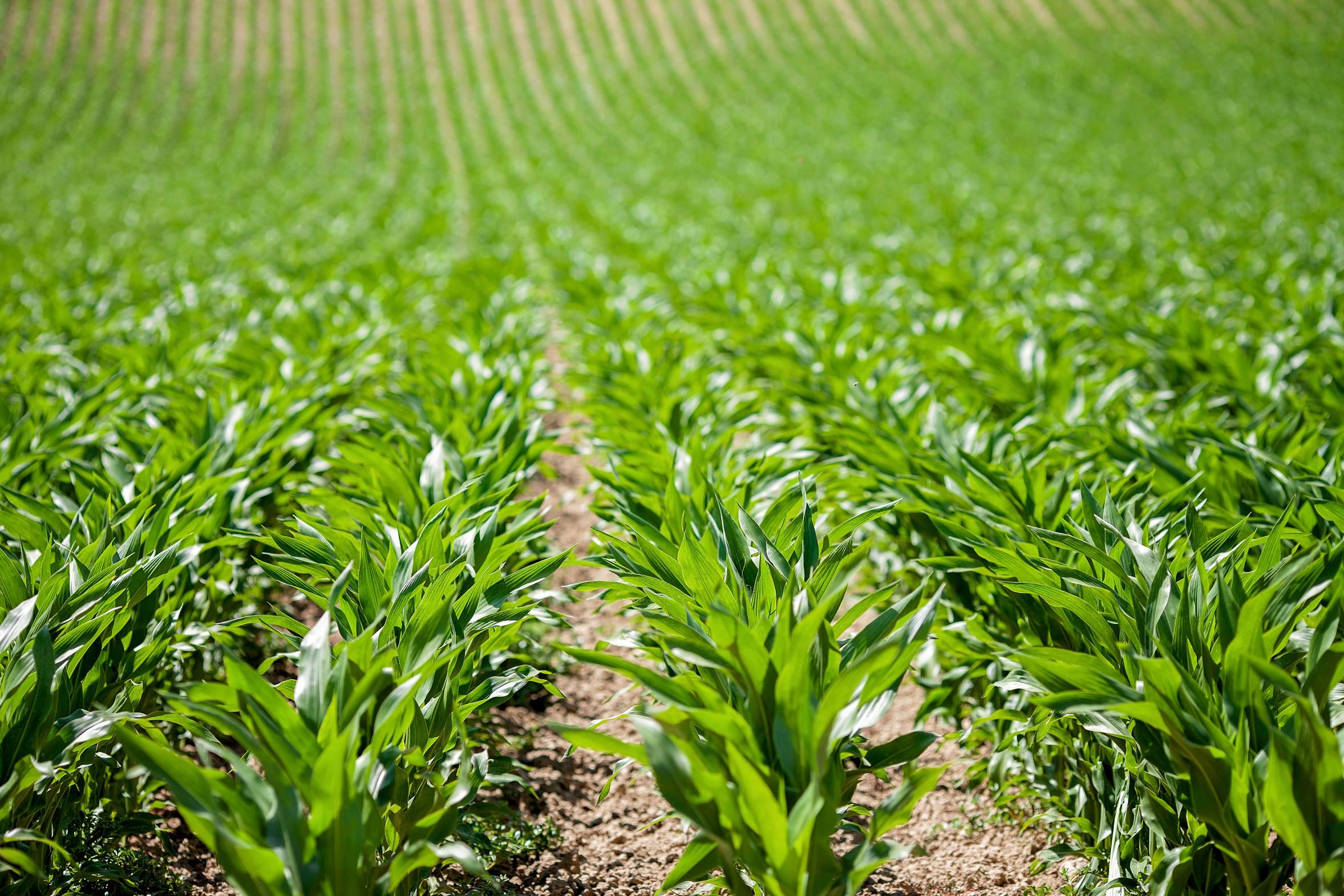
The Federal Government has called for more partnerships with private sector operators in the transformation of the Correctional Farm Centres into highly productive agricultural hubs.
Minister of Interior Dr.
Olubunmi Tunji-Ojo, stated yesterday in Abuja at a stakeholder dialogue on Optimising Correctional Farm Centres and Public-Private Partnership (PPP) Pathways for Inmate Reformation, organised by Hope Behind Bars Africa (HBBA), in collaboration with the Nigerian Correctional Service, with funding support from the European Union/International IDEA.Tunji Ojo, represented by the Permanent Secretary, Federal Ministry of Interior, Dr.Magdalene Ajani said these partnerships are the engines that would drive the scale of change needed, modernise infrastructure, and enrich rehabilitation programmes in the Nigerian Correctional Service (NCS).
He said: “It is an undeniable reality that government resources alone cannot fully unlock the vast potential lying dormant within our correctional system.
“The chest scale of the vision we hold calls for a synergy of strength. This is where the Public Private Partnership (PPP) transitions from being a mere policy option to an indispensable strategic imperative.
“PPP is a powerful vehicle for sustaining development, allowing us to fuel government policy, leadership, and oversight with the private sector’s innovation, operational efficiency, and capital. When structured with intention and integrity, these partnerships create shared values.
“Nigeria is a nation blessed with immense agricultural potential; our correctional farm centres can and should be transformed into highly productive agricultural hubs.”
In her opening remarks, Funke Adeoye, Executive Director, Hope Behind Bars Africa (HBBA), said through one of the projects of the organisation-Farming Justice Project, that HBBA has been working to reposition correctional farm centres as structured, rehabilitation-focused agricultural hubs that contribute to food security within and outside prison while strengthening correctional productivity and reintegration outcomes.
Adeoye pointed out that her organisation has integrated reformation with agriculture to achieve multiple outcomes, such as addressing food insecurity within custodial centres, equipping inmates with practical skills, and reducing reoffending, which remains at the heart of the criminal justice system’s purpose.
Commenting on the implementation of the Farming Justice Project, she said, “We are currently working across multiple custodial centres, including Dukpa Custodial Centre, Kuje Custodial Centre, Kirikiri Female Custodial Centre, and Oko Custodial Centre.
“Within these facilities, residents are actively engaged in structured mind-reformation training, covering behavioural change, financial literacy, crop cultivation, and the cultivation of second chances.
“They are also participating in structured agricultural production, growing crops such as pepper, okra, watermelon, ugu, green pepper, and sweet corn.
“We have established fish ponds, the latest of which is at Kuje Custodial Centre.
“To date, the project has reached direct beneficiaries across multiple centres: in Edo State, 95 residents and 5 officers; in Abuja, 222 residents and 18 officers; and in Lagos, 448 individuals.
“Beyond these direct participants, the indirect impact is even more remarkable; families, local communities and supply chains are all experiencing the ripple effects of increased food production, skill transfer, and entrepreneurship.”
She disclosed that the goal of the project is to transform correctional agriculture from an under-utilised function into a structured pathway for rehabilitation, reintegration, and national development.
Adeoye, therefore, reiterated the need for partnerships that would drive innovative solutions, transform lives, and help in the realisation of the true essence of the correctional system.
In his welcome address, Sylvester Ndidi Nwakuche, Controller General, Nigerian Correctional Service (NCS), said the NCS currently operates 18 farm centres and 10 cottage industries, covering a total landmass of approximately 10,000 hectares across the country.
Nwakuche said the Service runs 12 agricultural projects, five piggery projects, nine fishery projects, and 11 poultry projects across its facilities in Nigeria.
He said: “These activities are not only vital for supporting inmate welfare and contributing to food production, but also serve as a practical platform for skills acquisition and vocational training.
“By aligning our programmes with market realities, we can ensure that inmates acquire relevant employable skills that will enable them to reintegrate successfully into society upon release.”

Some residents in Lagos State have expressed concern over the recent surge in the price of tomatoes, forcing many households to adopt alternatives.
The residents made their views known in separate interviews on Wednesday in Lagos.
A market survey showed that a 50kg basket of tomatoes now sells between N115,000 and N125,000, compared to between N35,000 and N40,000 recorded last month.
Olachi Igwe, a resident of Ago Palace, said the scarcity and high cost of tomatoes had disrupted her household’s meal plans.
“I contacted my usual vendor, but she said tomatoes were scarce and difficult to source.
“A small bowl we used to buy for between N3,500 and N4,000 now sells for as high as N6,000 to N7,000, when available.
“For now, my family will resort to palm nut stew (ofe akwu) until prices stabilise,” she said.
Another resident, Mercy Okeleye of FESTAC, said although her family prefers fresh tomatoes, rising prices have forced her to consider cheaper options.
“I cannot do without fresh tomatoes because of the taste, but I may have to buy broken ones, popularly called ‘esha’, which are relatively cheaper.
“I do not consider tomato paste a suitable substitute because it is not purely made from tomatoes,” she said.
Also speaking, Tope Babalola from Dopemu, said she might adjust her cooking methods if prices remain high.
“I have not bought tomatoes in over a month, but if the price is still high, I will use more onions and peppers.
“I will not resort to artificial additives; I prefer natural ingredients for my meals,” she said.
Joan Ogugua, another resident, said she had already switched to tomato paste to cope with the situation.
“I asked my son to buy tomato paste for our meals. I cannot justify spending excessively on fresh tomatoes when other basic needs must be met,” she said.
Also, Oge Ugwu, a civil servant at Lekki, said she would resort to cucumber stew with the recent price hike.
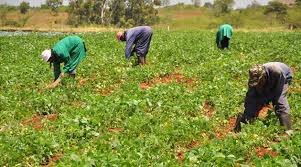
The Tomatoes Growers and Processors Association of Nigeria (TOPAN) has predicted a steady increase in the price of the produce between May and June 2026.
The Kaduna State Chairman TOPAN, Rabiu Zuntu, disclosed this in an interview recently in Lagos.
Zuntu noted that although there is no particular time for tomatoes planting season up north, seasonal weather variations can affect the production of the produce.
“Although we can plant tomatoes all-year-round, we cannot assure quality harvest all-year-round.
“Some farmers are harvesting now, while others are transplanting, and others are harvesting.
“Tomatoes are still available for sale but the price of the produce is gradually on the increase.
“Come May/June, the prices of tomatoes will be very expensive, so now is a good time to stock up the produce. There’s always a scarcity within that period.
“This is because of the nature of the weather in the north around that period, the weather is usually very hot and tomatoes cannot resist such hot temperature,” he said.
Zuntu said the price of tomatoes have started rising up in the north.
“A 50kg rafia basket of tomatoes sells from N20,000 as against N7,000 to N10,000 that was sold earlier in the year.
“While a crate of tomatoes up north is sold between N10,000 and N15,000 as against N5,000 to N6,500 sold earlier in the year.
“In most part of Kano State, where there is bumper harvest, they are rounding off their harvest. So, tomato is not that available there and most buyers have turned to where they can find it now, mostly within Kaduna State and some parts of Plateau State.
“So, that’s why the supply has decreased and the tomato supply and cost is determined by the law of demand and supply,” he said.
A 50kg basket of tomatoes in Lagos, at the moment, sells between N40,000 and N60,000 depending on the size and quality.

The Smallholder Women Farmers Organisation in Nigeria (SWOFON), Oyo State chapter, has said that the lack of irrigation facilities had become a major obstacle to dry season farming in the state.
The Chairperson of SWOFON in Oyo State, Atinuke Akinbade, said this in an interview in Ibadan on Monday.
Akinbade, who shared the experiences of women farmers in the state during the 2025 dry season, said that inadequate access to water for irrigation significantly affected the performance of many farmers during the period.
“It hindered many older farmers from participating in dry season farming and also prevented younger farmers from doing as much as they could in cultivating large acres of land,” she said.
Akinbade explained that farmers who managed to plant during the season struggled to access sufficient water to irrigate their farms, a situation worsened by the effects of climate change.
“Many farmers who depended on streams and wells to water their crops suffered major setbacks because those sources could not provide enough water for irrigation.
“Some farmers had to resort to buying water from commercial water tankers, which increased the cost of production, while at times it was even difficult to get water from the tankers,” she said.
The SWOFON chairperson warned that failure to address the problem could worsen food insecurity in the coming months.
“Even now, rainy season farming has not fully commenced because of the irregular rainfall pattern.
“This is a double burden, and if nothing is done, it may lead to serious hunger later,” she said.
Akinbade, however, acknowledged that the government had organised training for members of the association on home gardening.
She, however, said that little support was provided to address the challenges of dry season farming.
The chairman said that the home garden support package given to members consisted mainly of seedlings and one sprayer.
“They gave us two packs each of maize and pepper seeds, with six seeds in each pack, as well as one sprayer, so that we can grow food for household consumption,” she said.
Earlier, Oluwatoyin Oyedeji, SWOFON Coordinator in Oyo East, explained the severe hardship members of the organisation experienced in sourcing water for irrigation.
“Many farmers are already counting their losses because water was not available to irrigate their farms.
“Those who depended on streams and brooks were badly affected because many of them dried up, while the few that still had water had so little that farmers had to dig deeper into the ground in search of more,” Oyedeji said.
In the same vein, the Women Leader for farmers in Saki East, Musiliu Ashiru, said the absence of irrigation facilities also hampered dry season farming in her area.
According to her, many farmers still engaged in dry season farming have had to pay for water to keep their crops alive.
“Many of them buy water from the dam here to irrigate their crops. It has not been easy for them this year,” Ashiru said.


Peace on Paper, Peril in Practice: Why 2027’s Elections Remain at Risk
ShareBy Dakuku Peterside There is something reassuring about the ritual of political rivals gathering beneath the same roof and signing...


2027: Bawa Urges APC Leaders, Supporters on Unity
ShareBy Tambaya Julius, Abuja The Senior Special Assistant (SSA) to the Nasarawa State Governor on Greater Karu Development Control Agency...

NCS Lilypond Export Command Gets New Acting CAC
ShareThe Nigeria Customs Service (NCS), Lilypond Export Command, has appointed Deputy Comptroller Olusola Salako as its Acting Customs Area Controller...


Oyebanji Reappoints Retired Ekiti Accountant-General
ShareEkiti State Governor, Biodun Oyebanji, on Tuesday approved the appointment of Titilayo Olayinka as the new Accountant General of the...


Eid-el-Maulud: Tinubu, Govs, Others Preach Peace, Compassion, Unity
ShareBy Laide Akinboade, Abuja President Bola Tinubu, state governors, traditional rulers and religious leaders have called on Nigerians to draw...


Niger Mosque Massacre: Tinubu Orders Rescue of over 60 Abductees
ShareFrom Dan Amasingha, Minna President Bola Ahmed Tinubu has ordered the Armed Forces, the Nigeria Police Force, the Department of...


JAMB Breaks New Ground, Allows Home Upload of O’Level Results
ShareCandidates seeking admission into Nigerian tertiary institutions can now upload and verify their O’Level results from the comfort of their...


Tinubu Mourns Ogogo, Extols His Creative Legacy
SharePresident Bola Tinubu has condoled with the family, friends and colleagues of veteran Nollywood actor, filmmaker and screenwriter Taiwo Hassan,...


Nigeria Upgrading its Digital, Intelligence-led Border Management System — NIS
ShareNigeria is strengthening its border management architecture through digital technology, biometric identity systems, intelligence sharing and stronger collaboration with border...

ShareGoodluck Jonathan Advises Leaders to Invest in Youths, Industry Former President of Nigeria, Dr. Goodluck Jonathan, has called on leaders...