
Business News
Afreximbank President Challenges Youths to Develop Africa

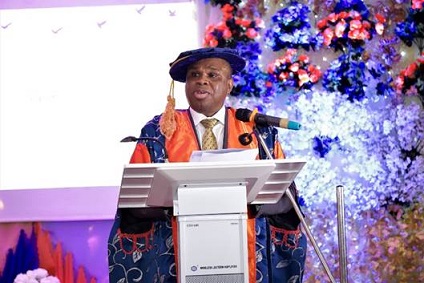
By Mathew Dadiya, Abuja
The President of the African Export-import Bank (Afreximbank) Prof. Benedict Oramah, has said that ”the new Africa” presents the continent’s youth with an excellent battleground to join and wage the economic struggle that would finally liberate the continent from the economic quagmire.
Speaking on the topic “Unleashing the Power of the Youth” while delivering the 14th Convocation Lecture of the Nnamdi Azikiwe University (UniZik) in Awka, Nigeria, Prof.
Oramah said, “just as Africa’s political struggle was led by the youth, so will the youth lead the way for Africa’s economic emancipation”.He said that youths represented agents of change across the socio-political and economic spectra adding that history and contemporary evidence had shown that they had always been the catalyst to economic transformation.
The Afreximbank boas noted that the youths constitute the largest proportion of the labour force and the population at the height of the industrial revolutions in the advance countries.
“History has shown that where the youth are given the opportunity, they have been the force for positive change,” Oramah said.
He added that he considered the youth to be Africa’s greatest resource, “an asset much more valuable than all the oil and solid minerals we so frequently celebrate”.
The Afreximbank chief quoted the late former President of Nigeria Dr Nnamdi Azikiwe, after whom the university was named, as saying: “The immediate aim of African education should be to develop character, initiative, and ability of the youth of the country, so that they may be reliable, useful, and intelligent in the rapidly changing life and circumstances of their own people.
Anything narrower than this must lead to a stagnant and menacing flood of unemployed and unemployable youth.”
Prof. Oramah noted that the ubiquitous social media platforms, Facebook, Twitter and Instagram; Tech companies such as Apple and Microsoft; and e-commerce platforms, including Amazon and Alibaba; were founded by people in their youth.
Youth-powered digital businesses accounted for about two-thirds of the U.S. economy, one-third of the Chinese economy and eight per cent of the Indian economy, he added, saying that those companies were bigger in value than many African economies.
Despite limited opportunities, African youth were beginning to make important contributions to economic transformation on the continent, said Prof. Oramah. The African versions of Steve Job, Mark Zuckerberg, Alexander McQueen and Calvin Klein were rising like the Phoenix while others, like Aliko Dangote, Tony Elumelu, Lily Alfonso and Njideka Akunyili-Crosby, all started making impact in their various endeavours as youth.
Prof Oramah cited Ndubuisi Eze, a young drone expert who was identified by Singaporean investors at the inaugural Intra-African Trade Fair in Cairo in 2018 and, subsequently, relocated to Singapore where he was able to get support to develop his company and now produces and exports drones to global markets.
Prof. Oramah also highlighted the Nigerian youth-led entertainment industry which is making significant gains and inroads into the global scene and noted that Afreximbank had recently announced a $500 million Creative Industry Financing Facility which was available to operators in the full spectrum of Africa’s creative sector. That facility was expected to boost youth participation in the African creative economy.
Prof. Oramah urged the youth to be prepared to take advantage of emerging opportunities under the African Continental Free Trade Area (AfCFTA) and announced that Afreximbank had launched a number of initiatives and programmes to support African economies and the youth to maximize the benefits of the AfCFTA.
He said that an incubation lab being put in place to support innovation and help bring innovative products to market.
Prof. Oramah paid tribute to the leaders whose visions made UniZik possible, including Chief Jim Nwobodo and Dr. Chukwuemeka Ezeife, two former governors of Nigeria’s Anambra State, and former Nigerian President Ibrahim Babangida under whose leadership the former Anambra State University of Science and Technology was renamed Nnamdi Azikiwe University and made a federal university.
Prof. Oramah also paid tribute to Dr. Azikiwe, who was Governor General of Nigeria from 1960 to 1963 and President from 1963 to 1966, saying that he was a freedom fighter who devoted his youth and entire life towards the emancipation of Africa in general and Nigeria in particular.
“He was fearless in his struggle, knew no boundaries in his scope and leveraged his legendary intellectual capacity to overcome the most complex of challenges. He understood the importance of education in the struggle for Africa’s renaissance. His passion for scholarship and Africa’s emancipation – what he stood for and his fulfilled life lived – presents us with an armour to engage in the complex battles of today,” said the Afreximbank President.
Earlier, Prof. Rasheed Abubakar, Executive Secretary of Nigeria’s National Universities Commission and Chairman of the Convocation Lecture, introduced Prof. Oramah, describing him as “one of the greatest minds” and saying that his lecture would stress the primacy of education.






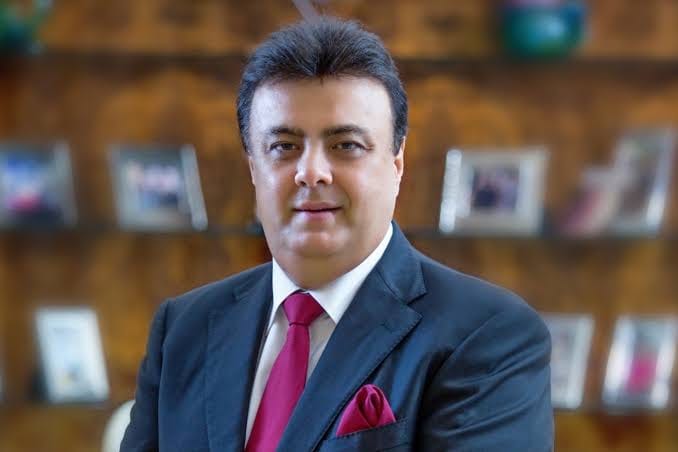
The Court on Friday ruled in the Bank’s favour on all issues and granted all its prayers.
United Bank for Africa (UBA) Plc has secured a significant legal victory in its debt recovery proceedings against Stallion Group, following a court judgment which upheld the Bank’s position on all issues submitted for determination.
In a sweeping decision, delivered by by Justice Daniel Osiagor of the Federal High Court sitting in Ikoyi, Lagos on Friday, the Court granted all the reliefs sought by UBA, affirming the validity of the appointment of a Receiver/Manager, the enforceability of the mortgage security and the liability of the guarantors.
The Court observed that the Defendants did not dispute the existence of their indebtedness to the Bank but challenged the amount claimed. It further held that the reconciliation of accounts between the parties did not extinguish or negate the underlying indebtedness.
In a major affirmation of UBA’s enforcement rights, the Court upheld the appointment of the Receiver/Manager and confirmed his entitlement to take possession of the mortgaged property and seek appropriate protective orders.
The Court also dismissed objections raised by the 12th Defendant, holding that it had failed to establish any proprietary rights over the mortgaged property. Consequently, its consent was not required for the creation of the mortgage, and its objections were rejected.
Significantly, the Court restrained the Defendants from diverting receivables due to them from government agencies, thereby reinforcing the Bank’s ability to protect its recovery interests.
The judgment also affirmed the liability of the guarantors, strengthening UBA’s legal position in pursuing recovery of the outstanding obligations.
The decision represents a comprehensive victory for UBA, with the Court resolving all issues in the Bank’s favour and granting all the reliefs sought.
The ruling is particularly significant for the enforcement of creditors’ rights in Nigeria, underscoring the legal validity of properly constituted security arrangements and the authority of duly appointed receivers to enforce creditors’ interests.
It also reinforces the principle that disputes over the precise amount of an outstanding debt do not, by themselves, invalidate the underlying indebtedness or prevent creditors from exercising their lawful recovery rights.
The judgment marks a major milestone in UBA’s efforts to recover its exposure to Stallion Group and safeguard the interests of the Bank and its stakeholders.

By Tony Obiechina, Abuja
The Budget Office of the Federation has reaffirmed the integrity of Nigeria’s newly enacted Tax Reform Acts, cautioning against what it described as governance by speculation and unverified claims following allegations of post-passage alterations.
In a statement on Wednesday, the Budget Office said it had taken note of concerns raised by the Minority Caucus of the House of Representatives, stressing that the sanctity of the law is central to constitutional democracy and not a mere procedural formality.
According to the Office, any suggestion that a law could be altered after debate, passage, authentication, and presidential assent without due process would strike at the core of the Republic and undermine citizens’ right to be governed by transparent and stable laws.
However, it warned that democratic integrity is also endangered by the careless amplification of unverified claims. “A nation cannot be governed by insinuation or sustained on circulating documents of uncertain origin,” the statement noted, adding that public confidence, once shaken by speculation, is often difficult to restore.
The Budget Office emphasized that both government and citizens share a common interest in truth, clarity, and due process, noting that public finance depends heavily on trust in the legality and clarity of fiscal laws. It welcomed the decision of the National Assembly to investigate the allegations, describing institutional inquiry, not conjecture as the appropriate response to claims of illegality.
On public access to the law, the Office agreed that Nigerians and the business community are entitled to clear and authoritative texts of all laws they are required to obey. It clarified, however, that the authenticity of legislation is determined by certified legislative records and official publication processes, not by informal or viral reproductions.
The statement also underscored the importance of separation of powers, warning that claims suggesting Nigeria is being governed by “fake laws,” if not backed by established facts, risk eroding confidence in democratic institutions.
At the same time, it stressed that legislative scrutiny should not be dismissed by the executive, noting that oversight is a constitutional duty, not an act of hostility.
From a fiscal perspective, the Budget Office said legal certainty is essential for revenue projections, macroeconomic stability, budget credibility, and investor confidence. While it is not the custodian of legislative records, it maintained that uncertainty around operative tax provisions directly affects economic planning.
To restore confidence, the Office proposed a set of measures, including the publication of verified reference texts in a single public repository, orderly access to Certified True Copies for stakeholders, clear public explanations where discrepancies are alleged, and strict alignment of all implementing regulations with authenticated legal texts.
Addressing calls for suspension of the tax reforms, the Budget Office cautioned against allowing prudence to slide into paralysis. It argued that properly implemented tax reform is necessary to reduce dependence on borrowing and inflationary financing, while easing indirect burdens on vulnerable citizens.
“Where clarification is required, it must be provided; where correction is required, it must be effected; where investigation is required, it must proceed,” the statement said, adding that governance and reform should not be stalled by unresolved conjecture.
The Office concluded by describing taxation as a democratic covenant that binds citizens and the state, insisting that compliance depends on transparency and trust. It called on political actors to protect institutions as much as positions, urging citizens and businesses to rely on verified sources and resist the spread of unauthenticated information.
The statement was signed by Tanimu Yakubu, Director-General of the Budget Office of the Federation, who reaffirmed the agency’s commitment to fiscal transparency, institutional integrity, and reforms that advance national prosperity while safeguarding citizens’ rights.
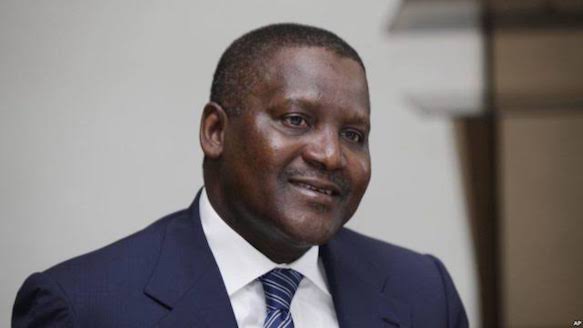
By Jennifer Enuma, Abuja
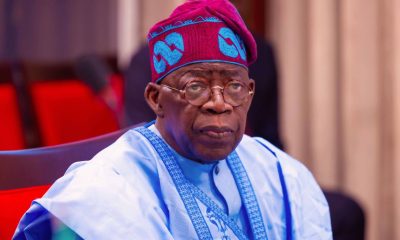
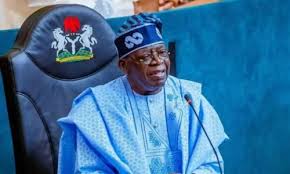
President Bola Tinubu has congratulated Alhaji Aliko Dangote, the President of Dangote Group, on his appointment to the World Bank’s Private Sector Investment Lab, a body tasked with promoting investment and job creation in emerging economies.
In a statement by Special Adviser on Media and Publicity, Bayo Onanauga, the President described the appointment as apt, given Dangote’s rich private sector experience, strategic investments, and many employment opportunities created through his Dangote Group.
The Dangote Group became one of Africa’s leading conglomerates through innovation and continuous investment.
Dangote Group’s business interests span cement, fertiliser, salt, sugar, oil, and gas. However, the $20 billion Dangote Petroleum Refinery and Petrochemicals remains Africa’s most daring project and most significant single private investment.
“President Tinubu urges Dangote to bring to bear on the World Bank appointment his transformative ideas and initiatives to impact the emerging markets across the world fully” the statement said.

The World Bank announced Dangote’s appointment on Wednesday, as part of a broader expansion of its Private Sector Investment Lab. The lab now enters a new phase aimed at scaling up solutions to attract private capital and create jobs in the developing world.
The CEO of Bayer AG, Bill Anderson, the Chair of Bharti Enterprises, Sunil Bharti Mittal, and the President and CEO of Hyatt Hotels Corporation, Mark Hoplamazian, are on the Private Sector Investment Lab with Dangote.
The World Bank said the expanded membership brings together business leaders with proven track records in generating employment in developing economies, supporting the Bank’s focus on job creation as a central pillar of global development.


Adeniyi, JAMB Registrar Seek Operational Synergy
ShareBy Tambaya Julius, Abuja The Nigeria Customs Service (NCS) and the Joint Admissions and Matriculation Board (JAMB) are considering areas...

NLC Suspends FCT Indefinite Strike
ShareThe Nigeria Labour Congress (NLC), Federal Capital Territory (FCT) Council, has suspended its indefinite strike and directed all affected workers,...


APC Dismisses Alleged Plot to Assassinate Atiku
ShareThe All Progressives Congress (APC) Presidential Campaign Council (PCC) has dismissed allegations that the Federal Government is plotting to assassinate...

2027: We’ll Deliver Rivers, FCT for Tinubu – Wike
ShareBy Laide Akinboade, Abuja The Minister of the Federal Capital Territory (FCT), Nyesom Wike, has declared that the All Progressives...

Tinubu’s Three Bills and the Burden of Government
ShareBy Tom Chiahemen A government that asks its citizens to endure the pain of economic reform must demonstrate a corresponding...
DMO Raises N2.02trn As FGN Bond Yields Rise To 17.29 Per Cent
ShareBy Tony Obiechina, Abuja Yields on Federal Government of Nigeria (FGN) bonds increased by as much as 50 basis points...

Anxiety Grips FCT Residents As FG Confirms Ebola Disease Case
ShareBy Laide Akinboade, Abuja The Federal Government (FG), on yesterday confirmed one case of Ebola disease in the Federal Capital...

Again, Tinubu Rules Out Return to Petrol Subsidy Regime
ShareBy Tambaya Julius, Abuja President Bola Ahmed Tinubu has ruled out a return to petrol subsidy, insisting that his administration...

Former Delta Governor Uduaghan Dies at 70
ShareFrom Francis Sadhere, Delta Former Governor of Delta State, Dr. Emmanuel Eweta Uduaghan, has died. Uduaghan, who governed the state...


Customs Opens Review for Disqualified Recruits, Flags 397 Applicants
ShareBy Tambaya Julius, Abuja The Nigeria Customs Service (NCS) has opened a review process for applicants disqualified during its recent...