
NEWS
African Petroleum Regulators’ Forum Seeks Collaboration, Innovation


The African Petroleum Regulators Forum (AFRIPERF) has called for collaboration and innovation in the 2025 operational year, for it to achieve its stated objectives.
Mr Gbenga Komolafe, the interim Chairman of the Forum, on Sunday in a statement reaffirmed commitment to its collective goals in advancing Africa’s petroleum sector.
AFRIPERF, inaugurated in July 2024, during the Nigeria Oil and Gas Energy Week, is a collaborative initiative aimed at enhancing governance and regulatory practices in the petroleum sector across Africa.
AFRIPERF seeks to promote cooperation among regulators from various African oil and gas-producing countries, including Angola, Ghana, Liberia, the Gambia, Mozambique, Tanzania, Uganda, Sierra Leone and Senegal.
Komolafe, in his New Year message to members, called for a spirit of enthusiasm, active participation and collaboration in 2025.
“Our objectives are ambitious, and achieving them necessitates the dedication and engagement of every participant.
“We urge members to prioritise attendance at our quarterly hybrid meetings.
“Your presence is crucial for fostering discussions and enhancing our decision-making processes, ensuring we remain aligned with our mission,” Komolafe said.
The interim chairman, who is also the Chief Executive of Nigerian Upstream Petroleum Regulatory Commission (NUPRC), emphasised the importance of inclusivity to AFRIPERF.
“Together, we can cultivate an environment where every voice is heard and every contribution is valued.
“Let us unite to leverage our diverse strengths, share knowledge and promote best practices across the continent.”
He underscored the need to enhance training, research and innovation, to build resilient regulatory institutions.
Komolafe reiterated the body’s aim towards promoting uniform regulatory practices that could attract investment and optimise resource management throughout Africa.
“Additionally, we advocate for Africa’s priorities in the global energy landscape while integrating renewable energy and emissions reduction into our policies.
“It is essential that we expand AFRIPERF’s reach and ensure that all members actively participate in shaping the continent’s collective future.”
“Together, we can navigate challenges and seize opportunities that will benefit not only our countries but also the oil and gas sector across the continent and the communities we serve,” he said (NAN)
NEWS
WAHO, ECOWAS Stakeholders Move to Harmonise Nursing, Midwifery Accreditation Standards Across West Africa
By David Torough, Abuja
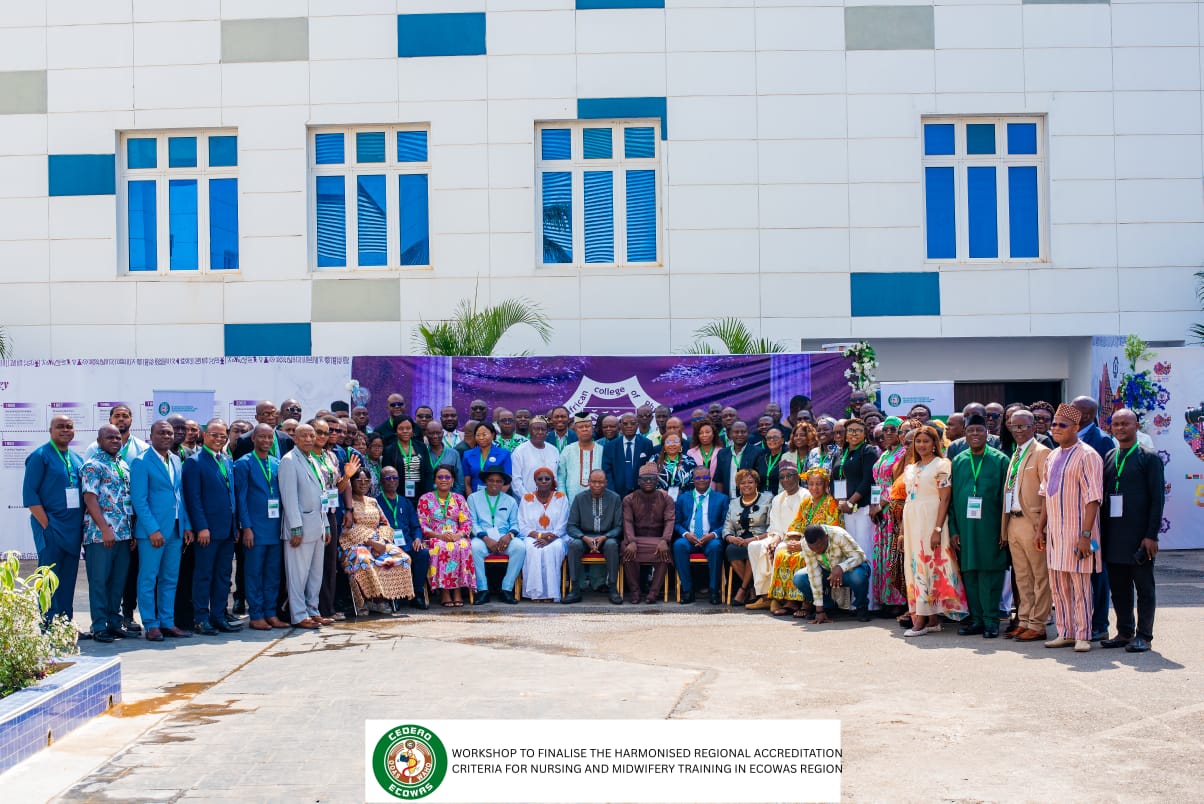
The West African Health Organisation (WAHO) has convened a three-day regional workshop in Abuja to finalise harmonised accreditation criteria for nursing and midwifery training institutions across Economic Community of West African States (ECOWAS) Member States, in a move aimed at strengthening healthcare education, improving patient safety and facilitating the mobility of qualified health professionals across the region.
The workshop brought together representatives of governments, professional regulatory bodies, academic institutions, professional colleges and other stakeholders to develop a common accreditation framework that will promote consistent standards in nursing and midwifery education throughout West Africa.
Speaking on behalf of Nigeria’s Coordinating Minister of Health and Social Welfare, Professor Muhammad Ali Pate, Dr Dakum Longji described the initiative as an important opportunity to strengthen professional standards, promote regional collaboration and improve the quality of healthcare delivery.
He said nurses and midwives remained the backbone of healthcare systems, noting that their knowledge, compassion and dedication were essential to improving the health and well-being of populations across the region.
According to him, accreditation is fundamental to ensuring that nursing and midwifery training institutions meet established educational standards and produce graduates equipped with the knowledge, skills and competencies required to provide safe, effective and compassionate care.
He stressed that harmonising accreditation standards across ECOWAS Member States would promote professional mobility, strengthen regional cooperation and enhance public confidence in healthcare systems.
“Accreditation should therefore not be viewed merely as a regulatory requirement. It is a vital investment in patient safety, quality healthcare and the future of our health systems,” he said.
Representing the WAHO Director General, Professor Palokinam T. Pitche, Professor Joseph Olorunda said the workshop was taking place at a critical time in the region’s efforts to strengthen health systems through improved education and training of healthcare professionals.
He noted that West Africa continued to face significant health system challenges, including inadequate financing, weak disease surveillance, insufficient infrastructure and shortages of qualified health workers.
According to workforce figures referenced in WAHO’s regional assessments, all 12 ECOWAS Member States face critical health workforce shortages, with an average health professional density of 0.73 per 1,000 population, compared with the referenced minimum threshold of 2.28 per 1,000.
He explained that addressing the shortages required not only increasing the number of health professionals but also ensuring that their education and training were relevant, consistent and of high quality.
“The quality of nursing and midwifery education directly determines the strength of our health systems,” he said, adding that the COVID-19 pandemic had demonstrated that universal health coverage and health security depended on a competent, adequately trained and equitably distributed health workforce.
Professor Olorunda said WAHO had already developed general accreditation criteria, while the ongoing workshop provided an opportunity to strengthen that foundation by developing specific, harmonised standards for nursing and midwifery training institutions.
He explained that a credible accreditation framework should establish clear requirements for curricula, institutional facilities, faculty qualifications and clinical training environments, supported by transparent institutional assessments, compliance monitoring and periodic reviews.
The proposed framework is expected to incorporate established accreditation procedures, including formal applications by institutions, verification of minimum programme requirements, pre-accreditation assessments, full accreditation visits and periodic reviews.
These measures, he said, would promote transparency, consistency and accountability while ensuring that training institutions complied with agreed regional standards.
Highlighting WAHO’s broader efforts to improve health professional education, Professor Olorunda said the organisation had supported the harmonisation and validation of 58 basic and specialist training curricula across medical specialties, pharmaceutical sciences, allied health professions, nursing and midwifery.
He added that WAHO had also supported the harmonisation of training manuals and practices for community-based health workers, developed regional training plans, provided financial assistance to Member States implementing harmonised curricula and offered scholarships for training in specialties facing critical shortages.
The organisation, he said, was also finalising a regional work plan to strengthen health worker motivation and retention, particularly in underserved and hard-to-reach areas, while pursuing initiatives to engage healthcare professionals in the diaspora to support training, retraining and mentorship.
Professor Olorunda called on participants to develop a robust, competency-based accreditation framework aligned with national requirements and regional and global priorities.
He further emphasised the need to strengthen inspection and regulatory mechanisms, introduce digital accreditation management systems and ensure safe, conducive clinical training environments for nursing and midwifery students.
Also speaking, the President of the Regional Council for Health Professionals Education, Professor Koffi Balogou, said harmonised accreditation criteria would help eliminate unregulated and substandard nursing and midwifery training practices in parts of the region.
He expressed concern that some institutions operated without qualified teaching personnel, adequate infrastructure and appropriate academic resources, while admitting candidates who did not meet the necessary academic requirements.
Such practices, he warned, undermined professional standards, exploited families investing in education and, most importantly, put the lives and safety of patients at risk.
Professor Balogou said the proposed framework would help ensure that only institutions meeting established standards were authorised to train nurses and midwives and award recognised qualifications.
He added that effective accreditation would protect students and their families from institutions offering inadequate training or qualifications that lacked legitimacy.
Beyond quality assurance, he said, the harmonisation of accreditation standards would facilitate mutual recognition of qualifications and support the free movement of qualified health professionals across ECOWAS Member States.
He, however, cautioned that the success of the initiative would depend on the effective dissemination and implementation of the final criteria across the region.
Representing Senegal, which currently chairs the ECOWAS Authority, Dr Awa Seck said the harmonisation of accreditation criteria represented a strategic decision for the future of health professional education in West Africa.
She conveyed the greetings of Senegalese President Bassirou Diomaye Diakhar Faye and reaffirmed his country’s commitment to building a more effective, harmonised and excellence-driven regional health education system.
Dr Seck said the quality of healthcare provided to communities was inseparable from the quality of education and training received by health professionals.
She noted that nurses and midwives were often the first, and sometimes the only, point of contact between communities and health services, making their contribution indispensable to achieving universal health coverage.
According to her, common accreditation standards would establish a regional framework in which nurses and midwives, regardless of their country of training, benefit from educational programmes based on rigorous and mutually recognised requirements.
She said the framework would strengthen confidence among training institutions, facilitate professional mobility and support continuous improvements in healthcare quality.
Dr Seck stressed that Member States must go beyond adopting the criteria to ensure national ownership, effective implementation and continuous improvement.
She expressed confidence that the workshop would produce a consensus that respected national circumstances while advancing the region’s shared ambitions for quality healthcare education.
Meanwhile, Professor Yao Tettey, representing the West African professional colleges, called for stronger collaboration among professional bodies, training institutions and regulatory authorities to ensure the successful implementation of the harmonised framework.
He said existing work undertaken by WAHO on accreditation, training curricula, professional practice, ethics and health workforce development provided a valuable foundation that relevant institutions should build upon rather than duplicate.
Professor Tettey noted that the participation of professional colleges, academic institutions and regulators in the workshop offered an opportunity to develop comprehensive criteria that could serve as a common reference across the region.
He urged participants to ensure that the final document met high professional standards and was widely disseminated to relevant institutions for adoption and implementation.
Similarly, Professor Boni Avoaka, representing the deans of faculties of health sciences, described the initiative as strategically important to the future of public health in West Africa.
He said nurses and midwives played fundamental roles in maternal, child and community health, making the quality and consistency of their education a priority for governments and academic institutions.
Professor Avoaka said academic leaders had a dual responsibility to ensure that training programmes met high standards and to support the free movement of health professionals through mutually recognised qualifications backed by credible accreditation mechanisms.
He expressed confidence that the expertise assembled at the workshop would produce rigorous, practical and regionally relevant criteria capable of strengthening quality assurance and mutual trust among universities, faculties and training institutions.
Across the goodwill messages, speakers underscored the importance of sustained cooperation among ECOWAS Member States, professional bodies, regulators and academic institutions to ensure that the proposed accreditation framework translated into measurable improvements in nursing and midwifery education.
They also highlighted the need for effective regulatory oversight, transparent assessment procedures and continuous monitoring to ensure that institutions maintained the standards required to produce competent health professionals.
The workshop is expected to conclude with the finalisation of harmonised regional accreditation criteria that will provide a common reference for nursing and midwifery training institutions across ECOWAS Member States.
The initiative is part of WAHO’s broader efforts to strengthen human resources for health, improve the quality of professional education and advance regional health integration.
Declaring the workshop open on behalf of Nigeria’s Coordinating Minister of Health and Social Welfare, Dr Longji commended WAHO, ECOWAS Member States and participating stakeholders for their commitment to the initiative.
He called on participants to work together in a spirit of unity and collaboration, emphasising that investment in the training of nurses and midwives was an investment in safer healthcare, healthier communities and a stronger future for West Africa.
By Tambaya Julius, Abuja
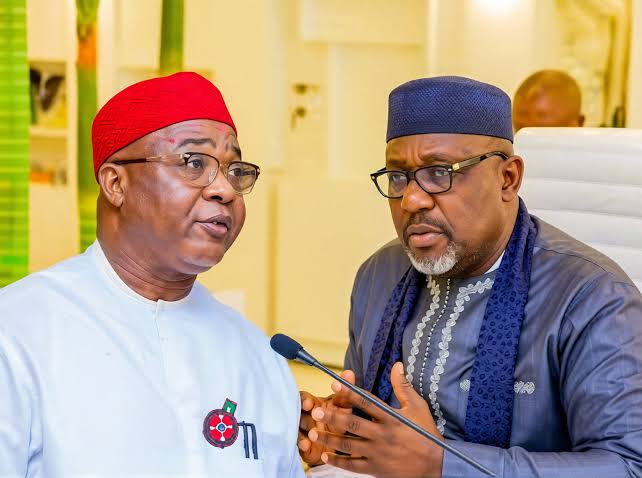
Former Imo State Governor, Rochas Okorocha, has described a Federal High Court judgment recognising him as the All Progressives Congress (APC) candidate for Imo West Senatorial District in the 2027 general election as a victory for the judiciary, democracy and the Nigerian Constitution.
However, the APC in Imo State has maintained that Governor Hope Uzodimma remains its candidate for the senatorial seat, despite the court ruling in favour of Okorocha.
The court, presided over by Justice Obiora Egwuatu, nullified Uzodimma’s recognition as the party’s candidate, declaring Okorocha the lawful winner of the APC senatorial primary held on May 18, 2026.
It also ordered the Independent National Electoral Commission (INEC) to publish Okorocha’s name as the party’s candidate and restrained Uzodimma from parading himself as the APC flag bearer for the January 16, 2027 election.
Okorocha had approached the court to challenge the outcome of the primary after the party declared Uzodimma the winner.
In the suit, the former governor also asked the court to determine whether Uzodimma could constitutionally contest the senatorial election while still serving as governor, considering that his tenure is expected to end in January 2028.
Reacting to the judgment in a statement issued on Thursday by his Special Adviser on Media, Sam Onwuemodo, Okorocha described the ruling as a landmark decision that reaffirmed the importance of the judiciary, democracy and constitutional governance.
“This judgment, to say the least, is a resounding victory for the nation’s judiciary.
It is a victory for the nation’s fast-growing democracy. It is an outstanding victory for the nation’s Constitution, as amended,” he said.
Okorocha added that the judgment was a victory for those who stood for justice and opposed wrongdoing, as well as for posterity and history.
“Finally, it is a victory for Imo people in general, and Imo West Senatorial District people in particular,” he said.
The former governor thanked President Bola Tinubu for providing what he described as an enabling environment for the judiciary and other institutions to function effectively in the interest of national development.
He also commended the APC leadership for allowing party members to pursue their legitimate aspirations and exercise their constitutional rights.
Okorocha expressed appreciation to the people of Imo State, particularly residents of Imo West Senatorial District, for their prayers, moral support and celebrations following the judgment.
He further acknowledged Uzodimma’s involvement in the legal proceedings, describing the case as part of a historic judicial decision, and thanked God for what he called a victory.
Meanwhile, the APC in Imo State has insisted that Uzodimma remains its candidate for the 2027 senatorial election, despite the court’s decision.
The party made its position known in a statement signed by its State Publicity Secretary, Onwuasoanya Jones, on Thursday, in reaction to the judgment.
“The Party wishes to state without any confusion that His Excellency Distinguished Senator Hope Uzodimma, CON, remains the candidate of our Party for Imo West Senatorial District, having won the primaries of our great Party with the overwhelming support of the majority of our Party members,” the statement read.
The APC said its legal department would study the judgment before deciding on its next course of action.
“The Party’s legal department shall study the outcome of a legal intervention in this matter and act accordingly,” it added.
The party also urged its members and supporters to remain focused and committed to securing victories across the state’s constituencies in the forthcoming elections.
The dispute followed the APC senatorial primary held on May 18, 2026, in which Uzodimma was declared winner with 230,464 votes, while Okorocha reportedly polled 1,098 votes in the results recognised by INEC.
Dissatisfied with the outcome, Okorocha challenged the result in court, disputing Uzodimma’s recognition as the party’s candidate.
In its judgment, the court ruled that Okorocha was the lawful winner of the primary and directed the APC to submit his name to INEC.
It also faulted inconsistencies in documents presented by the party in support of Uzodimma’s nomination.
The conflicting positions of the court and the state APC leadership could trigger further legal and political developments over who will represent the party in the Imo West Senatorial District in the 2027 general election.

The Federal High Court in Abuja on Wednesday dismissed a N10bn fundamental rights suit filed by Nollywood actor Emeka Ike against Lere Olayinka, Senior Special Assistant on Public Communications to the Minister of the Federal Capital Territory, Nyesom Wike and the Independent National Electoral Commission.
Justice Salim Ibrahim dismissed the suit after upholding the preliminary objections filed by the respondents, who challenged its competence and proper constitution.
The judge also dismissed the substantive suit for lack of proof.
Ike had accused Olayinka of violating his fundamental right to privacy by publishing his voter registration details on his X handle in May.
The actor alleged that the publication exposed his personal information, including details of the transfer of his voter registration from Imo State to the Federal Capital Territory.
Ike subsequently instituted the suit, marked FHC/ABJ/CS/1272/2026, through his lawyer, L.T. Adeh, seeking N10bn in aggravated and general damages against the respondents.
The actor, who aspired to contest the AMAC/Bwari Federal Constituency seat in the House of Representatives in the 2027 general elections on the platform of the Nigerian Democratic Congress, lost the party’s primary election.
In the suit, Ike asked the court to declare that Olayinka’s publication of his voter registration details without his consent “amounts to gross breach and violation of the applicant’s fundamental right to privacy and the protection of personal data”.
He relied on Section 37 of the 1999 Constitution, Article 12 of the Universal Declaration of Human Rights, and Sections 24 and 39 of the Nigeria Data Protection Act, 2023, to support his claim.
The actor also sought a declaration that INEC owed him and other registered voters a “statutory duty of care” to protect their personal information against unauthorised access.
He further asked the court to declare that INEC’s June 2 press statement, issued in response to the circulation of his voter information on social media, amounted to a tacit admission of guilt and liability.
File: The Senior Special Assistant on Public Communications and Social Media to the Minister of the Federal Capital Territory, Lere Olayinka.
Ike sought an order directing Olayinka to remove the disputed publication from his X account, #OlayinkaLere, and tender a written apology for the alleged infringement of his rights.
However, INEC and Olayinka urged the court to dismiss the suit, insisting that the publication did not amount to a breach of Ike’s fundamental rights.
In its counter-affidavit, INEC maintained that the information complained about was neither classified, sensitive nor confidential, arguing that the electoral body was legally empowered to make certain voter information available to the public.
The commission’s response was deposed to by Anthonia Makwe, an assistant director and data protection officer in its Legal Drafting and Clearance Department.
INEC argued that it had the “statutory and constitutional power to make available information of its voters to the general public without the consent of any registered voter”.
The commission said its statutory responsibilities included the compilation, maintenance, display, publication, certification and management of the voters’ register in accordance with the Constitution, the Electoral Act, 2026, and the Nigeria Data Protection Act, 2023.
It also denied that the information allegedly published by Olayinka originated from its database.
INEC stated that it had not breached its statutory duty to protect voters’ personal information within its secured portal and restricted database.
Olayinka, in his counter-affidavit, also denied wrongdoing, maintaining that the document he published contained only Ike’s name and passport photograph, which he claimed were already in the public domain.
He argued that the information was not obtained through any unlawful means and that he owed the actor no duty of confidentiality requiring his consent before publishing the material.
The FCT minister’s aide further contended that Ike, having presented himself as a public figure and expressed an intention to contest an election, could not claim to have suffered trauma from the circulation of his name and photograph.
Olayinka also argued that the publication was made after Ike allegedly led a group of hoodlums to INEC’s office to disrupt its activities following his declaration of interest in the election.
According to him, the publication was intended to remind the actor that he had recently transferred his voter registration area and draw public attention to the relevant electoral provisions.
He further cited Section 19(1) of the Electoral Act, 2026, arguing that INEC was required to publish the voters’ register within the period prescribed by law ahead of a general election.
Olayinka also relied on INEC’s June 2 statement, which he said confirmed that there had been no external breach of its continuous voter registration database, hacking incident or unauthorised access to its information technology infrastructure.
The statement, as quoted in his counter-affidavit, said, “There was no external breach of its CVR database, no hacking incident and no unauthorised external access to the commission’s ICT infrastructure.”
He argued that he was not a data controller under the Nigeria Data Protection Act, 2023, and therefore had no statutory obligation to safeguard the actor’s information in the manner alleged.
Rejecting Ike’s demand for damages, Olayinka described the N10bn claim as being made in bad faith, calling it “an indication that the applicant is a gold digger who wants to reap where he did not sow”.
He insisted that he should not be held liable for publishing information he claimed was already publicly accessible and urged the court to dismiss the suit in the interest of justice.



WAHO, ECOWAS Stakeholders Move to Harmonise Nursing, Midwifery Accreditation Standards Across West Africa
ShareBy David Torough, Abuja The West African Health Organisation (WAHO) has convened a three-day regional workshop in Abuja to finalise...

Okorocha Hails Court Victory as APC Insists Uzodimma Remains Candidate
ShareBy Tambaya Julius, Abuja Former Imo State Governor, Rochas Okorocha, has described a Federal High Court judgment recognising him as...

TRIBUTE: CHIEF GABRIEL GBAYAN, A LEGACY OF SERVICE TO BADMINTON
Share The late Chief Gabriel Gbayan was a distinguished sports administrator who served as a Two times Chairman of the...

Court Dismisses Emeka Ike’s N10bn Suit against Wike’s Aide
ShareThe Federal High Court in Abuja on Wednesday dismissed a N10bn fundamental rights suit filed by Nollywood actor Emeka Ike...

Reps Threaten to Arrest Telecom CEOs Over Poor Network Services
ShareBy Ubong Ukpong, Abuja The House of Representatives on Wednesday threatened to issue warrants of arrest against chief executives of...


A Guide to IFRS S1 and S2 Sustainability Implementation (4)
ShareBy Innocent Okwuosa The implementation of IFRS S1 and S2 must not be approached strictly from a regulatory compliance perspective....

2027: Reward Tinubu with Votes for Federal University – Wike
ShareBy Laide Akinboade Abuja The Minister of the Federal Capital Territory, Nyesom Wike, has said the Ogoni people of Rivers...

FCSC, Soft Alliance Explore IPPIS Integration to Improve Civil Service Management
ShareThe Federal Civil Service Commission (FCSC) and Soft Alliance and Resource Ltd. are exploring ways to integrate the commission’s statutory...


Tinubu Presides over FEC Meeting
SharePresident Bola Tinubu is presiding over a meeting of the Federal Executive Council at the Council Chamber of the State...
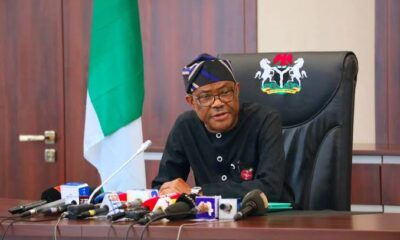

Wike Question Atiku, Obi, Contributions to Rivers State
ShareBy Laide Akinboade Abuja Minister of the Federal Capital Territory, Nyesom Wike, has challenged former Vice-President Atiku Abubakar and former...