
BUSINESS
Again, Tinubu Seeks Senate Approval for $20.52bn, €1.045bn External Loans


By Tambaya Julius, Abuja
President Bola Tinubu has asked the National Assembly to approve a supplementary external borrowing plan of $20.52 billion and €1.045 billion to finance projects and programmes across critical sectors of the Nigerian economy.
The request was conveyed in a letter read by Senate President Godswill Akpabio during plenary on Tuesday.
Tinubu said the proposed loans would help address the country’s infrastructure deficit, accelerate economic growth, create employment opportunities and improve the living conditions of Nigerians.
He urged the National Assembly to approve the 2026–2027 Supplementary External Borrowing Plan to enable the Federal Government to implement its development projects and programmes without delay.
Hhowever, the opposition- African Democratic Congress( ADC) has querried the timing of the loan just as it said economic conditions in tje country did not justify any fresh borrowing.
The president said the proposed borrowing would cover infrastructure, agriculture, healthcare, education, water supply, security, employment generation and financial management reforms.
According to him, the need to sustain economic growth and accelerate national development following the implementation of his administration’s reforms had made additional external financing necessary.
Tinubu put the proposed facilities at $20,517,755,901 and €1,045,083,643, adding that the projects and programmes had undergone technical and economic assessments to determine their potential contributions to national development.
He said the proposed investments were expected to stimulate economic activities, create jobs, promote skills acquisition, encourage entrepreneurship, reduce poverty and strengthen food security.
The president added that most of the projects would be implemented across the 36 states of the federation and the Federal Capital Territory (FCT).
He explained that the scale of Nigeria’s infrastructure needs and the financial resources required to address them had made broader external borrowing necessary to bridge the funding gap.
Tinubu said the funds would be channelled primarily into critical infrastructure, particularly power, transportation and healthcare, while other sectors would also benefit from the proposed financing.
He called on the Senate and the House of Representatives to give the request urgent consideration, arguing that prompt approval would facilitate timely disbursement and effective implementation of the projects.
Following the presentation of the letter, Akpabio referred the request to the Senate Committee on Local and Foreign Debts for consideration and directed it to report back to the chamber within one week.
The committee is expected to conduct the initial legislative review, with possible collaboration with the Senate Committee on Appropriations and other relevant committees.
The proposed borrowing plan must undergo legislative scrutiny before the external financing can proceed.
However, the letter, as presented to the Senate, did not provide a project-by-project breakdown of the proposed facilities, their individual financing terms or the allocation of funds among the beneficiary sectors.
The request comes as the Federal Government seeks additional resources to finance infrastructure and development programmes amid competing demands on public finances.
The implementation of the borrowing plan will depend on the outcome of the National Assembly’s consideration and the details of the projects to be financed.
In a statement, the Director of Media and Publicity of the ADC-PCC, Kola Ologbondiyan, said the fresh borrowing request came amid rising living costs, increased taxation and growing economic hardship among Nigerians.
Ologbondiyan questioned the rationale for seeking additional foreign loans when, according to the council, millions of citizens were struggling to meet their basic needs.
“What exactly is President Tinubu borrowing all this money for? Where are the roads, the electricity, the hospitals, the jobs and the critical infrastructure that should justify this relentless accumulation of debt? Nigerians deserve answers,” he said.
He also demanded explanations on the utilisation of funds saved from fuel subsidy removal and the proceeds of previous borrowings.
The ADC-PCC expressed concern that continued dependence on foreign loans, without clear evidence of corresponding improvements in infrastructure, productivity, employment and citizens’ welfare, could push Nigeria deeper into a debt trap.
According to the council, mounting debt-servicing obligations could limit the ability of future administrations to make independent economic decisions and undermine the country’s fiscal flexibility.
“This is not a sustainable path to national development. It is a dangerous attempt to mortgage the future of Nigeria and generations yet unborn,” Ologbondiyan said.
He argued that the government should not continue to demand economic sacrifices from citizens while seeking additional loans without adequately explaining how existing resources had been spent.
The council further warned that excessive borrowing could expose the country to greater financial pressure and constrain its ability to fund critical public services.
It insisted that any new borrowing arrangement must be tied to clearly defined national priorities, productive investments and measurable benefits for Nigerians.
The ADC-PCC therefore called on the National Assembly to subject the proposed loans to rigorous scrutiny and reject the request unless the Federal Government demonstrates their necessity, sustainability and expected benefits.
It also demanded that Tinubu publish a comprehensive account of all domestic and foreign loans obtained since May 29, 2023, alongside a detailed breakdown of revenue generated from fuel subsidy removal and how the funds had been applied.
The council called for full disclosure of the proposed facilities’ purposes, interest rates, repayment schedules, associated fees, conditions and any collateral or guarantees attached to them.
It maintained that Nigerians had a right to know the financial obligations being incurred on their behalf and the implications for the country’s economic future.
“Nigeria cannot borrow its way out of poor economic management. Borrowing must be tied to clearly defined national priorities, transparent expenditure and measurable outcomes.
Anything less is an injustice to the Nigerian people,” the statement added.
The ADC-PCC also urged the National Assembly not to abdicate its oversight responsibilities, insisting that lawmakers must ensure that any borrowing arrangement does not expose the country to unacceptable financial risks.
It said the Federal Government must demonstrate how the proposed loans would stimulate economic growth, create jobs, improve infrastructure and raise living standards rather than impose additional liabilities on future generations.
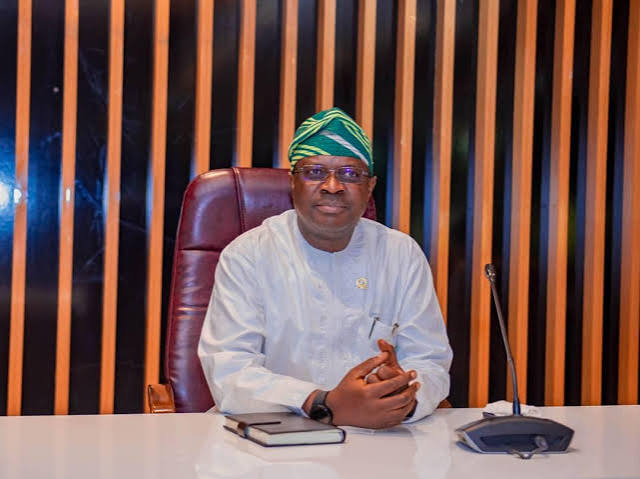
The Federal Government has called for a stronger agricultural value chains, increased agro-industrialisation and improved market access to boost food security in Nigeria.
The Permanent Secretary, Federal Ministry of Agriculture and Food Security, Dr.
Marcus Ogunbiyi, made the call on Monday in Enugu during the Technical Session of the National Council on Agriculture and Food Security.The theme of the event is “Enhancing Agricultural Value Chains, Agro-Industrialization and Market Access for Economic Growth.”
Ogunbiyi, who doubled as the Chairman of the Technical Session, said that the country must move beyond subsistence farming and embrace a commercially driven agricultural system capable of supporting industries, improving farmers’ incomes and expanding export opportunities.
“Our task goes beyond increasing the volume of food produced.
“We must build an agricultural economy that creates wealth, supports industries, generates decent employment, expands exports, improves rural livelihoods and contributes meaningfully to national economic growth,” he said.
The Permanent Secretary identified inadequate storage and processing facilities, limited access to finance, poor logistics and weak links between farmers and processors as major challenges affecting the competitiveness of agricultural products.
He called for increased investment in agro-processing facilities, rural roads, irrigation, electricity, cold-chain infrastructure and modern technologies to reduce post-harvest losses and promote local value addition.
“Agro-industrialisation is central to the transformation we seek to achieve. It provides the bridge between agriculture and industry.
“It also enables agricultural production to serve as a reliable source of raw materials for manufacturing and other productive sectors of the economy.
“The value of this Council will ultimately be determined by the quality of its resolutions and the extent to which those resolutions are implemented,” Ogunbiyi stated.
He also urged state governments to identify priority commodities, establish clear production and processing targets, attract private-sector investment and strengthen partnerships with research institutions and development partners.
In his remarks, the Enugu State Commissioner for Agriculture and Agro-industrialisation, Patrick Uburu, said that the state government was committed to agro-industrialisation to boost farmers’ income, create jobs and generate wealth.
Uburu, who described the technical sessions as a platform for translating policies into practical solutions, urged delegates to prioritise farmers and agribusiness operators in their deliberations.
He emphasised the need for stronger collaboration among state governments, federal agencies and development partners to address food security challenges, noting that recommendations from the meeting should be measurable and implementable.
The commissioner called for practical policies and investments that would improve farmers’ productivity and expand market access for agricultural produce.
Technical Lead Policy Advisory, GIZ ECOWAS & Nigeria, Dr Abiodun Ihebuzor, advocated for stronger partnerships and increased investment in agricultural value chains to reduce post-harvest losses and improve food security in Nigeria.
Ihebuzor noted that previous engagements at the 46th Council in Calabar and the 47th Council in Kaduna had provided opportunities to advance agricultural development.
He expressed optimism that the current meeting would strengthen collaboration among government institutions, development partners and private-sector operators.
According to him, healthy soils, efficient markets and improved storage systems were essential to sustainable food security.
On her part, Geraldine Onu, Deputy Director, Administration and Supply, Enugu State Ministry of Agriculture and Agro-Industrialisation, disclosed that the State Government had intensified efforts to transform agriculture from subsistence farming to commercial and mechanical farming as part of its economic development agenda.
She noted that investments in irrigation, storage, processing and agricultural infrastructure were aimed at increasing production, attracting private investment, reducing post-harvest losses and improving farmers’ livelihoods.
“In Enugu State, under the visionary leadership of Gov. Peter Mbah, agriculture occupies a strategic position in the state’s economic transformation agenda.
“The initiatives include the 300,000-hectare agricultural land bank, the development of Smart Farm Estates across the 17 Local Government Areas, the 260 Farm Estate Programme and the establishment of a tractor assembly plant,” Onu added.(NAN)
A graduate of the University of Maiduguri, Shianya Ebwaseh, said the Nigerian Education Loan Fund (NELFUND) helped improve her Grade Point Average (GPA) to 3.50 through financial support that enabled her to concentrate on her studies.
Ebwaseh, who graduated from the Department of Zoology, Faculty of Life Sciences, said this in an interview on Monday in Maiduguri.
She said financial difficulties had previously affected her academic performance, as she struggled to meet her daily needs while pursuing her degree.
The graduate said she resorted to selling fried chips and groundnuts on campus to support herself, sometimes missing lectures because of the time and energy required to run the business.
According to her, the introduction of NELFUND’s student loan scheme relieved her financial burden through tuition support and a monthly N20,000 upkeep allowance.
“Before NELFUND, I struggled with my GPA because of financial challenges. I sometimes missed lectures after spending hours frying and packaging chips for sale.
“But when NELFUND came, I stopped the business and concentrated on my studies. My GPA improved to 3.50, which is Second Class Upper,” she said.
Ebwaseh said the financial support also enabled her to attend lectures regularly, purchase learning materials and prepare adequately for tests and examinations without constant worries about money.
She added that her examination scores improved significantly after she began receiving the support, attributing the change to increased concentration and financial stability.
The graduate, who said she accessed the scheme in her third year, described the application process as simple and encouraged other eligible students to apply.
She also said the programme had helped financially disadvantaged students remain in school, particularly those whose parents could not afford tuition fees and upkeep.
Ebwaseh appealed to the Federal Government to sustain the initiative, emphasising that withdrawing the support could expose many students to financial difficulties and possible dropout.
She said the scheme had given beneficiaries an opportunity to pursue their academic ambitions with fewer financial distractions.(NAN)
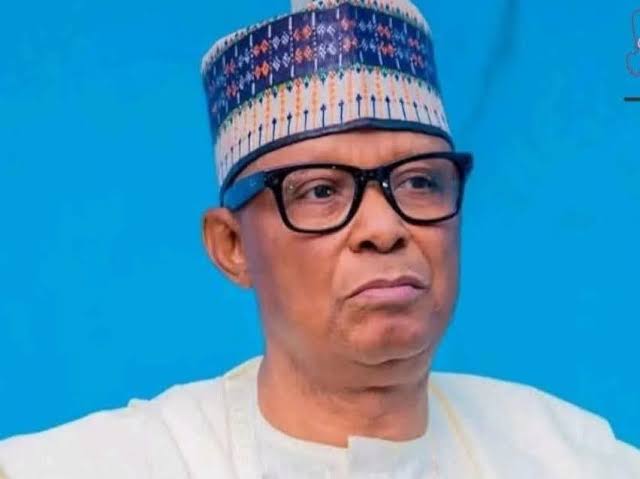
The Minister of Housing and Urban Development, Dr Muttaqha Darma, has called for synergy among government agencies in the housing sector to improve coordination and accelerate housing delivery.
Darma made the call in Abuja on Monday at the stakeholders’ conference on the proposed National Real Estate Regulatory Authority (NRERA).
The conference, themed “One vision, One Ecosystem, One National Housing and Real Estate Plan”, was organised by the Office of the Speaker, House of Representatives, and the House Committee on Housing and Habitat.
The minister said the lack of coordination among government agencies had affected the effective delivery of houses to Nigerians, noting that institutions in the sector operated independently.
“The players within the industry, all of us, operate in silos.
“Federal Housing Authority (FHA) does not even know what the Federal Mortgage Bank of Nigeria (FMBN) is doing. FMBN does not know what the Ministry of Finance Incorporated (MOFI) is doing,” he said.
According to him, the various institutions must work together towards a common goal rather than operate independently.
“Our target is to build houses for Nigerians. We are wasting our time because if we fail, it is us who fail, not the President,” he said.
The minister expressed support for the establishment of NRERA, saying the proposed authority would address the regulatory gaps in the real estate sector.
He said the ministry had reviewed the proposed legislation and recognised its potential to improve the sector.
Darma also disclosed that abandoned housing projects funded by the Federal Mortgage Bank of Nigeria (FMBN) across the country were worth about N38 billion.
He said a survey conducted by the ministry revealed abandoned FMBN-funded housing developments in every state of the federation, including the Federal Capital Territory.
“We realised about N38 billion of contributors’ money, your own money, all the Nigerian workers’ money. N38 billion is wasted,” he said.
He said that the poor management of workers’ contributions could discourage Nigerians from contributing to the National Housing Fund.
The minister urged the committee handling the proposed legislation to ensure that state governments were included in the regulatory framework.
He also called for safeguards to protect homebuyers, tenants, developers and mortgage lenders, including mandatory escrow accounts for buyers and standardised tenancy agreements.
The Managing Director and Chief Executive Officer of the Ministry of Finance Incorporated (MOFI), Dr Armstrong Takang, said effective regulation was necessary to restore investor confidence in Nigeria’s real estate sector.
Takang said the sector contributed 12.71 per cent to Nigeria’s Gross Domestic Product (GDP) as of June 2026, but remained largely unregulated.
He said the absence of a national licensing system had allowed unqualified individuals to operate as estate agents and developers without adequate accountability.
“Anyone can sell land, anyone can collect off-plan payments, run into tens of billions and get away with it. There are very few countries in the world where these are allowed,” he said.
He called for mandatory licensing of real estate operators and the protection of buyers’ funds through designated project accounts.
“An operator must be licensed with the authorities. No one should be operating in the real estate sector without a licence, no matter which part of the value chain they are involved in,” he said.
He added that buyers’ funds should be kept in protected project accounts and released to developers based on evidence of progress on construction.
Takang said effective regulation would attract domestic and foreign investment, protect citizens and support the Federal Government’s one-trillion-dollar economy target.
He urged the National Assembly to ensure the passage of the proposed legislation, describing it as critical to bringing order and transparency to the real estate sector.



CBN Introduces New Regulatory Framework for Non-Security VASPs, others
ShareBy Tony Obiechina, Abuja The Central Bank of Nigeria (CBN) has introduced a comprehensive regulatory framework for non-security virtual assets...
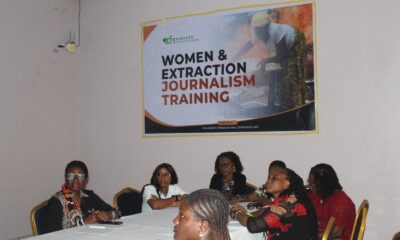

Group tasks Women Journalists on Reporting Impact of Coal Mining in Enugu
ShareFrom Sylvia Udegbunam, Enugu A non-governmental organisation, Renevlyn Development Initiatives, has called on women journalists in Enugu State to intensify...


RMAFC Chairman Tasks Directors, Others on Accountability, Productivity
ShareBy Tony Obiechina, Abuja The Chairman of the Revenue Mobilisation, Allocation and Fiscal Commission (RMAFC), Dr. Mohammed Bello Shehu has...


NDLEA Secures 18 Convictions, Arrests 130 Suspects in Kaduna
ShareThe National Drug Law Enforcement Agency (NDLEA), Kaduna State Command, said it secured 18 convictions and arrested 130 suspects for...
Gen Z No Longer Think for Themselves, Ayra Starr’s Mother Blames Social Media
ShareNene Aderibigbe, mother of Nigerian singer Ayra Starr, has criticised the influence of social media on Gen Z, claiming that...


Davido, Chioma Arrive in Style for Zlatan, Davita’s Wedding in Morocco
ShareNigerian music star, Davido, and his wife, Chioma Adeleke, have arrived in style in Marrakesh, Morocco, for the wedding celebration...


Lessons from the 2023 Presidential Elections: Obi Vs Wike
ShareBy Sunday Adelaja My goal in this article is to go beyond promoting a particular candidate like I did in...
Certificates Without Jobs: The Uncomfortable Reality of Nigeria’s Education System
ShareBy Idris Rufai Welcome to Nigeria, where young people are highly educated, professionally qualified and, unfortunately, increasingly experienced in the...

FG Generates N33tn Revenue in 10 Months – Oyedele
ShareBy Tony Obiechina, Abuja The Federal Government generated N33tn in revenue between January and October 2026, while about 90 per...


Terrorists Flee Strongholds, Military Block New Bases – DHQ
ShareBy David Torough, Abuja The Defence Headquarters (DHQ) has dismissed reports and suggestions of a ceasefire with Boko Haram terrorists,...