
BUSINESS
Ahmed, Yuguda Harp on Need for National Saving Scheme

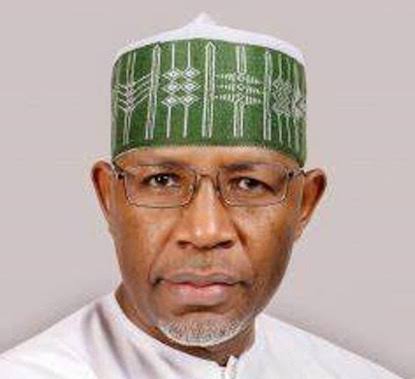
By Tony Obiechina, Abuja
Mobilization of domestic savings for capital formation and investment has been identified as a critical success factor for harnessing the true growth potential of the Nigerian economy.
This was stated by the Minister of Finance, Budget and National Planning, Mrs.
Zainab Ahmed during the submission of report of the Working Group on National Savings Scheme in Abuja, Tuesday.The Minister stated that the just launched Medium-Term National Development Plan 2021-2025 recognizes the role of a deep financial market in supporting the high and sustainable growth the plan aims to attain.
I hope the proposals made in this report will guide government in taking actionable steps to actualize the objectives outlined.She assured that she would review the report and work with the Securities and Exchange Commission and other stakeholders to ensure that the country fully realizes the potential benefits of the Scheme to the country.
Ahmed said, “We understand that this initiative will involve several other agencies such as the CBN, FIRS, NAICOM and other important stakeholders. We will leverage on our collaborative working environment within the government to ensure we get necessary buy-in and commitment from relevant stakeholders.
“On behalf of the federal government and the Ministry of Finance, Budget & National Planning, I extend my sincere appreciation for your selflessness in giving your time and skill in this painstaking work in support of government. I trust that we will count on your patriotic spirit when we call on you for further support in this or other laudable endeavours for our dear country”.
Director General, Securities and Exchange Commission (SEC), Mr. Lamido Yuguda explained that the need to establish a National Savings Strategy was outlined in the 10 Years Capital Market Master Plan “as one of the key strategies to enhance capital formation by mobilizing domestic funds for investment to drive rapid economic growth.
“It envisaged the deliberate provision of risk capital as venture capital and private equity that are naira based and more committed to the long-term prosperity of Nigeria as well as create a buffer to the instability created by foreign investors. The CAMMIC commissioned a white paper on a National Savings Strategy and recommended to the Minister of Finance, Budget and National Planning the formation of a Working Group to explore the feasibility of the report findings”, he added.
Yuguda thanked the Honourable Minister for Finance, Budget and National Planning for graciously embracing this initiative and constituting this National Working Group and expressed the hope that the Finance Minister will accept the recommendations of Working Group and facilitate the adoption of the National Savings Scheme in the Nation’s Development programe.
While presenting the report, Dr. Ore Sofekun member of the Committee and CEO of Foothold Advisors Limited who presented the report on behalf of the Committee Chairman, Mr. Fola Adeola, said the scheme will be open-ended and considering its medium-term to long-term objective, participants will have the opportunity to decide how their contributions will be invested and will be able to make periodic re-allocations.
To allow for product diversification and provide savers flexibility and choice, she stated that multiple investor risk/return profiles have been designed with corresponding savings products. These products will allow service providers offer an array of diversified product options tailored to match customer needs. New Government issued savings instruments that have features to protect savers from rising inflation have been recommended and a number of special products have also been proposed with the needs of Nigerians in mind.
On implementation Roadmap, Sofekun said the Scheme will be subject to the overall supervision of the Securities and Exchange Commission, and structured, to start, as a Department within the SEC adding that with the Investment and Securities Act (ISA) of 2007 currently being reviewed, a new section should be introduced in the proposed Investments and Securities Bill (ISB) to provide for the establishment of the National Savings Scheme as a mandatory scheme and other related matters.
The SEC launched a 10-year Capital Market Masterplan in 2015. The Commission at that time believed that having just emerged from a bubble that negatively impacted the performance and confidence in the Nigerian capital market, it was expedient to come up with a market wide strategic blueprint that had the buy-in of all stakeholders aimed at making our market deeper, vibrant and more effective.
The implementation of the initiatives in the 10-year master plan will transform the Nigerian market, facilitate the diversification of our economy, encourage savings and create wealth. This will no doubt grow investor confidence, improve the depth and breadth of the market in terms of product offerings, engender market integrity, and contribute to the country’s economic growth.








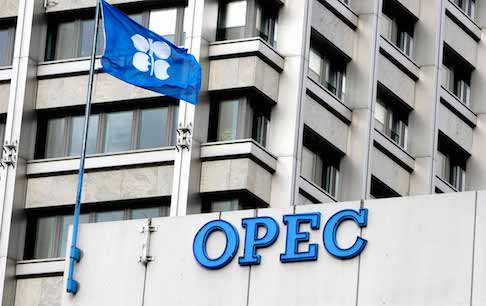
The Organization of the Petroleum Exporting Countries (OPEC), has revised downward its 2026 global oil demand growth estimates, citing expected slower consumption growth in advanced economies, where collective demand will rise by only 100,000 barrels per day.
The cartel said it now expects global oil demand growth to reach 1.
2 million barrels per day in 2026, down from its previous forecast of 1. 4 million barrels per day, explaining that the revision would bring total global oil consumption to 106.3 million barrels per day.In Europe, oil demand will decline by 30,000 barrels per day as weaker economic activity weighs on consumption, OPEC, said in its monthly oil market report.
The OPEC also expects some Asian economies, particularly Japan, to record slower demand growth. The organization forecast Japanese oil consumption to fall by 80,000 barrels per day.
However, strong demand from major emerging economies partly offset these weaker signals.
The OPEC said China would add 250,000 barrels per day to global demand, supported by its petrochemical industry. The organization also forecast India to increase demand by 200,000 barrels per day, driven by infrastructure spending and growth in vehicle ownership. Overall, OPEC expects emerging economies and developing countries to contribute an additional 1.1 million barrels per day to global oil consumption in 2026.
The OPEC’s revision aligns with a broader reassessment of global oil demand expectations.
In its May 2026 report, the International Energy Agency projected a much sharper downturn. The agency forecast a contraction of 420,000 barrels per day in global oil demand for the full year rather than a slowdown in growth.
The gap between the two institutions now exceeds 1 million barrels per day, highlighting the uncertainty surrounding the market outlook.
Both reports identified the near-closure of the Strait of Hormuz as a major factor behind market instability. According to the U.S. Energy Information Administration, six Gulf countries collectively reduced production by 10.5 million barrels per day in April, marking what the agency described as an unprecedented contraction outside pandemic periods.
As supply shortages intensified, oil producers outside the Middle East moved to increase production to offset part of the missing volumes. Several African producers, including Nigeria, Libya and Angola, benefited from rising demand for Atlantic Basin crude among Asian and European buyers that lost access to Gulf oil supplies, according to the IEA.
However, not all African producers can fully capitalize on the opportunity. Nigeria, Africa’s largest oil producer and an OPEC member, nonetheless showed encouraging momentum. According to provisional data published on May 15 by the Nigerian Upstream Petroleum Regulatory Commission, the country increased oil production from 1.546 million barrels per day in March to 1.663 million barrels per day in April 2026.
The Nigerian Content Development and Monitoring Board (NCDMB) has reaffirmed that compliance with Nigerian Content regulations in the oil and gas industry remains non-negotiable.
The Executive Secretary of NCDMB, Felix Ogbe, stated this on Tuesday at the 2026 Nigerian Oil and Gas Midstream and Downstream Stakeholders Summit in Lagos.
Ogbe was represented by Austin Uzoka, Head of the Directorate of Planning, Research and Statistics.
He said the midstream and downstream sectors remained vital to Nigeria’s economic expansion, industrialisation and job creation efforts.
The summit focused on the theme, ‘Unlocking, Growing and Sustaining Nigerian Content Development in Nigeria’s Oil and Gas Midstream and Downstream Sectors.’
Ogbe described the gathering as a strategic platform for shaping the future direction of Nigeria’s energy industry and strengthening indigenous participation.
According to him, reforms, improved regulatory clarity and growing investor confidence are repositioning Nigeria as a leading oil and gas investment destination in Africa.
He noted that the Board, established under the Nigerian Oil and Gas Industry Content Development Act 2010, continued promoting local capacity development and technology transfer.
Ogbe added that the Board had also advanced employment opportunities for Nigerians across several segments of the oil and gas industry.
He said Nigerian companies had recorded significant achievements in upstream operations, particularly in exploration, drilling, engineering, fabrication and project management activities.
According to him, the next growth phase lies within the midstream and downstream sectors of the nation’s petroleum industry.
He identified gas processing, transportation infrastructure, storage facilities, LPG and CNG distribution, refining and petrochemical development as major investment opportunities.
Ogbe said Nigeria was gradually reducing dependence on imported refined petroleum products through increased local refining and processing capacity.
He described the Dangote Refinery as a strong symbol of Nigeria’s industrial ambition, energy independence and economic self-sufficiency.
Ogbe stated that modular refineries were equally opening fresh opportunities for indigenous participation, local investment and improved national energy security.
He also highlighted ongoing gas commercialisation projects as important drivers of industrialisation and value addition within the domestic economy.
The NCDMB boss specifically referenced the Nigeria LNG Train 7 project and the Federal Government’s Presidential Initiative on Compressed Natural Gas.
According to him, both initiatives would strengthen domestic gas utilisation and support broader industrial growth across the country.
While emphasising the Board’s regulatory responsibilities, Ogbe insisted that compliance with Nigerian Content requirements remained central to industry operations.
“Compliance remains non-negotiable, but it must also be practical, implementable and supportive of investment and business growth,” he said.
He urged policymakers, investors, operators and service providers to deepen collaboration in order to maximise opportunities within the sector.
Ogbe said stronger partnerships would help drive sustainable economic growth, industrial capacity and long-term competitiveness in Nigeria’s energy industry.
The two-day summit attracted major stakeholders from the oil and gas industry to discuss strategies for expanding local content development.
Participants also examined ways to strengthen industrial capacity and improve Nigeria’s competitiveness within the global energy market.

Dangote Petroleum Refinery has reduced the price of aviation fuel, also known as Jet A1, from N1,750 to N1,650 per litre.
The company said the move is aimed at reducing the financial burden on airline operators and ensuring steady fuel supply across the country.
The development was announced in a statement issued on Tuesday in Lagos by the company’s spokesperson, Anthony Chiejina.
According to him, the refinery also introduced a 30-day interest-free credit facility for marketers and airline operators backed by bank guarantees.
He added that the company had also changed its pricing structure from dollar-based transactions to payments in Naira, a move expected to ease pressure on local operators.
Chiejina stated that the reduction was necessary due growing concerns over the rising operational costs in Nigeria’s aviation sector.
According to him, aviation fuel accounts for a major part of airline expenses.
He said, “Industry stakeholders have repeatedly warned that the increasing cost of Jet A1 fuel was putting serious financial pressure on domestic airlines and threatening smooth flight operations.
“The refinery’s latest decision is expected to provide relief for airline operators by lowering fuel costs, improving operational stability and supporting efforts to reduce airfares for passengers.”




Bayelsa state is for APC, says Lokpobiri
Share“As he delivered 13,591 votes to president Tinubu in his Ward 8” From Mike Tayese, Yenagoa As the 2027 political...


Tinubu Polls 277,192 Votes In APC Presidential Primaries in Bayelsa*A Restructured Nigeria Possible, Says Gov Diri
ShareFrom Mike Tayese, Yenagoa President Bola Tinubu, on Saturday, polled 277,192 votes in the direct primaries of the All Progressives...


Udende Leads Massive Tinubu Endorsement in Benue APC Primaries
ShareBy David Torough, Abuja The Senator representing Benue North East Senatorial District, Senator Emmanuel Memga Udende, on Saturday led party...


Flood: NEMA Lists 11 Niger LGAs as High-risk Areas
ShareThe National Emergency Management Agency (NEMA) has identified 11 Local Government Areas (LGAs) in Niger as high flood-risk zones ahead of the 2026 rainy season. Director-General of NEMA,...


DR Congo Cancels World Cup Training Camp over Ebola Outbreak
ShareThe Democratic Republic of Congo has cancelled its pre-World Cup training camp in the capital, Kinshasa, because of an Ebola outbreak in the east...
Gonorrhoea, Syphilis Hit Record Levels in Europe
ShareSexually transmitted infections (STIs) including gonorrhoea and syphilis have hit record levels in Europe, according to new data. The European Centre for Disease Prevention and Control (ECDC)...
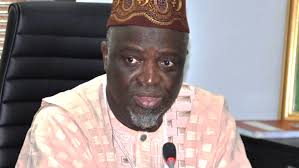

Tinubu Appoints Aina as JAMB Registrar
SharePresident Bola Tinubu has appointed Prof. Segun Aina as the new Registrar of the Joint Admissions and Matriculation Board (JAMB), succeeding Prof. Is-haq Oloyede. Oloyede’s tenure expires on...
Nursing Council Inducts First 57 Benue Varsity Graduates
ShareFrom Attah Ede, Makurdi Nursing and Midwifery Council of Nigeria (N&MCN), on Thursday, inducted 57 maiden graduates of the Department of Nursing Science of the Rev. Fr....
DisCos Meter 241,590 Customers in Two Months –NERC
ShareThe Nigerian Electricity Regulatory Commission (NERC) on Thursday said that Electricity Distribution Companies (DisCos) metered a total of 241,590 customers...


No Plan to Rename Nigeria, Abolish Shariah Law — Presidency
ShareBy David Torough, Abuja The Presidency has dismissed as false and misleading reports claiming that President Bola Tinubu plans to...