
NEWS
Ali Inaugurates $3.2bn e-customs Project to End Manual Administration


The Comptroller-General of the Nigeria Customs Service (NCS), retired Col. Hameed Ali on Thursday inaugurated a 3.2billion dollar modernisation project to end manual administration.
Ali while inaugurating the Project Management Office in Abuja, said the project, aimed at full automation of NCS was a dream come through.
According to him, the service embarked on the project, which is being handled by Trade Modernisation Project Limited (TMPL), to strengthen the processes of the service and eradicate corruption.
“Today we are witnessing the state of the art technology.
“So, it is with pride that we reflect on the journey we embarked upon since 2015,” he said.
Ali said the NCS decided on automation because of its numerous benefits, adding that “digitisation drives efficiency, transparency and effectiveness.”
He said the project would help NCS adapt to changing market dynamics, while assisting to automise operations and unlock revenue to contribute to economic growth and wellbeing of Nigerians.
On challenges encountered in actualising the project, the comptroller-general said, although there were obstacles, they persevered.
He said “The inauguration is a celebration of NCS” determination, resilience and foresight.
“Every step that has been taken has been a testament to our commitment to embracing the power of digitisation.”
On concerns that adopting the technology would reduce use of manpower, Ali said such assertion was unfounded.
According to him, modernisation will engender the service’s desire to recruit more personnel.
He added that the project would require a lot of manpower to effectively cover the borders and ensure security of the people.
“We need to be at par with global practices, “he said.
Mr Saleh Ahmadu, Chairman, TMPL, said the project would “invest 3.2 billion dollars over a 20 year period.
According to him, the investment will generate over 200 billion dollars in revenue generation.
“Financing for the first stage of the project is in the sum of 300 million dollars.
“This is with a cash backed 9million dollars performance fund, which has been secured through financial partners, “he said.
Ahmadu said capacity building was one of the priorities of the project, adding that “substantial part of the project will go into building the capacity of staff.”
NAN reports that Mr Clem Agba, former minister of state, budget and national planning, said the federal executive council on April 20, approved the implementation of the e-customs project to a concessionaire.
The concessionaire is Bergman securities consultant and suppliers limited as the project sponsor, Africa Finance Corporation, UFC as the lead financier, and Huawei Technologies will be trained as the lead technical service provider.
The concessionaire, he said has furnished the government with 9 million dollars (N4.135 billion) in security from the satisfactory performance of the project.
They have also executed the depth facility tensions of 300 million dollars (N138 billion) to finance the first phase of the project.
“The revenue sharing arrangement is 45 per cent of accruals to the comprehensive input service scheme going to the concessionaire and 55 per cent going to the federal government, five per cent of what accrues to the Nigerian responsible action scheme, and 75 pe rcent federal government,” the former minister said. (NAN)

President Donald Trump has expanded a US travel ban, barring nationals of five additional countries and people travelling on Palestinian Authority-issued documents from entering the US.
The White House said the restrictions were intended “to protect the security of the United States” and will come into force on 1 January.
Full-entry restrictions will be imposed on people from Burkina Faso, Mali, Niger, South Sudan and Syria as well as Palestinian Authority passport holders.
The administration also moved Laos and Sierra Leone, which were previously subject to partial restrictions, to the full ban list and put partial restrictions on 15 other countries, including Nigeria, Tanzania and Zimbabwe.
Trump, who has tightened immigration controls since returning to the White House in January, said the expanded travel ban was necessary because of what his administration described as failures in screening and vetting systems overseas.
Officials cited high visa overstay rates, unreliable civil records, corruption, terrorist activity and a lack of cooperation in accepting deported nationals.
The announcement followed the arrest of an Afghan national suspected of shooting two National Guard troops over the Thanksgiving weekend, an incident the White House pointed to in highlighting its security concerns.
This is the third time Trump has imposed a travel ban.
During his first term, he introduced a similar order in 2017, which sparked protests and legal challenges at home and abroad. The policy was later upheld by the US Supreme Court.
The White House said the restrictions would remain in place until affected countries show “credible improvements” in identity management, information-sharing and cooperation with US immigration authorities.
A number of exceptions apply and the ban will not affect lawful permanent residents, many existing visa holders, diplomats, or athletes travelling for major sporting events. Officials said case-by-case waivers would also be available where travel is deemed to be in the national interest.
Countries with full restrictions:
Afghanistan, Burkina Faso, Burma, Chad, Equatorial Guinea, Eritrea, Haiti, Iran, Laos, Libya, Mali, Niger, Republic of the Congo, Sierra Leone, Somalia, South Sudan, Sudan, Syria, Yemen
Individuals travelling on Palestinian Authority issued or endorsed travel documents are also subject to a full suspension of entry
Partial restrictions:
Angola, Antigua and Barbuda, Benin, Burundi, Côte d’Ivoire, Cuba, Dominica, Gabon, Gambia, Malawi, Mauritania, Nigeria, Senegal, Tanzania, Togo, Tonga, Venezuela, Zambia, Zimbabwe
Special case:
Turkmenistan (restrictions remain for immigrants but have been lifted for non-immigrant visas).

By Eze Okechukwu, Abuja
President Bola Tinubu has nominated new chief executives for Nigeria’s two foremost petroleum regulatory agencies following the resignation of their heads, Engineers Farouk Ahmed and Gbenga Komolafe.
In separate letters to the Senate yesterday, the President requested the confirmation of Oritsemeyiwa Amanorisewo Eyesan as Chief Executive Officer of the Nigerian Upstream Petroleum Regulatory Commission (NUPRC) and Engineer Saidu Aliyu Mohammed as Chief Executive Officer of the Nigerian Midstream and Downstream Petroleum Regulatory Authority (NMDPRA).
The nominations followed the voluntary exit of Ahmed, who headed the NMDPRA, and Komolafe, the pioneer CEO of the NUPRC.
Both men were appointed in 2021 by former President Muhammadu Buhari after the enactment of the Petroleum Industry Act (PIA), which created the two regulatory bodies to oversee reforms in Nigeria’s oil and gas industry.According to a State House press release by the Special Adviser to the President on Information and Strategy, Bayo Onanuga, Tinubu urged the Senate to expedite the confirmation process to ensure continuity and stability in the regulation of the petroleum sector.
Eyesan, a seasoned industry professional, is an Economics graduate of the University of Benin and spent nearly 33 years with the Nigerian National Petroleum Company Limited (NNPC) and its subsidiaries. She retired as Executive Vice President, Upstream, in 2024, and previously served as Group General Manager, Corporate Planning and Strategy, from 2019 to 2023.
Engineer Saidu Aliyu Mohammed, born in 1957 in Gombe State, is a Chemical Engineering graduate of Ahmadu Bello University, Zaria. He has held several strategic positions in the oil and gas industry, including Managing Director of the Kaduna Refining and Petrochemical Company and the Nigerian Gas Company. He also served as Group Executive Director and Chief Operating Officer, Gas and Power Directorate at NNPC.
Mohammed has chaired the boards of the West African Gas Pipeline Company, Nigeria LNG subsidiaries and NNPC Retail, and played key roles in major national projects such as the Escravos–Lagos Pipeline Expansion, the Ajaokuta–Kaduna–Kano (AKK) Gas Pipeline and Nigeria LNG Train developments.
The President expressed confidence that the nominees’ experience and expertise would strengthen the implementation of the Petroleum Industry Act and advance reforms across Nigeria’s oil and gas value chain.
Labour Takes Nationwide Protest to Streets over Insecurity
The Nigeria Labour Congress (NLC) yesterday led a nationwide protest across major cities, including Abuja, Calabar and Osogbo, to draw attention to Nigeria’s worsening insecurity and economic hardship, insisting that governments at all levels must urgently reclaim communities, protect citizens and restore public confidence.
In Abuja, the NLC President, Joe Ajaero described the heavy deployment of security personnel around the protest as “normal,” arguing that whether security agencies were sent to protect or stop workers, it showed the impact of labour’s action.
However, he faulted the practice of deploying security chiefs to interface with labour during industrial disputes, stressing that labour matters were not security issues.“Industrial relations issues are the responsibility of the Ministry of Labour and the Office of the Secretary to the Government of the Federation, not heads of security institutions,” he said, warning against intimidation of workers under the guise of security.
Addressing workers after a brief procession, the NLC Deputy General Secretary, Comrade Ismail Bello, said the protest was not partisan but a struggle for the survival of all Nigerians. He lamented the devastation caused by insecurity, noting that communities had been destroyed, livelihoods lost and essential services disrupted.
“We have paid a heavy price. Healthcare workers, teachers, transport workers and many others have been affected. The damage is enormous and it has to stop,” Bello said, adding that the constitution guaranteed the right to peaceful protest and freedom of association.
He called for decisive action against kidnappers and criminal elements, arguing that failure to punish perpetrators had emboldened insecurity. “Children must return to school. Communities must return to normalcy. Government must deploy the full machinery of governance to recover all spaces taken over by criminals,” he added.
The NLC Head of International Department, Comrade Uche Ekwe, said the protest was meant to strengthen the government’s resolve to confront insecurity, insisting that those funding criminal activities must be arrested and prosecuted.
Labour disclosed grim statistics to underscore its concerns, revealing that since 2009, over 2,295 teachers had been killed by insurgents and bandits, more than 19,000 displaced in the North-East, and over 910 schools destroyed. In the health sector, about 35 per cent of facilities were destroyed by terrorism, while 50 per cent became inaccessible, worsening the shortage of medical personnel.
In Cross River State, organised labour staged a peaceful rally in Calabar, where the NLC Chairman, Comrade Greg Olayi, warned that Nigerians could no longer live or work in safety. He cited attacks on farmers, kidnappings of schoolchildren and insecurity on highways as evidence of a failure of governance.
Similarly, the Joint Negotiating Council Chairman, Comrade Raymond Afu, described the rally as a call to conscience for government at all levels, stressing that the essence of governance was the protection of life and property.
In Osun State, labour leaders and civil society voices also joined the protest, calling on the state government to strengthen local security networks, including Amotekun and other community-based outfits, rather than shutting them down. They warned that insecurity must not be allowed to take root in the state.
The Osun State Chairman of the Nigeria Union of Journalists (NUJ), Wasiu Ajadosu, said organised labour could no longer remain silent while citizens faced daily threats, emphasising that security was the foundation for development and social justice.


Nigeria Clinches Bronze in Judo at 4th African Youth Games
ShareTeam Nigeria clinched a bronze medal in judo at the ongoing 4th African Youth Games after winning the 63kg category bout against Zimbabwe. The...
NCDMB Set to Attain 100 Per Cent Local Content in Africa
ShareBy Eddy Ochigbo, Abuja The Nigerian Content Development Management Board (NCDMB) has reaffirmed its determination to increase the current from...


Trump Expands US Travel Ban to Five More Countries
SharePresident Donald Trump has expanded a US travel ban, barring nationals of five additional countries and people travelling on Palestinian Authority-issued documents from entering the US. The White...


Farouk Ahmed, Gbenga Komolafe Resign after Dangote Petition
ShareBy Eze Okechukwu, Abuja President Bola Tinubu has nominated new chief executives for Nigeria’s two foremost petroleum regulatory agencies following the resignation...

NLC Stages Nationwide Strike over Insecurity
ShareLabour Takes Nationwide Protest to Streets over Insecurity The Nigeria Labour Congress (NLC) yesterday led a nationwide protest across major...
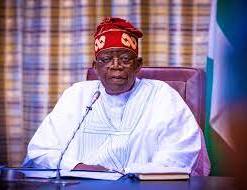

Presidency Transmits N43.5trn 2026 Appropriation Bill to Reps
SharePresident Bola Tinubu yesterday, transmitted the appropriation (Repeal and Re-enactment Bill 2024/2025 bill to the House of Representatives for consideration and expected approval...

SMEDAN Unveils MSMEs New Policy in 2026, Targets Funding Expansion
ShareThe Small and Medium Enterprises Development Agency of Nigeria (SMEDAN) said it will deepen business formalisation, expand access to affordable financing and unveil a new national MSMEs policy in 2026....


NCDMB set to Attain 100% Local Content in Africa
ShareBy Eddy Ochigbo The Nigerian Content Development Management Board (NCDMB) has reaffirmed its determination to increase the current from 56%...
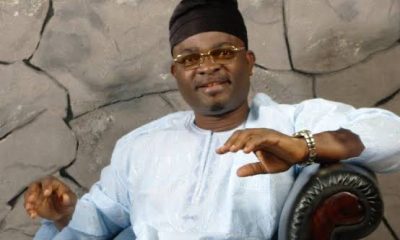

The Man Rotimi Makinde: A True Progressive by All Standards
ShareBy Kolapo Ogundare It is impressive to note that many well-meaning Nigerians are now coming out, recounting several good deeds...
FG, NBS Launch Nationwide MICS7 Survey
ShareFrom Francis Sadhere, Delta The Federal Government of Nigeria, through the National Bureau of Statistics (NBS), has officially launched the...