
NEWS
Alleged Disregard to Judgment: Court Hears Contempt Proceeding against CBN Governor


The Federal High Court in Abuja has fixed June 23 for hearing of the contempt proceeding against the Central Bank of Nigeria (CBN) Governor, Olayemi Cardoso, over alleged disobedience to a Supreme Court judgment.Justice M.G Umar fixed the date after Chikaosolu Ojukwu, SAN, who appeared for the applicant, and CBN’s lawyer, Abdulfatai Oyedele, presented a brief argument when the case was mentioned.
The News Agency of Nigeria (NAN) reports that in June 2024, the Supreme Court overturned a previous forfeiture order against Melrose General Services Limited’s funds, which had been frozen following an investigation by the Economic and Financial Crimes Commission (EFCC). The disputed sums included N1,222,384,857.84 in Melrose’s bank account and N220 million paid by the company to Wasp Networks and Thebe Wellness as loan and investment.The apex court had ruled that the EFCC had not proven the funds were proceeds of fraud, as alleged.The court set aside the lower courts’ forfeiture orders, directing the release of the funds to their rightful owners.However, despite the Supreme Court’s decision, Melrose’s lawyers filed a lawsuit at the trial court, alleging that the CBN and its top officials had only partially complied with the judgment.Melrose, in its application before Justice Ekwo, averred that while the N1.22 billion was refunded, the outstanding N220 million remains unpaid.The disputed money was part of the Paris Club refund.The company, through its counsel, filed the contempt suit against the CBN governor; the apex bank’s Director of Legal Services, Salam-Alada Kofo; the EFCC and the Minister of Finance, arguing that their refusal to release the full amount constitutes contempt of court and undermines the Supreme Court’s authority.When the case was called, Ojukwu told the judge that the EFCC had written a memo to the CBN, instructing the apex bank to comply with the Supreme Court judgment.“That memo from EFCC is not even attached to the CBN’s affidavit before the Court,” he added.He alleged that the CBN knew that if they produced the EFCC memo in their documents, the court would see what transpired.He said that if the money was paid, his client would not have come to court.The judge then asked Abdulfatai if he was contesting Ojukwu’s submission.The CBN counsel maintained that the order of the Supreme Court was clear and that if Melrose is alleging disobedience to the order, it is not applicable to the CBN.He stressed that the money in respect of which Melrose went to the Supreme Court had been paid to the company.He said it is “strange for one entity to be demanding money that is due to other entities.”“With the greatest respect, the CBN has complied with the order of the Supreme Court.“We are not in contempt,” he said, highlighting that the apex bank had paid Melrose and Wasp, while the third entity was yet to be paid as the bank has not received a demand from them.After listening to the lawyers, the judge adjourned the case until June 23 for hearing.He also ordered that a hearing notice be issued to the defendants The dispute stems from the controversial Paris Club refund, a settlement involving payments to consultants for services rendered to the Nigerian Governors’ Forum (NGF).The EFCC had claimed that an investigation revealed N3.5 billion was allegedly fraudulently paid to the appellant for a purported consultancy job for the NGF.At the apex court, Melrose’s legal team argued that the disputed funds were payment for a contractual and consultancy agreement between their client and relevant government stakeholdersIn its majority decision, the Supreme Court agreed with the appellant, ruling that the EFCC failed to prove the funds were proceeds of fraud.Consequently, the court upheld the appellant’s case and set aside the lower courts’ forfeiture orders.(NAN)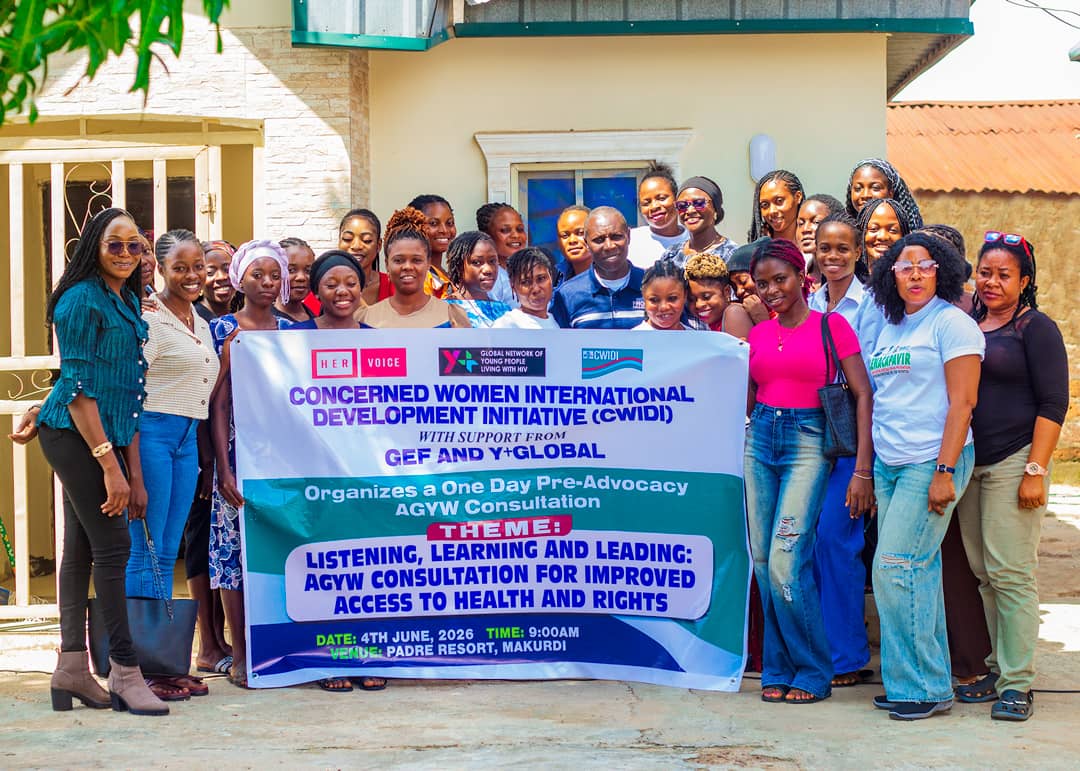
By Attah Ede, Makurdi
Adolescent Girls and Young Women (AGYW) in Benue State have been urged to speak out against Gender-Based Violence (GBV) in order to protect their health rights and secure their future aspirations.
The Executive Director of Concerned Women International Development Initiative (CWIDI), Becky Gbihi, made the call during a one-day Pre-Advocacy Consultative Engagement held at Padre Resort, Makurdi.
The engagement, themed “Listening, Learning and Leading for Improved Access to Healthcare and Rights,”was organized by CWIDI in collaboration with GEF and Y+ Global to strengthen the capacity of 25 Adolescent Girls and Young Women in Benue State.
Gbihi noted that many AGYW in the state continue to face violence, discrimination, and exclusion in accessing healthcare services, justice, and participation in government decision-making processes.
She explained that the programme was designed to equip participants with knowledge on healthcare access, legal rights, leadership, and active participation in policies and decisions that affect their lives.
“We want to instill leadership qualities in the participants and equip them with knowledge on health and rights. The essence of this engagement is also to provide a platform for AGYW to share the barriers they face so that CWIDI can effectively advocate on their behalf,” she said.
According to her, the meeting also identified key stakeholders for follow-up advocacy aimed at addressing the challenges raised by participants.
In a presentation titled “Understanding Gender-Based Violence and Survivor-Centred Responses,” the Lead of the Centre for Family Empowerment, Mr. Emmanuel Zia, trained participants on various forms of violence, including physical, sexual, emotional, and economic abuse, as well as child marriage and online violence.
He advised caregivers and support providers to prioritize survivors’ safety, maintain confidentiality, treat victims with dignity, and avoid blame or judgment, stressing that negative attitudes often worsen survivors’ trauma.
“Victims should be provided with emotional security and assured of strict confidentiality. This guarantees their right to privacy and helps build trust,” Zia said.
He further encouraged participants to utilize the knowledge gained from the training to advocate for improved healthcare, education, gender equality, environmental protection, and disability rights by engaging relevant stakeholders.
During group discussions, participants identified inadequate budgetary allocation to the health sector and a shortage of medical personnel at primary healthcare facilities in rural communities as major barriers to quality healthcare access.
They also highlighted malaria, unsafe abortion-related complications, and tuberculosis as pressing health challenges affecting AGYW and called on government and philanthropic organizations to provide urgent interventions.
One of the participants, Miss Doofan Dugba, expressed appreciation to the organizers, saying the training broadened her understanding of GBV response and how to support survivors without stigmatization.
Another participant, Miss Tondo Iveren, said the workshop changed her perception that women should be treated as second-class citizens.
“The knowledge I gained from the workshop has helped me understand that women have rights, and whenever those rights are violated, they should speak up,” she said.
She added that she now knows where to report cases of abuse, how to overcome fear of perpetrators, and pledged to replicate the knowledge gained in schools and communities.
Also speaking, Miss Vera Anjov described the engagement as highly educative but recommended that future editions allocate more time for group discussions to enable participants to identify and proffer solutions to a wider range of challenges affecting AGYW.

By Tambaya Julius, Abuja
The Nigeria Customs Service (NCS) on 3 June 2026 hosted a high-level diplomatic cocktail reception in Abuja, bringing together ambassadors, high commissioners, heads of missions, and senior government officials in a strategic engagement aimed at strengthening international cooperation, trade relations, and institutional partnerships.
The event, held at the rooftop of the Nigeria Customs Service Headquarters, Maitama, Abuja, also attracted the Chief of the Air Staff, the Inspector-General of Police, members of the Customs Management, and other senior officials from key security and government institutions.
Welcoming the diplomatic community, the Comptroller-General of Customs, Adewale Adeniyi MFR, expressed appreciation for the sustained support of international partners in strengthening bilateral relations and advancing global trade cooperation with Nigeria.
“We recognize and appreciate your contributions to strengthening diplomatic and trade relations. The Service remains committed to providing the support and services required for diplomatic missions to operate effectively in Nigeria,” he said.
He noted that NCS continues to deepen its global footprint through structured collaboration frameworks with over twenty customs administrations worldwide, focusing on knowledge exchange, capacity development, and operational synergy aimed at improving trade facilitation and border management.
According to him, sustained collaboration among customs administrations, diplomatic missions, and security agencies remains critical to achieving efficient border security, enhanced revenue generation, and improved economic competitiveness in a rapidly evolving global trade environment.
The CGC further emphasised that modern Customs administration now operates within a highly interconnected global system, requiring continuous engagement, trust-building, and shared responsibility among international partners to address emerging challenges in trade, security, and compliance management.
He added that platforms such as the diplomatic reception provide valuable opportunities for dialogue, relationship building, and the exploration of new areas of cooperation that will further strengthen Nigeria’s trade and diplomatic architecture.
The evening concluded with networking sessions and goodwill messages from participants, with senior government officials and diplomatic representatives commending the NCS for its consistent efforts in fostering stronger institutional ties and promoting an enabling environment for international collaboration.
From Attah Ede, Makurdi
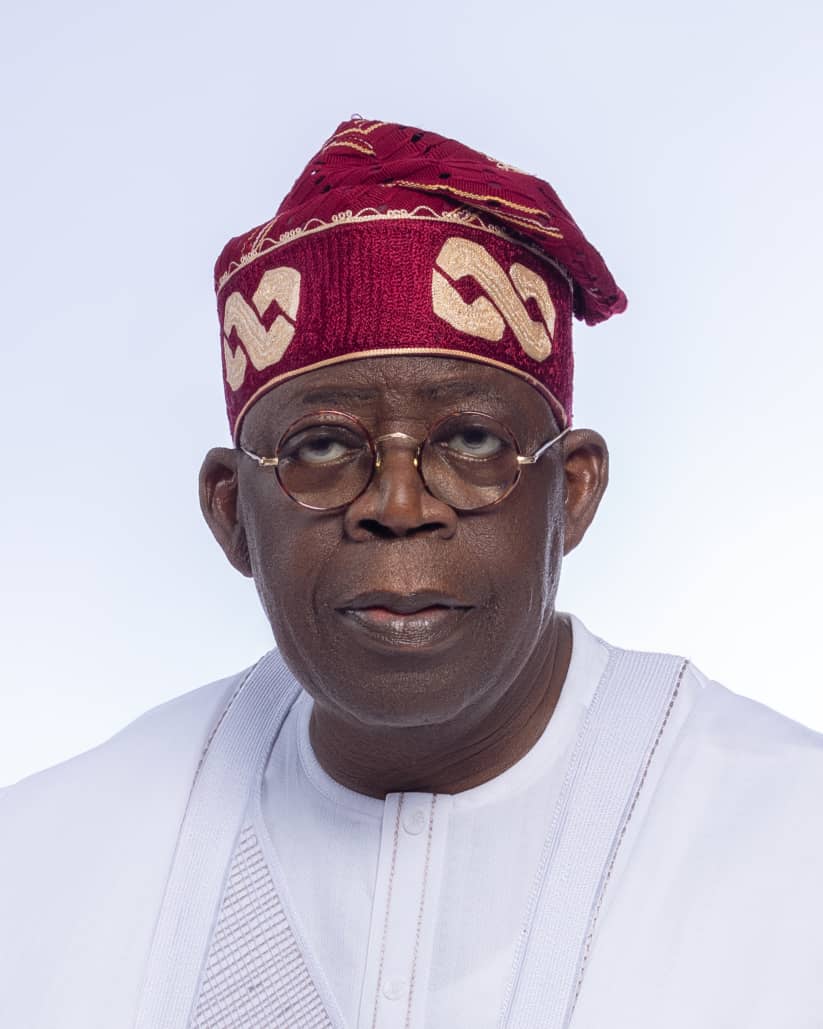
President Ahmed Bola Tinubu is set to visit Benue State to commission the newly built ultra modern Bensono Concentrate Plant, Benva Juice Factory, and the Motorcycle Assembly Plant in Makurdi, Benue State.
Alia disclosed this while speaking with journalists shortly after inspecting the factories and the plant ahead of the commissioning.
He expressed satisfaction with the level of completion and readiness of the facilities ahead of their official commissioning.
The governor, accompanied by the Speaker of the 10th Benue State House of Assembly, Aondoaver Emberga, described the projects as major milestones in the state’s industrialisation drive and efforts to transform Benue from a predominantly agrarian economy into a hub for agro-processing and manufacturing.
Speaking during the inspection tour, Governor Alia commended the management of the Benue Investment and Property Company (BIPC), particularly its Group Managing Director, Dr. Raymond Asemakaha, CFA, for delivering the projects within record time.
“It is exciting to hear and see that the companies are ready for commissioning. This fourth year is our year of commissioning, and I am hopeful that President Bola Ahmed Tinubu will graciously come and commission these projects for us. Very soon, we shall begin commissioning all the projects embarked upon by this administration,” the governor stated.
Governor Alia noted that the establishment of the Bensono Concentrate Plant and Benva Juice Factory would significantly reduce post-harvest losses, a challenge that has long affected fruit farmers across the state.
According to him, the factories will provide a ready market for locally produced fruits, improve farmers’ incomes, and stimulate economic activities across the agricultural value chain.
“Our farmers have suffered greatly over the years. Almost every family has an orchard farm, but buyers often come from outside the state and dictate prices that do not reflect the true value of the farmers’ hard work. These factories will change that narrative,” he said.
He urged farmers to increase production in anticipation of the factories’ operations, assuring them that the state government was committed to creating sustainable markets for their produce.
“Buyers can still purchase our oranges, but the process will now be more controlled and beneficial to our people. Whether through concentrates or juice production, the value will remain within the state. It is a win-win situation for our farmers and the economy of Benue State,” the governor added.
The governor also inspected 525 motorcycles assembled by the company under a partnership arrangement between the Benue State Government and a Chinese firm. The partnership was initiated during Governor Alia’s investment mission to the People’s Republic of China in 2024.
Earlier, the Group Managing Director of BIPC, Dr. Raymond Asemakaha, explained that the agro-processing factories were established to create value from Benue’s abundant agricultural produce, particularly oranges, mangoes, and tomatoes.
He said the projects were designed to tackle the persistent challenge of post-harvest losses while creating jobs and generating revenue for the state.
“We want to add value to what our farmers produce and drastically reduce the post-harvest losses that have been witnessed in Benue State for decades. Economic growth must be inclusive, and these projects are built around an inclusive model that directly benefits farmers,” Asemakaha said.
The BIPC GMD disclosed that both factories were fully completed and ready to commence production immediately after commissioning.
“Our factories are ready. We are only awaiting the official commissioning. Once that is done, full production will commence. We believe these facilities will change the economic landscape of Benue State,” he stated.
Asemakaha lamented that for many years Benue farmers had produced raw agricultural commodities that were transported out of the state, creating wealth and jobs elsewhere.
“For years, our mothers, fathers, brothers and sisters have laboured to grow produce that others use to build their economies and industries. We are determined to stop that trend by ensuring that value addition takes place here in Benue,” he said.
He further revealed that the orange concentrate to be produced at the Benfruits plant would target both local and international markets.
Citing raw materials council data, Asemakaha noted that Nigeria spent approximately ₦68 billion importing fruit concentrates in 2025 despite having abundant raw materials.
“The Raw Materials Research and Development Council has indicated that Nigeria imported about ₦68 billion worth of concentrates in 2025. We have the oranges here in Benue. There is no reason we should continue importing what we can produce locally. Our goal is to substitute imports and eventually export our concentrates to the international market,” he explained.
He expressed confidence that the factories would position Benue as a leading producer of fruit concentrates and processed beverages in Nigeria while creating employment opportunities for thousands of residents.
The projects form part of Governor Alia’s industrialisation and investment agenda aimed at boosting local production, creating jobs, increasing internally generated revenue, and unlocking the state’s vast agricultural potential.



Stakeholders Seek Better Healthcare Access for Benue Adolescent Girls
ShareBy Attah Ede, Makurdi Adolescent Girls and Young Women (AGYW) in Benue State have been urged to speak out against...


Nigeria Customs Hosts Diplomatic Reception to Strengthen Global Partnerships, Trade Relations
ShareBy Tambaya Julius, Abuja The Nigeria Customs Service (NCS) on 3 June 2026 hosted a high-level diplomatic cocktail reception in...


Tinubu To Commission Fruit Juice Factories, BIPC Motorcycle Assembly Plant In Benue
ShareFrom Attah Ede, Makurdi President Ahmed Bola Tinubu is set to visit Benue State to commission the newly built ultra modern Bensono Concentrate Plant, Benva Juice Factory, and the Motorcycle Assembly...


Dangote Refinery Surpasses Capacity Target, Eyes 1.4m bpd Expansion
ShareBy David Torough, Abuja Dangote Petroleum Refinery and Petrochemicals has achieved a major operational milestone by increasing its crude oil processing capacity to 700,000 barrels...


Alia Appoints New Acting Head of Service in Benue
ShareFrom Attah Ede, Makurdi Benue State Governor, Rev Fr .Hyacinth Alia has approved the appointment of Dr. Ihu Eunice Ogbenyi as new Acting Head of Service (HoS)...
Oshonaike Hails Steady Progress of Nigerian Table Tennis Players
ShareSeven-time Olympian Olufunke Oshonaike said Nigerian table tennis players are making steady progress in spite of the challenges they face in competing...

Poland Bans Smartphones in Primary Schools
SharePoland plans to ban mobile phones in all primary schools from next academic year under draft legislation approved by the government on Tuesday. The...
Reps Minority Picks Ugochinyere as New Leader
ShareBy Ubong Ukpong, Abuja Following the defection of the former minority Leader of the House of Representatives, Kingsley Chinda, the minority caucus has nominated Hon. Ikenga...
Kano Revokes Private School Licences over Sexual Abuse
ShareFrom Aliyu Askira, Kano The Ungogo Local Government Area of Kano State has withdrawn the licences of all private schools within its jurisdiction following allegations that...


CBN Approves Regular Commercial Operations for Abbey Mortgage Bank
ShareBy Tony Obiechina, Abuja Abbey Mortgage Bank Plc, one of Nigeria’s longest‑standing primary mortgage banks, has secured regulatory approval from...