
DEFENCE
Appreciating the Elasticity of Nigerian Army

By Frank Itodo
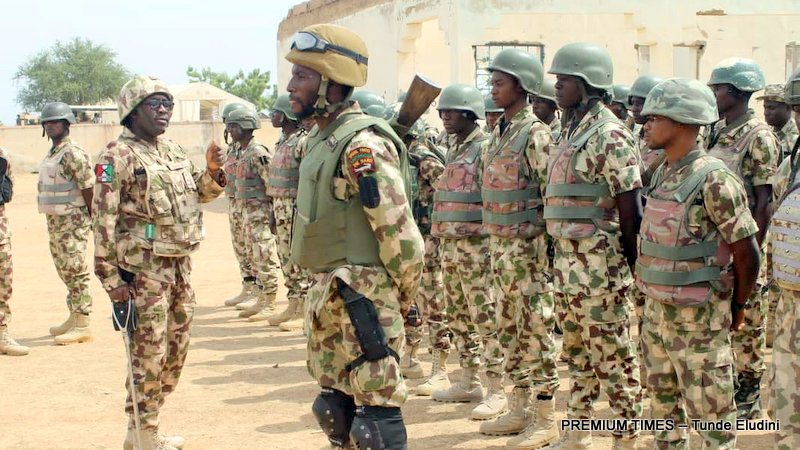
In the annals of the Nigerian Army, it has never been this tough. The crisis in North-East Nigeria is taking its toll, and this calls for concern from all critical stakeholders.
That we have managed to stay secured remains a mystery because the Nigerian Army has been stretched thin in the task of ensuring that Nigeria’s territory is preserved from eternal aggression and also ensuring that every Nigerian is free to go about his or her endeavours without fear.This didn’t happen overnight. In my opinion, it is as a result of the failure of past leadership in the country to correctly orientate and equip the Nigerian Police for greater efficiency.
They felt it wasn’t such a big deal to have a responsive police force that would live up to expectation. So the result is the involvement of the Nigerian Army in roles that ordinarily the Nigerian Police should be able to handle.The Nigerian Army had indeed saved the day when the nation was bedevilled with activities of militant groups. I recall the case of the Indigenous People of Biafra (IPOB), which indeed tasked the operational effectiveness of the Nigerian Police that the Nigerian Army had to come to the rescue. And as usual, a crisis of phenomenal proportion was averted.
What Nigerians didn’t realize was that the Nigerian Police whose constitutional role it is to quell such uprising were helpless and could not match the violent nature of the IPoB militant group. And as they say, the rest is also history and no form of commendation was extended to the Nigerian Army.
We were also witnessed to the activities of the Niger Delta Avengers that almost brought the economy of the country to its knees. Again the Nigerian Police was missing in action for lacking in the capacity to deal with the threat posed by the Niger Delta Avengers. This too became history not without the great sacrifices made by the Nigerian Army.
The interesting thing about the failure of the Nigerian Police int the discharge of its duties is the fact that at some point the Nigerian Army was simultaneously carrying out eleven military operations across the country at the same time. For example, there was Operation Lafiya Dole set up to counter-terrorism and Boko Haram insurgency. It was later expanded to specialized operations including “Operation Crackdown,” “Operation Gama Aiki,” and “Operation Safe Corridor.”
There was also Operation Crocodile Smile II, an exercise which involves amphibious war games in the Niger Delta region and parts of Ogun State. It was aimed at protecting the nation’s crude oil infrastructure. Operation Tsera Teku was launched in Warri, Delta state to check piracy in the Niger Delta region. Operation Awatse was started to dismantle the operational bases of pipeline vandals and militants in the coastal areas of southwest Nigeria.
Operation Sharan Daji/ Operation Harbin Kunama II was established in the Northwest to battle armed bandits, cattle rustlers and robbers operating mainly in Zamfara, Kaduna, and fringes of Sokoto, Kebbi, Katsina and Kano states. Operation Safe Haven is stationed in Plateau State with areas of operation extending to Benue, Kogi, Nasarawa and Kwara state to quell ethno-religious conflicts and other criminal activities.
Operation Delta Safe This was set up to replace Operation Pulo Shield. It is aimed at containing security challenges in the Niger Delta, especially the protection of critical national assets and provision of security in the area. Amongst a host of others.
What does this tell us? It’s merely the fact that the Nigerian Police failed woefully in the above areas that the Nigerian Army had to step in. With such operations by the Nigerian Army, it is sufficing to say that the Nigerian Army has been indeed stretched thin. However, they have not buckled, and we do not need to wait for them to buckle before the right thing should be done.
The Nigerian Police must get serious and stop playing to the gallery. The times we are in requires that they put their best foot forward in the area of crime prevention, maintenance of law and order and dealing with societal disorders. The political authorities in Nigeria must commend the Nigerian Army for its invaluable contribution to the sustenance of peace in Nigeria.
The political authorities must also see the burden on the shoulders of the Nigerian Army with its various operations in the country and begin the process of overhauling the operations of the Nigerian Police for greater efficiency before things get out of hand.
I have reserved praises for the leadership of the Nigerian Army whose dynamism has been brought to bear in dealing with the myriads of security challenges in the country including those within its purview and those outside its purview. I cant but encourage the leadership of the Nigerian Army not to relent in this arduous task that has stretched it thin.
Also, for the leadership of the Nigerian Police, there ought to be a significant reorganization of its operations to reflect the exigencies of time. This is not the time to play to the gallery, but rather, this is the time to take a cue from the Nigerian Army and be the best they can be. If this is not done, then there would be no moral justification for officers and men of the Nigerian Police Force to continue to draw salaries monthly.
The task of securing Nigeria is not an impossible one. It only requires commitment and sincerity of purpose as exemplified by the conduct of the Nigerian Army. It is naturally expected that the Nigerian Police should take a cue from the Nigerian Army if they are indeed desirous of making meaningful contributions to peace and stability in Nigeria.*Itodo wrote from Lagos



By David Torough, Abuja
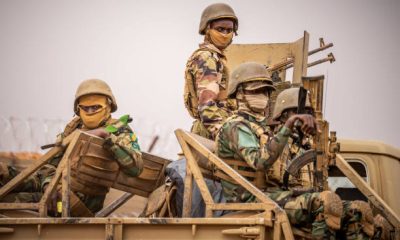
The Armed Forces of Nigeria (AFN) say troops neutralised 217 terrorists and other criminals, rescued 349 kidnapped victims and arrested 333 suspects during coordinated military operations across the country in October 2026.
The military also recorded the surrender of 70 insurgents, recovered 105 weapons and 3,174 rounds of ammunition, and dismantled 49 illegal oil-refining sites, recovering 756,837 litres of petroleum products during operations conducted between September 30 and October 30.
The figures were disclosed by the Director of Defence Media Operations, Major General Michael Onoja, during the monthly press briefing on ongoing military operations on Friday, October 30, 2026.
According to the briefing, troops sustained offensive operations across the country’s six geopolitical zones, targeting terrorist groups, bandits, kidnappers, arms traffickers, oil thieves and other criminal networks, with support from the Nigerian Air Force and other security agencies.
In the North-East, troops under Operation HADIN KAI neutralised 162 terrorists, arrested 98 suspects, rescued 39 kidnap victims and received the surrender of 68 insurgents.
One of the major engagements occurred between October 6 and 7 when troops repelled an attempted ISWAP attack on Kukawa town in Borno State, neutralising 25 terrorists and recovering six AK-47 rifles, ammunition, rocket-propelled grenade bombs and other military equipment.
The operation also recorded the neutralisation of a senior ISWAP commander, Abdussamad Ohida, in Owo Forest, Ondo State, on October 2.
Ohida was identified as the group’s deputy leader in Central Nigeria and was reportedly involved in planning attacks across several states.
In the North-West, troops under Operation FANSAN YAMMA neutralised 18 terrorists, arrested 10 and rescued 167 kidnapped persons.
A significant operation took place on October 7 in Maiyama Local Government Area of Kebbi State, where troops repelled a large-scale attack by Lakurawa terrorists reportedly advancing on more than 100 motorcycles and armed with machine guns and rocket-propelled grenades. Ten terrorists were neutralised, while others fled.
Troops also rescued 27 villagers abducted in Gamji community, Sabuwa Local Government Area of Katsina State, on October 16, alongside other successful rescue operations across the theatre.
In the North-Central, Operation SAVANNAH SHIELD recorded three terrorists neutralised, three arrests and 29 rescued kidnap victims across Kwara and Niger states.
Under Operation ENDURING PEACE, troops neutralised six criminals, arrested 84 suspects and rescued 13 kidnapped persons across Plateau and Kaduna states.
Similarly, Operation WHIRL STROKE recorded 24 terrorists neutralised, 71 arrests and 68 rescued kidnap victims across Benue, Kogi, Nasarawa and Taraba states.
Among the notable successes was the rescue of 11 passengers abducted along the Ayere-Kabba Road in Kogi State on October 19, following a pursuit operation by troops.
In the South-South, Operation DELTA SAFE neutralised two criminals, arrested 45 suspects and dismantled 49 illegal refining sites.
The operation, conducted alongside Operation DELTA SENTINEL, also resulted in the recovery of 756,837 litres of stolen petroleum products.
Troops also sustained operations against kidnapping and illegal oil bunkering in Rivers, Edo and Cross River states.
In the South-East, Operation UDO KA neutralised two terrorists, arrested 22 suspects and rescued 33 civilians.
A major breakthrough was recorded following the abduction of prospective National Youth Service Corps (NYSC) members and other passengers along the Owerri-Onitsha Expressway in Imo State on October 1.
The abducted prospective corps members were rescued on October 7, while a follow-up operation on October 16 led to the arrest of five members of the kidnapping syndicate and the recovery of three AK-47 rifles, a pistol and ammunition.
The military also reported the neutralisation of 10 terrorists during a follow-up operation against a kidnapping syndicate in Anambra State, with weapons and materials suspected to be used in the fabrication of improvised explosive devices recovered.
Beyond kinetic operations, the Armed Forces said more than 50 terrorist fighters and their family members surrendered to troops at various locations in Borno State, while other surrenders contributed to the overall figure of 70 insurgents recorded nationwide.
The military further disclosed that troops recorded 98 attacks across different operational theatres during the reporting period. Operation HADIN KAI recorded 27 attacks, Operation FANSAN YAMMA 24, Operation ENDURING PEACE 29, Operation WHIRL STROKE 12, Operation UDO KA four, while Operations DELTA SAFE and SAVANNAH SHIELD recorded one attack each.
Despite the operational gains, the military acknowledged civilian casualties following terrorist attacks in Binari community, Karim Lamido Local Government Area of Taraba State, on October 23.
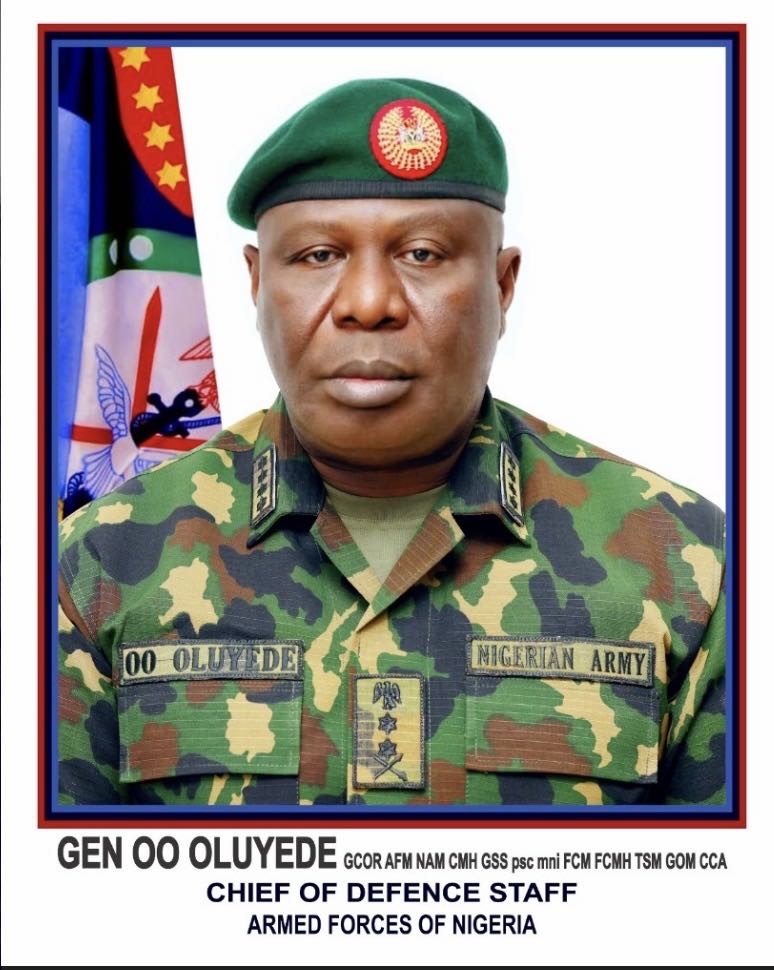
The Chief of Defence Staff, General Olufemi Olatunbosun Oluyede, expressed condolences to the affected families and assured residents that efforts would be intensified to apprehend those responsible.
The briefing also highlighted the Armed Forces’ non-kinetic interventions, including the construction and rehabilitation of community infrastructure, provision of healthcare facilities, solar-powered boreholes, educational facilities and other development projects across several states.
The military said it would sustain collaboration with other security agencies, strengthen intelligence sharing and intensify efforts to dismantle terrorist support networks, including informants, logistics suppliers, arms traffickers and recruiters.
The Defence Headquarters urged members of the public to provide credible and timely security information to the nearest military formation or through the toll-free emergency line 193, assuring that information received would be treated confidentially.
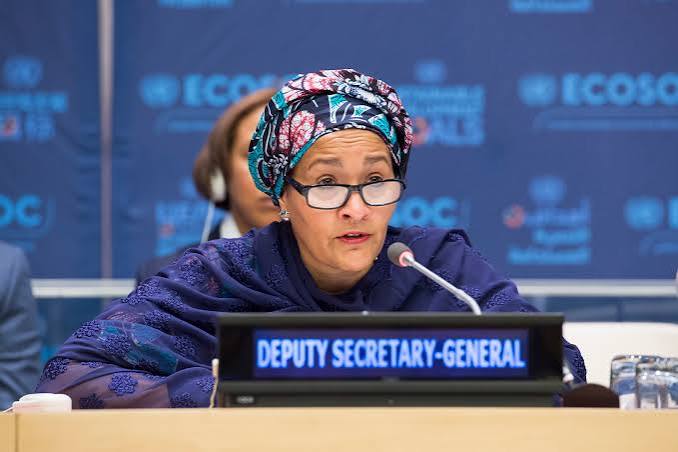
UN Deputy Secretary-General Amina Mohammed, has called for stronger intelligence sharing, public trust and responsible use of emerging technologies to strengthen Africa’s fight against terrorism and violent extremism.
Mohammed made the call in virtual remarks at the High-Level African Lessons Learned Forum on Counter Terrorism Cooperation, Intelligence Sharing and Emerging Technologies in Abuja on Monday.
She said terrorism continued to devastate families and communities across Nigeria’s North-East, the Lake Chad Basin, the Sahel and parts of East and Southern Africa.
“In Nigeria we know the cost of this scourge, the toll it is taking on families and communities across the North-East and the Lake Chad Basin,” she said.
Mohammed said the violence was claiming lives, displacing communities, disrupting economic activities and undermining development in vulnerable areas.
“Behind each of these numbers are people whose hopes for their children are no different from our own,” she said.
She welcomed the forum’s practical approach to examining successful counter-terrorism strategies, identifying failures and sharing lessons across countries.
The UN deputy secretary-general identified trust, emerging technology and community-centred interventions as critical priorities for strengthening counter-terrorism cooperation.
“Intelligence sharing begins with trust. That means trust between agencies, between nations and countries, and between the state and its people,” she said.
She said communities were more likely to share information when security institutions were accountable, justice was accessible and human rights were respected.
She stressed that trust was essential to building effective partnerships between citizens and security agencies in preventing terrorist attacks.
On emerging technologies, Mohammed warned that terrorist groups were adapting rapidly and exploiting artificial intelligence and synthetic media for recruitment and propaganda.
She noted that the same technologies could support early warning and prevention if deployed with appropriate safeguards and effective oversight.
She cautioned that military operations alone would not bring an end to terrorism, urging governments to complement security measures with rehabilitation, reintegration, justice and community support.
She cited Nigeria’s Operation Safe Corridor and similar programmes as examples of efforts to help individuals leave armed groups and rebuild their lives.
According to her, sustainable reintegration requires justice for victims and adequate support for communities receiving former associates of armed groups.
The UN official also called for greater investment in young people through education, decent employment and accessible public services.
She said addressing the needs of vulnerable populations was particularly urgent, with only four years remaining to achieve the 2030 Agenda for Sustainable Development.
“The United Nations stands with you. We will continue supporting solutions that Africa designs and leads,” she said.
Mohammed expressed hope that the lessons shared at the forum would strengthen cooperation and produce tangible improvements in the lives of communities affected by terrorism.
In his remarks, the European Union (EU) Ambassador to Nigeria, Mignot Gautier, announced 20 million euros in non-lethal military equipment to support the Nigerian Armed Forces in the fight against terrorism.
Gaitier said the support approved under the European Peace Facility (EPF), was designed to respond to Nigeria’s needs in tackling terrorism.
“Last week, the EU announced its decision to use for the first time the EPF to support the Nigerian armed forces in their fight against terrorism with 20 million euros of non-lethal equipment,” the ambassador said.
He added that the latest support complemented the EU’s longstanding assistance to the Multinational Joint Task Force (MNJTF) operating around the Lake Chad Basin.
According to him, the EPF has provided a total of 285 million euros in support of the multinational force over several years.
The ambassador reaffirmed the EU’s commitment to strengthening counter-terrorism cooperation with Nigeria, the African Union and other African partners.
He said terrorism and violent extremism required coordinated international responses, stronger intelligence sharing and sustained partnerships among security agencies and judicial institutions.
“Intelligence sharing is crucial and involves secure channels between agencies and the judicial system,” he emphasised.
The Country Representative, United Nations Office on Drugs and Crime (UNODC), Cheikh Touré, called for African-led counter-terrorism strategies, warning that terrorist groups were increasingly exploiting cross-border networks, organised crime and emerging technologies.
Touré said Africa had become a major centre of global terrorism, with the Sahel accounting for more than half of all terrorism-related deaths worldwide.
He said four of the five countries responsible for nearly 70 per cent of global terrorism deaths in the previous year were African: Burkina Faso, Nigeria, Niger and the Democratic Republic of the Congo.
Touré said terrorist groups were strengthening cross-border operations, collaborating with organised criminal networks and exploiting improvised explosive devices, drones, digital platforms and artificial intelligence.
He cautioned against adopting international counter-terrorism practices without considering the specific needs and institutional capacities of African countries.
“The groups we confront cross borders with a fluency that too often exceeds our own. Our response therefore must be equally fluent and be African-led,” he said.
He reaffirmed UNODC’s commitment to working through African institutions and regional frameworks, including the African Union, ECOWAS and the Abuja Process.
The forum brings together African and international stakeholders to discuss intelligence sharing, emerging technologies, counter-terrorism financing and strategies for preventing and countering violent extremism.
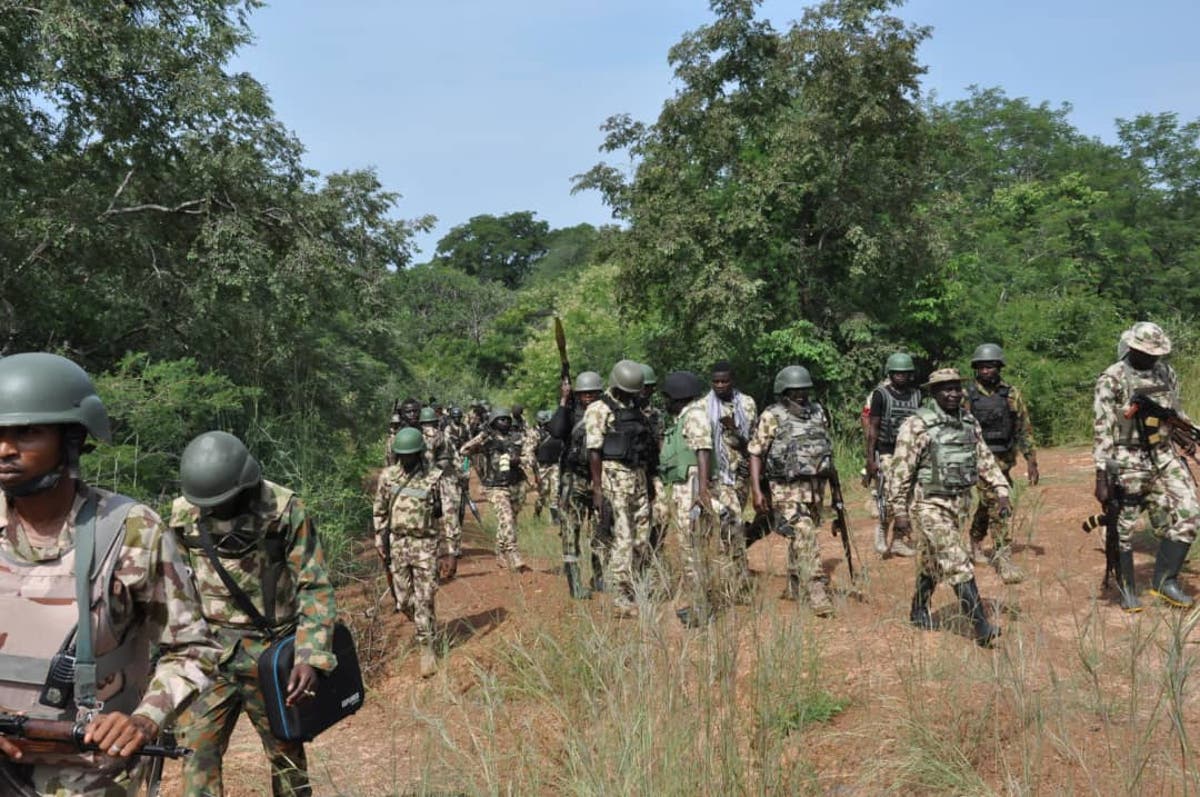
Troops of Sector 2, Operation FANSAN YAMMA, have rescued three kidnapped victims following an operation in Sakaba Local Government Area of Kebbi.
The Media Coordinator of the operation, Osoba Olaniyi, confirmed this in a statement on Sunday in Birnin Kebbi.
Olaniyi stated that the rescue took place on Oct.
24 adding that two victims were rescued at Makuku Village, while one was rescued at Dankolo village.“The rescued victims include A’isha Aminu, 46, Sumayya Aminu, 27, and Nana Abbas, 15,” the media coordinator said.
He disclosed that the victims were subsequently handed over to the District Head of Dirindaji, Alhaji Usman Muhammad, through the Chairman of Sakaba Local Government Area.
Olaniyi noted that the operation was concluded successfully without any incident, stressing that the troops remained committed to the protection of lives and property.



2027: Tompolo Deploys 50 Vehicles in Enugu, Cross River for Tinubu’s Re-election
ShareGrand Patron of the PBAT Door-to-Door Movement, High Chief Oweizidei Government Ekpemupolo, has donated 50 vehicles for President Bola Tinubu’s...

Customs Generates N1.4tn Revenue in Two Months
ShareBy Julius Tambaya, Abuja The Nigeria Customs Service (NCS) generated a total of N1.419 trillion in revenue between September and...

Tegbe Assures Nigerians of Swift Restoration of Power Supply
ShareThe Minister of Power, Joseph Tegbe, has assured Nigerians experiencing reduced electricity supply in parts of the country of a...


WAHO Leads Drive to Harmonise Subspecialty Training Across ECOWAS
ShareBy David Torough, Abuja Accredited health professional colleges, training institutions and regulatory bodies across the Economic Community of West African...


Bishop Oyedepo Re-affirms strong support for Pastor Ibiyeomie, Pastor Komaiya’s Ministry
ShareBy David Torough, Abuja The Founder and Presiding Bishop of Living Faith Church Worldwide, Bishop David Oyedepo, has reaffirm strong...


West Africa: How WAHO Successfully Harmonized Procedure Manuals for Health Disciplines and Professions
ShareBy David Torough After three days of serious brain-storming sessions in Abuja, the West African Health Organization (WAHO), has successfully...


2027: CAN Seeks Return of Sacked Traditional Rulers in Kaduna
ShareFrom Shabanyan Kantiok, Kaduna The Christian Association of Nigeria in Chikun Local Government Area of Kaduna State has urged Christian...


OPay Opens New Kano Office, Strengthens Commitment to Nigeria’s Financial Inclusion
ShareOPay, Nigeria’s leading digital bank, has opened a new office in Kano State, strengthening its presence in Nigeria and bringing...

Rigging Years Before Elections: Why Tinubu, Parliament Favours Staggered Balloting
Share Silhouette of Donald Andoor e‐mail; doandoor@gmail.com There is a growing need for Nigerians to look beyond the ballot box and...

Akpabio Congratulates Nigeria’s Golden Girls, Flamingos
ShareThe President of the Senate, Godswill Akpabio has sent a hearty congratulations to the Nigerian Under-17 Women’s National Team on...