
NEWS
Army Court Martials Five Officers, 20 Soldiers in Enugu


From Sylvia Udegbunam, Enugu
The Nigerian Army has established a General Court Martial for the trial of five officers and 20 soldiers within the jurisdiction of 82 Division in Enugu.
The offences of the accused army personnel included: murder, defilement, manslaughter, extortion and assaults on civilians.
Inaugurating the court martial, President of the General Court Martial (GCM), Brig.
-Gen. Buhari Sadisu, said that the court martial was convened by the General Officer Commanding (GOC) 82 Division, Maj.-Gen. Oluyemi Olatoye.Buhari said that it was pertinent to note that, “Court Martial is one of the instruments used in the Armed Forces to maintain discipline.
”He said, “In Court Martial, military personnel alleged to have committed offences known to laws applicable to them are tried and if found guilty, punished in accordance to the laws criminalising such offences.
“However, where the prosecution failed to establish the allegations against them, the Court will discharge and acquit the accused personnel.
“For the accused personnel present for today’s inauguration, let me assure you that this Court Martial will be guided throughout the trial by the principles of natural justice and fair hearing.
“It will also be guided by the Constitution of the Federal Republic of Nigeria 1999 (as amended) and other extant laws and procedures related to your trial.”
The President said that the Court Martial would be free from any external influence and would afford the personnel accused adequate time and facility to defend themselves.
According to him, please note that the court martial is fully aware of the cardinal principle of our criminal judicial system that an accused person is presumed innocent until the contrary is proven.
“Under our criminal justice system, it is better for 99 guilty persons to be set free than for one innocent person to be convicted.
“Accordingly, I hereby assure you that the Court Martial will strive to do justice in your cases by ensuring that evidence presented before her are judiciously and fairly evaluated.
“This is in order to avoid a situation where an innocent person is made to suffer unjustly,” he said.
The Court Martial has the same power and concurrent mandate as the Federal and State High Courts as its decisions can only be challenged at the Court of Appeal.
In the Court Martial session, regular court lawyers within Enugu also appeared for some of the accused personnel.

From Jude Dangwam, Jos
The Vice Chancellor of the University of Jos, Prof. Ishaya Tanko has confirmed the sad death of 8 students of the University to a road crash involving their Toyota bus with a truck in the metropolitan city of Jos.
He disclosed that one of the students was being prepared for surgery in the early hours of Thursday at the Jos University Teaching Hospital while others were receiving medication at the Bingham Teaching Hospital.
The Federal Road Safety Corps (FRSC) Plateau State Command disclosed that the accident occurred opposite Unity Bank Zaria Road, Jos, at around 2:30 am.
The Plateau State Sector Commander of the Corps, Olajide Mogaji explained that seven people lost their lives on the spot, while another victim died in hospital, bringing the total number of fatalities to eight.
According to the Command’s statement, the crash involved a trailer and a bus, which was carrying eleven passengers, all male students of the University of Jos, opposite Unity Bank Zaria Road, Jos, at around 2:30 am.
Mogaji said eyewitness accounts revealed to the corps emergency teams that the bus was speeding and engaged in wrongful overtaking, leading to the loss of control and the crash.
The Sector Commander has appealed to drivers to avoid night trips, excessive speed, and dangerous driving, saying, “The government needs you alive, and wants you to live life to the fullest in this festive season and beyond.”
The FRSC noted that the incident is still under investigation, while urging the public to report crashes or road emergencies to their toll-free emergency number 122 at all times for prompt responses.
The victims were said to have been coming back from a welcome special party for new students when the unfortunate incident occurred with the vehicle carrying the male students while the other vehicle carrying the female students escaped the tragedy.

UNICEF Hails Bayelsa as Champion of Primary Healthcare Devt in Nigeria
From Mike Tayese, Yenagoa
The United Nations Children’s Fund (UNICEF) has commended the Bayelsa State Government for its deliberate efforts at improving primary healthcare delivery, especially in the area of immunization in recent years.
The Country Representative of UNICEF in Nigeria, Wafaa Saeed, gave the commendation, on Wednesday, when she led a delegation on a courtesy visit to Government House, Yenagoa.
Saeed said what she saw during her visit to some health facilities and her random interactions with some mothers in the state, corroborated the positive reports UNICEF has been receiving about Bayelsa in terms of immunization.
The special UN envoy, who described Bayelsa as champion of healthcare delivery and a shining spot in the country, noted that the state has achieved an impressive performance in its immunization indices from 2021 to date.
She attributed the improvement in the health indicators of the state to purposeful leadership, commitment and accountability being provided by the present administration.
While assuring the Bayelsa of UNICEF’s readiness for collaboration to improve nutrition for children as well as unlock resources for healthcare development in the state, the Country Rep, however, urged the Governor Douye Diri-led administration to sustain its efforts in the health sector.
She said, “We are really impressed with what Bayelsa is doing… Bayelsa State has also committed its financing of immunization campaigns from the state budget, and a special one (immunization) in-between.
“Also there is a monthly allowance and support you have continued to give from GAVI. These are some of the things that have really increased the number of immunized children and improved the performance of the state.
“In 2021, the number of children not immunized in Bayelsa was 71 percent; that means seven out of ten kids were not immunized. But between then and now, there is a big difference due to the leadership, commitment and accountability we are seeing in Bayelsa State.
“You have been a champion of primary healthcare and a champion of immunization. And I really look to have Bayelsa not only a champion of states in Nigeria but in our continent and the globe.”
In a response, Governor Douye Diri represented by his deputy, Senator Lawrence Ewhrudjakpo, reaffirmed the determination of his administration to prioritize investments in the health sector.
He said plans were underway to review the state primary healthcare board law with a view to not only sustaining the extant primary healthcare funding model but also expanding it through effective private sector contributions, especially from corporate organizations operating in the state.
Diri thanked the Country Rep, Ms Wafaa Saeed, for her kind words of encouragement and also acknowledged the support of UNICEF, WHO, Bill Gate, Dangote Foundation and other development partners, noting that Bayelsa could not have recorded its present achievements in the health sector without their collaboration.
His words: “We also want to thank you profusely for supporting our programme. We thank UNICEF, the WHO, Bill Gate Foundation, Dangote Foundation and others for your support. We really appreciate what you have done for our state.
“As a government, we know where we are going. A man who knows where he is going cannot be misled. We are focused and will continue to redouble our efforts in the health sector.
“You talked about sustainability. That is very important to us, and so, we are looking at the principal law, which is the Primary Healthcare Development Board Law. We are looking at some areas of that law to bind the hands of whoever that comes after us.
“That is to ensure that even if the administration after us will not have the motivation and passion to provide leadership for primary healthcare like the present governor is doing, the law will compel them to do so.”
The UNICEF Country Representative was accompanied on the visit by the Chief of Field Service, Judith Leville, UNICEF Health Consultant, Dr. Makio Perekeme, the Chief Field Officer, Anselm Audu and a health specialist, Eghe Abe, among others.
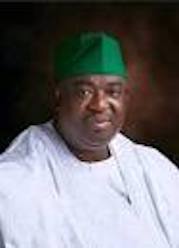
Mutfwang Pledges Support for Minister of Defence in Fight against Insecurity
From Jude Dangwam, Jos
Plateau State Governor, Caleb Mutfwang, has paid a courtesy visit to the newly appointed Minister of Defence, Gen. Christopher Gwabin Musa (Rtd), assuring him of his total and unwavering support in the collective effort to defeat insecurity in Plateau State and across Nigeria.
The Director of Press and Public Affairs to the Governor, Gyang Bere on Thursday disclosed that the Governor has expressed delight over Gen.
Musa’s appointment, describing it as a “strategic and timely decision” in confronting the country’s intricate and evolving security challenges.Mutfwang noted that the Minister’s vast experience and proven professionalism would significantly strengthen ongoing national security interventions.
“We must now focus on finding solutions to the challenges confronting us. Whatever has happened in the past should not deter us. The time has come for all of us to join hands and holistically address our security concerns,” Mutfwang emphasized.
The Governor reiterated his support for the establishment of State Police, acknowledging concerns about possible abuses, but stressing that the nation must collectively develop safeguards and ensure operational efficiency.
Gen. Christopher Musa expressed gratitude for the Governor’s visit, assuring him of a robust and productive collaboration in addressing security concerns in Plateau State and the country at large.
He commended Governor Mutfwang for hosting the Plateau Unity Christmas Carols and Praise Festival, describing it as a unifying initiative.

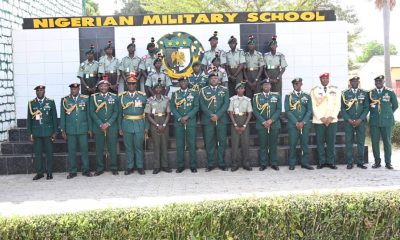

COAS Urges NMS Students to Uphold Discipline, Excellence, Promises Better Learning Environment
ShareBy David Torough, Abuja The Chief of Army Staff (COAS), Lieutenant General Waidi Shaibu, has charged students of the Nigerian...


Gov Adeleke Didn’t Join APC Because Osun People Already Hated the Party – Jackson Ojo
Share…Says Defectors to Ruling Party Will Regret By Mike Odiakose, Abuja A former chieftain of the All Progressives Congress (APC),...


COAS Charges 3,439 New Army Recruits on Loyalty, Discipline
ShareBy David Torough, Abuja The Chief of Army Staff (COAS), Lieutenant General Waidi Shaibu (NAM), has charged 3,439 newly trained...


CBN Revamps Agric Guarantee Scheme, Targets Smallholder Farmers
Share The Central Bank of Nigeria (CBN) has launched a major overhaul of the Agricultural Credit Guarantee Scheme Fund (ACGSF),...
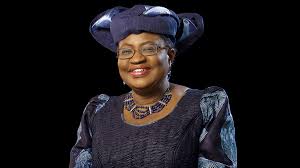

Okonjo-Iweala, Others Urge Youths to Drive Reforms, Strengthen Civic Action
ShareNational leaders have challenged youths to lead Nigeria’s renewal, warning that meaningful change now depends on young citizens organizing, demanding...


Eight Students Die, Three Injure in Jos Road Crash
ShareFrom Jude Dangwam, Jos The Vice Chancellor of the University of Jos, Prof. Ishaya Tanko has confirmed the sad death...


ShareUNICEF Hails Bayelsa as Champion of Primary Healthcare Devt in Nigeria From Mike Tayese, Yenagoa The United Nations Children’s Fund...


EFCC Seeks Stronger Alliance with CSOs, Media in Anti-corruption Fight
ShareThe Economic and Financial Crimes Commission (EFCC) has called for deeper collaboration with Civil Society Organisations (CSOs) and the media...

ShareMutfwang Pledges Support for Minister of Defence in Fight against Insecurity From Jude Dangwam, Jos Plateau State Governor, Caleb Mutfwang,...


FRSC Deploys New Sector Commander to Benue
ShareThe Federal Road Safety Corps (FRSC) on Thursday, announced the deployment of Corps Commander (CC) Kehinde Dahunsi as new commander...