
DEFENCE
Army Shakes Up Top Command, Names New North-East Theatre Boss

By David Torough, Abuja
The Nigerian Army has announced a major reshuffle of its senior leadership, redeploying generals and brigadier generals to critical operational, command, training and strategic appointments across the Service.
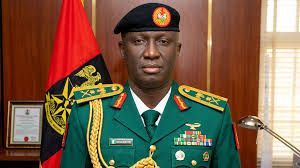
The shake-up, approved by the Chief of Army Staff (COAS), Lieutenant General Waidi Shaibu, is aimed at strengthening operational effectiveness and repositioning the Army’s command structure to meet Nigeria’s evolving security challenges.
At the centre of the latest changes is Major General IA Ajose, who has been moved from the Army Headquarters Department of Army Operations to take over as Theatre Commander of the Joint Task Force North-East, Operation HADIN KAI (OPHK), the military’s key command responsible for counter-insurgency operations in the region.
Ajose takes over the strategic theatre as the Army continues its campaign against Boko Haram and Islamic State West Africa Province (ISWAP) terrorists operating across parts of the North-East.
His predecessor, Major General AE Abubakar, has been redeployed to the Nigerian Army Heritage and Future Centre as Dean of the Faculty of Operational Research.
The Army said the latest postings were designed to ensure that the “right leadership, experience and expertise” were deployed to critical operational and strategic positions.
The Acting Director, Army Public Relations, Colonel Appolonia Anele, announced the changes in a statement on Wednesday.
Under the new arrangement, Major General AM Alechenu has moved from the Defence Headquarters Garrison to the Nigerian Army Heritage and Future Centre, while Major General RT Utsaha has been redeployed from the Army Headquarters Department of Army Standards and Evaluation to the Defence Headquarters Garrison as Commander.
Major General AM Umar is moving from the Army Headquarters Department of Civil-Military Affairs to the Army War College Nigeria as Commandant. He is replaced at the Department of Civil-Military Affairs by Major General UM Alkali, who moves from the Army War College.
Major General GS Muhammed has been redeployed from the Office of the National Security Adviser to the Nigerian Army Finance Corporation as Director General.
Major General JE Osifo, formerly of the Nigerian Army Finance Corporation, moves to the Military Pension Board as Chairman, while Major General IE Ekpenyong has been redeployed to the Defence Headquarters Department of Defence Logistics as Director, Engineering Services.
The changes also extend to several operational formations at the brigadier general level.
Brigadier General AA Bello has moved from 6 Division Garrison/Sector 3, Joint Task Force South-South, Operation DELTA SAFE, to the Defence Headquarters Department of Defence Operations.
Brigadier General MS Adamu has been appointed Commander of the newly established 8 Brigade after leaving the Nigerian Army Women Command, while Brigadier General MS Sule moves from Special Task Force Operation ENDURING PEACE to command 27 Task Force Brigade.
Brigadier General I Sule has also been redeployed from the Directorate of Recruitment Management to 6 Division Garrison as Commander.
Brigadier General E Azenda moves from the Land Forces Simulation Centre to command 2 Division Garrison, with Brigadier General AS Bugaje taking over at the simulation centre as Director of Administration.
Shaibu charged the newly appointed commanders and senior officers to justify the confidence reposed in them through exemplary leadership, operational innovation, professionalism and unwavering commitment to duty.
He urged them to remain focused on the Army’s constitutional mandate of defending Nigeria’s sovereignty, protecting its territorial integrity and supporting civil authorities in maintaining peace and security.
The Army said the latest exercise was part of its continuing effort to maintain a dynamic leadership and force-employment framework capable of improving operational outcomes, strengthening joint and inter-agency coordination, and responding decisively to contemporary and emerging security threats.
The reshuffle comes less than a year after President Bola Ahmed Tinubu ordered a sweeping change in the country’s military leadership, leading to Shaibu’s appointment as Chief of Army Staff in October 2025.
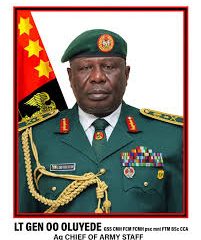
Shaibu assumed office on November 5, 2025, as the 25th Chief of Army Staff, succeeding Lieutenant General Olufemi Oluyede, who was elevated to Chief of Defence Staff.
His emergence came amid mounting pressure on the military to improve its response to multiple security theatres, including the long-running insurgency in the North-East and the growing threats of banditry and kidnapping across parts of the North-West and North-Central.
Since assuming office, Shaibu has placed renewed emphasis on offensive operations and improving the Army’s capacity to confront terrorist and other criminal threats.
During his first operational visit to Borno in November 2025, the Army chief told troops that the campaign against terrorists had to be conducted differently and declared that failure was not an option.
The latest command changes therefore represent another significant attempt by the Army leadership to align personnel, operational experience and command responsibilities with the demands of Nigeria’s increasingly complex security environment.
The Nigerian Army is strengthening its aviation quality management systems to improve flight safety, aircraft reliability and operational readiness.
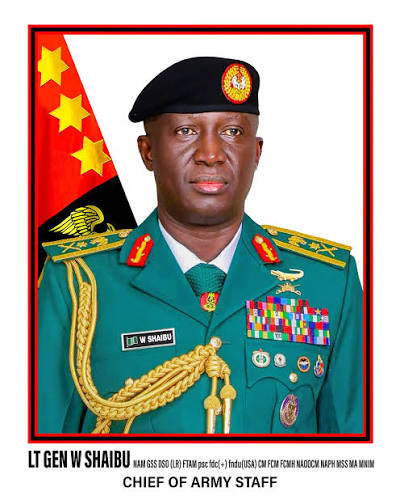
The Chief of Army Staff (COAS), Lt.-Gen. Waidi Shaibu, stated this at the opening of the Nigerian Army Aviation Command Workshop on Aviation Quality Management Systems on Monday in Abuja.
Represented by the Chief of Standard and Evaluation, Maj.
-Gen. Thompson Ugiagbe, the COAS said the effectiveness of army aviation depended on robust quality management systems.“The effectiveness and sustainability of these capabilities depend not only on the availability of aircraft and trained personnel, but also on robust quality management systems that ensure safe, standardised and reliable aviation operations,” he said.
Shaibu said aviation operations required the highest standards of discipline, professionalism, standardisation and continuous improvement.
He said the systems would help identify risks, ensure compliance with approved standards and prevent recurring deficiencies.
“As Nigerian Army Aviation continues to expand its operational and technical capabilities, institutionalising such a system is essential to building a resilient aviation organisation and sustaining operational readiness,” he said.
The army chief noted that since the re-establishment of Nigerian Army Aviation in 2014, efforts had been made to develop the platforms, personnel, infrastructure and systems required to support land operations.
He said the workshop would provide an opportunity for participants to examine practical approaches to quality assurance, safety management, maintenance practices, documentation and standardisation.
Shaibu expressed confidence that the deliberations would produce actionable recommendations for institutionalising an effective quality management system across Nigerian Army Aviation.
He urged participants to develop sustainable measures to strengthen aviation safety culture, improve operational processes and enhance the reliability of aviation assets.
The Commander, Nigerian Army Aviation Command, Brig.-Gen. Al-Amin Ibrahim said quality management was fundamental to aviation safety, aircraft availability, mission effectiveness and combat readiness.
“For the Nigerian Army Aviation Command, quality is not merely an administrative requirement; it is fundamental to operational safety, aircraft availability, mission effectiveness, accountability and sustained combat readiness,” Ibrahim said.
He said the workshop was designed to establish a structured framework for standardisation, accountability, disciplined documentation, effective monitoring and continuous improvement across the Command.
The commander stressed that quality management should be embraced as a shared responsibility by all personnel involved in aviation operations.
“Quality must also be embraced as a culture. It is not the sole responsibility of an inspectorate or quality assurance office.
“Rather, it is the responsibility of every officer, soldier and civilian staff member involved in planning, flying, maintenance, logistics, administration, training and support,” he said.
Ibrahim said the Command must prioritise preventing deficiencies rather than waiting for them to occur before taking corrective action.
He urged participants to develop practical recommendations with measurable outcomes that could be implemented and monitored across the Command.
“Our emphasis must be on prevention through discipline, effective supervision, risk awareness, adherence to approved procedures, timely reporting and organisational learning,” he said.
Ibrahim added that the proceedings and recommendations would be compiled into a compendium to guide the implementation, monitoring and periodic review of quality management initiatives.
The five-day workshop, which began on Monday, ends on Friday, brought together stakeholders to strengthen quality management and promote a culture of operational excellence in Nigerian Army Aviation. (NAN)
From Ifeanyichukwu Nwannah, Gusau
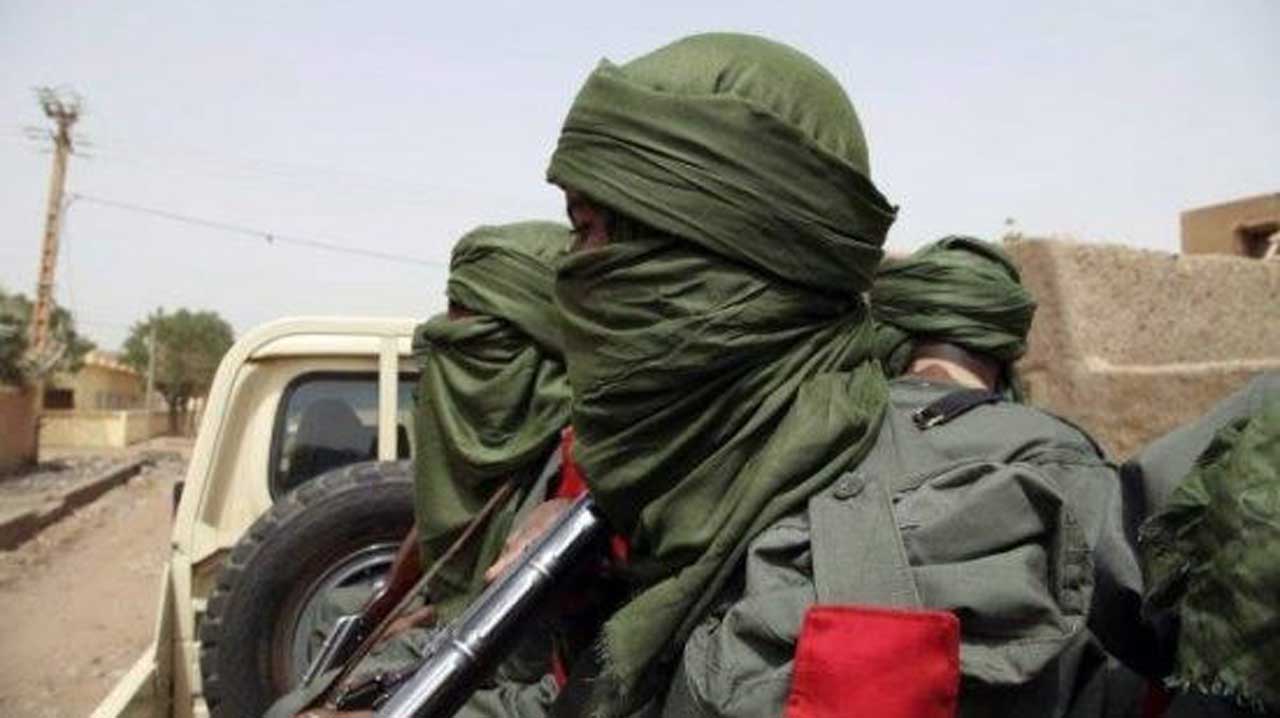
No fewer than 22 persons including four soldiers have been killed by ravaging bandits along Gwashi- Nassarawa axis on Bukkuyum local government area of Zamfara State.
This medium also gathered that three communities in Dansadau axis of Maru Local Government Area of the State have been displaced after several terror attacks were unleashed on them by the notorious bandits.
It was gathered that over 400 community members of the affected Communities have deserted the area for the safety of their lives, after a series of separate attacks on the three villages and setting ablaze over 12 vehicles.
This medium also gathered that the ravaging bandits imposed a N50 million levy on communities in the area, even though the bandits burnt over 12 vehicles and displaced three villages.
The killing of 22 people including 4 soldiers, along Gwashi- Nassaawa axis, the lawmaker, representing Bukkuyum in the Zamfara State House of Assembly, Hon. Hamisu Faru, confirmed that the terrorists ambushed the victims, saying that the bandits unleashed terror attack on the people on Sunday while the soldiers were on duty in the area.
According to him, the bodies of some of the victims were yet to be recovered as at the time of filing this report.
The Media Information Officer of Operation Fansan Yamma OPFY, Lt. Col. Aliyu Danja, also confirmed this to newsmen in Gusau, the State capital on Monday.
Reacting to the attacks, Zamfara State chapter of the National Democratic Congress (NDC), condemned the attacks, saying that the security situation in the State is deteriorating.
In a statement issued by State publicity secretary of the party, Kassim Almustapha Kayatawa, said the party commiserated with the families of the victims, including the fallen soldiers.
“The NDC Zamfara State chapter, under the leadership of Alhaji Surajo Garba Maikatako, condemns in strong terms the barbaric attacks in Dansadau and Bukkuyum and mourns the victims,” the statement said.
The State chapter of the party called on the federal government and the Zamfara State Government to urgently deploy more security personnel to vulnerable communities in Dansadau, Bukkuyum and other flashpoints in the State.
Speaking further, the party also urged both federal and State governments to adopt a comprehensive strategy to address banditry and prevent further attacks in the State.
The party criticised Governor Dauda Lawal over his reported trip to Ethiopia, while the State was mourning the victims, urging him to cut short the visit and return to address the security situation.
“While the people are being attacked, the governor is said to be in Ethiopia as part of a federal government delegation. We call on him to cut short the trip and return to address the security challenges,” the party said.
The party further urged security agencies to intensify operations to restore peace and prevent further loss of lives and property.
All efforts to get the reaction of the Zamfara State Police Command’s spokesman, DSP Abubakar Yazid proved abortive at the time of filing this report.
From Ifeanyichukwu Nwannah, Gusau
The troops of Operation Fansan Yamma (OPFY) have neutralised Explosive Devices Planted along Magami–Hannutara–Dansadau road, Maru, in Zamfara State.
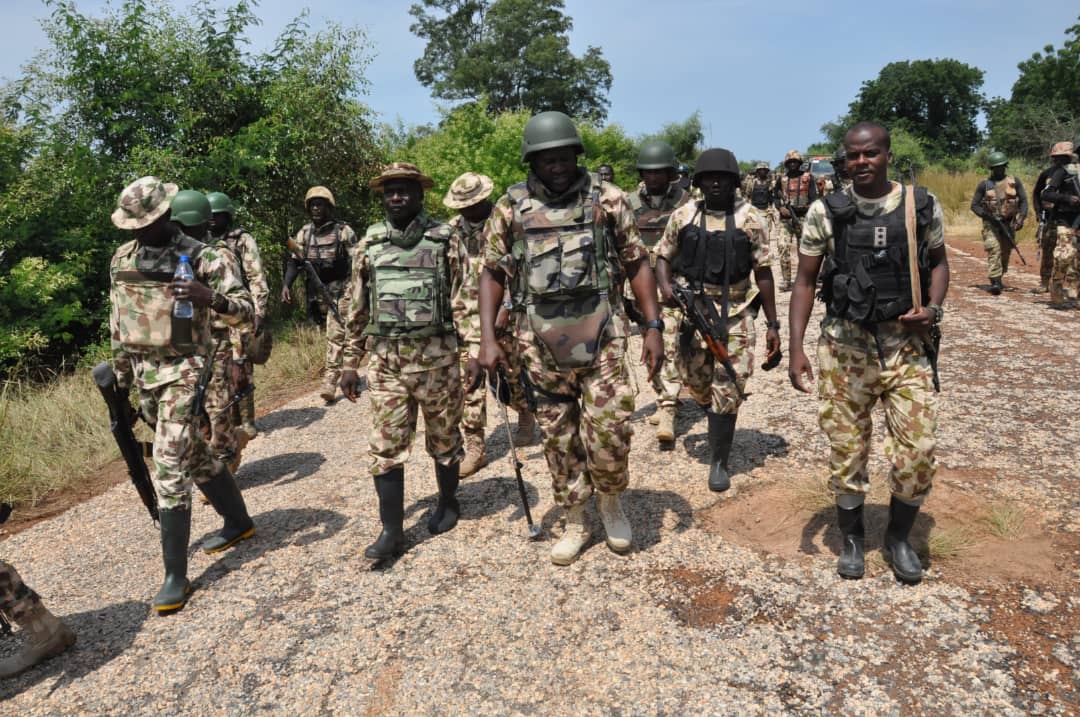
Reliable military sources revealed that the troops of Sector 2, Operation Fansan Yamma, have recovered and neutralised explosive devices planted by terrorists in the axis.
It was gathered that the devices were reportedly planted to kill and endanger the commuters plying the busy route.
According to the sources, the troops, acting on credible intelligence, secured the affected area and conducted a thorough search, and identified two locations where explosive devices were said to have been planted.
It was also learnt that an Explosive Ordnance Disposal (EOD) team was quickly deployed to handle the threat, saying that the team successfully destroyed one of the devices and safely recovered and rendered the second device useless.
The sources noted that the troops have intensified patrols and surveillance along the road and surrounding communities to secure the lives and properties of the residents, ensure the safety of commuters and prevent further insecurity in the area.
The management of Operation Fansan Yamma has urged members of the public to remain vigilant and timely report suspicious objects or activities to the nearest security agency.
The operation underscores the importance of timely intelligence and proactive security measures in preventing attacks and safeguarding lives and property in Zamfara State.




2027: Group Rejects Alleged Rainbow Coalition Plot in Benue, Warns Wike, Akume Of Any Attempt To Thwart Alia’s Reelection.
ShareFrom Attah Ede, Makurdi The Benue Alliance for Good Governance and Accountability (BAGA), has raised concerns over an alleged political...

Economic Independence: CDS Empowers Veterans with Skills
ShareThe Chief of Defence Staff (CDS), Gen. Olufemi Oluyede, has reaffirmed the commitment of the Defence Headquarters (DHQ) to improving...


Beyond 23 Per Cent MPR, Should CBN Reconsider 45 Per Cent CRR to Unlock Credit?
ShareBy Blaise Udunze The last Monetary Policy Committee (MPC) meeting of the Central Bank of Nigeria (CBN) was its 307th...
Shame of a Nation: Cacophony Trails Igbokoba Naf Aircraft Crash
ShareThe tragic crash of a Nigerian Air Force (NAF) ATR-42 aircraft, registration number NAF 931, in the swampy terrain of...
CBN: Nigeria’s Foreign Reserves hit $58.81bn, Highest in 18 Years
ShareBy Tony Obiechina Abuja Nigeria’s foreign exchange reserves rose to $58.81 billion on October 12, 2026, their highest level since...


INEC Engages PWDs, Reaffirms Commitment to Inclusive Electoral Process
ShareThe Independent National Electoral Commission (INEC) has restated its commitment to an inclusive electoral process. The Resident Electoral Commissioner (REC)...


2027: Governance Won’t Take Back Seat to Campaigns –Tinubu
SharePresident Bola Tinubu has assured Nigerians that governance will not take a backseat to electioneering ahead of the 2027 presidential...


NYSC DG Task Corps Members on Safety, Networking
ShareFrom Mike Tayese, Yenagoa The Director-General of the National Youth Service Corps (NYSC), Brigadier General O. O. Nafiu, has urged...


Nigeria, EU, Euro Bank Sign €14m Grant Agreement on Fibre-Optic Infrastructure
ShareBy Tony Obiechina, Abuja The Federal Government of Nigeria, the European Union (EU) and the European Bank for Reconstruction and...


Tinubu: I Won’t Abandon Governance for 2027 Campaigns
ShareBy Tambaya Julius, Abuja President Bola Ahmed Tinubu has said he will not allow political campaigns ahead of the 2027...