
OPINION
As Chijioke Edeoga, LP Await Ruling of Enugu Guber Election Tribunal

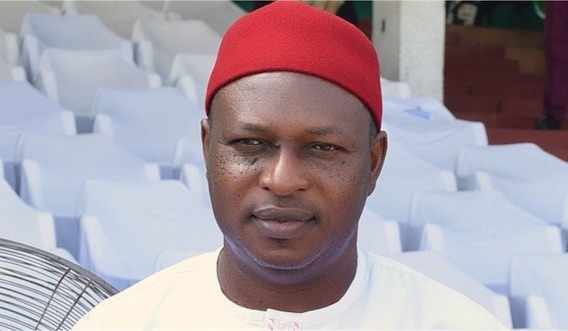
By Emeka Ugwuonye
I do not want to preempt the judgment of the tribunal in the case challenging Peter Mbah’s claim to victory in the Enugu State governorship election. So, we leave the tribunal to render its judgment as it finds fit given the facts, the law and the evidence of the case before it.
But as a human being, experienced in the art of law and courtroom warfare, it is impossible for me to observe a battle without forming an opinion on it and sharing same with those who read my works. In fact, those who follow me have come to expect my thoughts and assessment of this legal battle.Yesterday, Chijioke Edeoga and Labor Party (LP) closed their case against Peter Mbah, PDP and INEC.
By this, they fully presented their evidence and analysis of the law within the court’s scheduling order. Remember that as the party that filed the case, the burden is upon Edeoga and LP to prove their case to the standard of clear and convincing evidence. Any experienced legal analysist could look at their efforts so far, the quality of the evidence they tended, the witnesses they called, the quality of the presentation they made in the court against the opposition and tell whether indeed they have done enough to win the case to the requisite standard of proof.There are three legs to the case against Mbah, PDP and INEC. They are:
(1) That Peter Mbah was not qualified to contest in the governorship elections on the ground that he presented a forged NYSC certificate,
(2) That there was a computation error which favored Mbah, instead of the right person, Edeoga, and
(3) That there was over-voting, which added fake 9000 votes to Mbah, without which Mbah could not have been declared the winner.
The trial so far has been filled with shocking drama with a lot of suspense. There were several turning points when the outcome of this case was determined. For instance, the first such critical turning point was when NYSC showed up in court and told the court that it did not issue the certificate that Mbah presented to INEC. With that testimony and supporting evidence, the first leg of Edeoga’s case has been established in such a way that Mbah has no hope of ever overcoming it.
It remained the second and third leg of the case. Yesterday, those remaining legs were established beyond any doubt. In the report presented by a professional observer of the case, the following report was presented:
“Immediately Court commences sitting at about 10:30am Edeoga and LP’s legal team lead by Dr. Mrs. V. O. Azinge SAN who after she addressed the Court, called on Mr. Fatogun SAN to take over proceedings from her.
“Mr. Fatogun SAN presented two witnesses from Igboeze-North LGA who did well on their statements on oath respectively. It is as soon as the second witness concluded his witness that the learned SAN Mr. Fatogun called the attention of the Court to the Subpoena order served INEC REC Dr. Chukwuemeka Joseph Chukwu to produce the isolated BVAS machines from the isolated polling units contained in the served order and prayed that the Court invites INEC to present those machines.
“At this point, the Court asked Mr. H. I. Okoli Esq. to respond to the petitioners order who subsequently invited one Mr. Victor Okafor who claims he was in Court to represent the INEC REC.
“The representative of the REC at that point eventually got into the witness box and produced 5 isolated BVAS machines on the isolated polling units from Igboeze North LGA, leaving out 10 from Owo & Ugbawka.
“The proceedings became more interesting after the 5 machines were tendered and the REC representative Mr. Okafor were asked to open the BVAS machines he brought to the Court one after the other and supply the Court information contained in each. Mr. Okafor then opened and put on one of the machines and eventually confirmed to the Court that the BVAS machines cannot be operated beyond what he has done because the machines are locked and empty.
“But in his further answer to the question of Mr. Fatogun SAN, as to what information should the Court rely that are contained in the 5 BVAS machines he brought and the ones he didn’t bring, and he replied and said that the Court should rely on the information on the BVAS report already before the Court which it’s Certified True Copies (C.T.C) was sought and obtained by the petitioners (Edeoga & LP).
“So by this testimony from the INEC officer, it will be right to hold that our second ground of petition which is over-voting is today proved, sealed and delivered to the glory of God.”
The above report is consistent with the observation of every independent reporter present at the proceeding. It is clear from the above that the remaining legs of the case of Edeoga are now firmly and implacably in place. The tribunal will have no choice but to rely on the evidence produced by Edeoga as unchallenged and irrefutable. Indeed, it was as if Peter Mbah and his team were not involved in the case anymore. Their best evidence is in favor of the Edeoga. When the subpoenaed INEC official told the Court that Edeoga’s evidence was right, what do you expect the court to do? It was like going to a match and your opponents get too disoriented in the middle of the game and start scoring against themselves.
Even though Mbah is now to formerly open his defense, it is already clear what his defense cannot undo. They cannot undo NYSC testimony. They cannot undo the admission of the INEC person who told the court to rely only on Edeoga’s evidence. One can as well declare the fight over with Mbah ready to sign terms of unconditional surrender.
Indeed, Edeoga should have enough reasons by now to start celebrating I victory. But I know the gentleman. He is cool-headed, humble and unassuming. He does not see this as a personal battle for him. Rather, he is in this for the sake of justice and truth. He believes that the people of Enugu State should be governed by the person they voted for, not by someone imposed on them through a result that was purchased with money. For that reason, I believe Edeoga is focused and waiting for whatever judgment the tribunal deems fair and just in the circumstances.

By Catherine Agbo
In the unfolding drama of Nigerian political discourse, few things excite the commentary circuit quite like a prominent figure stepping decisively into the political arena.
The recent media frenzy surrounding the activities of the High Chief Government Ekpemupolo-led PBAT Door-to-Door Movement is a classic study in selective outrage.
Ekpemupolo, popularly known as Tompolo, is the Grand Patron of the movement.
From editorial columns in national dailies to online commentary, critics have been relentless in dishing out opinions about the group’s activities targeted at mobilising support for President Bola Tinubu’s re-election campaign.
Yet, beneath the righteous indignation lies a fundamental misinterpretation of constitutional rights and democratic principles.
The narratives being spun across several opinion pieces, such as those asking why Tompolo should be actively involved in partisan politics or phoney groups labelling his endorsement as “deceptive,” are all built on shaky foundation.
Critics point to his role as a major security stakeholder in the Niger Delta and argue that a person of his background should remain politically passive or detached from party politics. Others question the deployment of operational vehicles and logistics to coordinators of the movement across states for the campaign, framing legitimate political mobilisation as an overreach.
However, this wave of criticism ignores a fundamental truth, that Nigeria is a constitutional democracy governed by the rule of law.
Section 39 and 40 of the 1999 Constitution of the Federal Republic of Nigeria (as amended) guarantee every citizen the right to freedom of expression and the right to peaceful assembly and association.
These rights are not reserved exclusively for career politicians, armchair intellectuals, or media commentators, they belong to every Nigerian citizen in equal measure.
Critics who have raised the alarm over campaign spending have also conveniently ignored the provisions of Nigeria’s statutory electoral framework.
The way I see it, High Chief Ekpemupolo has not gone against the Electoral Act 2026 in any way.
The Electoral Act 2026 sets clear financial caps on direct spending by individual candidates and limits on direct monetary donations to political parties or candidates’ accounts.
It also limits the amount a donor can make to a candidate or political party to N500 million.
The Electoral Act 2026 does not, however, specify, mandate, or place any financial spending ceiling for independent third-party support groups, non-governmental movements, or citizen-led mobilisation platforms.
Because the law contains no statutory cap on what an independent group can spend to mobilise voters, logistically equip its coordinators, or advocate for a candidate, Tompolo’s support group operates entirely within the legal limits of the Nigerian electoral law.
To invent non-existent legal infractions simply to tar a political support group is a disingenuous exercise in bad faith.
Tompolo has not been indicted by any court of competent jurisdiction, nor has he violated any law of the land by supporting a presidential candidate of his choice.
He has not been found wanting in any legal measure whatsoever for exercising his democratic suffrage and organising a political support group.
To, therefore, suggest that he should sit on the sidelines while other private citizens and influencers exercise their constitutionally guaranteed right to endorse and fund candidates is to demand a double standard that borders on hypocrisy.
Political association in a democratic society is rooted in choice, conviction, and interest.
If Tompolo believes that the current administration’s policies, particularly in stabilised oil production, maritime security, infrastructure, increased allocation to states, security, especially the State Police bill which 25 state Houses of Assembly have already approved, among others, align with the long-term prosperity of his constituency and the nation, he is within his full constitutional rights to persuade others to share that vision.
Mobilising grassroots support at the ward, household, and polling-unit levels through peaceful door-to-door engagement is the very essence of citizen participation in governance. It is political organising at its most fundamental level.
Those rushing to judge him prematurely are mistaking political enthusiasm for wrongdoing.
A citizen’s choice to donate campaign vehicles, set up organisational structures, and hold political rallies across different geopolitical zones is standard practice in presidential politics globally. In democratic climates, such actions are celebrated as evidence of civic investment and grassroots empowerment. Why should a different standard be constructed when the participant happens to be an influential opinion leader like Tompolo?
The online backlash and critical editorials reveal a deeper prejudice.
Nigeria’s democracy matures when citizens participate freely without fear of unwarranted public trial by the media.
The PBAT Door-to-Door Movement is operating entirely within the boundaries of civil political engagement and statutory electoral law. Rather than attacking the messenger, critics would do well to focus their energy on robust policy debates, engaging the electorate on ideas rather than seeking to curtail the lawful rights of individuals.
Tompolo has broken no law, breached no electoral act provision, and violated no constitutional mandate. He is simply exercising his fundamental right as a free citizen of Nigeria to associate, express his preference, and campaign for the candidate he trusts to lead the country. The misplaced outrage and hasty judgments filling opinion pages ought to be laid to rest.
In a free nation, the right to choose belongs to everyone and Tompolo is no exception.
Agbo, a strategic and development communication expert writes from Abuja.

By Uddin Ifeanyi
Much of the palaver over the recent meeting of the Central Bank of Nigeria’s policy committee was exercised by how well the apex bank is doing its job. Against its primary goal of maintaining price stability, the CBN’s Monetary Policy Committee’s decision to recalibrate its monetary policy rate (MPR) in order to align it with the market invited the most attention.
First, there is the question of what the MPR anchors.
In reality, nothing. Ideally, however, the CBN’s policy rate should transmit price signals through the financial system, influencing saving, borrowing, liquidity, inflation expectations, and in the end, the naira’s exchange rate. It should, in other words, signal the central bank’s intentions. Yet, we have had years in which the MPR stoically remained unchanged even as inflation ran riot, and the naira’s exchange rate came under severe downward pressure.The CBN has regularly papered over this crack with an often-bewildering arsenal of tools — including some eccentric flimflams that it has deployed in recent times. But this only raises further questions as to how useful even these are. Take the cash reserve requirement.
At 45 percent for deposit money banks, it means that nearly half of banks’ qualifying deposits are warehoused with the central bank at any given time. While these sums may not, therefore, be available to build bubbles in the foreign exchange and equity markets, they are not likewise available for lending. Even if we argue that long-term lending ought properly to be funded by equity, banks and not shareholders should bear the burden of financing businesses’ working capital needs. Then, there is the small matter of how the CBN’s cash reserve requirement might be just as orphaned as its policy rate.
Banks raising naira deposits end up paying the CRR tax. In an economy that has witnessed considerable dollarisation — “the process where a country uses a foreign currency (most often the greenback) alongside or completely in place of its own domestic currency” over the years, does it matter that deposits into domiciliary accounts are not CRR compliant? And how?
Might the “dollarisation” phenomenon hold the key to the CBN’s toolkit’s redundancies? Countries formally adopt the dollar in place of their domestic currencies when locals lose faith in the latter. This process restores the stability that struggling economies often find unable to achieve with their currencies and drives investment inflows.
Nigeria’s dollarisation is only partial and barely adjacent. Yet, while the country may not have lost the gains — seigniorage — from printing its own currency that is one consequence of dollarisation, the CBN looks to have partially lost control of the monetary policy space, with the sums that Nigerians increasingly park in their dollar accounts.
There are, thankfully, many ways to regain this control without having to nationalise dollar deposits. Neither the CBN nor the government can talk their way out of this, though. You cannot tell Nigerians to keep their savings in naira while offering them a savings rate below inflation. The smart choice in this circumstance is for domestic economic actors to move their savings into dollars, property, equities, commodities, inventory, or other assets.
Giving Nigerians a reason to save in naira should thus be the central goal of a policy reset. How to do this? We have got to keep inflation low. At 30% year-on-year a while back, the CPI numbers were an outrage. At a little over 15 percent today, it is still doing great injury to the naira. N100 today has roughly the purchasing power of only ₦50 after five years. The solution here goes beyond the CBN setting a credible, explicit medium-term inflation target.
It also transcends the CBN laying out incentive structures that make deviations from this target costly both politically and institutionally. More than this, the national commitment to the CBN not financing fiscal deficits must be religious and total. While this means that monetary policy is no longer subordinate to the federal government’s financing requirements, it must aim at positive real interest rates for savers.
Still a spectre haunts monetary policy in Nigeria. It is unfortunately not in the CBN’s gift to exorcise the nightmare that the federal government’s financing requirements have become.
How do we persuade our public sector boffins that a government that persistently spends more than it can sustainably pay for creates pressure for any of higher taxation, additional borrowing, monetary accommodation, inflation, or the naira’s depreciation? If the naira is only as strong as Nigeria’s balance sheet, then the task of getting both the fiscal and monetary authorities to operate under a common nominal inflation anchor must begin with reducing recurrent expenditure, broadening the tax base instead of increasing the tax rate, returning off-budget borrowing back to the budget, publishing complete fiscal accounts, improving the quality of public investment, establishing a credible medium-term strategy, and ceasing to use the CBN as a piggy bank.
Hopefully, this should help the economy produce more tradable goods and services. Because the naira represents a claim on the economy by anyone holding it, we cannot permanently defend the currency’s exchange rate through interest rates and reserves, if the economy continually uses up more foreign exchange than it earns. In other words, then, the economy must work for the naira to work.
Uddin Ifeanyi, a journalist manqué and retired civil servant, can be reached @IfeanyiUddin.
By Prince Charles Dickson Ph.D
There is an old story about a lawyer who sold his well to a teacher, then returned demanding payment for the water inside it. The teacher smiled. If the water still belonged to the lawyer, he replied, perhaps the lawyer should remove it or pay rent for storing it in somebody else’s well.
Suddenly, the lawyer remembered he had only been joking.It is funny until we recognise ourselves as lawyers.
We tell people with disabilities that public spaces belong to everyone. Then we demand an additional price for entering them.
We give them citizenship, but charge for the ramp. We promise education, but make the classroom unreachable. We proclaim equal opportunity, then construct the doorway too narrow for their wheelchair.That contradiction came home to me when Grace shared her story with me, she titled Public Place Accessible Report for Inclusion. It contained no sentimental appeal. It simply insisted that public places should allow everyone to enter, move, communicate, receive services and participate independently, safely and with dignity.
I listened to it in her voice once as a report. Then, I read it again as an indictment.
Behind every line was somebody’s ordinary day made unnecessarily difficult. A mother arrives at a hospital, already frightened for her child, discovering that the entrance has steps but no ramp. A young man preparing carefully for an interview, only to find his opportunity waiting upstairs without a lift. An older woman confronting a pavement that has forgotten her legs cannot move as quickly as they once did.
These are imagined scenes, but the barriers Grace identified are painfully real. Poorly enforced building standards. Toilets that exclude. Transport that humiliates. Signs people cannot read. Public information people cannot hear. Facilities built without consulting those who will need to use them.
Grace’s intervention mattered because she did not reduce accessibility to a construction problem. Her story and experience understood something profound: every inaccessible entrance is also a message. Sometimes it says, “We did not think of you.” Sometimes, more cruelly, it says, “We thought of you, but you were not worth the expense.”
What does that message do to a child’s heart?
Imagine a girl with cerebral palsy watching other children rush into a school assembly while she waits outside for someone to carry her over the steps. Imagine her learning, year after year, that she must be grateful for help rather than entitled to access. Imagine how quietly a society can teach someone to apologise for existing.
On 3 October 2026, at GlowingStar Empowerment Initiative and Development’s World Cerebral Palsy Day commemoration in Bukuru, I delivered a keynote titled Beyond Therapy: Seeing the Whole Person, Not Just the Condition. Its central argument was simple: a person has cerebral palsy; cerebral palsy does not have the person.
A diagnosis is information, not identity. Therapy is necessary, valuable and sometimes life changing. But therapy is supposed to be a bridge into life, not the whole landscape of living. Beyond treatment are friendships, classrooms, jobs, ambitions, relationships, leadership, laughter, choices and dreams that deserve room to breathe.
We can celebrate a child’s progress in therapy while failing that same child at the school gate. We can praise a parent’s devotion while exhausting that parent with inaccessible transport, expensive care and the endless labour of explaining why their child deserves a chance. We can call ourselves compassionate while our architecture remains indifferent. At the commemoration, parents spoke of stigma, costly therapy and limited support. Their courage was unmistakable, but courage should not be the currency families must spend to secure ordinary human rights.
That was why I argued that admission is not inclusion. Allowing a child through the gate means little if the classroom, teaching methods, toilet, playground or attitudes inside still tell that child to remain on the margins.
And communication must never be confused with intelligence. When someone speaks differently or needs more time, our responsibility is neither impatience nor pity. Ask. Then wait. Listen without finishing their sentences. A human voice does not lose its authority because it travels by an unfamiliar route.
I returned to Grace’s story and noticed how practical her demands were: sensible ramps and handrails, usable toilets, safe pathways, accessible transport, clear signage, Braille, captions, audio information and regular audits. It called for architects, officials and contractors to understand universal design, and for people with disabilities themselves to help plan and evaluate the spaces they use.
Nothing about us without us. That principle is not a decorative language for conferences. It is what stops a well-meaning official from installing a ramp that is too steep, or declaring a school inclusive without asking the students to navigate its corridors.
Nigeria has legal commitments against disability discrimination. Yet a law that cannot travel from the statute book to a bus stop, hospital, workplace or classroom remains a promise stranded on paper. Rights should not require influential relatives, public sympathy or a viral photograph before anyone honours them.
Sometimes, as I said in that keynote, society needs therapy. Our buildings need rehabilitation. Our policies need rehabilitation. Our assumptions, professional habits and careless language need rehabilitation. We must stop asking only how a person can adapt to a hostile environment and begin asking why we made that environment hostile.
I keep thinking about Grace, my newfound friend. As she shared recommendations, their moral weight was larger than the suggestions itself. She reminded me that inclusion often begins when someone refuses to look away from what everyone else has learned to step over. It begins with the uncomfortable decision to measure progress not by the elegance of our speeches, but by who can actually enter the room.
The lawyer in the story wanted to sell the well while keeping its water hostage. Too often, our society offers people with disabilities belonging without access, opportunity without accommodation, dignity without choice. Then it calls every concession generosity.
But the water was never ours to withhold.
Every child deserves more than survival. Every caregiver deserves more than exhaustion. Every adult with a disability deserves the freedom to work, love, contribute and belong without performing gratitude for rights already theirs. The purpose of inclusion is not to make people feel fortunate to be tolerated. It is to build a country where nobody must beg to be considered human.
So, Grace, thank you for disturbing our comfort with something as unromantic, and as revolutionary, as sharing your story with me. May we answer it with budgets, redesigned spaces, enforced standards and genuine listening. May the next child approaching a public doorway find no argument waiting there, only an opening.



Establishment of Development Commissions, Tinubu’s Best Decision for Nigeria, Says Momoh
ShareBy David Torough, Abuja The Minister of Regional Development, Engr. Abubakar Momoh, has described the establishment of the Regional Development...


OPHK Air Strikes Kill 37 Terrorists, Destroy Four Vehicles in North-East
ShareBy David Torough, Abuja The Nigerian military says air strikes conducted by the Joint Task Force, Operation HADIN KAI (OPHK),...
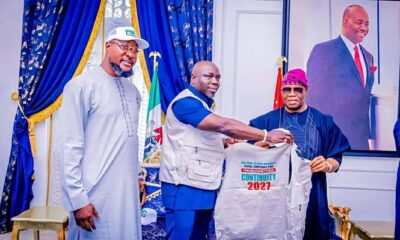

2027: Akwa Ibom opposition ‘ll Vote Tinubu, says Akpabio as Tompolo Donates 31 Campaign Vehicles
SharePresident of the Senate, Godswill Akpabio, says the All Progressives Congress (APC) in the state and other opposition political parties...

Don’t Destroy Family Ties Over Politics, Ogazi Cautions Youths
ShareBy Tambaya Julius, Abuja Gidan Zakara community in Karu Local Government Area of Nasarawa State has declared 100 per cent...

BTOCARES: Ondo Families, Students, Farmers Celebrate as Tunji-Ojo’s Intervention Eases Hardship
ShareBy David Torough, Abuja Beneficiaries of the BTOCARES humanitarian initiative in Ondo State have expressed gratitude to the Minister of...


WPRF Delegates Leaving Nigeria with Positive Impressions, Says Customs CG
ShareBy Tambaya Julius, Abuja The Comptroller-General of the Nigeria Customs Service (NCS), Adewale Adeniyi, has said delegates attending the World...

Customs Suspends Training at Two Colleges over Recruitment Concerns
ShareBy Tambaya Julius, Abuja The Nigeria Customs Service (NCS) has temporarily suspended training activities at its two training colleges to...


INEC Shelves Comprehensive Voters’ Register Clean-Up
ShareBy Orjime Moses, Abuja The Independent National Electoral Commission (INEC) has said it will no longer conduct a comprehensive clean-up...
Protect The President, But Do Not Punish the People
ShareNo one disputes it: the security of the President of the Federal Republic of Nigeria cannot be compromised. Not for...

Shettima to Moniepoint: Provide Affordable Loans for Businesses
ShareBy Tony Obiechina, Abuja Vice-President Kashim Shettima has tasked Moniepoint Microfinance Bank to expand access to affordable loans for farmers,...
Pingback: Enugu Tribunal: INEC Closes Defence Without Witness Daily Asset Online
Pingback: Enugu Tribunal: PDP Closes Defense, Calls Three Witnesses Daily Asset Online