
Business News
As eNaira Advocacy Gains Momentum

By Ademola Oyetunji
Nigeria’s Payments System trajectory started with Payments System Vision 2020 (PSV 2020) in 2007 with the objective of making the Nigeria’s Payments System internationally recognised and nationally utilised.
The transformation no doubt has been phenomenal.The phased implementation of the Vision, and other developments in the Nigeria’s financial landscape, including the pursuit of the Financial System Stability Vision 2020 (FSS 2020) has no doubt stimulated an exponential growth in commercial and financial activities.
The rapid growth in the volume and value of financial transactions also became a huge source of revenue for the providers of payment services particularly banks and other stakeholders.Among other benefits are fostering safety and efficiency of payment, clearing, settlement, and recording systems, promotion of financial system stability, speed of service and transactions, development of new lifestyle products, financial inclusion, etc.
The growth has also significantly altered the risks associated with the payment and settlement of these transactions. However, as human economic activities crave for more sophisticated, efficient, and convenient means of exchange, so also is the urge to innovate. Thus, the advent of electronic payments system in the Nigeria financial space became imperative.
This crave has changed the mode of how people pay for goods and services, and is ultimately bringing in a larger number of the bankable segment of the economy into the financial net. It has also enhanced the Central Bank of Nigeria’s financial inclusion objectives.
Globally though, electronic channels of payment are advanced, sophisticated, huge and a booming industry particularly in the developed economies and had attracted investments than other financial services sector, and delivering highest returns. These are the FinTechs.
COVID-19, the global pandemic that wreaked socio-economic havoc in its wake also offered the rest of the world the opportunity to lock into that space. As economies locked down globally, electronic and virtual ways of conducting economic and social activities replaced physicality.
Nigeria leveraged the auspicious occasion to fledge its bourgeoning electronic channels of payment. Countries in the continent, including Nigeria, during and post COVID-19, witnessed quantum leap in e-payment transactions – mobile transactions particularly witnessed increased volumes to almost 800/900 million per day.
What fueled the surge, and adoption, is the huge infrastructure investment in FinTechs. It helped to advanced and accelerated its usage. The vision of Central Bank of Nigeria, envisioned in its financial inclusion agenda manual also greatly impacted its acceptance, gradually inching to the 85 percent financial inclusion target.
The Nigerian economy as we all know is traditionally cash-based despite visible risks and cumbersomeness. This practice is typical of the traders and politicians, the narrative CBN foresaw and wants to change.
The scenario played out during the Naira Redesign and 2022/2023 political campaigns. The intention was misconstrued.
The fulcrum of CBN payments system architecture was to encourage Nigerians to embrace a more convenient, cheap, and safe means of transactions, thereby saving the Bank the huge cost of replacing and reprinting of misfit banknotes.
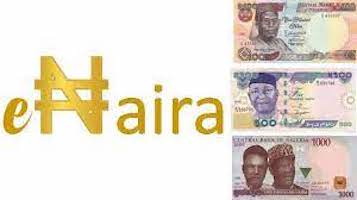
Thus, it was fitting to expand the e-payment landscape. That desire birthed the introduction and launch of Nigeria’s digital currency – eNaira, the first digital currency in the continent. The introduction was to cut down the emerging influence of cybernetic cryptocurrencies, gaining traction internationally, and in Nigeria.
The emerging trend was considered not only inimical to the financial system but its stability. eNaira, the digital currency of the Naira banknotes is not to obliterate the usage or acceptance of the physical Naira banknotes, but to complement it.
A digital currency that provides a unique form of money denominated in Naira. eNaira is to serve as both a medium of exchange and a store of value, offering better payment prospects in retail transactions when compared to cash payments. eNaira has an exclusive operational structure that is both remarkable, and nothing like other forms of central bank money.
It will foster economic growth by providing easy access to capital and financial services with potential to increase economic activities at low or probably at no interest transaction.
Nigeria’s eNaira is also secure and cheaper for swift diaspora remittances, traceable, and with capacity to check illicit and fraudulent transactions. The CBN eNaira has the capacity to galvanize both local and international economic activities by making transactions not only cheap, safe, and quickc, but better. It has impenetrable security features that cannot be compromised.
And for the government, and other revenue generating agencies, even tertiary institutions, eNaira offers a veritable platform for collection of revenues and school fees, thereby reducing cash handling and incidences of theft and corruption.
Recently, the Central Bank of Nigeria embarked on another phase of its sensitization campaign to tertiary institutions nationwide, organized CBN Sensitization Fairs in Bauchi and Gombe States, and attended the Chambers of Trade and Commerce organized Trade Fairs in Kaduna and Enugu to step up its sensitization and enlightenment of Nigerians on eNaira.
The sensitization had also been held in markets and motor parks in Abuja, Lagos and some major cities in the country.
The Bank has thus offered a veritable platform for the government to conduct all its transactions through the platform, and its banker, if it is committed to shoring up its revenue and fighting corruption. It will help the government in its efforts to block all revenue leakages.
Even the private sector stakeholders are leveraging the platform to feather their businesses.
With the successes thus far recorded by Nigeria in the eNaira project, it was therefore not a surprise seeing some countries in the continent turning Nigeria into a pilgrimage to understudy the Central Bank of Nigeria for its adoption and operation in their various sovereignties.
Ademola Oyetunji writes from Ibadan.
The Court on Friday ruled in the Bank’s favour on all issues and granted all its prayers.
United Bank for Africa (UBA) Plc has secured a significant legal victory in its debt recovery proceedings against Stallion Group, following a court judgment which upheld the Bank’s position on all issues submitted for determination.
In a sweeping decision, delivered by by Justice Daniel Osiagor of the Federal High Court sitting in Ikoyi, Lagos on Friday, the Court granted all the reliefs sought by UBA, affirming the validity of the appointment of a Receiver/Manager, the enforceability of the mortgage security and the liability of the guarantors.
The Court observed that the Defendants did not dispute the existence of their indebtedness to the Bank but challenged the amount claimed. It further held that the reconciliation of accounts between the parties did not extinguish or negate the underlying indebtedness.
In a major affirmation of UBA’s enforcement rights, the Court upheld the appointment of the Receiver/Manager and confirmed his entitlement to take possession of the mortgaged property and seek appropriate protective orders.
The Court also dismissed objections raised by the 12th Defendant, holding that it had failed to establish any proprietary rights over the mortgaged property. Consequently, its consent was not required for the creation of the mortgage, and its objections were rejected.
Significantly, the Court restrained the Defendants from diverting receivables due to them from government agencies, thereby reinforcing the Bank’s ability to protect its recovery interests.
The judgment also affirmed the liability of the guarantors, strengthening UBA’s legal position in pursuing recovery of the outstanding obligations.
The decision represents a comprehensive victory for UBA, with the Court resolving all issues in the Bank’s favour and granting all the reliefs sought.
The ruling is particularly significant for the enforcement of creditors’ rights in Nigeria, underscoring the legal validity of properly constituted security arrangements and the authority of duly appointed receivers to enforce creditors’ interests.
It also reinforces the principle that disputes over the precise amount of an outstanding debt do not, by themselves, invalidate the underlying indebtedness or prevent creditors from exercising their lawful recovery rights.
The judgment marks a major milestone in UBA’s efforts to recover its exposure to Stallion Group and safeguard the interests of the Bank and its stakeholders.

By Tony Obiechina, Abuja
The Budget Office of the Federation has reaffirmed the integrity of Nigeria’s newly enacted Tax Reform Acts, cautioning against what it described as governance by speculation and unverified claims following allegations of post-passage alterations.
In a statement on Wednesday, the Budget Office said it had taken note of concerns raised by the Minority Caucus of the House of Representatives, stressing that the sanctity of the law is central to constitutional democracy and not a mere procedural formality.
According to the Office, any suggestion that a law could be altered after debate, passage, authentication, and presidential assent without due process would strike at the core of the Republic and undermine citizens’ right to be governed by transparent and stable laws.
However, it warned that democratic integrity is also endangered by the careless amplification of unverified claims. “A nation cannot be governed by insinuation or sustained on circulating documents of uncertain origin,” the statement noted, adding that public confidence, once shaken by speculation, is often difficult to restore.
The Budget Office emphasized that both government and citizens share a common interest in truth, clarity, and due process, noting that public finance depends heavily on trust in the legality and clarity of fiscal laws. It welcomed the decision of the National Assembly to investigate the allegations, describing institutional inquiry, not conjecture as the appropriate response to claims of illegality.
On public access to the law, the Office agreed that Nigerians and the business community are entitled to clear and authoritative texts of all laws they are required to obey. It clarified, however, that the authenticity of legislation is determined by certified legislative records and official publication processes, not by informal or viral reproductions.
The statement also underscored the importance of separation of powers, warning that claims suggesting Nigeria is being governed by “fake laws,” if not backed by established facts, risk eroding confidence in democratic institutions.
At the same time, it stressed that legislative scrutiny should not be dismissed by the executive, noting that oversight is a constitutional duty, not an act of hostility.
From a fiscal perspective, the Budget Office said legal certainty is essential for revenue projections, macroeconomic stability, budget credibility, and investor confidence. While it is not the custodian of legislative records, it maintained that uncertainty around operative tax provisions directly affects economic planning.
To restore confidence, the Office proposed a set of measures, including the publication of verified reference texts in a single public repository, orderly access to Certified True Copies for stakeholders, clear public explanations where discrepancies are alleged, and strict alignment of all implementing regulations with authenticated legal texts.
Addressing calls for suspension of the tax reforms, the Budget Office cautioned against allowing prudence to slide into paralysis. It argued that properly implemented tax reform is necessary to reduce dependence on borrowing and inflationary financing, while easing indirect burdens on vulnerable citizens.
“Where clarification is required, it must be provided; where correction is required, it must be effected; where investigation is required, it must proceed,” the statement said, adding that governance and reform should not be stalled by unresolved conjecture.
The Office concluded by describing taxation as a democratic covenant that binds citizens and the state, insisting that compliance depends on transparency and trust. It called on political actors to protect institutions as much as positions, urging citizens and businesses to rely on verified sources and resist the spread of unauthenticated information.
The statement was signed by Tanimu Yakubu, Director-General of the Budget Office of the Federation, who reaffirmed the agency’s commitment to fiscal transparency, institutional integrity, and reforms that advance national prosperity while safeguarding citizens’ rights.
By Jennifer Enuma, Abuja
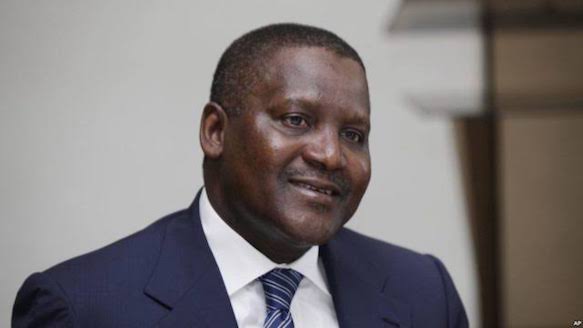
President Bola Tinubu has congratulated Alhaji Aliko Dangote, the President of Dangote Group, on his appointment to the World Bank’s Private Sector Investment Lab, a body tasked with promoting investment and job creation in emerging economies.
In a statement by Special Adviser on Media and Publicity, Bayo Onanauga, the President described the appointment as apt, given Dangote’s rich private sector experience, strategic investments, and many employment opportunities created through his Dangote Group.
The Dangote Group became one of Africa’s leading conglomerates through innovation and continuous investment.
Dangote Group’s business interests span cement, fertiliser, salt, sugar, oil, and gas. However, the $20 billion Dangote Petroleum Refinery and Petrochemicals remains Africa’s most daring project and most significant single private investment.
“President Tinubu urges Dangote to bring to bear on the World Bank appointment his transformative ideas and initiatives to impact the emerging markets across the world fully” the statement said.

The World Bank announced Dangote’s appointment on Wednesday, as part of a broader expansion of its Private Sector Investment Lab. The lab now enters a new phase aimed at scaling up solutions to attract private capital and create jobs in the developing world.
The CEO of Bayer AG, Bill Anderson, the Chair of Bharti Enterprises, Sunil Bharti Mittal, and the President and CEO of Hyatt Hotels Corporation, Mark Hoplamazian, are on the Private Sector Investment Lab with Dangote.
The World Bank said the expanded membership brings together business leaders with proven track records in generating employment in developing economies, supporting the Bank’s focus on job creation as a central pillar of global development.




Attempted Suicide in Nigeria: Legislative Reform, Economic Hardship and the Right to Human Dignity
ShareBy Oluwaleye Adedoyin Grace Should a person who survives a suicide attempt be punished or helped? This question challenges Nigeria’s...

UBA Scores Legal Victory in N156bn Stallion Debt Case
ShareBy Tambaya Julius, Abuja United Bank for Africa (UBA) Plc has secured a favourable judgment in its N156 billion debt...

Nigeria Customs, Afreximbank Push Regional Border Modernisation
ShareBy Tambaya Julius, Abuja The Nigeria Customs Service (NCS) and the Customs administrations of Benin and Cameroon are working with...

NCDMB Heritage Energy Train 48 Nigerians in Subsea Engineering
ShareFrom Mike Tayese, Yenagoa The Nigerian Content Development and Monitoring Board (NCDMB), in partnership with Heritage Energy Operational Services Limited...

CAN: Tinubu Tasks Christians for Greater Unity
ShareBy Laide Akinboade, Abuja The first lady Senator Oluremi Tinubu, at the weekend urged all Nigerian Christians to ensure they...
Maka Oganiru Begins Operations, Pledges Africa’s Investment-ready Projects
ShareBy Tony Obiechina, Abuja New Africa-focused advisory firm aims to connect high-potential opportunities with global capital, institutional investors and strategic...

FG Tadks Varsities on Specialised Health Degree Programmes
ShareBy Tambaya Julius, Abuja The Federal Government has urged vice-chancellors of Nigerian universities to introduce degree programmes that address critical...

Presidency, Makinde Clash Over Alleged ₦250bn NLNG Fund for States
ShareBy Tambaya Julius, Abuja The Presidency has dismissed claims by Oyo State Governor Seyi Makinde that the Federal Government is...


UBA Wins N156bn Debt Recovery Case Against Stallion Group
ShareThe Court on Friday ruled in the Bank’s favour on all issues and granted all its prayers. United Bank for...


Senator Abba Moro: It is Time to Go Home
ShareBy Cleopas Agada For seven years in the National Assembly, what has Benue South actually felt? For a man who...