
NEWS
As Nigerian Youths Rise against Tobacco Abuse

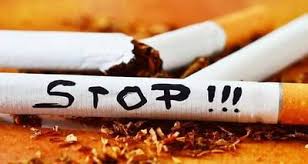
By Abiemwense Moru
By happenstance, 16-year-old Blessing Obiabo found herself on the frontline of a national movement.
Obiabo, a student of Lyngra Private Montessori School in Karu, Nasarawa State, found her voice the day Cedars Refuge Foundation (CRF) brought its anti-tobacco campaign to her school.
“We are not fools; this is our future, and we are taking it back,” she said.
Obiabo’s declaration mirrors a growing wave of youth-led resistance sweeping across Nigeria, fueled by the CRF’s Students Congress Against Tobacco (SCAT) initiative.
The programme, inaugurated under the banner of a “Tobacco-free Revolution,” is a response to what CRF describes as a calculated and aggressive invasion by the tobacco industry into the lives of young Nigerians.
The Executive Director of CRF, Mr Peter Unekwu-Ojo, minced no words at the campaign inauguration in Karu.
“The tobacco industry is a well-dressed cartel selling flavoured slavery.
“They are not selling lifestyle; they are selling addiction, bubble-wrapped in mango flourish and influencer smiles.”
According to Unekwu-Ojo, the tactics of the tobacco industry have become more deceptive than ever.
“Gone are the days of plain cigarettes; in their place are brightly-packaged e-cigarettes, vapes, and other nicotine products, flavoured, flashy, and dangerously appealing to teenagers.
“It is the same poison, just packaged in sleek tech and tropical flavours.
“These flavoured products, often promoted through digital marketing and pop culture influencers, create the illusion of harmless fun, masking the reality of addiction and long-term health consequences.”
The SCAT programme, now active in several schools across Nasarawa and Abuja, was created to expose and counter these tactics.
It promotes in-school advocacy, peer-led clubs, creative campaigns, and dialogues with teachers, parents, and community leaders.
Unekwu-Ojo emphasised the call for urgent reforms, including a nationwide ban on flavoured tobacco and nicotine products, higher tobacco taxes, strict penalties for marketing to minors, and the enforcement of school-based prevention programmes.
“If we do not protect the future in classrooms, we will be fighting addiction in clinics,” he warned.
Mr Abba Owoicho, CRF’s Programme/Operations Officer, weighed in.
“We are witnessing a silent epidemic thriving on ignorance and regulatory loopholes.
“SCAT is not just a campaign; it is a counter-offensive,” he said.
At the school level, educators are stepping up.
Mrs Blessing Onu, Head Teacher at Lyngra, welcomed the initiative.
“Our students will not be left defenceless in the face of such a manipulative industry,” she said, announcing the establishment of a Tobacco-Free Club in the school.
Mr Pius Nnaemeka, a senior teacher, appealed directly to national authorities.
“If we continue to play soft while our children inhale poison, history will not forgive us.
“The government must outlaw flavoured tobacco, fund preventive education, and support civil society groups championing this cause,” he said.
These school-based actions are mirrored across other institutions.
At Klinnicaps Academy in Koroduma, another CRF outreach event themed “Exposing Lies, Protecting Lives” engaged students in interactive sessions that peeled back the façade of flavoured products.
Unekwu-Ojo told the students that the industries were setting young people up against their future.
“They sandwich their products with glamorous colourful packaging and high-profile adverts, hiding the dangerous consequences of addiction.”
He described the educational sessions as a wake-up call.
“Tobacco use is not a fashion statement; it is a death sentence disguised in shiny colours,” he said.
Mr John Egla, Executive Director of Development Initiatives for Societal Health, reinforced the message: “There is no safe level of smoking.”
He cited global statistics from the 2018 Tobacco Atlas, noting that more than 942 million men and 175 million women worldwide smoke, with rising usage among African youth.
In response, CRF is establishing Tobacco-Free Clubs in at least 10 more schools in Nasarawa State, equipping students with peer leadership and advocacy tools.
The message is resonating beyond classrooms.
In Katsina State, the Commissioner for Health, Alhaji Musa Adamu-Funtua, recently stressed the importance of school-based campaigns.
Speaking during World Tobacco Day celebrations, he warned that a society that allowed the exploitation of its youth by profit-driven tobacco companies is a society at risk.
Adamu-Funtua urged joint efforts among government agencies, civil society, parents and youths.
“Let us choose health over harm, strength over addiction,” he said.
The Civil Society Legislative Advocacy Centre (CISLAC) has also thrown its weight behind tobacco control.
At a recent workshop in Bauchi, its Senior Programme Officer, Mr Solomon Adoga, highlighted tobacco’s role in multiple cancers and reproductive health challenges.
“Tobacco significantly contributes to Nigeria’s cancer burden,” he said.
CISLAC’s Executive Director, Auwal Rafsanjani, called for urgent policy reforms, stronger laws, and intensified awareness campaigns to stem tobacco-related deaths.
Beyond the halls of policy and classrooms, the anti-tobacco wave is being carried by mothers.
In Ilorin, Kwara, a march led by Bundies Care Support Initiative and other groups amplified maternal voices demanding action.
Mrs Funmilayo Osiegbu, Executive Director of the initiative, sounded a note of warning.
“We cannot stand by while our children are exposed to harmful tobacco products.
“We are urging the government to enact policies that shield young people.”
Inspired by international campaigns such as Tobacco-Free Jordan, the Kwara mothers demanded full implementation of Nigeria’s National Tobacco Control Act.
“This includes stricter enforcement of bans on advertising and sponsorship, and stronger measures to prevent youth access,” she said.
Kwara’s Commissioner for Women Affairs, Mrs Afolashade Opeyemi, reaffirmed government’s support.
“The administration has zero tolerance for smoking any substance,” she said.
Also, health experts lend their support.
Prof. Abiodun Afolayan, Chair of the Nigeria Cancer Society in Kwara, warned that lung cancer had become the most common cancer worldwide, driven largely by smoking.
“Often, the damage only appears when it is too late,” he said.
Mr Lekan Mikail, Special Adviser on Drug Abuse to the Kwara Governor, urged parents to stay vigilant.
“We must protect our children from this slow and silent killer,” he said.
As the SCAT initiative prepares to expand to 30 schools by 2025, it is clear that a national youth-driven movement is taking root.
From Obiabo’s defiance to policymakers’ endorsements, Nigeria is witnessing a shift in its tobacco control landscape.
But for CRF’s Unekwu-Ojo, the work is far from over.
“Every child deserves a future free from the industry’s traps, flavoured nicotine, flashy adverts, and peer-induced pressure,” he said.
His words echo in classrooms, streets, and government chambers across the country; the call is no longer just to awareness, but to action.
Mrs Precious Ojiaku, Dean of Studies at Klinnicaps Academy, said tobacco had no place in the future of Nigerian youth.
“Living a morally grounded life and rejecting these traps is the strongest resistance we can teach,” she said.
With the ongoing concerted efforts, stakeholders believe the threat posed by tobacco can be contained.(NAN)
 | ReplyReply allForwardAdd reaction |

By Tambaya Julius, Abuja
The Nigeria Customs Service (NCS), in collaboration with the World Customs Organisation (WCO) and the United Kingdom International Development, has intensified efforts to strengthen its internal anti-corruption framework through a workshop on corruption risk analysis, risk mapping and the development of Standard Operating Procedures (SOPs).
The workshop, which focused on identifying vulnerabilities within key Customs processes and developing practical measures to address them, ended on Friday, August 21, 2026, at the NCS Headquarters in Maitama, Abuja.
The Comptroller General of Customs (CGC), Adewale Adeniyi, described the WCO-supported exercise as an important step towards strengthening institutional integrity, growth and corruption risk management within the Service.
Adeniyi explained that the exercise was not about finding fault or apportioning blame, but about allowing the Service to examine its operations, identify areas of vulnerability and develop sustainable solutions.
He said the assessment covered critical areas of Customs operations, including regulatory and administrative procedures, clearance processes, inspection and examination, enforcement and compliance, procurement, and human resource management.
“The purpose of what we have therefore been doing with our partners was to identify such areas of vulnerabilities, assess the associated risk and develop practical measures to mitigate them,” the CGC said.
The Customs helmsman reaffirmed the Service’s commitment to measures that promote transparency, accountability and stronger internal controls, while simplifying processes and expanding the use of technology to reduce unnecessary discretion.
According to him, improving transparency and predictability in Customs operations would not only strengthen accountability but also facilitate legitimate trade and improve public confidence in the Service.
“A customs administration that is transparent, that is predictable and accountable, is better positioned to facilitate legitimate trade, improve compliance, and enhance public confidence,” Adeniyi noted.
Also speaking, the WCO Lead Technical Expert for the Accelerate Trade Facilitation Programme, Arman Zhalitov, commended the CGC for his continued support for the initiative.
Zhalitov urged members of the working group to ensure that the outcomes of the workshop receive the necessary endorsement and are translated into concrete actions.
He said the exercise produced a comprehensive action plan outlining clear steps to advance trade facilitation and strengthen the anti-corruption agenda of the Nigeria Customs Service.
He further encouraged the working group to sustain the momentum by ensuring that the recommendations generated during the exercise lead to practical and lasting institutional reforms.
The WCO Programme Manager for the Accelerate Trade Facilitation Programme, David Tanenbaum, also highlighted progress recorded through the partnership in areas including the Authorised Economic Operator (AEO) programme, post-clearance audit and the Time Release Study.
Tanenbaum stressed that integrity should not be viewed as an isolated issue, but must form part of broader Customs reforms and operational improvements.
He said the progress recorded so far demonstrated that the partnership was producing tangible institutional and operational results.
“Our work continues to bring us closer to a systematic, preventive approach to identifying and managing corruption risks within customs operations,” Tanenbaum said.
The workshop is part of broader efforts by the NCS and its development partners to strengthen preventive approaches to corruption, improve risk-based management and enhance the efficiency and predictability of Customs operations.
The proposed risk-mitigation measures and SOPs are expected to provide officers with clearer operational guidelines while reducing vulnerabilities across critical Customs processes.
The initiative also reinforces the Service’s emphasis on technology, process simplification and stronger internal controls as key tools for reducing opportunities for corruption and improving service delivery.
From Mike Tayese, Yenagoa
The Bayelsa State Government has received the final draft copy of the constitution of Twon-Brass Kingdom just as it warned antagonizing factions in Otakeme Community in Ogbia council area to sink their differences and work for the collective good of their community.
Receiving the Twon-Brass Draft Constitution in Government House, Yenagoa, at the weekend, the Deputy Governor, Dr.
Peter Akpe, commended the Chairman and members of the Constitution Drafting Committee and other critical stakeholders for doing what he described as a great job in turning in the document in record time.Dr. Akpe stressed the need for the draft constitution to be ratified at a properly constituted congress comprising critical stakeholders from the five communities that make up the kingdom.
Consequently, he announced the constitution of a five-man ratification committee led by the Chairman, House Committee on Education and Member representing Brass Constituency 1 at the state House of Assembly, Dr Charles Daniel, to oversee the process.
He charged the constitution drafting committee to liaise with other stakeholders in Twon-Brass to produce not less than 300 copies of the draft constitution and make it available for people to study and make their final inputs before its formal adoption by the general assembly.
The committee, which has eight weeks to complete its assignment, has Chief Victor Sam-Ateki, Chief Doigha Eweli, Chief Joseph Laderi and Chief Golden Sintei as members
The Chairman of the Twon-Brass Constitution Drafting Committee, His Highness Kune Igoni-Claudius, explained the procedural steps taken and the wide consultations made to come up with the draft constitution, which he described as comprehensive enough to guide the administration of the Kingdom.
Chief Igoni-Claudius, who acknowledged the support and encouragement of the various paramount rulers, thanked the state government for the privilege to serve the people of Twon-Brass Kingdom.
In a related development, Dr. Akpe has called on the people of Otakeme community in Ogbia Local Government Area of the state to cooperate with the Ogbia Traditional Rulers Council to resolve the protracted leadership tussle over the Obanema stool of the community.
Dr. Akpe made the call at an enlarged meeting held in Government House, Yenagoa, with chiefs and leaders of Otakeme, top government functionaries, the Obanobhan of Ogbia Kingdom, King Dimaro Charles-Owaba, and his Emeyal counterpart, King Wapebiama David-Amakiri.
The deputy governor reiterated the present administration’s commitment to peace and stability across the state, and appealed to the warring factions to place the unity, peace and development of their community above personal interests.
He recalled that in a bid to resolve the lingering chieftaincy crisis, his predecessor, the late Senator Lawrence Ewhrudjakpo, had set up a committee on the matter, noting, however, that little or nothing had been achieved so far because of the uncompromising attitude of the feuding parties.
While thanking the Ogbia Council of Traditional Rulers for showing concern and their decision to constitute a committee to resolve the protracted conflict, Dr. Akpe gave the council two months to carry out their reconciliatory assignment and revert to government
Speaking on behalf of the Ogbia traditional rulers, the Obanobhan of Ogbia Kingdom, His Eminence King Dimaro Charles-Owaba, commended the state government for its efforts towards bringing lasting peace to the community.
King Charles-Owaba, however, pleaded with the people of Otakeme to give peace a chance and cooperate with the traditional rulers to resolve the matter traditionally in the best interest of the community and the larger Ogbia Kingdom.
A statement by the Senior Special Assistant on Media to the Deputy Governor, Doubara Atasi, noted that all the factions represented at the meeting expressed acceptance and strong commitment to working with the Ogbia Council of Traditional Rulers to resolve the crisis.
The Special Adviser on Security Matters to Sokoto State Governor Ahmed Aliyu, Col. Ahmed Usman (retd.), has called on political leaders and other stakeholders to put aside partisan differences and unite in the fight against banditry in the state.
Usman made the call on Sunday in a statement while reacting to recent comments by some opposition politicians on the security situation in Sokoto State, stressing that insecurity should not be politicised.
He said bandits did not belong to any political party and did not discriminate between members of the All Progressives Congress, Peoples Democratic Party, or other political groups when carrying out attacks.
“Bandits have no political party. They do not ask whether their victims are APC, PDP or members of any other party before attacking them. Their victims are ordinary citizens.
“That is why the fight against insecurity must be treated as a collective responsibility. The consequences of insecurity affect everyone, regardless of political affiliation,” he said.
Usman acknowledged the right of opposition politicians to express their views but urged them to ensure that their interventions contributed positively to efforts to protect lives and restore peace.
He particularly commended former Sokoto State Governor and Senator representing Sokoto North, Senator Aliyu Wamakko, for what he described as his continued support for victims of banditry and efforts to engage individuals and institutions capable of contributing to the fight against insecurity.
“Senator Aliyu Wamakko has demonstrated that there is a better way to contribute to the fight against insecurity. He has not only supported victims and communities affected by banditry, but has also been reaching out to those who matter, seeking their commitment and support towards finding lasting solutions to the security challenges facing the state.
“We appreciate politicians who have demonstrated genuine commitment to addressing insecurity, irrespective of political affiliation. Their support is important because no single government or institution can defeat banditry alone. We encourage others to emulate such efforts and contribute positively to the search for lasting solutions”, Usman said.
The Special Adviser urged political leaders, traditional rulers, religious leaders and members of the public to work closely with the government and security agencies.
“Those who have useful ideas or suggestions should bring them forward constructively, while those with the capacity to support security efforts should do so.
“At this moment, what matters most is the protection of lives and property and the restoration of peace across the state,” he said.
He also appealed to residents to provide security agencies with credible and timely information and avoid statements or actions capable of undermining ongoing operations.
He assured that the Sokoto State Government remained committed to strengthening security and collaborating with relevant stakeholders to ensure that residents could live, farm and conduct their businesses without fear.




NCS, WCO, UK Intensify Anti-Corruption Drive, Strengthen Customs Integrity
Share By Tambaya Julius, Abuja The Nigeria Customs Service (NCS), in collaboration with the World Customs Organisation (WCO) and the...
Bayelsa Receives Twon-Brass Draft Constitution
ShareFrom Mike Tayese, Yenagoa The Bayelsa State Government has received the final draft copy of the constitution of Twon-Brass Kingdom...
Nigeria’s Reforms Must Now Deliver Jobs, Higher Incomes – CPPE
ShareCentre for the Promotion of Private Enterprise (CPPE) has urged the Federal Government to shift its economic reform focus from...
NICA Seeks N2trn Credit Guarantee Fund to Unlock Nigeria’s Economy
ShareThe National Institute of Credit Administration (NICA) has called for the immediate capitalisation of the Nigerian Credit Guarantee Company (NCGC)...
Aiyedatiwa Won’t Support Candidate against APC – Aide
ShareSteve Otaloro, the Senior Special Assistant (SSA) on Public Engagement to Gov. Lucky Aiyedatiwa of Ondo State, has dismissed rumours...

2027: NDC Affirms Sule-Garo as Kano North Senatorial Candidate
ShareThe Nigeria Democratic Congress (NDC) has affirmed Nasiru Sule-Garo as its senatorial candidate for Kano North Senatorial District in the...
Insecurity: Sokoto Gov’s Aide Urges Unity against Banditry
ShareThe Special Adviser on Security Matters to Sokoto State Governor Ahmed Aliyu, Col. Ahmed Usman (retd.), has called on political...
Lagos Community Seeks Intervention over Lingering Refuse
ShareSome residents and shop owners in Orile, Iganmu, Lagos, have appealed for urgent intervention over persistent refuse accumulation. They said...
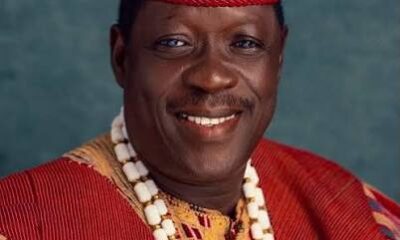

Nollywood Actor, Taiwo Hassan ‘Ogogo’ Dies
SharePopular Nollywood actor, Taiwo Hassan, better known as Ogogo, is dead. The news of the actor’s death was confirmed by...


FRSC Evacuates 15 to Hospital in Kano-Zaria Road Crash
ShareThe Federal Road Safety Corps (FRSC), Kano Sector Command, has rescued 15 persons following a lone road traffic crash involving...