
Agriculture
As the New Agric Minister Assumes Duty


By Joseph Chibueze
Exactly nine days after he was appointed Minister of Agriculture and
Rural Development, Dr. Mohammad Mahmood Abubakar has finally taken
charge of the ministry.
His appointment, which is actually a redeployment from the Ministry of
Environment where he served as a minister, came sequel to the sack of
the erstwhile minister of agriculture, Alhaji Sabo Nanono.
His mission is clear, Nanono was sacked for underperformance. He is
therefore in the ministry on a salvage mission. Fortunately, he
appears to be very much aware of that.
In his speech during the handover yesterday in Abuja, Abubakar, who
exhumes an air of enthusiasm and clear mindedness, spelt out his
priority areas in the ministry.
In his words, “The priority of this ministry under my leadership will
be to ensure that we provide necessary policy direction and drive that
will truly position agriculture as the mainstay of our economy as
captured in the medium term national development plan and Mr
President’s vision of uplifting 100 million Nigerians out of poverty
in 10 years.
“In this regard, the National Livestock Transformation Plan (NLTP)
would be given a priority due to its implication not just on food
security and nutrition, but its overall impact in curbing insecurity
in the country.”
He also promised to promote synergy among the agencies and departments
of the ministry while giving research and extension services the
needed support to ensure that their services are translated into
concrete deliverables in the agric and livestock value chain.
“Our agencies must collaborate and work with relevant stakeholders in
achieving our mandate,” he said.
This was one thing that was lacking under the leadership of Nanono
who in his remarks at the ceremony confessed that he had never met
most of the directors in the ministry directly.
The present administration places high premium on agriculture because
it is central to the attainment of its economic diversification and
employment generation agenda.
In the past two years under Nanono, Nigeria’s agricultural sector has
moved from bad to worse. Of course one is aware of the impact of the
outbreak of COVID-19, but the former minister seemed to have no clue
as to what his job was at the ministry.
Farmers and other critical stakeholders, who have, at various times,
expressed concerns over his display of “gross incompetence” in
handling issues of national importance as they relate to agriculture,
said the ministry never had it so bad. They accused the minister of
working at cross purposes, making it impossible for the ministry to
fulfill its mandate of being the poster agency of government in its
quest for economic diversification, with emphasis on job creation and
food security.
While the nation is touting attainment of self-sufficiency in food
production, especially rice, the nation’s food import is on the rise.
Recent statistics published by the National Bureau of Statistics (NBS)
show that the total value of Nigeria’s agricultural imports during the
first three months of 2021 added up to N503 billion ($1.21 billion).
To show how heavily dependent Nigeria still is on the import of
agricultural commodities, the figures show that the total trade in
agriculture was N757.4bn in the first quarter of the year. However,
exports only totalled N127.2bn, while the total value of imports stood
at N630.2bn during the period under review.
It is also on record that the bulk of the agricultural inputs provided
by government as intervention to farmers, never got to the real
farmers as confirmed by the National President of All Farmers
Association of Nigeria (AFAN) Arc Kabir Ibrahim who accused the former
minister of sidelining key stakeholders in agriculture.
“Chief among the reasons why the former minister failed was because
there is disconnect between all the actors,” said Kabir. “The former
minister sidelined all the stakeholders and was virtually working
alone. That is what the new minister must avoid. For us to make any
head way, the stakeholders must be involved in all the policy
formulation processes. The small holder farmer you think is not
important must be involved.
“The current administration has taken very far reaching initiatives to
make agriculture work in Nigeria, and it must be commended, but the
obvious threat factor to the attainment of food sufficiency, include
probity, competence and knowing what to do in the management of the
entire food system, and this calls for reinvigorating it by appointing
capable and competent hands with integrity. I am glad, the President
has taken the decision to sack the former minister.
“The new minister must adopt a business attitude towards agriculture,
which is key to the economy in terms of food and raw materials for
agro-allied industries, revisit agricultural initiatives of the
Goodluck Jonathan administration and adopt working policies without
political, ethnic or religious biases, facilitate dry season farming,
as well as encourage agricultural research institutes to come up with
technologies that would increase farmers’ productivity.”
The minister must work closely with development agencies like the
African Development Bank (AfDB) especially as they work to develop
Special Agro- processing Zones (SAPZ), an integrated agro-industrial
ecosystem comprising production, processing and marketing.
Special Adviser on Industrialisation, Office of the President, AfDB
Group, Professor Banji Oyelaran-Oyeyinka at the recent Feed Nigeria
Summit, said the SAPZ is a special solution for rural transformation
and sustainable urbanisation.
According to him, “The difference between countries that have
succeeded and those that have failed is that those that have succeeded
have diversified their economies, they have added value to their
produce. Nobody survives simply by exporting raw materials.”
Oyeyinka further stated that there is a need to move away from being
an agrarian society, stressing that there is no pride in saying that
80 per cent are employed in agriculture.
“There are countries where only two per cent of the citizens are
employed in agriculture, and still export billions of food to other
countries,” he said.
The new minister must also according to Dr Muda Yusuf, an economist
and private sector advocate, focus on bringing down the prohibitive
cost of farm inputs such as agrochemicals, farm machinery and
equipment.
He also called for more emphasis on irrigation farming which he said
will guarantee the farmers all year round farming.
“Most of the interventions in agriculture in this country are
monetary, but the challenge of agriculture is beyond the intervention
funds,” Yusuf said. “Insecurity is now a major problem for farmers
across the country. Although, the problem is more severe in the
northern part of the country.
“There are also issues of power supply for storage and agro
processing, transportation costs of food items etc. There are also
concerns around issues of desertification and climate change. These
are areas the government should focus on if we truly want to achieve
food security.”




Some residents in Lagos State have expressed concern over the recent surge in the price of tomatoes, forcing many households to adopt alternatives.
The residents made their views known in separate interviews on Wednesday in Lagos.
A market survey showed that a 50kg basket of tomatoes now sells between N115,000 and N125,000, compared to between N35,000 and N40,000 recorded last month.
Olachi Igwe, a resident of Ago Palace, said the scarcity and high cost of tomatoes had disrupted her household’s meal plans.
“I contacted my usual vendor, but she said tomatoes were scarce and difficult to source.
“A small bowl we used to buy for between N3,500 and N4,000 now sells for as high as N6,000 to N7,000, when available.
“For now, my family will resort to palm nut stew (ofe akwu) until prices stabilise,” she said.
Another resident, Mercy Okeleye of FESTAC, said although her family prefers fresh tomatoes, rising prices have forced her to consider cheaper options.
“I cannot do without fresh tomatoes because of the taste, but I may have to buy broken ones, popularly called ‘esha’, which are relatively cheaper.
“I do not consider tomato paste a suitable substitute because it is not purely made from tomatoes,” she said.
Also speaking, Tope Babalola from Dopemu, said she might adjust her cooking methods if prices remain high.
“I have not bought tomatoes in over a month, but if the price is still high, I will use more onions and peppers.
“I will not resort to artificial additives; I prefer natural ingredients for my meals,” she said.
Joan Ogugua, another resident, said she had already switched to tomato paste to cope with the situation.
“I asked my son to buy tomato paste for our meals. I cannot justify spending excessively on fresh tomatoes when other basic needs must be met,” she said.
Also, Oge Ugwu, a civil servant at Lekki, said she would resort to cucumber stew with the recent price hike.
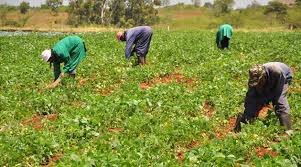
The Tomatoes Growers and Processors Association of Nigeria (TOPAN) has predicted a steady increase in the price of the produce between May and June 2026.
The Kaduna State Chairman TOPAN, Rabiu Zuntu, disclosed this in an interview recently in Lagos.
Zuntu noted that although there is no particular time for tomatoes planting season up north, seasonal weather variations can affect the production of the produce.
“Although we can plant tomatoes all-year-round, we cannot assure quality harvest all-year-round.
“Some farmers are harvesting now, while others are transplanting, and others are harvesting.
“Tomatoes are still available for sale but the price of the produce is gradually on the increase.
“Come May/June, the prices of tomatoes will be very expensive, so now is a good time to stock up the produce. There’s always a scarcity within that period.
“This is because of the nature of the weather in the north around that period, the weather is usually very hot and tomatoes cannot resist such hot temperature,” he said.
Zuntu said the price of tomatoes have started rising up in the north.
“A 50kg rafia basket of tomatoes sells from N20,000 as against N7,000 to N10,000 that was sold earlier in the year.
“While a crate of tomatoes up north is sold between N10,000 and N15,000 as against N5,000 to N6,500 sold earlier in the year.
“In most part of Kano State, where there is bumper harvest, they are rounding off their harvest. So, tomato is not that available there and most buyers have turned to where they can find it now, mostly within Kaduna State and some parts of Plateau State.
“So, that’s why the supply has decreased and the tomato supply and cost is determined by the law of demand and supply,” he said.
A 50kg basket of tomatoes in Lagos, at the moment, sells between N40,000 and N60,000 depending on the size and quality.
The Smallholder Women Farmers Organisation in Nigeria (SWOFON), Oyo State chapter, has said that the lack of irrigation facilities had become a major obstacle to dry season farming in the state.
The Chairperson of SWOFON in Oyo State, Atinuke Akinbade, said this in an interview in Ibadan on Monday.
Akinbade, who shared the experiences of women farmers in the state during the 2025 dry season, said that inadequate access to water for irrigation significantly affected the performance of many farmers during the period.
“It hindered many older farmers from participating in dry season farming and also prevented younger farmers from doing as much as they could in cultivating large acres of land,” she said.
Akinbade explained that farmers who managed to plant during the season struggled to access sufficient water to irrigate their farms, a situation worsened by the effects of climate change.
“Many farmers who depended on streams and wells to water their crops suffered major setbacks because those sources could not provide enough water for irrigation.
“Some farmers had to resort to buying water from commercial water tankers, which increased the cost of production, while at times it was even difficult to get water from the tankers,” she said.
The SWOFON chairperson warned that failure to address the problem could worsen food insecurity in the coming months.
“Even now, rainy season farming has not fully commenced because of the irregular rainfall pattern.
“This is a double burden, and if nothing is done, it may lead to serious hunger later,” she said.
Akinbade, however, acknowledged that the government had organised training for members of the association on home gardening.
She, however, said that little support was provided to address the challenges of dry season farming.
The chairman said that the home garden support package given to members consisted mainly of seedlings and one sprayer.
“They gave us two packs each of maize and pepper seeds, with six seeds in each pack, as well as one sprayer, so that we can grow food for household consumption,” she said.
Earlier, Oluwatoyin Oyedeji, SWOFON Coordinator in Oyo East, explained the severe hardship members of the organisation experienced in sourcing water for irrigation.
“Many farmers are already counting their losses because water was not available to irrigate their farms.
“Those who depended on streams and brooks were badly affected because many of them dried up, while the few that still had water had so little that farmers had to dig deeper into the ground in search of more,” Oyedeji said.
In the same vein, the Women Leader for farmers in Saki East, Musiliu Ashiru, said the absence of irrigation facilities also hampered dry season farming in her area.
According to her, many farmers still engaged in dry season farming have had to pay for water to keep their crops alive.
“Many of them buy water from the dam here to irrigate their crops. It has not been easy for them this year,” Ashiru said.




NAN Backs Insurance Sector’s Transformation Agenda, hails NAICOM
ShareBy Tony Obiechina, Abuja The National Association of Nigerian Students (NANS) National Secretariat, the umbrella body representing over 40.1 Million...


Don Calls for More Investment in Entrepreneurship/Innovation in Nigeria
ShareFrom Joseph Amedu, Lokoja A Professor of Entrepreneurship and Corporate Strategy at the Federal University, Lokoja, John Alabi has called...


Tinubu Submits NDDC 2026 Appropriation Bill
SharePresident Bola Tinubu has submitted the 2026 Statutory Budget Proposal of the Niger Delta Development Commission (NDDC) to the House...


Senate Passes Bill Extending 2025 Capital Budget Implementation to Dec 31
ShareThe Senate on Tuesday passed a bill extending the implementation of the capital component of the 2025 Appropriation Act from...
CANEX 2026 to Unlock Investment, Jobs in Nigeria’s Creative Economy — FG
ShareThe Federal Government said Nigeria’s hosting of the 2026 Creative Africa Nexus (CANEX) Weekend will attract investment, deepen market access...


NNPC Posts N7.2trn Profit amid Revenue Decline
ShareThe Nigerian National Petroleum Company Ltd. (NNPC Ltd.) recorded N7.2 trillion Profit After Tax (PAT) in 2025, a 33 per...

Wike Approves Contracts for Digitization of FCT High Courts
ShareThe Minister of the Federal Capital Territory (FCT), Nyesom Wike, has approved the award of contracts for the digitisation of...


OPay Names Top 10 Teams in N18m National Innovation Challenge
ShareIn a bid to empower young Nigerians with the skills, opportunities and support needed to build solutions for real-world challenges,...


CBN Sets Agenda for Post-Recapitalisation Banking
ShareBy Tony Obiechina, Abuja The Central Bank of Nigeria (CBN) said recent reforms in the foreign exchange market, monetary policy...

Gunmen Abduct 18 Women in Benue, 47 Niger Farmers
ShareFrom Attah Ede, Makurdi, and Dan Amasingha, Minna Fresh fears over the worsening insecurity across the country emerged on Tuesday...