
POLITICS
Atiku Demands Fresh Wage Hike, Pledges Action from Day One

By David Torough, Abuja
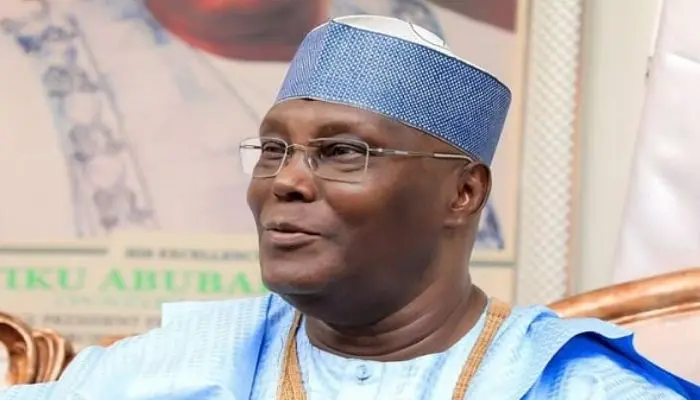
Former Vice President and presidential candidate of the African Democratic Congress (ADC), Atiku Abubakar, has urged President Bola Tinubu to raise the N70,000 national minimum wage, arguing that rising living costs have significantly eroded workers’ purchasing power.
Atiku, in a statement issued on Sunday by the Director of Strategic Communications of the ADC Presidential Campaign Council, Phrank Shaibu, said the current wage was no longer sufficient to cushion workers from soaring costs of petrol, food, transportation and housing.
He challenged the Federal Government to agree to what he described as a substantial wage increase that reflects prevailing economic realities.
The Federal Government increased the minimum wage from N30,000 to N70,000 in July 2024 following negotiations with organised labour. President Tinubu had said the new wage would be reviewed after three years.
But Atiku argued that the increase had failed to keep pace with inflation and rising prices.
“At N1,400 a litre, the entire N70,000 monthly minimum wage buys just 50 litres of petrol. What does the worker take home to feed the children? What pays the rent? What gets that worker back to work on Monday?” he asked.
He compared the purchasing power of the old and current wage, noting that N30,000 could buy about 118 litres of petrol when the national average price stood at N254.06 per litre in April 2023. At N1,400 per litre, he said, N70,000 would buy only about 50 litres.
“The payslip has grown, but the fuel it can buy has more than halved,” Atiku said, describing the situation as hardship disguised as a wage increase.
His comments come amid renewed concerns over petrol prices and the broader cost-of-living crisis. Petrol prices have risen sharply in recent years following the removal of the fuel subsidy, with prices varying across different parts of the country.
Atiku also criticised the subsidy removal, arguing that the policy was implemented without sufficient protection for working families.
He said the effect of higher petrol prices went beyond the filling station, as increased transportation and energy costs also raise the prices of food and other essential goods.
“Petrol does not stay at the pump. Its price follows the farmer to market, enters the baker’s oven and appears in the fare a parent pays to take a child to school,” he said.
The former vice president also compared Nigeria’s minimum wage with those of some other African oil-producing countries, while acknowledging that differences in wage structures, exchange rates and living costs must be taken into account.
Atiku urged the President to make his position on another wage increase clear, saying workers should not be subjected to prolonged negotiations without a definite outcome.
He promised that, if elected president in 2027, his administration would begin work on raising the minimum wage from its first day in office.
“I will begin the work of raising the wage floor from my first day in office,” he said.
Atiku also pledged measures aimed at reducing the cost of living, including support for domestic production, targeted social protection and interventions in the petroleum sector.
Under his proposed targeted production subsidy, petroleum products refined in Nigeria and sold to Nigerians would receive government support, subject to spending limits, public accounting and independent auditing.
“Government support must produce measurable relief at the pump,” he said.
He further called for measures to stabilise the prices of essential goods and energy, arguing that higher wages alone would not solve the pressures confronting households if the cost of living continued to rise.
The Tinubu administration has defended the N70,000 minimum wage, noting that it was agreed after consultations with organised labour and other stakeholders. The presidency had said the new wage was designed to provide immediate relief while providing for a review after three years.
Atiku, however, maintained that the key issue was the purchasing power of workers.
“Nigerians do not eat FAAC figures. A full treasury is no answer to an empty kitchen. The test of this government is whether the men and women who work all month can live on what they earn,” he said.
He added: “A living wage must buy a living. It is not a privilege; it is a basic right.”
“Tinubu has made life painfully expensive. I will make life affordable again,” Atiku said.
By David Torough, Abuja
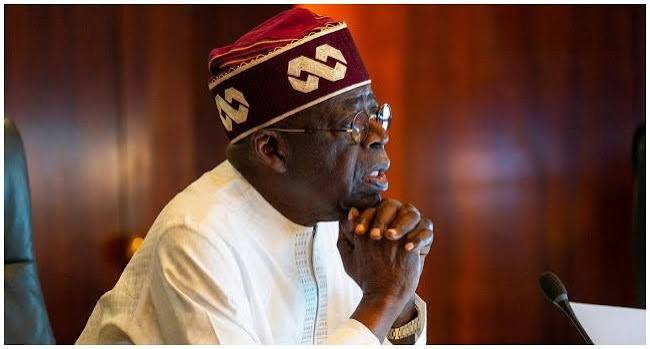
President Bola Tinubu and state governors have called on Nigerians to renew their commitment to peace, unity and nation-building as the country marks its 66th Independence Anniversary, while religious leaders urged citizens and public officials to embrace integrity, justice and responsible leadership.
Tinubu, who spoke through Senate President Godswill Akpabio at an interdenominational church service in Abuja on Sunday, pledged that his administration would work to leave behind a peaceful, united and prosperous Nigeria.
The service, themed “Anchored in Hope: The Path to Divine Stability and Shared Prosperity,” was based on Hebrews 6:19.
The President urged Nigerians to remain hopeful and committed to nation-building, saying the challenges facing the country could be overcome through collective responsibility, unity and responsible citizenship.
He also called for a peaceful and credible 2027 general election, urging citizens to assess candidates freely on the basis of their ideas, character and records of service.
Tinubu cautioned Nigerians against allowing political differences to destroy relationships and national cohesion.
“Let citizens make their choices freely, and let us remember throughout the campaign and after the votes are cast that our neighbour who supports another candidate remains our neighbour after the elections,” he said.
The President urged Nigerians to reject hatred and division, stressing that national interests should take precedence over partisan, ethnic and religious considerations.
He said the Federal Government’s reforms were targeted at addressing economic and social challenges, citing reported economic growth, student loans, infrastructure projects and increased investment, particularly in the gas sector.
Tinubu, however, said the ultimate measure of progress must be felt by ordinary Nigerians through improved living conditions, access to jobs, safe farming and a stable environment for businesses.
He urged all levels of government to pursue these objectives with urgency and ensure that public resources were deployed for the public good.
On the 2027 elections, the President called for prayers for peace, integrity and fairness before, during and after the polls. He also urged the National Assembly, electoral authorities, judiciary, security agencies and other institutions to play their roles in ensuring a credible electoral process.
He appealed to Nigerians to match their prayers with responsible conduct, saying the quest for peace and justice must be accompanied by rejection of hatred and dishonesty.
At the service, the guest preacher, Most Rev. Musa Panti Filibus, Archbishop of the Lutheran Church of Christ in Nigeria, said Nigeria’s 66 years of independence had been marked by promise, disappointment, sacrifice, loss and division, but maintained that the country still had reasons for hope.
Filibus said national stability went beyond the absence of conflict, arguing that it required justice, trust, responsible leadership and respect for human dignity. He also said shared prosperity should translate into families meeting their basic needs, children accessing education, young people developing their talents and communities flourishing.
The cleric challenged the Church to speak truth with courage and humility, stand for justice and human dignity, and remain united despite political, religious and other differences.
In Cross River State, Governor Bassey Otu called for renewed commitment to peace, unity and the collective task of building a better Nigeria.
Otu, whose message was delivered by the Speaker of the state House of Assembly, Elvert Ayambem, at an interdenominational thanksgiving service in Calabar, said Independence Day should serve not only as a commemoration of history but also as a reminder of citizens’ responsibilities to the nation.
He said Nigerians had demonstrated resilience, enterprise and faith despite the challenges experienced since independence.
The governor reaffirmed his administration’s commitment to improving the welfare of Cross Riverians through opportunities for young people, stronger education and healthcare systems, support for businesses, infrastructure development and increased investment.
He stressed that government could not achieve these goals alone, calling for the participation of religious institutions, traditional rulers, the private sector, civil society, youths and citizens.
In Imo State, Governor Hope Uzodimma and the Catholic Archbishop of Owerri, Most Rev. Lucius Ugorji, separately called for unity, honesty and integrity as essential ingredients for national development.
Speaking at a Special Thanksgiving Mass at Maria Assumpta Cathedral, Owerri, Uzodimma said Nigeria’s survival through civil war, military rule and economic crises had been sustained by the sacrifices of patriotic citizens.
He acknowledged the economic difficulties facing Nigerians, saying government must ensure that citizens’ sacrifices translated into meaningful improvements in their standard of living.
Ugorji, in his homily, identified corruption, insecurity, poverty and energy shortages as major obstacles to national development, while calling for an end to ethnic and religious divisions.
“If we want a new Nigeria, we must become new Nigerians,” the Archbishop said.
In Kaduna, Governor Uba Sani urged Nigerians to remain patriotic, hopeful and committed to building a country worthy of inheritance by future generations.
His message, delivered by the Commissioner for Humanitarian Affairs, Yunana Barde, at an interdenominational service in Barnawa, reaffirmed the state government’s focus on security, healthcare, roads, agriculture and support for vulnerable citizens.
Sani said Nigeria had experienced both difficult and encouraging periods since independence but urged citizens not to lose faith in the country.
“I believe in Nigeria. This is our home, this is our nation,” he said.
The Resident Pastor of Living Faith Church, Barnawa, Pastor Yakubu Kezi, said national development required citizens to take responsibility for transforming Nigeria’s human and natural resources into national assets.
He urged Nigerians to cultivate values that would promote nation-building and expressed optimism about the country’s future.
Across the different services, religious and political leaders converged on the need for citizens to work together despite their differences, while urging continued prayers for the country, its leaders, security personnel and families facing hardship.
Secretary to the Government of the Federation, Senator George Akume, who gave the vote of thanks at the Abuja service, said Nigerians might disagree on several issues but must not lose sight of what unites them.
He called for a Nigeria in which the benefits of development reached every community, stressing that the country belonged to all its citizens.
As Nigeria enters another year of independence, the messages from the national and state celebrations centred on a common challenge: translating hope and patriotic declarations into tangible improvements in security, livelihoods, infrastructure, education, healthcare and economic opportunity.
By Reuben Abati
The high-level meetings and debates of the UN General Assembly (UNGA) open today at the UN Headquarters in New York, United States, with about 300 heads of states and governments, vice presidents, ministers, and at least a crown prince in attendance.
This is the 81st UNGA, the UN having been established in June 1945.The event itself began on 8 September, with different forums having been held involving institutions, the private sector, and civil society organisations, underscoring the collective ownership, at a person-to-person level, of the programmes and objectives of the institution.
What begins today is the debate among leaders about many of the central issues of our time.This 81st session of UNGA will be against the background of increased tensions and uncertainties in the world, war in Gaza, Ukraine, the Middle East, Democratic Republic of Congo, and Sudan, the increasing threat and fear of Artificial Intelligence (AI) and the future of humanity, climate action and the urgency of environmental protection and safety, and the perennial questions about the legitimacy, effectiveness and representativeness of the United Nations.
The question is: Can the UN stop conflicts and division and save the world? This year also brings to full term the tenure of the Portuguese diplomat and politician, António Guterres, as UN Secretary General. With his tenure ending on 31st December, this would be his last UNGA as Secretary-General, a process is on-going to elect a successor. Nigeria’s Amina Jane Mohammed, the former minister of Environment (2015-2016) who was appointed as a Deputy Secretary General in 2017 by Antònio Guterres will also be stepping down after nine years of service at the UN.
This UN Secretary General has had a good run – he has consistently established himself as an unrelenting advocate for peace, human dignity, a safer world, the protection of the international rules-based order, climate action, multilateralism and inclusiveness. He has served as a voice of reason in a turbulent decade.
Amina Mohammed who holds the second highest national honour of Nigeria, the Grand Commander of the Order of the Niger (GCON) has been a dependable, hardworking Deputy Secretary General, a great achievement for the centering of women and an outspoken promoter of skills acquisition and sustainable development goals.
As she steps down from her international duties, Nigeria should be proud of her, and find new opportunities for her to continue to contribute to the growth and development of her country and the world.
The United Nations is at a crossroads. It is in crisis. It was established in 1945, to promote international peace, security, development and co-operation, essentially to save succeeding generations from the scourge of war, after the horror of World War II.
Over the years, the UN established institutions to promote these objectives within the framework of the brotherhood of humanity and multilateralism. But today, there is skepticism about whether or not the United Nations is still serving its original purpose. It suffers from a credibility and trust deficit.
The world today is divided, fragmented, multilateralism is threatened. Old alliances are collapsing. Energy prices are rising. The international rules-based order is failing, as countries like the US, Russia, and Israel routinely disregard international law, with no enforcement mechanism to check them. The binding resolutions of the UN are breached with impunity by powerful states.
The Permanent Members, known as the P-5 of the UN Security Council and their allies, if not surrogates, have imposed a curious ethic: that might is right in violation of the UN Charter. When they are not checkmating themselves: Russia vs the US, or US vs. China, they block whatever does not align with their power of control. Skeptics thereby argue that the UN General Assembly is, at best, an inefficient, debating society. But that same debate will begin today and it is worth listening to.
Today, Guterres will welcome the UN community of 193 member-nations in an opening address, and there will be statements by US President Donald Trump and French President Emanuel Macron. On Wednesday, speakers will include Ukraine’s President Volodymyr Zelenskyy, Iranian President Masoud Pezeshkian and on Thursday, Vice President Kashim Shettima, who is representing Nigeria. I will comment on Nigeria’s participation shortly.
On Thursday, there will be country statements by Prime Minister Benjamin Netanyahu of Israel, to the discomfiture of New York Mayor Zoran Mamdani, who had to be reminded by higher powers that he does not have the authority to stop Netanyahu from entering New York.
Meanwhile, the same US Government that sees Israel as an ally and Netanyahu as a friend has stopped the Iranian delegation from entering the United States, for the second year in a row, and President Mahmoud Abbas can only address the UNGA by video on Thursday. The treatment of Palestine, which enjoys an observer status, along with the Holy See, is in violation of the 1947 UN Headquarters Agreement.
Whatever may be the shortcomings of the United Nations, there is no doubt that the world still needs it, perhaps now more than ever as a stabilising force. In its 81 years, it has been a catalyst for development, in the defence of causes and projects that remind us at critical moments of the common humanity that binds us.
Its many organisations may not have always saved the world from conflict and war, but they have proven to be strong intervention agencies in many areas: peacekeeping, support for vulnerable persons and institutions, health, humanitarian aid, education, support for women, climate action, sustainable development, a force for decolonisation and the promotion of equity and justice.
On all counts, the UN has been more successful than the League of Nations which preceded it. Not surprisingly the UN has been awarded the Nobel Peace Prize for its efforts through the UNICEF, ILO, IAEA, the UN Commission for Refugees as an institution, and its officials for their personal distinction.
The fact that its relevance is still appreciated was made clear when US President Trump proposed the Board of Peace Initiative in January to oversee a peace plan for Gaza and promote peace building around the world. Many countries (including Australia, Brazil, Canada, China, France, Ireland, New Zealand, UK, European Union, and the Vatican) declined membership because of Trump’s claim that the
Board could potentially replace the UN. The United Nations Security Council in its Resolution 2803 had welcomed the BoP but Trump had proposed himself as the Board’s President for Life! Even the about 27 countries that joined Trump’s Board have not expressed a desire to abandon the UN.
What is established as a growing concern among many UN members is the demand for a reform and restructuring of the institution, a subject of interest and discussion over the decades, which is likely to feature again prominently in the debates.
The Allied Powers that established the UN (US, UK, France, China and Russia) were the victors of World War II, but the landscape of power has since changed in a multi-polar reality, and the question has been the need to change the structure of the UN to reflect the new reality and recognise the new powers that have emerged.
The UN Security Council is dominated by the Permanent Five who exercise a veto power. By the 1970s, Third World nations whose numbers had increased in the UN formed a Group of 77, and began to assert influence. Successive Secretary Generals responded by introducing one form of reform or the other.
Boutros Boutros-Ghali (1992 -1996) initiated a reform of the UN secretariat. In 2011, Ban Ki-Moon established a Change Management Team to work on a reform agenda. His successor, Kofi Annan worked along the same lines.
This last Sunday, the outgoing Secretary General António Guterres called for permanent African representation on the Security Council and sweeping reforms to global governance structures. The sentiment among major regions like Africa and Latin America is that they are excluded.
Others have called for the expansion of the Security Council, or that the UN headquarters should be taken away from New York. Brazil, Germany, India, and Japan are also asking for permanent seats, while the G4 nations are asking for a modernisation of the Security Council.
The UN Security Council is considered anti-democratic, unrepresentative, and inequitable. But there are two obstacles. Any reform will require the approval of two-thirds of the UN membership, which may be difficult to get. The P5, with their veto power, also do not want any reform. They are not willing to give up their power.
When Kofi Annan appeared to be serious and determined about the restructuring of the UN bureaucracy to address charges of inefficiency, the US threatened to withdraw its UN dues. The US has always behaved like the primary power in the UN, a hegemonic, self-assertion that has seen its worst expression under President Trump’s unilateralism.
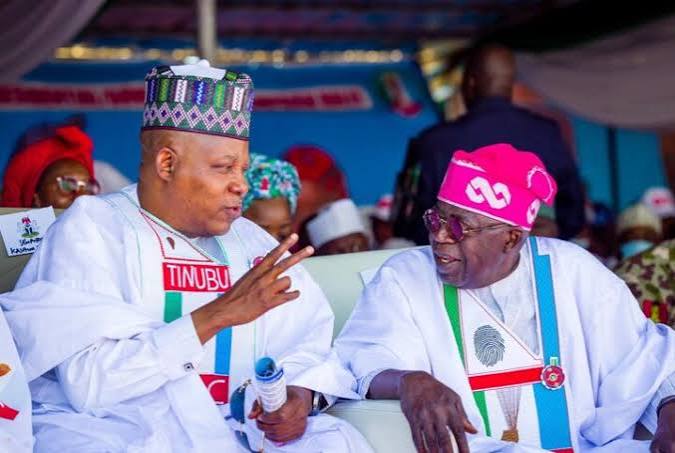
The UN today is an assembly of divided interests. It is therefore instructive that Nigerian vice president, Senator Shettima, who is leading the Nigerian delegation this year, as he did in the last two sessions – 79th and 80th – has said that Nigeria’s focus will be guided by its national interest, commitment to multilateralism and President Tinubu’s call for the reforms of global institutions.
This should be a good pitch, and on national interest, that should be an opportunity for the Tinubu administration to project itself on the global stage, this being an election season. But rather than seek to contribute to the debate, Nigerian opposition politicians have been more concerned by the fact that President Tinubu is not attending the UNGA. This should not be an issue.
Nigeria loses nothing by being represented by its vice president. Besides, Senator Shettima has proven to be well-suited for international engagements, as it has been seen in his appearances on the world stage at such events as the World Economic Forum, this same UNGA, the African Union and most recently at the BRICS summit in New Delhi, India, where on every occasion he acquitted himself honourably.
And by the way, President Tinubu is not the only Head of State who has sent a delegation. He is in the same company, as China’s President Xi Jinping, who meets President Trump on Wednesday, will be represented at UNGA by his deputy. President Putin of Russia and Prime Minister Narendra Modi won’t be there either. With Vice President Shettima in New York, President Tinubu who has been away on a working leave for three weeks should actually be on his way back home, and not tarry any longer in Europe!
As the debates begin at the UN General Assembly, the future of the UN and humanity itself should remain in focus as encapsulated in the theme: “Restoring Trust, Managing Transformation: A United Nations That Delivers for All.” The process for finding a successor to António Guterres is already in motion. It is important to choose the right candidate: a Secretary General that will inherit the institution with its merits and imperfections but with the capacity, strength and vision to draw it closer to its original mandate and rebuild trust.
At the end of a third straw poll, a secret, informal vote, held last Friday, out of the eight candidates who indicated interest in the office (including two from Africa: former Senegalese President Macky Sall, and Uganda politician, Olara Otunnu), the race has now been reduced to three leading candidates – Costa Rica’s Rebecca Gryspan, followed by Carolyn Rodrigues-Birkett of Guyana, and Argentina’s Rafael Grossi.
The winning candidate will need at least nine votes in the 15-member Security Council and must not be vetoed by any of the Permanent Five. The removal of this autocratic hold on the UN by a minority is the most urgent task before the UN, in addition to the menace of war and the emerging threat of Artificial Intelligence.
The UN Charter is also in need of a review to delete certain provisions in its Chapter XIII, and the now obsolete “enemy clauses” in Articles 53 and 107.
Reuben Abati, a former presidential spokesperson, writes from Lagos.
The Independent National Electoral Commission (INEC) has raised an alarm over smear campaigns among political parties and threatened to sanction erring parties.
The Resident Electoral Commissioner (REC) in Oyo State, Prof.
Adeniran Tella, raised the alarm at a stakeholders’ meeting held in Ibadan on Thursday.Tella said the commission had observed with deep concern a rise in abusive, intemperate and inflammatory language during the ongoing political campaigns.
He said the commission has the statutory responsibility to monitor campaigns and enforce compliance within the Code of Conduct for political parties.
The REC maintained that campaign activities should be issue-based “and not based on personality, ethnic or religious matters”.
Tella added that Section 96 of the Electoral Act, 2026 prohibits campaign language that could harm religious, ethnic, tribal or sectional feelings or provoke violence.
He reminded politicians that individuals who err will face fines of up to N5 million or a 12-month imprisonment.
“Political parties will face fines up to N10 million for a first offence,” he said.
Tella directed political parties in the state to submit schedules of their campaign activities, including specific venues and dates of their rallies and meetings, to the commission’s state headquarters for monitoring.
Speaking on the participating political parties’ candidates in the forthcoming general election, the REC said 38 candidates are vying for the three senatorial district seats.
According to him, 151 candidates are vying for the 14 House of Representatives seats.
“Regarding the governorship and State House of Assembly elections, the commission has published the particulars of candidates on Form EC9.
“The final list for state-level candidates is scheduled for publication on Oct. 10.
“So, I urge all party leaders to verify the details of their candidates and ensure that their credentials are in order, as there will be no room for errors at that stage,” he stated.
The REC further informed the public that the commission had opened its portal for the recruitment exercise of ad-hoc staff to be deployed across 6,319 polling units in the state.
According to him, the portal: pres.inecnigeria.org and http://www.inecnigeria.org/
He promised a level playing field for all and appealed to all political parties, candidates, and their supporters that politics is a contest of ideas, not a war.
“We shall remain impartial, transparent and accountable as an umpire in the electoral process,” he said.
In his goodwill message, the police representative, Usen Ekanem, said political parties and their candidates should be decorous and campaign with a focus on what they will do for the electorate.
He said all political parties should endeavour to inform the police of their rally/campaign venues and dates 48 hours in advance to enable the provision of security officers.
The representative of the Department of State Security (DSS), G. E. Akaram, urged political parties to shun violence and refrain from destroying their opponents’ campaign billboards.
The National Orientation Agency (NOA) representative, Mrs Florence Shiyanbade, urged political parties to focus on their manifestoes instead of engaging in fights and violence with their opponents.
The Inter-Party Advisory Council (IPAC), represented by Olajumoke Odususi, called on political parties to support INEC and security agencies to conduct credible elections.
Odususi, who is the state Deputy Chairman of IPAC, said the council had started orienting its members on the need to ensure their campaigns are issue-based.
She called on all political parties not to see the forthcoming elections as a do-or-die affair. (NAN)




Atiku Demands Fresh Wage Hike, Pledges Action from Day One
ShareBy David Torough, Abuja Former Vice President and presidential candidate of the African Democratic Congress (ADC), Atiku Abubakar, has urged...

Nigeria at 66: Tinubu, Govs Preach Unity, Renewal
ShareBy David Torough, Abuja President Bola Tinubu and state governors have called on Nigerians to renew their commitment to peace,...

Tinubu Has Stopped Nigeria’s Economic Freefall, Rebuilt Investor Confidence — Niboro
ShareBy David Torough, Abuja Spokesman of the All Progressives Congress Presidential Campaign Council, Ima Niboro, has said President Bola Tinubu’s...

Stop wasting money on Medical Tourism. Prof. Advice Bayelsans
ShareFrom Mike Tayese, Yenagoa Bayelsa State Government has asked Bayelsans to stop wasting money on Medical Tourism when the state...


Pete Edochie Pays Tribute to Olu Jacobs, Celebrates His Life, Legacy
ShareLegendary Nollywood actor, Pete Edochie, has paid glowing tribute to late colleague, Olu Jacobs, describing him as a peaceful and...


NIPCO Plans $3bn Floating LNG Project
ShareNIPCO Group plans to develop a more than $3 billion Floating Liquefied Natural Gas (FLNG) project to boost gas monetisation...

Tinubu, Shettima and the United Nations Assembly
ShareBy Reuben Abati The high-level meetings and debates of the UN General Assembly (UNGA) open today at the UN Headquarters...

2027: INEC Raises the Alarm over Smear Campaigns among Political Parties
ShareThe Independent National Electoral Commission (INEC) has raised an alarm over smear campaigns among political parties and threatened to sanction...


NOA Urges Nigerians to Promote Respect for National Symbols
ShareThe National Orientation Agency (NOA) has called on Nigerians to take the lead in promoting love, respect and positive disposition...
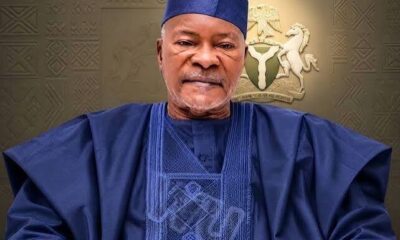

Late Former Kogi Gov, Ibrahim Idris for Burial Today in Abuja
ShareFrom Joseph Amedu, Lokoja Abdullahi Ibrahim Idris, son of the Late Ex- Kogi Governor Ibrahim Idris has announced that the...