
OPINION
August Protests: Rebellion, Rhetoric and Reproach

By Ayo Elebute
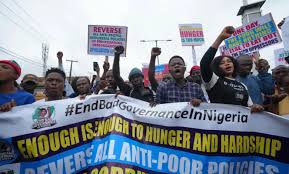
August 2024 protests created a hysterical atmosphere in Nigeria. The protests have proved the country especially difficult to govern subsequent to her birth defects on October the first 1960. The two sides effect of these August protests are highly visible and concrete; they opened a very significant channel of monitoring the peoples social milieu and they sent unclear and difficult message, hard to understand, before public audience.
The protests were not simply arbitrary outbursts of emotions; hatred, fear and anger were used as strategic plans to further individual and sectional interests. The protests have imaged the Nigerian society as a multicultural nation that evolved from a volatile history of military regimes that forcefully interchanged with civilian governments that have entrenched parallel political structures which remain firmly rooted and influential in our political landscapes.After emerging from authoritarian military regimes through multiparty structures of the second, third and fourth republics, Nigeria have successfully transformed into a fragile democratic architecture that makes decisions that can be protested by dozens of people at any given time.The supposedly key grounds for the August protests are the followings: (1) to fight the biting effect of the economy on ordinary citizens whose disposable income has been eroded overtime, (2) to raise the question of food inflation that stands at 40 percent in Nigeria (3) to fight the scourge of employment (4) to challenge the rate of economic insecurity and (5) to alert the stakeholders that kidnappings, terrorisms and banditries have pervaded the country.To a great degree, Nigerians want to live in peace. But because of insecurity, some citizens have lost their right of existence with unpleasant side effects. Basic commodities of living have turned to luxury and fuel price is in a state of constant flux and electric power is highly epileptic. In actuality, Nigeria is one of the largest exporters of petroleum products, but despite this, the fuel prices are not stable resulting from the epilepsy of the economy system.Above all else, the naira has maintained a downward slope in spite of all attempts to prop it up through policies and other available means. However, the ill-assorted motives and bad preparations for the so called August protests are indicative that Nigerians are ethnically divided over the choice of demonstration to use in registering their grievances against any ill-gotten government.There had been clear buildups of divided interest among notable opinion leaders and the mass society since the idea of the August protests was mooted and stood as topic of discussion for several weeks. The observable major problem that is facing the protest culture in our nation as of today is derivable from the fact that politics in Nigeria is highly contentious. The political occurrences over the years have made it difficult to settle the highly contentious relationships that dangled on all sides of our political existence, which hung down into the waters and most times placed under the ominous cloud of social unrest, mayhem, political impasse, political imbroglio, general insecurity, fear, distrust and breakdown of orders. These contentious relationships are highly obvious in our democratic culture which was berthed at the pier of conflict and confusion.Then, the existing rift among different ethnic groupings has exposed to sunlight the historical animosities and general political criminality as the society is still at the verge of seeking a viable political order that will result in the gain of better life for all. The state power has remained very great in arbitrary size, often violent, always threatening; and the political class is always seeking to obtain, maintain and sustain power by hook or by crook through patronage politics in which there are relationships between those who seek to gain and maintain political power as patrons and those who are used to achieve political power as clients.It was in this type of political logjam in which no progress seems possible that the political ethnocentric and patrons relied on promises of rewards and access given to political apologists who had brought about the idea of clandestine operation as political clients to rise in protests against bad governance in Nigeria.It is worthy of mention here and now that the August protests have generated a great deal of interest from ethnocentrisms in which each sectional group behaved differently; they failed to move out in one direction from a single point. This presupposes the fact that the protests may not lead to the desired goal of #Endbadgovernance. For instance, the youth from the northern part of the country led an armed insurrection in which they resultantly engaged in drastic measures, defacing valuable objects in public spaces; threatening to escalate the protests by responding rebelliously and putting up treasonous behaviour if that were the only way to get attention.However, the youth from the southern axis have adopted divergent approaches, views and attitudes towards the protests. There were divided pro-protester and anti-protester groups; there were racist rhetoric and angry rhetoric with propulsive forces. For example, the Igbo Must Go protest festered for days in Lagos while some groups among Yoruba youth, with intense feeling of euphoria, pointed at the Igbo tendency of being territorial and initiated massive protest of #IgboMustGo by mandating the Igbo ethnic group to leave and relocate their businesses from southwestern states.In reprisal for the tag line, some disgruntled elements among Igbo youth demanded to receive a pro-rata share of some spaces in Lagos by claiming that 99 percent of estates in Lagos are owned by Igbo traders and residents, and that all the swamps in Lagos were developed by the Igbo ethnic group while asking rhetorically: “How many Yoruba invested in such swampy areas?” Concerned citizens managed to douse the flame of this escalating tension with water by condemning those who have taken undue advantage of the protests to threaten other sections of the country, reiterating that there is no room for ethnic bigotry in the Nigerian territorial space. Accusations and condemnations made it trickier to manage further discussions between protesters and the government. The conduct of protesters across the country has brought reproach to the reasons and the motives of the expostulations and the situation of these August protests has become an official letter of reprimand for acting beyond bounds as the protests have been criticised as blameworthy. In case of another time, the protesters should align the language of protest with dialogue and not with violence because citizens’ engagement with politics must be an expected part of democracy and not a threat to democratic process.Speaking earnestly, the 10 days of #Endbadgovernance protest indicates a widespread public discontentment towards Nigeria’s economic mess, but going by the current economic situation, the average Nigerian cannot endure endless protests. In this struggle, therefore, the poor masses must be treated considerately.The protesters must made their points very obvious in one way or the other through the obvious unorganized massive turnout. Then, the congress of protesters has taken a final decision by calling for suspension of demonstrations. It should be assumed that a very loud cry and evocative message had been sent to the people in power and if they collectively fail to cut down the cost of governance, stop wasteful spending and tighten their individual belts or lead by showing good examples then another room may probably be created for protesters to re-strategize, to regroup, to reinvent and to rejig, and to create inclusive working groups that can call the government to order again at the rate of speed.Elebute, Professor of Journalism, Media and Cultural Studies, writes in from Hallmark University, Ogun State.
By Catherine Agbo
In the unfolding drama of Nigerian political discourse, few things excite the commentary circuit quite like a prominent figure stepping decisively into the political arena.
The recent media frenzy surrounding the activities of the High Chief Government Ekpemupolo-led PBAT Door-to-Door Movement is a classic study in selective outrage.
Ekpemupolo, popularly known as Tompolo, is the Grand Patron of the movement.
From editorial columns in national dailies to online commentary, critics have been relentless in dishing out opinions about the group’s activities targeted at mobilising support for President Bola Tinubu’s re-election campaign.
Yet, beneath the righteous indignation lies a fundamental misinterpretation of constitutional rights and democratic principles.
The narratives being spun across several opinion pieces, such as those asking why Tompolo should be actively involved in partisan politics or phoney groups labelling his endorsement as “deceptive,” are all built on shaky foundation.
Critics point to his role as a major security stakeholder in the Niger Delta and argue that a person of his background should remain politically passive or detached from party politics. Others question the deployment of operational vehicles and logistics to coordinators of the movement across states for the campaign, framing legitimate political mobilisation as an overreach.
However, this wave of criticism ignores a fundamental truth, that Nigeria is a constitutional democracy governed by the rule of law.
Section 39 and 40 of the 1999 Constitution of the Federal Republic of Nigeria (as amended) guarantee every citizen the right to freedom of expression and the right to peaceful assembly and association.
These rights are not reserved exclusively for career politicians, armchair intellectuals, or media commentators, they belong to every Nigerian citizen in equal measure.
Critics who have raised the alarm over campaign spending have also conveniently ignored the provisions of Nigeria’s statutory electoral framework.
The way I see it, High Chief Ekpemupolo has not gone against the Electoral Act 2026 in any way.
The Electoral Act 2026 sets clear financial caps on direct spending by individual candidates and limits on direct monetary donations to political parties or candidates’ accounts.
It also limits the amount a donor can make to a candidate or political party to N500 million.
The Electoral Act 2026 does not, however, specify, mandate, or place any financial spending ceiling for independent third-party support groups, non-governmental movements, or citizen-led mobilisation platforms.
Because the law contains no statutory cap on what an independent group can spend to mobilise voters, logistically equip its coordinators, or advocate for a candidate, Tompolo’s support group operates entirely within the legal limits of the Nigerian electoral law.
To invent non-existent legal infractions simply to tar a political support group is a disingenuous exercise in bad faith.
Tompolo has not been indicted by any court of competent jurisdiction, nor has he violated any law of the land by supporting a presidential candidate of his choice.
He has not been found wanting in any legal measure whatsoever for exercising his democratic suffrage and organising a political support group.
To, therefore, suggest that he should sit on the sidelines while other private citizens and influencers exercise their constitutionally guaranteed right to endorse and fund candidates is to demand a double standard that borders on hypocrisy.
Political association in a democratic society is rooted in choice, conviction, and interest.
If Tompolo believes that the current administration’s policies, particularly in stabilised oil production, maritime security, infrastructure, increased allocation to states, security, especially the State Police bill which 25 state Houses of Assembly have already approved, among others, align with the long-term prosperity of his constituency and the nation, he is within his full constitutional rights to persuade others to share that vision.
Mobilising grassroots support at the ward, household, and polling-unit levels through peaceful door-to-door engagement is the very essence of citizen participation in governance. It is political organising at its most fundamental level.
Those rushing to judge him prematurely are mistaking political enthusiasm for wrongdoing.
A citizen’s choice to donate campaign vehicles, set up organisational structures, and hold political rallies across different geopolitical zones is standard practice in presidential politics globally. In democratic climates, such actions are celebrated as evidence of civic investment and grassroots empowerment. Why should a different standard be constructed when the participant happens to be an influential opinion leader like Tompolo?
The online backlash and critical editorials reveal a deeper prejudice.
Nigeria’s democracy matures when citizens participate freely without fear of unwarranted public trial by the media.
The PBAT Door-to-Door Movement is operating entirely within the boundaries of civil political engagement and statutory electoral law. Rather than attacking the messenger, critics would do well to focus their energy on robust policy debates, engaging the electorate on ideas rather than seeking to curtail the lawful rights of individuals.
Tompolo has broken no law, breached no electoral act provision, and violated no constitutional mandate. He is simply exercising his fundamental right as a free citizen of Nigeria to associate, express his preference, and campaign for the candidate he trusts to lead the country. The misplaced outrage and hasty judgments filling opinion pages ought to be laid to rest.
In a free nation, the right to choose belongs to everyone and Tompolo is no exception.
Agbo, a strategic and development communication expert writes from Abuja.

By Uddin Ifeanyi
Much of the palaver over the recent meeting of the Central Bank of Nigeria’s policy committee was exercised by how well the apex bank is doing its job. Against its primary goal of maintaining price stability, the CBN’s Monetary Policy Committee’s decision to recalibrate its monetary policy rate (MPR) in order to align it with the market invited the most attention.
First, there is the question of what the MPR anchors.
In reality, nothing. Ideally, however, the CBN’s policy rate should transmit price signals through the financial system, influencing saving, borrowing, liquidity, inflation expectations, and in the end, the naira’s exchange rate. It should, in other words, signal the central bank’s intentions. Yet, we have had years in which the MPR stoically remained unchanged even as inflation ran riot, and the naira’s exchange rate came under severe downward pressure.The CBN has regularly papered over this crack with an often-bewildering arsenal of tools — including some eccentric flimflams that it has deployed in recent times. But this only raises further questions as to how useful even these are. Take the cash reserve requirement.
At 45 percent for deposit money banks, it means that nearly half of banks’ qualifying deposits are warehoused with the central bank at any given time. While these sums may not, therefore, be available to build bubbles in the foreign exchange and equity markets, they are not likewise available for lending. Even if we argue that long-term lending ought properly to be funded by equity, banks and not shareholders should bear the burden of financing businesses’ working capital needs. Then, there is the small matter of how the CBN’s cash reserve requirement might be just as orphaned as its policy rate.
Banks raising naira deposits end up paying the CRR tax. In an economy that has witnessed considerable dollarisation — “the process where a country uses a foreign currency (most often the greenback) alongside or completely in place of its own domestic currency” over the years, does it matter that deposits into domiciliary accounts are not CRR compliant? And how?
Might the “dollarisation” phenomenon hold the key to the CBN’s toolkit’s redundancies? Countries formally adopt the dollar in place of their domestic currencies when locals lose faith in the latter. This process restores the stability that struggling economies often find unable to achieve with their currencies and drives investment inflows.
Nigeria’s dollarisation is only partial and barely adjacent. Yet, while the country may not have lost the gains — seigniorage — from printing its own currency that is one consequence of dollarisation, the CBN looks to have partially lost control of the monetary policy space, with the sums that Nigerians increasingly park in their dollar accounts.
There are, thankfully, many ways to regain this control without having to nationalise dollar deposits. Neither the CBN nor the government can talk their way out of this, though. You cannot tell Nigerians to keep their savings in naira while offering them a savings rate below inflation. The smart choice in this circumstance is for domestic economic actors to move their savings into dollars, property, equities, commodities, inventory, or other assets.
Giving Nigerians a reason to save in naira should thus be the central goal of a policy reset. How to do this? We have got to keep inflation low. At 30% year-on-year a while back, the CPI numbers were an outrage. At a little over 15 percent today, it is still doing great injury to the naira. N100 today has roughly the purchasing power of only ₦50 after five years. The solution here goes beyond the CBN setting a credible, explicit medium-term inflation target.
It also transcends the CBN laying out incentive structures that make deviations from this target costly both politically and institutionally. More than this, the national commitment to the CBN not financing fiscal deficits must be religious and total. While this means that monetary policy is no longer subordinate to the federal government’s financing requirements, it must aim at positive real interest rates for savers.
Still a spectre haunts monetary policy in Nigeria. It is unfortunately not in the CBN’s gift to exorcise the nightmare that the federal government’s financing requirements have become.
How do we persuade our public sector boffins that a government that persistently spends more than it can sustainably pay for creates pressure for any of higher taxation, additional borrowing, monetary accommodation, inflation, or the naira’s depreciation? If the naira is only as strong as Nigeria’s balance sheet, then the task of getting both the fiscal and monetary authorities to operate under a common nominal inflation anchor must begin with reducing recurrent expenditure, broadening the tax base instead of increasing the tax rate, returning off-budget borrowing back to the budget, publishing complete fiscal accounts, improving the quality of public investment, establishing a credible medium-term strategy, and ceasing to use the CBN as a piggy bank.
Hopefully, this should help the economy produce more tradable goods and services. Because the naira represents a claim on the economy by anyone holding it, we cannot permanently defend the currency’s exchange rate through interest rates and reserves, if the economy continually uses up more foreign exchange than it earns. In other words, then, the economy must work for the naira to work.
Uddin Ifeanyi, a journalist manqué and retired civil servant, can be reached @IfeanyiUddin.
By Prince Charles Dickson Ph.D
There is an old story about a lawyer who sold his well to a teacher, then returned demanding payment for the water inside it. The teacher smiled. If the water still belonged to the lawyer, he replied, perhaps the lawyer should remove it or pay rent for storing it in somebody else’s well.
Suddenly, the lawyer remembered he had only been joking.It is funny until we recognise ourselves as lawyers.
We tell people with disabilities that public spaces belong to everyone. Then we demand an additional price for entering them.
We give them citizenship, but charge for the ramp. We promise education, but make the classroom unreachable. We proclaim equal opportunity, then construct the doorway too narrow for their wheelchair.That contradiction came home to me when Grace shared her story with me, she titled Public Place Accessible Report for Inclusion. It contained no sentimental appeal. It simply insisted that public places should allow everyone to enter, move, communicate, receive services and participate independently, safely and with dignity.
I listened to it in her voice once as a report. Then, I read it again as an indictment.
Behind every line was somebody’s ordinary day made unnecessarily difficult. A mother arrives at a hospital, already frightened for her child, discovering that the entrance has steps but no ramp. A young man preparing carefully for an interview, only to find his opportunity waiting upstairs without a lift. An older woman confronting a pavement that has forgotten her legs cannot move as quickly as they once did.
These are imagined scenes, but the barriers Grace identified are painfully real. Poorly enforced building standards. Toilets that exclude. Transport that humiliates. Signs people cannot read. Public information people cannot hear. Facilities built without consulting those who will need to use them.
Grace’s intervention mattered because she did not reduce accessibility to a construction problem. Her story and experience understood something profound: every inaccessible entrance is also a message. Sometimes it says, “We did not think of you.” Sometimes, more cruelly, it says, “We thought of you, but you were not worth the expense.”
What does that message do to a child’s heart?
Imagine a girl with cerebral palsy watching other children rush into a school assembly while she waits outside for someone to carry her over the steps. Imagine her learning, year after year, that she must be grateful for help rather than entitled to access. Imagine how quietly a society can teach someone to apologise for existing.
On 3 October 2026, at GlowingStar Empowerment Initiative and Development’s World Cerebral Palsy Day commemoration in Bukuru, I delivered a keynote titled Beyond Therapy: Seeing the Whole Person, Not Just the Condition. Its central argument was simple: a person has cerebral palsy; cerebral palsy does not have the person.
A diagnosis is information, not identity. Therapy is necessary, valuable and sometimes life changing. But therapy is supposed to be a bridge into life, not the whole landscape of living. Beyond treatment are friendships, classrooms, jobs, ambitions, relationships, leadership, laughter, choices and dreams that deserve room to breathe.
We can celebrate a child’s progress in therapy while failing that same child at the school gate. We can praise a parent’s devotion while exhausting that parent with inaccessible transport, expensive care and the endless labour of explaining why their child deserves a chance. We can call ourselves compassionate while our architecture remains indifferent. At the commemoration, parents spoke of stigma, costly therapy and limited support. Their courage was unmistakable, but courage should not be the currency families must spend to secure ordinary human rights.
That was why I argued that admission is not inclusion. Allowing a child through the gate means little if the classroom, teaching methods, toilet, playground or attitudes inside still tell that child to remain on the margins.
And communication must never be confused with intelligence. When someone speaks differently or needs more time, our responsibility is neither impatience nor pity. Ask. Then wait. Listen without finishing their sentences. A human voice does not lose its authority because it travels by an unfamiliar route.
I returned to Grace’s story and noticed how practical her demands were: sensible ramps and handrails, usable toilets, safe pathways, accessible transport, clear signage, Braille, captions, audio information and regular audits. It called for architects, officials and contractors to understand universal design, and for people with disabilities themselves to help plan and evaluate the spaces they use.
Nothing about us without us. That principle is not a decorative language for conferences. It is what stops a well-meaning official from installing a ramp that is too steep, or declaring a school inclusive without asking the students to navigate its corridors.
Nigeria has legal commitments against disability discrimination. Yet a law that cannot travel from the statute book to a bus stop, hospital, workplace or classroom remains a promise stranded on paper. Rights should not require influential relatives, public sympathy or a viral photograph before anyone honours them.
Sometimes, as I said in that keynote, society needs therapy. Our buildings need rehabilitation. Our policies need rehabilitation. Our assumptions, professional habits and careless language need rehabilitation. We must stop asking only how a person can adapt to a hostile environment and begin asking why we made that environment hostile.
I keep thinking about Grace, my newfound friend. As she shared recommendations, their moral weight was larger than the suggestions itself. She reminded me that inclusion often begins when someone refuses to look away from what everyone else has learned to step over. It begins with the uncomfortable decision to measure progress not by the elegance of our speeches, but by who can actually enter the room.
The lawyer in the story wanted to sell the well while keeping its water hostage. Too often, our society offers people with disabilities belonging without access, opportunity without accommodation, dignity without choice. Then it calls every concession generosity.
But the water was never ours to withhold.
Every child deserves more than survival. Every caregiver deserves more than exhaustion. Every adult with a disability deserves the freedom to work, love, contribute and belong without performing gratitude for rights already theirs. The purpose of inclusion is not to make people feel fortunate to be tolerated. It is to build a country where nobody must beg to be considered human.
So, Grace, thank you for disturbing our comfort with something as unromantic, and as revolutionary, as sharing your story with me. May we answer it with budgets, redesigned spaces, enforced standards and genuine listening. May the next child approaching a public doorway find no argument waiting there, only an opening.




Morov Community Bans Mining Activities, Inaugurates C’ttee to Investigate Lawful Mining Operations
ShareBy David Torough, Abuja The Morov Community Development Association (MCDA) has resolved to halt all mining activities in the community...
Morov Community Bans Mining Activities, Inaugurates C’ttee to Investigate Lawful Mining Operations
ShareBy David Torough, Abuja The Morov Community Development Association (MCDA) has resolved to halt all mining activities in the community...

NGX’s Investment in Nairobi Securities Exchange: A New Chapter in Africa’s Capital Market Integration
ShareBy Uche Joe Uwaleke The Nigerian Exchange Group Plc’s (NGX Group) acquisition of a 10 percent strategic stake in the...

Customs Moves to Upgrade B’ODOGWU, Targets Cargo Clearance
ShareBy Tambaya Julius, Abuja The Nigeria Customs Service (NCS) has concluded a three-day review of its B’Odogwu Unified Customs Management...


NAPE 2026: TotalEnergies Spuds Nigeria’s First Deep Offshore Exploration Well in Decade
ShareTotalEnergies EP Nigeria Limited has commenced drilling of the Akpo Far East B exploration well, days after its Country Chair...
Dance as Politics: Dancing to 2027
ShareBy Reuben Abati When a proper audit of the current electoral process is conducted, it would be interesting to evaluate...


Oborevwori Woos CAN Support, Promises Land for Prayer Retreat Centre
ShareFrom Francis Sadhere, Delta Delta State Governor, Rt. Hon. Sheriff Oborevwori, has pledged his administration’s support for the proposed Christian...

Wike Promotes 4,220 FCT Teachers, 3,494 Other Civil Servants
ShareBy Laide Akinboade, Abuja The Federal Capital Territory (FCT) Minister, Nyesom Wike, on Tuesday approved the promotion of 4,220 Teachers...

Flag-Off Of Tinubu/Alia 2027 Campaign Benue State
ShareBenue State is Ready for a New Chapter of Renewed Hope, Consolidated Progress And Greater Development! The Tinubu/Alia Campaign Council...


AfDB Approves $102m Facility to Finance SMEs in Nigeria
ShareThe African Development Bank (AfDB) has approved a 102 million dollar financing package for Sterling Bank Nigeria Ltd. to expand...