
CRIME
Banditry: 15,000 Persons Displaced in Niger East

From Dan Amasingha, Minna.
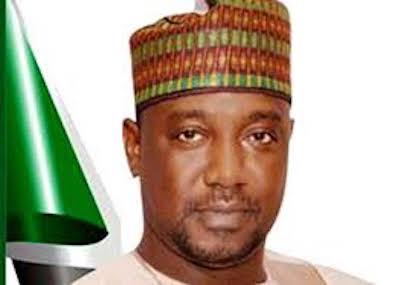
The senator representing Niger East senatorial district at the National Assembly, Senator Musa Sani has declared that not less than 15,000 have been displaced from over 15 communities in Niger East, as gunmen continue to run amok on innocent citizens.
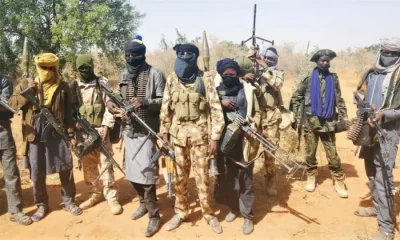
Senator Sani who is popularly known as Sani 313, decried the unabated bloodletting going in his senatorial district said the last one week could be described as hell on earth for the people of Niger East who, he said could no longer sleep both in the day and night for fear of the unknown.
“They have been rendered helpless even as they continue to starve due to the destruction of their property and inability to engage in what they know how best to do
“My heart, therefore, goes out to the victims of the numerous attacks and by extension the entire people of Niger East.
May Allah comfort those who have lost their loved ones, and grant the souls of the departed Aljana Firdaus” he stated.
He lamented the security situation in Niger State, and indeed the north as a whole, adding that a lasting solution must be proffered, and those who were tasked with the responsibility of protecting the lives of the people must rise to the occasion.
“With the mass abduction of children in Government Science Secondary School Kankara in Katsina State and the numerous attacks, kidnapping and massacres suffered by the people of Niger East and elsewhere, there is no doubt that there is no better time to act than now.
“Enough of the bloodletting and carnage. The lives of innocent citizens cannot continue to be sacrificed on the altar of blood-thirsty vampires who are bent on destroying the peace of our land” he stressed.
The Senator urged President Muhammadu Buhari to put the security operatives on their toes to ensure they lived up to their responsibilities of protecting the lives of the citizens.
“If the security agencies in our country, cannot guarantee the protection of lives and property of the citizens, then Nigeria may be on the precipice of anarchy” he said.
“I once again lend my voice to the voices of my distinguished colleagues in the Senate and Honourable members of the House of Representatives as well as other meaningful Nigerians to call for the revamp of the security architecture in the country.
“Mr President should not hesitate to ensure that is done, and indeed now”, he advised.
According to him, the gallantry efforts of men and officers of the Force deserved commendation for their zeal towards rooting out those bad elements that have infiltrated the communities.
“I urge them to continue to do their best in this trying period,” he appealed.






By David Torough, Abuja
The Federal Government has unveiled a comprehensive five-year strategy to intensify Nigeria’s war against illicit drugs, with plans to accelerate the prosecution of drug traffickers, confiscate proceeds of crime, dismantle transnational criminal networks and strengthen prevention, treatment and rehabilitation programmes.
The National Drug Control Master Plan (NDCMP) 2026–2030, inaugurated on Monday in Abuja, seeks to consolidate previous achievements while addressing identified weaknesses in coordination, funding, service delivery and enforcement capacity across the country.
Vice President Kashim Shettima, who spoke as Special Guest of Honour through the Special Adviser to the President on Special Duties, Office of the Vice President, Dr Modibbo Aliyu Umar, charged stakeholders at federal, state and local government levels to ensure the immediate and effective implementation of the plan.
Representing President Bola Tinubu, Shettima described drug abuse and trafficking as public health, security, economic and development challenges, warning that Nigeria could not secure its future without protecting the people responsible for building it.
He said enforcement alone would not defeat the drug menace without sustained investment in prevention, treatment, rehabilitation and decisive action against the illicit financial flows sustaining drug markets.
“Our response must therefore be comprehensive, coordinated and sustained,” he said.
The Vice President outlined the plan’s six strategic pillars as supply reduction; drug demand reduction and access to controlled medicines for scientific and medical purposes; alternative development and sustainable livelihoods; disruption of the illicit drug economy; and strengthened governance, financing and coordination.
He urged ministries, departments and agencies to incorporate the plan’s priorities into their work schedules, budget proposals and implementation frameworks, insisting that the success of the initiative would depend on measurable results rather than ceremonial commitments.
“Five years from now, the significance of today’s inauguration will not be judged by the ceremony. Let this be the moment Nigeria moves from policy to action,” he declared.
Shettima also called on state and local governments to take ownership of the initiative, particularly the NDLEA’s Alternative Development Programme, which seeks to replace illicit drug cultivation with legitimate agricultural activities and sustainable livelihoods.
The initiative, according to him, is already recording progress in three communities in Ondo State.
In a related commitment to strengthen the criminal justice response, Attorney-General of the Federation and Minister of Justice, Lateef Fagbemi (SAN), pledged that the Federal Ministry of Justice would collaborate with the judiciary to accelerate the disposal of drug-related cases in line with the Administration of Criminal Justice Act.
Fagbemi said the government would also intensify efforts to ensure that convictions for drug offences were accompanied by the confiscation of assets acquired through illicit activities.
He disclosed that Nigeria would strengthen mutual legal assistance, extradition arrangements and cross-border asset recovery to dismantle the financial structures supporting organised drug trafficking.
According to him, the objective is not only to arrest and prosecute traffickers but also to ensure that they are deprived of the financial benefits of their criminal enterprises.
He stressed that early collaboration between investigators and prosecutors, an approach being promoted by the National Drug Law Enforcement Agency (NDLEA), was helping to improve evidence gathering, prevent procedural errors and strengthen criminal proceedings.
Fagbemi described the NDLEA as the bedrock of Nigeria’s drug control architecture, commending its Chairman, retired Brig.-Gen. Buba Marwa, for his leadership and commitment to the country’s anti-drug campaign.
The minister, however, emphasised the need to distinguish between major drug traffickers and individuals suffering from substance use disorders, noting that while criminal kingpins must face the full weight of the law, persons battling drug dependence require appropriate medical and psychological support.
He maintained that an effective national drug policy must combine law enforcement with prevention, treatment, rehabilitation and social reintegration.
The new master plan, he said, would provide a broader whole-of-government framework for cooperation among law enforcement agencies, public health institutions, educational authorities, social development agencies, financial investigators and community stakeholders.
Meanwhile, Marwa disclosed that the outgoing NDCMP 2021–2025 recorded 77,736 arrests, the seizure of more than 14.8 million kilogrammes of illicit drugs and over 14,200 convictions.
He added that more than 32,400 individuals benefited from treatment, counselling and rehabilitation services during the period.
However, the NDLEA chairman acknowledged that an evaluation of the previous plan identified significant gaps in institutional coordination, financing, service delivery, data management, monitoring and accountability, as well as inadequate capacity at state and local government levels.
He said the new five-year strategy was designed to preserve previous gains, correct shortcomings and confront emerging threats posed by increasingly sophisticated drug trafficking organisations.
“The new plan is designed to keep what worked, fix what did not, and confront what is emerging,” Marwa said.
He explained that the strategy would strengthen the integration of supply and demand reduction while targeting the financial and technological infrastructure of criminal networks, including those exploiting encrypted communications and cryptocurrency.
The plan would also prioritise the growing threat of synthetic drugs and new psychoactive substances, which have become increasingly difficult to control through conventional enforcement methods.
Highlighting recent operational successes, Marwa recalled the April 28 coordinated operation involving the NDLEA, the United States Drug Enforcement Administration and law enforcement partners in Switzerland, France and Greece, which dismantled a transnational criminal organisation.
The operation, he said, led to the arrest of a suspected billionaire drug baron in Switzerland and two female kingpins in Anambra and Delta states.
He added that several bank accounts and cryptocurrency wallets had been blocked, while the agency secured interim forfeiture orders covering multi-billion-naira properties allegedly linked to the syndicate, including two hotels in Delta State and an apartment building in Mabushi, Abuja.
Marwa also cited the dismantling of a Nigerian-Mexican methamphetamine trafficking network and a clandestine laboratory in Ogun State, involving drugs and chemicals valued at approximately $362.9 million.
He said four additional Mexican-linked methamphetamine laboratories were subsequently uncovered in Oyo, Ebonyi and Enugu states, leading to the arrest of 10 Mexican nationals and 14 Nigerian collaborators, who are facing criminal charges.
On financing, the NDLEA boss described sustainable funding as perhaps the most critical condition for the successful implementation of the new master plan.
He appealed to federal budget authorities to incorporate its priorities into annual budgets and the Medium-Term Expenditure Framework, while urging state and local governments to make dedicated financial provisions for their respective Drug Control Committees.
He also called on banks, telecommunications and technology companies, agribusinesses and philanthropists to support prevention, rehabilitation and alternative livelihood programmes.
Marwa disclosed that the agency would develop a resource mobilisation framework backed by costed implementation plans to ensure that the strategy was adequately funded.
He welcomed President Tinubu’s transmission of the NDLEA Bill 2026 to the National Assembly, where it has passed second reading, assuring that enforcement operations would remain guided by the rule of law, due process and respect for human rights.
The Chairman, House of Representatives Committee on Drugs and Narcotics, Abass Adigun, represented by Dominic Okafor, reaffirmed the legislature’s commitment to providing the necessary legal and oversight support for the programme.
He stressed the importance of adequate funding, accountability and effective coordination among relevant institutions, describing the fight against illicit drugs as a shared national responsibility.
Similarly, the wife of the Yobe State Governor, Hajiya Hafsat Buni, pledged the support and partnership of her office towards the implementation of the master plan.
At the regional level, the Economic Community of West African States (ECOWAS) Commission commended Nigeria for developing the new strategy, describing it as an important contribution to efforts to build a safer and healthier West Africa.
The commission’s representative, Prof. Nassirou Bako-Arifari, Commissioner for Human Development and Social Affairs, said the success of the initiative would depend on sustained political commitment, adequate financing and cooperation among governments, civil society organisations, communities, the private sector and international partners.
He warned that drug trafficking and substance abuse were transnational challenges that could not be defeated by individual countries acting in isolation.
The commission pledged to support Nigeria through experience-sharing, resource mobilisation and stronger coordination with other member states.
“Nigeria’s progress will guide the region because no country can win this fight alone,” Bako-Arifari said.
Fagbemi, who also commended the NDLEA’s alternative development initiatives, said replacing illicit drug cultivation with legitimate cash crops and other agricultural enterprises would provide sustainable economic opportunities for vulnerable communities.
He urged all stakeholders to translate the provisions of the NDCMP 2026–2030 into practical programmes and measurable outcomes, stressing that the document must serve as an operational guide rather than remain a policy statement.
The inauguration, themed “Strategic Action for a Drug-Free Nation,” attracted ministers, members of the National Assembly, representatives of the diplomatic corps, the European Union, the United Nations Office on Drugs and Crime (UNODC), ECOWAS, state and local government drug control committees, traditional rulers, religious leaders and other stakeholders.
The Federal Government expressed confidence that the new framework, supported by stronger prosecution, financial disruption, regional cooperation and sustained investment in prevention and rehabilitation, would strengthen Nigeria’s capacity to confront the drug menace over the next five years.

A 28-year-old school bus driver, Onome Ughagha, has been arrested by operatives of the Delta State Police Command for allegedly kidnapping and sexually assaulting a 14-year-old female student in Sapele.
The suspect allegedly demanded and collected ₦503,000 in ransom from the student’s father before abandoning her along Oton Road, Sapele.
The command’s Police Public Relations Officer, Bright Edafe, disclosed this in a statement in Warri on Sunday.
According to Edafe, the incident was reported at the Sapele Area Command on October 20, 2026, by the victim’s father, who alleged that the suspect abducted his daughter while she was preparing to leave for school.
“The suspect subsequently contacted him (the father), demanded ₦503,000 and threatened to kill the minor if the ransom was not paid,” the statement added.
The police said the girl was abandoned along Oton Road after the ransom was paid and later reunited with her family in a traumatised condition, with indications that she had been sexually assaulted.
Following the report, operatives of the Sapele Area Command commenced an investigation, while the victim was taken to a medical facility for examination and treatment.
The school principal and vice-principal were also invited for questioning as the police intensified efforts to apprehend the suspect, who had reportedly abandoned the school bus and fled.
Edafe said the operatives, acting on credible intelligence, traced Ughagha to his hideout in the Ajimele area of Sapele, where he was arrested on October 23, 2026.
The suspect reportedly confessed to his involvement in the crime during preliminary interrogation.
The police spokesman added that arrangements were being made to transfer him to the State Criminal Investigation Department in Asaba for further investigation.
Meanwhile, the state Commissioner of Police, Samuel Erale, condemned the incident and reiterated the command’s commitment to protecting children from all forms of violence and exploitation.
The commissioner assured that “investigations will be thorough and that anyone found culpable will be brought to justice”.
He also urged school authorities, parents and transport operators to “exercise greater vigilance in safeguarding children”, stressing that the safety of every child entrusted to their care must remain paramount.

From Sylvia Udegbunam Enugu
The Commissioner of Police, Enugu State Command, CP Mamman Bitrus Giwa, has ordered a thorough investigation into the circumstances surrounding the death of Nnaji Izuchukwu (male) during an intelligence-led operation by operatives of the Anti-Cultism Section of the Violent Crime Response Unit (VCRU).
In a statement by the Police Public Relations Oficer, Enugu State command, Daniel Ndukwe said that the CP has directed the Assistant Commissioner of Police in charge of the State Intelligence Department (SID) to establish the facts of the incident and determine whether the operation and use of firearms complied with established operational standards and extant laws.
Preliminary findings indicate that operatives, acting on credible intelligence, raided Bull Hotel, Asata, Enugu, where Nworie Chidera Kelvin, a.k.a. “Akidi,” an alleged notorious drug peddler and Vikings Confraternity member, was lodged with associates. Akidi is reportedly linked to multiple cases involving unlawful firearm possession and cultism, including one in which he was charged in absentia.
He was also suspected of keeping the gang’s firearms and other criminal tools. The operation led to the arrest of Akidi and nine other suspects, comprising males and females aged 17–28. Quantities of dried weeds suspected to be “loud” cannabis, a weighing scale suspected to be used for measuring illicit drugs, and ₦43,400 in various denominations were recovered.
During the operation, Nnaji and another suspect jumped through a window in an attempt to escape. While pursuing them, an operative was confronted by both suspects, who allegedly attempted to disarm him. In the ensuing struggle, the firearm discharged, leaving Nnaji with gunshot injuries, while the other suspect escaped. Nnaji was rushed to hospital, where he was later confirmed dead. His remains have been deposited in a mortuary for preservation and autopsy.
CP Giwa has urged the deceased’s family, associates and other concerned persons to remain calm, assuring them that the circumstances surrounding the incident will be thoroughly investigated and that any officer found culpable will face appropriate disciplinary action. He reiterated that professionalism, ethical conduct and strict adherence to operational standards, particularly those governing the use of firearms, must never be compromised in any police operation.




Customs Unveils Novara to Spotlight Officers’ Challenges
ShareBy Tambaya Julius, Abuja The Nigeria Customs Service (NCS) has unveiled a 79-episode television drama series, Novara, to showcase the...


FCT Upgrades 20 PHCs Under World Bank-supported IMPACT Project
ShareBy Laide Akinboade, Abuja The Federal Capital Territory Administration (FCTA) has upgraded 20 Primary Health Centres (PHCs) across the territory...
DESOPADEC Set to Complete, Hand over Agweyom Civic Centre before Christmas
ShareFrom Francis Sadhere, Delta The Delta State Oil Producing Areas Development Commission (DESOPADEC) has assured residents of Agweyom, Agwetiti Community...


Delta Moves to Deploy Doctors to Underserved Rural Communities
ShareFrom Francis Sadhere, Delta The Delta State Government has unveiled plans to deploy more doctors and other medical personnel to...
BTOCARES: Ondo Families, Students, Farmers Celebrate as Tunji-Ojo’s Intervention Eases Hardship
ShareBy David Torough, Abuja Beneficiaries of the BTOCARES humanitarian initiative in Ondo State have expressed gratitude to the Minister of...
Prosperity Cup Organizers Mourn Bayelsa Boat Mishap Victims
ShareFrom Mike Tayese, Yenagoa The organisers of Nigeria’s biggest grassroots football spectacle, the Bayelsa Governor’s Football Tournament, popularly known as...


HIV/AIDS: 20 Per Cent of People Living with Don’t Know Their Status – FG
ShareBy Laide Akinboade, Abuja Director-General of Nigeria’s National Agency for the Control of AIDS (NACA) is Dr. Temitope Ilori, on...


INEC Tasks Media on Fight against Electoral Misinformation Ahead 2027
ShareBy Orjime Moses, Abuja The Independent National Electoral Commission (INEC) has urged journalists, media organisations and social media users to...
No Plans to Increase Electricity Tariff – Tegbe
ShareThe Minister of Power, Joseph Tegbe has assured Nigerians that there will be no increase in electricity tariffs in 2027,...
FCCPC Shuts Lagos Estate Firm over Property Breach
ShareThe Federal Competition and Consumer Protection Commission has shut the business premises of Meridian Park Real Estate Company in Lagos...