
NEWS
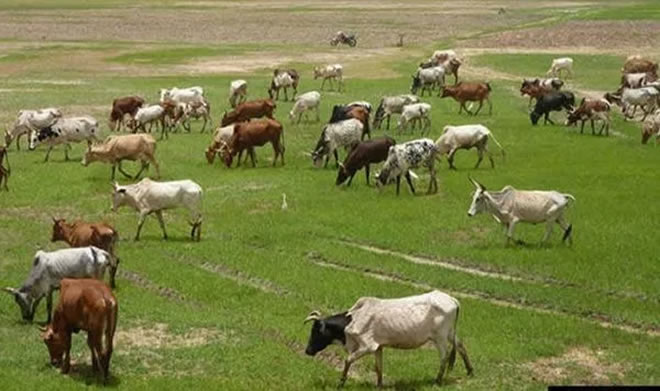
Benue Community Demands Immediate Burial of Victims of Herdsmen Attack

From Attah Ede, Makurdi
Masev ethnic nationality, under the aegis of the Masev Development Association (MASDA), in Benue State, has called on the State Government to either bury without further delay, the 18 persons gruesomely murdered by suspected armed herders at Wandor Mbaikyor, in Mbalom Council Ward of Gwer East Local Government area of the State, or hand over the corpses to the association for immediate mass burial.
The development association said having the victims buried now would relieve the bereaved families of unending uncertainties and anxieties aggravated by the delayed burial rites of their loved ones murdered a month ago.
In a communique signed by the president general, Prof.
Vearumun Tarhule and the national secretary, Noble Nick Ahor, said the decision was taken after extraordinary convention on the state of the nation and the Masev people at Community Secondary School, Apir, Benue State.The Masev people have resolved to remain law-abiding to law enforcement agencies and all properly constituted authorities in Nigeria.
They further demanded for full implementation of the Benue State Open Grazing Prohibition Law to stop the influx of open grazers and flush out bandits displacing Masev people from their ancestral lands.
The association therefore approved amendment to the 2024 Masev Development Association Constitution, as reenacted by the MASDA Constitutional Review Committee.
They have equally resolved to solicit funding and infrastructural interventions from Masev people, state actors, organizations, and corporate bodies in favor of Community Secondary School, Apir, to boost the school’s basic amenities and provide the needed facilities for effective teaching and learning.
“We have resolved to deepen community initiatives aimed to cultivate bonds of friendship, partnership, and collaboration with other ethnic nationalities within and outside Nigeria for mutual benefits and accelerated development of the Masev nation.
“To quicken the Masev Economic Blueprint, Planned Agricultural Revolution Policy, Enhance Entrepreneurial Access, and chart a way forward for welfare schemes to better the lives of all Masev people at home and in the diaspora.
The Masev nationality reassured Governor Alia, of their commitment, loyalty, obedience, and patience, while hoping to have the much-desired dividends of democracy as an ethnic group in the state, under his watch as a Governor and father.
They promised to write officially and copy all relevant law enforcement agencies, local, state, and federal authorities to safeguard and provide maximum security to enable Masev people to go about their legitimate businesses wherever they find themselves in Nigeria.

By Laide Akinboade, Abuja
Federal capital Territory Administration (FCTA) has pledged to provide the necessary support for the successful completion and operation of the African Medical Center of Excellence, with a view to reversing medical tourism.
The FCT Minister of State, Dr. Mariya Mahmoud, made this pledge during a site tour of the state of the art facility, of African Medical Centre for Excellence, billed to be operational in early 2025.
Mahmoud noted that the partnership between the African Export-Import Bank and Kings College Hospital London to establish the 170-bed hospital was a testament to the commitment to advancing clinical care, training, and research in specialty areas such as oncology, cardiovascular services, hematology, diagnostics, and general medical services.
The minister further added; “The potential impact of this initiative in reversing medical tourism and reducing healthcare worker migration is commendable.
“I am encouraged by the prospect of over 1000 workers being employed to support the hospital’s operations.
“Therefore, I am fully committed to ensuring that the Federal Capital Territory Administration provides the necessary support for the successful establishment and operation of the African Medical Center of Excellence.
“We are happy to see, that the 6.5 hectares of land, which was donated by the Federal Capital Territory Administration, on behalf of the Federal Government of Nigeria, as part of the host country agreement, has been developed to accomodate this hospital.”
While conducting the minister round the project, the Chief Executive Officer, African Medical Center of Excellence, Mr. Brian Deaver, commended the FCT Administration for the strategic partnership.
He used the occasion to inform the minister that the management staff of the medical centre are looking forward to further contributions of the Administration to improvement in the management of non communicable diseases in the territory.
Deaver stressed that the potential benefits of the location of this hospital in Abuja is significant, just as he expressed confidence that the partnership would yield positive outcomes for the healthcare sector in the region.
From Attah Ede, Makurdi
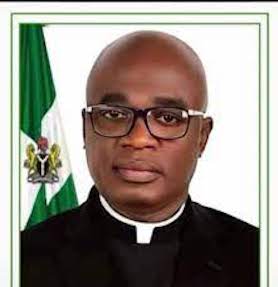
Former Governor of Benue State, Chief Samuel Ortom, the incumbent Deputy Governor, Barr Sam Ode and the Managing Director and Chief Executive Officer (MD/CEO) of Benue Investment and Property Company (BIPC), Dr Raymond Asemakaha, Wednesday, extended their felicitations to the State Governor, Rev Fr.
The former governor in a statement signed by his Media Aide,Terver Akase and made available to newsmen in Makurdi, prayed God to grant Governor Alia the wisdom and health to steer the affairs of the state.
He maintained that God would grant Alia the enablement to surmount all challenges fronting his administration and wished him a memorable birthday celebration and many more years ahead.
The statement read in part: “Your Excellency, as you celebrate, I pray that God grants you wisdom, good health and strength to enable you to continue to steer the affairs of our dear state.
“Leadership comes with its numerous challenges, but I have no doubt that with God’s grace and guidance, all problems are surmountable.”
Similarly, the Deputy Governor of the State, Barr. Sam Odeh, on behalf of the State Executive Council (SEC), prayed that Governor Alia’s birthday would be a celebration of his uncommon passion for speedy transformation of the state.
“On behalf of the Benue State Executive Council, I write to warmly felicitate with Your Excellency, Rev. Fr. Dr. Hyacinth Iormem Alia, Executive Governor of Benue State on the occasion of your 58th birthday anniversary.
“As you mark your years of existence on earth today, we heartily join your family, the good people of Benue State and the entire nation in wishing Your Excellency a very happy birthday.
“May your 58th birthday be a celebration of your positive energy and uncommon passion for speedy transformation of Benue State. As Governor of our dear state, you have, in the last one year, demonstrated pragmatic leadership with selflessness and dedication, by rendering quality service to the good people of Benue.
“Your ability to turn challenges into opportunities is truly admirable. We have every reason to celebrate you today, because your transformation drive has brought the state to national and global prominence with many laudable initiatives and partnerships that are now yielding positive results in various sectors of Benue economy.
“Happy Birthday! Your Excellency, you are truly a special gift to the state and a beacon of inspiration for us all. May your birthday mark the beginning of a new chapter filled with even greater successes and fulfillment.
“We pray that the Almighty God will continue to uphold, keep and strengthen you for His glory and to the benefit of humanity. Congratulations and happy birthday!, Ode stated”.
On his part, the MD/CEO, BIPC, Dr Raymond Asemakaha, on behalf of the management and staff of the company, said the governor had so far demonstrated visionary leadership, tireless efforts, and unwavering commitment to the transformation of Benue State.
Governor Alia’s exemplary governance and dedication to the welfare of the people are truly inspiring, stressing that this milestone birthday marks the beginning of another remarkable year filled with wisdom, good health, and unparalleled success.
By Tony Obiechina, Abuja
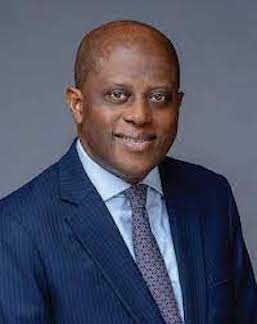
The Central Bank of Nigeria (CBN) has activated plans to double foreign-currency remittance flows through formal channels by granting 14 new International Money Transfer Operators (IMTOs) Approval-in-Principle (AIP).
This was disclosed in Abuja on Wednesday, by the Bank’s Acting Director of Corporate Communications, Mrs.
She said, “This will spur liquidity in Nigeria’s Autonomous Foreign Exchange Market (NAFEX), augmenting price discovery to enable a market-driven fair value for the naira.
“It will be recalled that the CBN Governor, Mr. Olayemi Cardoso, had recently declared: “We’ve set ourselves a target to double remittance flows into Nigeria within a year, a goal I firmly believe is within reach.
“We are wasting no time driving progress to remove any bottlenecks hindering flows through formal channels permanently. We have a determined pathway and a sequenced approach to tackling all challenges ahead, working hand in hand with key stakeholders in the remittance industry,” she stated.
Continuing, Sidi Ali, said that the CBN viewed increasing formal remittance flows—one of the major sources of foreign exchange, accounting for over 6% of GDP—as a means of reducing the historical volatility in Nigeria’s exchange rate caused by external factors, such as fluctuations in foreign investment and oil export proceeds.
The increase in the number of IMTOs is one of the primary actions initiated by the CBN’s remittance task force, overseen by Governor Cardoso as a collaborative unit pulling together specialists to work closely with the private sector and market operators to facilitate the ease of doing business in the remittance ecosystem in Nigeria.
The task force was established as a direct result of an executive learning session with IMTOs during the World Bank/IMF Spring Meetings held in Washington DC, United States of America, in April 2024. The task force will meet regularly to implement strategy and monitor the impact of its measures on remittance inflows.



Para Badminton: Bolaji, Chigozie qualify for Paris 2024 Paralympics
ShareThe duo of Mariam Eniola Bolaji and Jeremiah Chigozie have qualified for the Paris 2024 Paralympic Games coming up from...

FCTA Moves to Curb Medical Tourism
ShareBy Laide Akinboade, AbujaFederal capital Territory Administration (FCTA) has pledged to provide the necessary support for the successful completion and...


Ortom, Ode, Asemakaha Felicitates With Alia on 58th Birthday
ShareFrom Attah Ede, Makurdi Former Governor of Benue State, Chief Samuel Ortom, the incumbent Deputy Governor, Barr Sam Ode and...


NAICOM, RMAFC Collaborate on Economic Diversification
ShareBy Tony Obiechina, AbujaThe Commissioner for Insurance/CEO, Mr. Olusegun Ayo Omosehin, and his management team have met with the members...


22,000 Beneficiaries to Get N50,000 Nano Businesses Grant in Kogi
ShareFrom Joseph Amedu, LokojaNo fewer than 22,000 beneficiaries in Kogi will get N50,000 each, under the Presidential Conditional Grant Scheme...

CBN Unveils Strategy to Boost Remittances
ShareBy Tony Obiechina, AbujaThe Central Bank of Nigeria (CBN) has activated plans to double foreign-currency remittance flows through formal channels...


Accountant General Declares N318.5b Revenue Inflow in First Quarter
ShareBy Ubong Ukpong, AbujaThe Accountant General of the Federation, Mrs Oluwatoyin Madein on Wednesday said total revenue inflows to the...

Senate Charges Army, Police to Increase Presence in Uzo-Uwani to Forstall Peace
ShareBy Eze Okechukwu, AbujaThe Senate yesterday charged the Inspector General of Police (IGP) Kayode Egbetokun and Chief of Army Staff...


Ebonyi LG Polls: EBSIEC Gives 3rd June Ultimatum for Political Parties to Conclude Primaries
ShareBy Godwin Okeh, AbakalikiEbonyi State Independent Electoral Commission, EBSIEC, on Wednesday gave 3rd June 2024 ultimatum for all political parties...
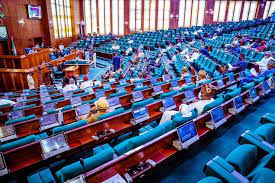

Reps Member Calls for Urgent Intervention in Federal Teaching Hospitals
ShareBy David Torough, AbujaThe Chairman, House of Representatives Committee on Health Institutions, Amos Magaji has called for an urgent financial...