
Agriculture
Benue Farmers Fault Anchor Borrowers Programme

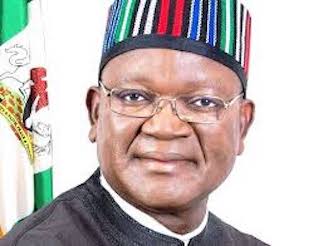
Farmers in Benue state have faulted the Central Bank of Nigeria’s (CBN) ongoing Anchor Borrowers Programme (ABP) and urged the federal government, the Central Bank of Nigeria(CBN) and other stakeholders to engage Benue farmers on large scale in the Nigerian Incentive Based Risks Sharing for Agricultural Lending (NIRSAL)’s funding for the agriculture sector.
The farmers spoke over the weekend at Achia, Kwande LG of Benue State.
The Leaders of the communities’ cooperative societies said that the Organisation for Youth & Women Aid In Africa (OFYWAIA) aggregates for the NIRSAL scheme, Mr. Iordye Amena and Hon. John Ubee wondered why they were not given any agricultural inputs for the last cropping season. “It would have increased productivity and galvanised the drive to make Nigeria food sufficient by 2030, in line with the 2030 zero-hunger agenda.“We are optimistic that our aggregator and the NIRSAL office situated at the CBN in Makurdi will cross the ‘tees’ and dot the ‘is’, so we could benefit this year,” they pleaded.
The chairman of Rice Farmers Association of Nigeria (RIFAN) for Kwande LGA Mr. Icheen could not be accessed for comments for he was said to have travelled.
In 2015, the Nigeria government introduced the ABP through which loans and farm inputs are given to small and medium scale farmers in order to boost agricultural output.
A beneficiary of a similar scheme Mrs Atoo said ABP has helped more farmers to go into agriculture as a business, and contribute to meeting up with the consumption need of the Nigerian populace.
“We plead this year, if inputs can get to farmers on time, we will be able to plan ahead of the planting season and also increase productivity all year round,” she said
The leader of OFYWAIA for Benue State, Bar. Dooyum Agav said: “The meeting was put together by OFYWAIA and the cooperative societies to preview their activities in the previous years.”
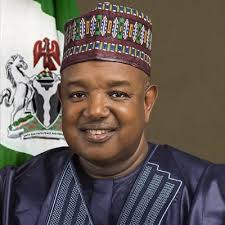

The Federal Government, through the Kano State Special Agro-Processing Zone (SAPZ) Programme in partnership with IFAD, has empowered 9,870 rice farmers in Kano with climate-resilient inputs and modern rice production technologies.
This was contained in a statement issued by the SAPZ Knowledge Management and Communication Officer, Rabi Mustapha.
The State Project Coordinator, Aminu Iliyasu, disclosed this on Sunday during the Farmers Field Day at Chiromawa Garin Babba Cluster in Garun Malam Local Government Area.
He said the exercise was organised to expose the farmers to Science-based and practical solutions capable of enhancing yields, improving food security, and boosting rural livelihoods.
Iliyasu described the field day as a celebration of knowledge, innovation and the resilience of smallholder farmers.
He explained that the SAPZ initiative in Kano aimed to expand access to improved technologies, strengthen extension services, reduce post-harvest losses and create market opportunities for rural farmers.
“These innovations are not theoretical. They are practical solutions that farmers can adopt immediately to raise productivity and increase income,” he said, while commending the support of local authorities.
Mustapha said the inputs distributed to 9,870 farmers included FARO 44 improved seeds, Urea and NPK fertilizers, and insecticides, targeting beneficiaries in Garun Malam, Gezawa, Bichi and Bagwai LGAs during the 2025 wet season.
She added that experts trained farmers on soil selection, seed dressing, nursery establishment, land preparation, and timely transplanting at proper spacing.
“They also covered fertilizer management, weed control, Integrated Pest Management and water regulation to boost rice yields.
“The training emphasised harvesting at optimal maturity, drying paddy to safe moisture levels, and fumigation using phostoxin to prevent storage losses,” she stated.
A beneficiary, Salamatu Ali, said the intervention had positioned Kano farmers to boost yields, withstand climate pressures and increase household incomes.
Another farmer, Huwaila Ibrahim, said the programme transformed her approach to rice production.
“Before, we planted without checking whether the land was suitable.
“Now, we first assess the soil to ensure it matches the seed variety. This season, we cultivated FARO 44,” she said.
Ibrahim added that her output increased from 20–25 bags per acre to about 40 bags after adopting the improved technologies.
The Federal Government has launched the National Agricultural Sample Survey (NASS) 2023 report, towards developing data-driven policies to achieve food security and economic diversification.
Minister of Agriculture and Food Security, Sen. Abubakar Kyari, made this known at the launch of “Disseminating the National Agricultural Sample Survey (NASS) 2023 report” on Tuesday in Abuja.
“As a Ministry, we will apply these findings across the core levers of agricultural transformation, ensuring that our programmes remain data-driven, impact-focused and aligned with the aspirations of the Renewed Hope Agenda.
“A nation that measures well governs well. And food security begins with information security.
“This report should be seen as a practical tool for decision-making, one that guides policy choices, informs investment priorities and accelerates the reforms required across Nigeria’s agricultural sector.
“In a country of more than 232 million people, the strength of our food system depends on the quality of the data that guides national decisions,” Kyari said.
The minister explained that without credible evidence, interventions risk being misdirected and investments may fail to reach the areas of highest need.
The News Agency of Nigeria reports that Food and Agriculture of the United Nations (FAO) in collaboration with the Federal Ministry of Agriculture and Food Security, National Bureau of Statistics and the World Bank launched “Disseminating the National Agricultural Sample Survey NASS the 2023 report”.
He stated that the National Agricultural Sample Survey provides reliable, sector-wide data that helps the agriculture sector track production, understand emerging trends, and guide policy decisions.
Kyari added that the launch and dissemination of the National Agricultural Sample Survey 2023 represents an important step in ensuring that our national choices are informed, targeted, and grounded firmly in evidence.
“This report therefore represents more than statistical outputs; it reflects our commitment to transparency, disciplined planning, and the sustainable development of Nigeria’s agricultural sector.
“The findings of the National Agricultural Sample Survey 2023 present a clear and compelling picture of national production.
“The data we are presenting today is central to that mandate because it gives us the precision required to target interventions, close gaps, and drive the reforms needed to secure our nation’s food system.
“These data points also remind us that every figure reflects real activity across the country, from production to processing to marketing.
“With these digital foundations in place, insights from the NASS move from static data to operational intelligence, enabling a more transparent, efficient and connected agricultural system,” the Minister said.
The Director-General FAO representative in Nigeria, Dr. Hussein Gadain, said the NASS 2023 Report is not just a presentation of data but a celebration of collaboration, commitment, and progress towards building a stronger, more resilient agricultural sector in Nigeria.
Similarly, Adeyemi Adeniran Statistician General of National Bureau of Statistics (NBS) said that the NASS Report 2023 provides critical information on crop production, livestock, aquaculture, labour amongst all.
Adeniran who was represented by David Babalola an official of NBS said that data is essential for shaping effective policies and driving sustainable growth.
According to him, the survey also reaffirms the national bioscience commitment to upholding global best practices in data production through improved methodologies, enhanced field operations, rigorous quality data assurance processes and development of modern digital tools, in Nigeria.
Henry Karshima, Assistant Chief Forest Officer in the Ministry of Environment said that the role of agriculture cannot be overemphasised in food security especially with the launch of the survey.
Mr Abdulhameed Umar National Project Coordinator for Agro-Climatic Resilience in Semi-Arid Landscapes expressed satisfaction with the project in the line of restoring land degradation through data collection.
On his part, Asad Alam, the Senior Economist and Project leader 50×2030 Initiative World Bank Nigeria Development Data Group, Economic Division commended the initiative of making data a priority in agricultural activities to ensure food security.
By David Torough, Abuja
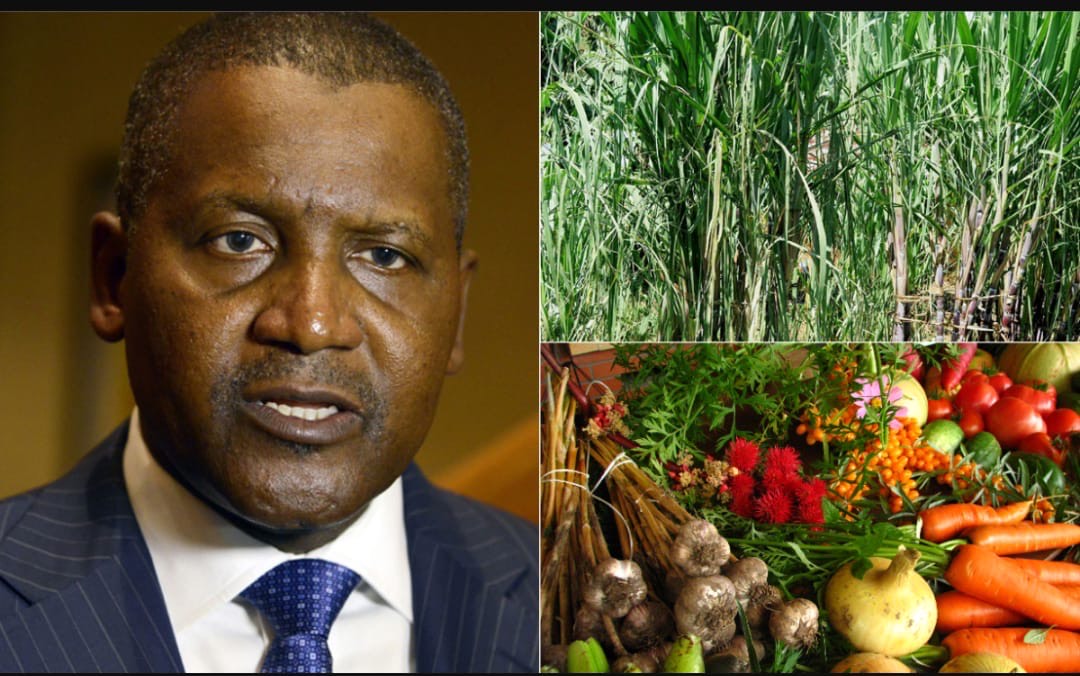
The Dangote Group has said that it is collaborating with strategic partners to revitalise and strengthen the agricultural sector of the Nigerian economy.
This development comes as the company sponsors the 17th National Agricultural Show, which opens on Tuesday, November 25, 2025, in Keffi, Nasarawa State.
The company’s spokesman, Anthony Chiejina, stated that expanding mechanised agricultural practices will play a critical role in boosting Nigeria’s GDP while creating meaningful employment opportunities for the country’s growing youth population.
“Through this partnership, the company aims to encourage greater participation in commercial agriculture and reinforce its role in advancing Nigeria’s economic growth,” he said.
He said the theme for this year’s Show: Employing Smallholder Farmers: Restoring Value, Ensuring Productivity will Ensure Attainment of Food Security in Nigeria, is apt.
Chiejina said: “Restoring the value of agriculture offers Nigeria more than nostalgic appeal; it provides a pragmatic route to economic renewal. With the right incentives and modern practices, agriculture can once again serve as a reliable engine of growth, anchoring jobs, stabilising markets and giving the economy a sturdier foundation.”
The Agricultural Show, a fixture in Nigeria’s agricultural calendar, offers a platform for showcasing innovation across the value chain.
The statement said the company is currently developing rice mills in Kano, Jigawa, Niger, Kebbi, and Sokoto States, with a combined total milling capacity of 1.5 million tonnes per annum.
It noted that the effort is intended to support the government’s broader push for food security.
The statement quoted the Senior Adviser to the President of the Dangote Group, Mrs. Fatima Wali-Abdurrahman, as saying that, in line with the company’s commitment to restoring value to agro-allied industrialisation in Nigeria, it is investing heavily in its backward-integration projects in the sugar sub-sector in Nasarawa and Adamawa States.
She said as part of its contribution to the agricultural sector, the company has a fertilizer complex in Lagos, located in the Lekki Free Trade Zone, with a production capacity of 3 million metric tonnes per annum of urea.
On the participation of the Dangote Group, Chairman, Board of Trustees (BoT), National Agricultural Foundation of Nigeria, organizers of the annual National Agric Show, Arc Kabiru Adamu, said: “Dangote Group has been our greatest ally from inception and we have enjoyed tremendous and invaluable support from them such that without them we will not be able to continue to hold the show efficiently.”
Adamu, who is also the President, All Farmers Association of Nigeria (AFAN) urged the Dangote Group to focus on agriculture, after its success in the oil and gas sector.
He added that: “This year we envisage a tumultuous turn out of farm machinery manufacturers, processors, researchers and youth and women farmers answering the clarion call to bolster Nigeria’s food system.”



Group Backs Tinubu, Urges Sule to Run for Senate
ShareFrom Abel Zwanke, Lafia The Chief Executive Officer of the Community Initiative for Character Moulding and Entrepreneurship Development (CiCMED) and...

Ooni Installs Oluremi Tinubu as Yeye Asiwaju Ile Oodua
ShareFrom Ayinde Akintade, Osogbo The Permanent Chairman, Southern Nigeria Traditional Rulers Council (SNTRC), Arole Oodua Olofin Adimula and Ooni of...


NYSC Presidential Honor Award Winner Returns to Benue, Shows Appreciations
ShareFrom Attah Ede, Makurdi An ex- corps member and a recipient of Presidential Honour Award, Udokpo Abasi, at the weekend...


NGO Launches Climate Project Steering Committee in Benue
ShareFrom Attah Ede, Makurdi A global Non-Governmental Organisation (NGO), International Alert has inaugurated Climate Project Steering Committee in Benue State,...


A silent Emergency: Soaring Costs of Diabetes Care Spark Alarm
ShareBy Folasade Akpan For Mrs Schola Effiong, a 58-year-old confidential secretary in Calabar, managing diabetes in today’s economy feels like...


World Bank, Partners Record Progress Toward 1.5bn Healthcare Goal
ShareThe World Bank Group, global partners and countries on Saturday announced continued progress toward the goal of delivering affordable and...


UN Commits to Strengthening Nigeria’s Policy Framework, Enhancing Digital Safety
ShareThe UN Women has reaffirmed its commitment to strengthening policy frameworks, enhancing digital safety, and promoting accountability for online harms...

Nightclub Fire in India’s Goa Kills 25 People
ShareA fire at a popular nightclub in India’s coastal region of Goa has killed 25 people, local officials say. Police...


Hong Kong votes in Election as City Mourns Deadly Fire
ShareHongkongers are voting in an election seen as a test of public sentiment following a deadly fire that angered some...


PDP Crisis: Wike Camp Moves to Conduct Fresh Congresses, Convention
ShareBy Laide Akinboade, Abuja The factional Board of Trustees (BoT) of the Nyesom Wike tendency in the Peoples Democratic Party...