
NEWS
Benue PDP Crisis: We Have Issues Dividing Our Party in Benue- Suswam, Ortom

From Attah Ede Makurdi
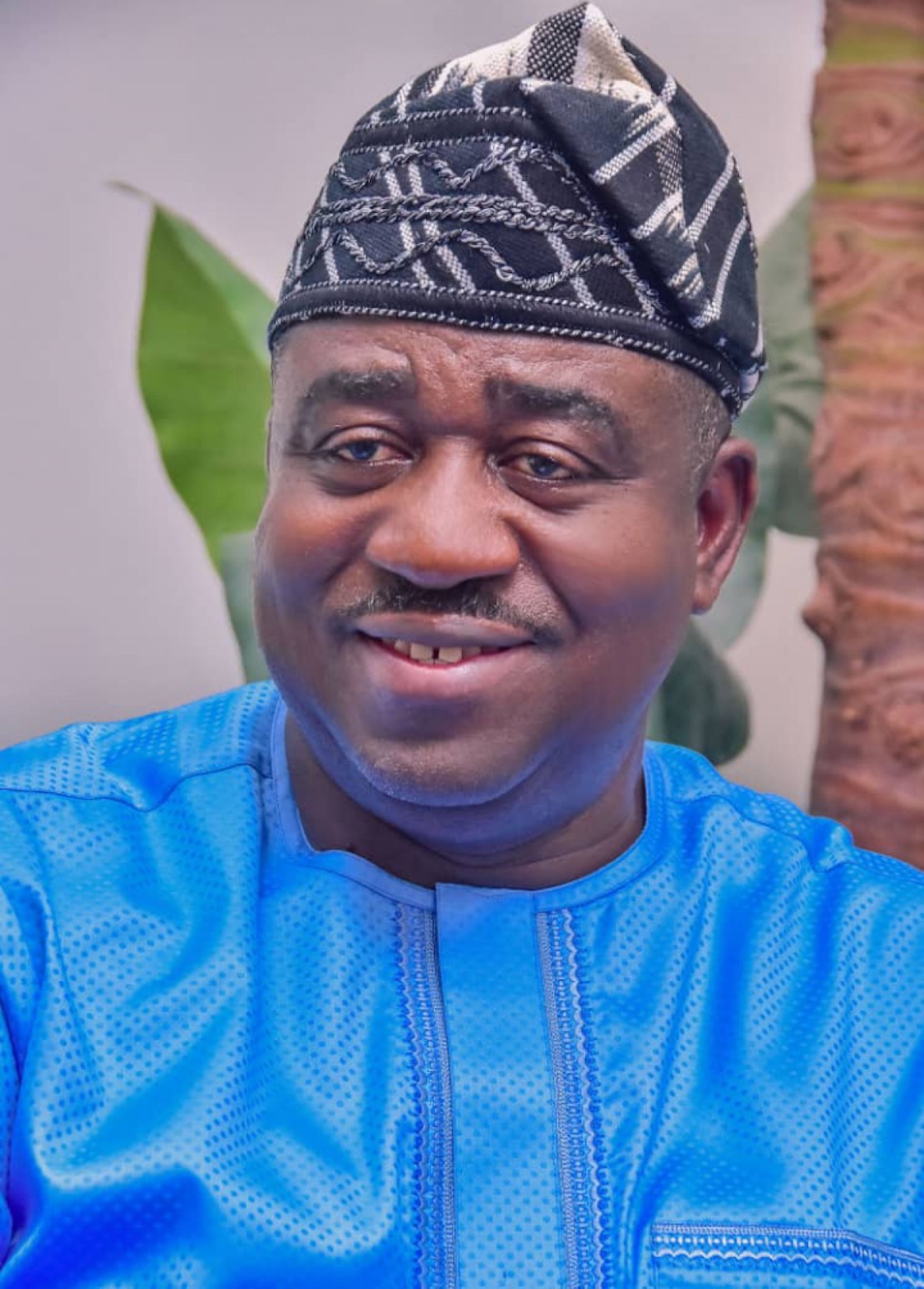
Former Governor of Benue State and leader of the main opposition People’s Democratic Party (PDP) in the State, Samuel Ortom and his predecessor, Senator Gabriel Suswam, on Thursday, admitted that there were contentious issues confronting the peace and unity of the party in the State.
The two leaders further said that there was need to address the root cause of the problem that had bedeviled the party thereby causing disaffection amongst members.
Both leaders spoke during the expanded stakeholders meeting of the party that was convened by the State Caretaker Committee of the party held at the party secretariat in Makurdi.
Although discussions at the meeting were expected to revolve around the forthcoming chairmanship and council elections in the state, issues of the crises that had come on the party took center stage.
But at the end of the day, all parties including Ortom, Senator Suswam and Senator Abba Moro, representing Benue South senatorial district and the speakers from the three senatorial zones resolved to close ranks and move forward.
Declaring the meeting open, Chairman of the Caretaker Committee, AVM Napoleon Bali, said the meeting was to brief members of the party ahead of the forthcoming Local Government (LG)elections in the state.
Although he confirmed that there were issues on ground, he was confident that such issues would be resolved and put behind the party in no distant time from now.
While he encouraged party members to pick forms and contest the election, he said he was hopeful that despite all, the PDP would make an impact in the election.
Bali, who advised members of the party to play by the rules, pledged that it would ensure that the right thing was done at all times.
In his remarks, Senator Suswam observed that “If we pretend here that there are no issues and go into the local government elections, the same issues that are on ground will resurface.
In his remarks, the leader of the party in the state, Chief Samuel Ortom insisted that, “We (PDP) are a strong force; till tomorrow PDP remains a big party that can win elections at any time.
“And by the grace of God we have seen the power of uniting together to win elections, but when we are divided we lose and that shows a big lesson that we must not fight to fulfill our personal interest or boost our ego but we should fight for the interest of the party. That is what will make things work for us.
“And where things are wrong, we should be bold enough to confront them (leaders) because the end result will be where we have found ourselves today; being complacent and sitting on the fence will not help us.
“I also agree as leader of the party that things are not well with us and there is need for us to sit together; if we sit together we can be able to iron out our differences; those areas that are conflicting with our interest and then we can come out with solutions that will project and promote the People’s Democratic Party.
“We are on ground and if we are united, I can assure you that we are going to win elections anytime and any day.
“You (Caretaker Committee) have additional work to do; as our leaders we must work closely because we know how elections at the local levels are done and here I think we can win with a little bit of careful strategy.
“In our party, we have always had conflicts but we have always found ways of resolving it and that is why in the Constitution of our party it is embedded in the conflict resolution mechanism; internally we sort out our problems.
“We can still do it; we can do that at individual levels, discuss with ourselves. Where we cannot, there are others we can call to help us resolve it. That is life; that is politics; you cannot run away from conflicts
Senator Abba Moro, representing Benue South senatorial district who appealed to leaders of the party not to meddle in the selection process, insisted that the emergence of the right candidate was key to the PDP winning the local government polls in the state.
Speaker after speaker, from each of the senatorial zones, stressed the need for the PDP to have a united house that was capable of winning any election in the state.
While they pledged that they would continually support the party to succeed, the speakers also pledged to extend the same support to the Caretaker Committee to ensure a smooth transition.
They also appealed to the Committee to work towards ensuring that peace was restored in the state chapter of the PDP, stating that the move would grant the PDP victory, come 2027.

Lagos State Govornor Babajide Sanwo-Olu of has described Prince Tajudeen Olusi, Chairman of the Governance Advisory Council of the Lagos Chapter of All Progressives Congress (APC), as an epitome of loyalty, trust, integrity and wisdom.
Sanwo-Olu said this in a congratulatory message to Olusi, the Baba Adini of Yorubaland and Atobatele of Ekiti, on his 90th birthday anniversary.
The governor described the nonagenarian as a father, whose counsel helped his administration to navigate challenges.
“Baba has taken me as a son; in fact, I am his political son.
He has guided me and offered advice on several occasions on matters of politics and governance while maintaining respect for the office I occupy.“He is a rare human being, whose wisdom, patience and peacemaking abilities remain invaluable,” he said.
Sanwo-Olu said Olusi remained a repository of knowledge on the political and historical development of Lagos and the old Western Region of Nigeria.
According to him, the elder statesman has an exceptional understanding of Nigeria’s political evolution.
“He can effortlessly recount events that shaped political decisions, from the days of the late sage Chief Obafemi Awolowo’s Action Group to the current republic,” he said.
The governor also commended Olusi for his loyalty to the APC.
“Baba Olusi firmly believes that the party is supreme.
“He often emphasises that no political group or association can stand the test of time if members fail to respect and abide by the party’s decisions,” Sanwo-Olu said.
He prayed for a longer life and continued good health for the elder statesman.
“On behalf of my family and the good people of Lagos State, I pray that Baba enjoys good health for the rest of his life.
“I wish Prince Oluyole Olusi a happy 90th birthday anniversary,” the governor said. (NAN)

By Tony Obiechina, Abuja
The Director-General of the National Pension Commission (PenCom), Omolola Oloworaran, on Tuesday disclosed that more than 241,000 retirees under the Contributory Pension Scheme (CPS) have benefited from increases in their monthly pensions under the reforms introduced by President Bola Tinubu’s administration.
According to Oloworaran the adjustment, implemented under Pension Boost 1.
0, raised the combined monthly pension payments to the beneficiaries from N12.15bn to N14.83bn.She described the increase as a landmark reform, noting that it was the first time retirees under the contributory pension scheme had received a pension adjustment across the board.
She said the initiative was designed to improve retirement security and ensure that pensioners benefit from reforms in the country’s pension industry.
The PenCom boss also announced a major review of pensions under the Nigeria Social Insurance Trust Fund (NSITF), saying beneficiaries had waited 21 years for an adjustment.
She said the commission invoked the relevant legal provisions to facilitate the review, which resulted in a 1,173 per cent increase in pensions for eligible NSITF retirees.
The adjustment raised the combined monthly pension payments to 2,168 NSITF retirees from N12.56m to N159.95m.
Oloworaran added that the Federal Government had paid N8.7bn in outstanding pension arrears owed to the beneficiaries, bringing relief to retirees who had waited years for their entitlements.
She said beyond the NSITF pension review, the Tinubu administration had approved a N758bn intervention to settle inherited federal government pension liabilities, some of which had remained outstanding since 2007.
According to the PenCom director-general, payments under the intervention had reached hundreds of thousands of beneficiaries, helping to clear obligations accumulated over successive administrations.
She further disclosed that accrued pension rights were being credited to eligible federal employees ahead of retirement following a verification and enrolment exercise covering workers due to retire up to December 2029.
Oloworaran said the commission had also introduced a zero-waiting-time policy to ensure that federal employees begin receiving their pensions upon retirement, eliminating the prolonged delays that previously characterised the process.
She added that retirement benefit applications, which had taken up to 21 months to process, were now subject to a mandatory 48-hour service standard for pension fund administrators.
The reforms, she explained, were aimed at improving service delivery and ensuring that retirees could access their entitlements without unnecessary bureaucratic delays.
The PenCom DG also highlighted the introduction of an exit benefit scheme for eligible employees of treasury-funded ministries, departments and agencies with at least 10 years of qualifying service.
Under the scheme, eligible retirees receive an additional benefit equivalent to 100 per cent of their annual emoluments, alongside their normal pension benefits.
Oloworaran disclosed that the first batch of 175 retirees received approximately N1.1bn under the scheme in August
While improving benefits for existing retirees, she said PenCom was also working to expand pension coverage to Nigerians in the informal sector, including traders, artisans, farmers and transport workers.
She explained that the commission was deploying accredited pension agents to markets, workshops and other business locations to encourage self-employed Nigerians to participate in the Personal Pension Plan.
The initiative, she said, was intended to address low pension penetration in the informal sector and provide more Nigerians with opportunities to build retirement savings.
Providing an update on the growth of the pension industry, Oloworaran said 938,229 Nigerians joined the pension scheme between July 2024 and June 2026.
She added that pension assets increased from N20.7tn in July 2024 to N31.48tn in June 2026, representing growth of more than N10.7tn in less than two years.
The director-general also disclosed that PenCom had recovered N36.6bn from employers who failed to remit pension contributions deducted from workers’ salaries as of July 2026.
She said recoveries in 2025 set a record for annual collections since the introduction of the Contributory Pension Scheme, adding that the commission had already surpassed the previous year’s record in 2026.
Oloworaran warned employers against deducting pension contributions without remitting them into workers’ Retirement Savings Accounts, describing the practice as a breach of trust and the law.
Going forward, she said the commission was preparing to introduce additional measures to strengthen retirement security, including a minimum pension guarantee and a healthcare programme for low-income retirees.
The proposed healthcare initiative, known as PenCare, is expected to provide essential medical services at no cost to an initial 30,000 eligible retirees.
She explained that the minimum pension guarantee would establish a floor below which eligible retirees under the contributory pension scheme should not receive pension payments.
According to her, the two initiatives are part of broader efforts to strengthen social protection, improve retirement outcomes and expand access to pension benefits.
Oloworaran also disclosed that PenCom had begun work on a Pension Transformation Agenda 2030, which would establish clear priorities and measurable targets for the industry while strengthening accountability in pension administration.
She said the commission would continue to focus on protecting contributors’ savings, improving the payment of retirement benefits and ensuring that more Nigerians could look forward to financial security after leaving active employment.
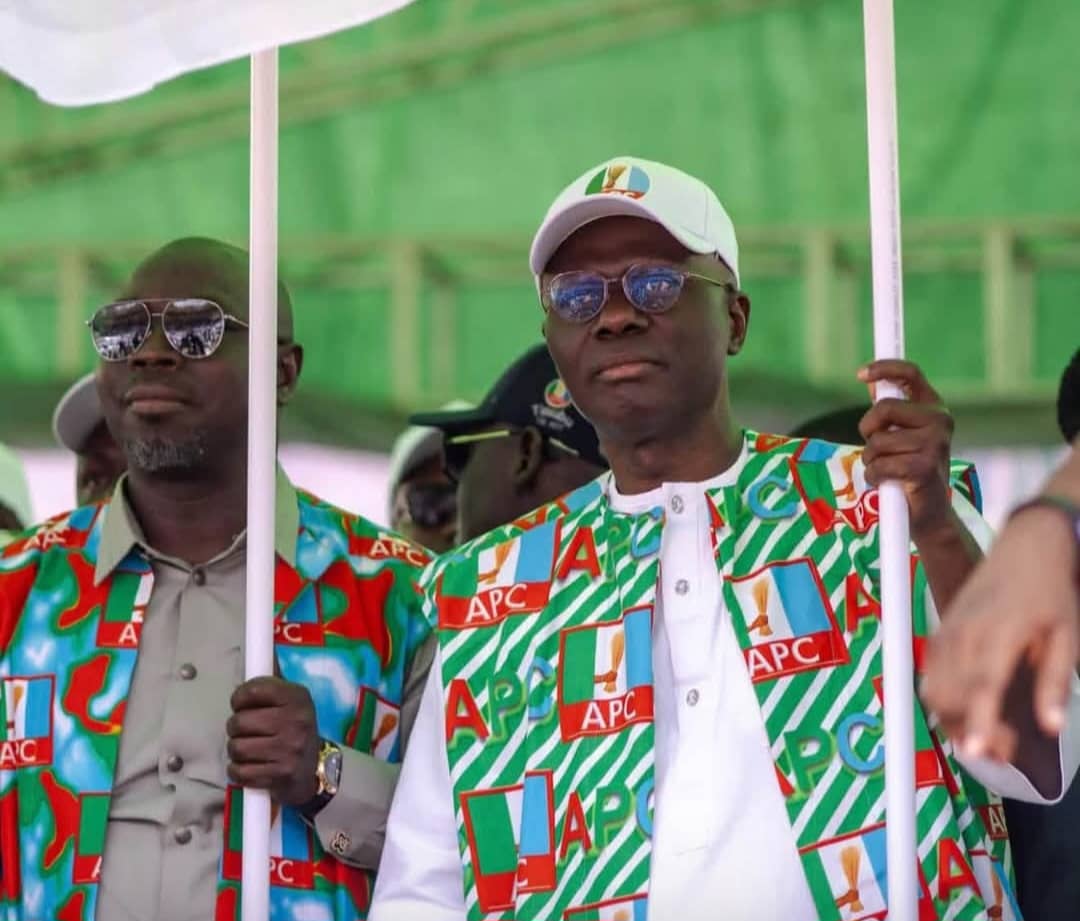
Leader of the PBAT Door-to-Door Movement, Government Ekpemupolo, has advised the people of Lagos State not to allow a repeat of what played out in the 2023 election in the state in the 2027 presidential election.
He called on the people to take advantage of the ongoing continuous voter registration exercise by the Independent National Electoral Commission (INEC) and get their Permanent Voters Cards (PVCs) to enable them vote massively for one of their own, President Bola Ahmed Tinubu.
Ekpemupolo, widely known as Tompolo, who was represented by Kestin Pondi, gave the charge in Lagos, on Tuesday, during a campaign rally for Tinubu’s reelection, during which he also presented 57 campaign vehicles to state coordinators.
“What happened in 2023 must not repeat. He must win convincingly in 2027,” he said.
He described Tinubu as a selfless and courageous leader who did not care about his reelection but went on carrying out bold reforms that are already yielding results and which many Nigerians are benefitting from.
Ekpemupolo pointed out that, the fact that Lagos is today referred to as a city for all Nigerians is all thanks to the foundation laid by President Tinubu, which successive governors have built on, and now that he has a higher responsibility, there was the need for his own people to stand solidly behind him.
“Lagos is the city for all Nigerians because someone stood firm to restructure and reform it. “From the time he came into office in 1999 up to 2007 that he left, Lagos was the envy of other states.
“Today, he has a higher responsibility, an opportunity to replicate the Lagos success story in Nigeria through reforms. There is massive development across the states today because reforms are working,” he stated.
Ekpemupolo said to ensure that the reforms continue, the people of Lagos and all Nigerians must take the message to every door and everyone that Tinubu is the man for Nigeria.
Also speaking, Governor Babajide Sanwo-Olu, pointed out that Nigeria was attaining economic stability under the Tinubu-led administration.
He advised the people to ignore the antics of opposition politicians who have no plan for Nigeria, but only desperate to win elections and have been moving from one party to another, demonstrating a lack of consistency, which he emphasised was bad quality for any leader.
Sanwo-Olu said Tinubu has constructed more roads than previous administrations in three years, given succour to students, increased minimum wage and made money available for payment of pensions.
“Why won’t we vote for him? The entire Lagos is for Tinubu. All our votes are for Tinubu. You’ve done it before, you’ll do it again. “We will touch every corner of Lagos with our message to reelect Tinubu. Go out and convince everyone that Tinubu is the candidate to vote,” the governor stated.
Earlier, National Coordinator of the movement, Sunday Asuku, urged the people of Lagos to go out and get their PVCs to enable them vote massively for Tinubu.
“We must stand our ground and deliver Tinubu with PVCs, not with guns or intimidation. Lagos must not put their son, Tinubu, to shame,” he stated.
He said in the 2027 presidential election, Nigerians must make a bold statement to retire “serial contesters” who he described as “enemies of Nigeria.”




Sanwo-Olu Celebrates Prince Olusi at 90
ShareLagos State Govornor Babajide Sanwo-Olu of has described Prince Tajudeen Olusi, Chairman of the Governance Advisory Council of the Lagos...


Akwanga Set to Host Dignitaries for Spotlight Magazine Launch
ShareBy Tambaya Julius, Abuja Akwanga, Nasarawa State, is set to host prominent personalities from within and outside the state as...

Mbah Tasks SEDC on Gas Pipeline, Support for Industrial Revolution
ShareFrom Sylvia Udegbunam, Enugu Enugu State Governor, Dr. Peter Mbah, has urged the South East Development Commission (SEDC) to prioritise...


PVCs of 2026 Registrants Not Available Yet — INEC
ShareThe Independent National Electoral Commission (INEC) said Permanent Voter Cards (PVCs) for persons who registered between Jan. 5 and July...

Rainbow Coalition: Wike Assures APC Governors Have Nothing to Fear
ShareBy Laide Akinboade Abuja Minister of the Federal Capital Territory (FCT), Nyesom Wike, has defended the emerging political coalition supporting...
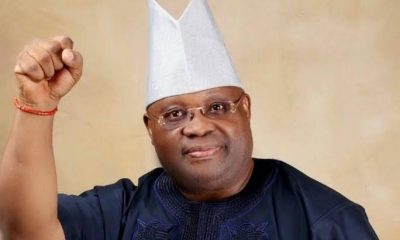

Group Welcomes Appointment of Adeleke as Tinubu’s Campaign Coordinator
ShareFrom Ayinde Akintade, Osogbo The Imole Campaign Council (TICC) has welcomed the appointment of Governor Ademola Adeleke as the Osun...


FG Raises Pensions from N12.15bn to N14.83bn for 241, 000 Retirees
ShareBy Tony Obiechina, Abuja The Director-General of the National Pension Commission (PenCom), Omolola Oloworaran, on Tuesday disclosed that more than...
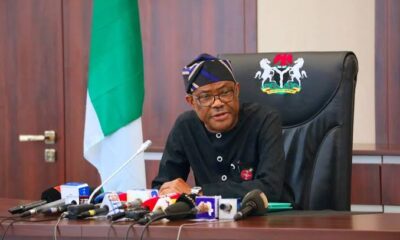

Wike Accuses NLC of Politicizing FCT Teachers’ Strike
Share By Tambaya Julius, Abuja The Minister of the Federal Capital Territory (FCT), Nyesom Wike, has accused the Nigeria Labour Congress...
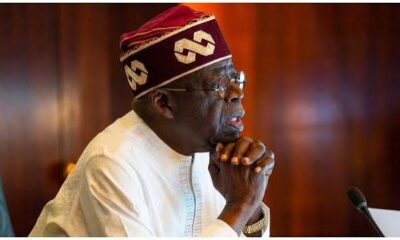

APC Unveils Revised 2027 Presidential Campaign Council, Retains Yari, DG
ShareBy Tambaya Julius, Abuja The All Progressives Congress (APC) has unveiled its revised Presidential Campaign Council for the 2027 general...
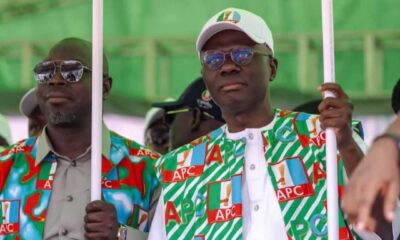

Tinubu’s Re-election: Don’t Allow Repeat of 2023, Tompolo Tells Lagos
ShareLeader of the PBAT Door-to-Door Movement, Government Ekpemupolo, has advised the people of Lagos State not to allow a repeat...