
OPINION
Benue State, from a Refugee Crisis to a Migrant Home for Violent Deradicalized Islamic Extremist

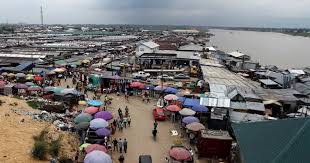
By Wilfred Uji
The “Old West” had an Institutionalized framework that eliminated violent criminal elements who were supposed to be” repentant” through a systematic forced migration and relocation.
Australia and New Zealand apart from being strategic military garrisons in the far Pacific Oceans, were crested to serve as rehabilitation centers for some kind of repentant criminals from Western Europe, Britain and France in particular.
The United States of America dubbed up the same tradition and practice, where some countries of Latin America, including some islands, have long served the strategic purpose of centers for forced migrations of criminal elements.
Some countries of Latin America voluntarily accept the deportation of criminal elements into their country, perhaps, with the expectations of some kind of material and economic reward from the United States of America.
What do nations and states gain when they willingly and voluntarily accept the deportation or forced migrations of criminal elements?
Is there some kind of horse trading with some attached diplomatic strings?
In the International system, weaker nations or conquered territories are often forced into such deals by more powerful and imperial nations.
There is no sane nation, except for some kind of mental insanity that will open up her borders, to receive an influx of violent criminal extremists under the guise of repentant criminals.
A forced migration of ex criminal elements with both a track record as well as network of violent criminal extremism, exposes and compromises the strategic security of the host recipient community both in the short and long term.
A forced migration of repentant criminals or forced deportation is at best a systematic process of internal colonization with both short and long term consequences. It is a strategic reach to migrations, social change and power dynamics over time and space.
Over time and space, Australia and New Zealand, through the process of forced migrations, have become the imperial outpost of Britain in the Far Pacific Oceans. As a matter of fact, these nations are the extension of British sovereignty in the Pacific Oceans over and above the indigenous aborigines of those nations.
What happened to the indigenous aborigines of Australia and New Zealand is a lesson of what forced migrations can impact on social change and power dynamics in history.
The Punch Newspaper of the 21st of February, 2026, carried the screaming headlines that the government of Benue State had voluntarily agreed to provide land settlements for repentant de radicalized Boko Haram members.
There is need to tread with caution as we await a formal statement and declaration from the government of Benue State.
But if this headline is true, it underscores the historical significance of the politics of rehabilitation of criminal elements in the international system and how that has played out on both short and long term security and social change dynamics.
The idea that Benue State will provide lands for the settlement of repentant Boko Haram members raises a lot of questions and dust that are legal as well as political and perhaps material in nature and character.
Firstly is that within the initiative of the Bamako Declaration, both in terms of structures and framework, there is enough room for both herders and repentant Islamic militants in the far Northern Nigerian States that shares common borders with the Sahel Region.
These states include Kastina and Bornu that can house all the herders and repentant Islamic militants.
The Bamako Declaration takes into cognisance the fact of consanguinity of the shared strategic geography of the Northern States and the Sahel Region.
Benue State has neither geographical nor historical shared antecedents with the Far Northern States or the Sahel Region, and therefore cannot provide the framework and structure that will accommodate the crises of violent religious extremism in the North.
The idea to settle repentant Boko Haram members, if they are truly de radicalized, as past experiences has always proven in the contrary, the idea to use lands in Benue State is not far from a colonization agenda of the Arewa Political Forces of the Far North.
In addition, this idea is similar to that of “RUGA” Settlements aimed at the Institutionalization of Herdsmen Occupation of North Central Nigeria. It still narrows down to an agenda of internal colonization orchestrated by the ruling aristocratic Arewa political class in strong partnership and synergy with the ruling political class of Benue State.
The institutionalization agenda is two fold, firstly, internal colonization and secondly, the conspiracy of the ruling political class of Benue State and the larger North Central Nigeria. Both Herdsmen and militant Islam Groups are real and masquerading, external and within.
If the idea to resettle the de radicalized Boko Haram members in Benue State is true, this will prove the complicity of religious forces in the enslavement of indigenous people in world history.
As Nigeria gradually enters the political season ahead of the 2027 general elections, there is a growing temptation among politicians to return to the familiar playbook: aggressive campaigns, endless promises, political propaganda, ethnic calculations, religious sentiments and the mobilisation of money and machinery.
But if the political class is paying attention, the recent Osun election should offer a sobering lesson.
Elections are no longer simply contests between political parties or exercises in political arithmetic. They are increasingly becoming referendums on performance, credibility, organisation and the relationship between politicians and the people.The Osun experience should therefore be more than another election victory or defeat to be celebrated by one camp and rationalised by another. It should be a warning to every politician preparing for 2027.
The first lesson is that the people are watching.
For too long, Nigerian politicians have behaved as though voters can be permanently manipulated with slogans, inducements and election-day theatrics. But voters are becoming more discerning. They may still respond to material incentives, but they also remember who governed well, who failed, who showed up and who disappeared after collecting their votes.
The second lesson is that political structures cannot replace public trust.
A party may possess powerful godfathers, influential leaders, vast resources and impressive campaign machinery, but these cannot indefinitely compensate for a credibility deficit. Political structures are important, but they work best when they are reinforced by genuine voter confidence.
The third lesson is that incumbency is not an automatic guarantee of victory.
Those who occupy political offices must understand that public office comes with a political bill that eventually falls due. Roads, schools, healthcare, jobs, security, salaries, infrastructure and the general welfare of citizens are not merely governance issues; they increasingly shape electoral decisions.
The politician who assumes that occupying government gives him an irreversible advantage may discover, rather painfully, that voters have the final word.
There is also a lesson for opposition parties. Winning elections requires more than criticising the government. Nigerians are increasingly interested in alternatives. Opposition parties must articulate credible programmes, build strong grassroots structures and demonstrate that they have the competence and discipline required to govern.
Perhaps the most important lesson is that 2027 cannot be approached as politics as usual.
Nigeria is facing an electorate that is younger, more digitally connected and increasingly vocal. Social media has changed political communication. Citizens can challenge official narratives in real time. Political mistakes can become national conversations within minutes. Candidates can no longer depend entirely on traditional campaign rallies and carefully managed media appearances.
The political class must also recognise that Nigerians are tired of being treated as statistics during elections and forgotten citizens afterwards.
The road to 2027 will undoubtedly produce the usual alliances, defections, endorsements and political realignments. There will be new coalitions and old rivalries. There will be attempts to weaponise identity, manipulate emotions and redefine political narratives.
But the real question is whether politicians will learn from Osun.
Will they understand that voters deserve respect? Will they realise that performance matters? Will political parties begin to prioritise competence over loyalty? Will candidates campaign on ideas rather than insults? Will politicians understand that democracy is not simply about winning elections but earning the legitimacy to govern?
These are the questions the Osun election should force the political class to confront.
The 2027 election is approaching. The campaign season may only be beginning, but the lessons have already arrived.
The politicians who choose to ignore them may do so at their own peril.
Nigeria’s voters are watching. And this time, they may be keeping a much longer memory.
Kokome, a communications strategist and public affairs analyst, writes from Lagos via kokomejohn@yahoo.com
By John Chibuzo Emmanuel
The realm of Nigerian politics today is a chessboard where our bones and dripping blood are recklessly tossed from one end to another. This is why one of the most quoted phrases in the history of our nation is “politics is a dirty game.
” Well, from the days of Azikiwe right to the days of Asiwaju, from Balewa to Buhari, from Gowon to Goodluck, from Obafemi to Obasanjo, corruption scandals have never ceased to dominate our headlines.Achebe summed it all up when he lamented: “The trouble with Nigeria is simply and squarely a failure of leadership.
There is nothing basically wrong with the Nigerian character. There is nothing wrong with the Nigerian land or climate or water or air or anything else. The Nigerian problem is the unwillingness or inability of its leaders to rise to the responsibility, to the challenge of personal example which are the hallmarks of true leadership” (Achebe 1).And in these trying times of ours, when the blood of our children flow in the thick green forest, when the cries of our raped mothers do nothing but chase away the watching birds that perch on the tall trees, when the screams of our brave soldiers that echo in the forests serve as their untimely and only goodbye; we must remember General Murtala Muhammad. In this era when inhumanity has replaced our sense of religion and empathy, we must not forget a man who truly loved, lived and died for Nigeria. We must not forget the bravest and most fearless leader to have walked the brown earth of this barren land endowed with the greatest mineral deposits. Do not laugh at this paralyzing but profound and truthful paradox.
It is indeed a national tragedy that the most distinguished and excellent individuals in our short history have either been relegated to the background of oblivion, persecuted by the majority, or slaughtered on the altar of envy. It is a national tragedy that our school children know nothing of their history or heroes. It is even a greater tragedy that they are being robbed of noticeable examples of distinguished leadership from our history. The painful consequence of this is that we have come to accept stupidity and ideological bankruptcy in politics as our national guiding principles.
Mothers in the marketplace, children in malpractice-ridden schools, students in dilapidated institutions, brave soldiers dying in the thick enclaves of Sambisa, intellectuals tired from years of doing battle with the federal and state governments, do not forget General Murtala Muhammad. Do not forget General Murtala for he is a reminder of all we can achieve if we eradicate the different manifestations of corruption unique to our lives.
General Murtala was born on November 8, 1938, and became one of the youngest generals throughout the history of Nigeria. At the age of thirty-six he took over the reins of government from General Yakubu Gowon on July 29, 1975, through a bloodless coup d’etat, and ruled the country for just two hundred days before he was assassinated by Lieutenant Colonel Bukar Suka Dimka on February 13, 1976.
However, in his two hundred days of power, he implemented some of the most impactful and iconoclastic social and economic reforms ever seen in the history of this country. In his two hundred days of power, he sacked more than ten thousand corrupt and incompetent civil servants. In his two hundred days of power, he conceived and began implementing a vision of a central capital city other than Lagos. This city is now known as the city of Abuja.
In his two hundred days in power, he championed African Liberation Movements throughout Africa as well as opposed apartheid and neo-colonialism virulently. In his two hundred days of power he did what even democratically elected leaders have always hesitated to attempt: decentralization of the national executive. He decentralized his executive powers into a military triumvirate consisting of himself, Olusegun Obasanjo and Theophilus Danjuma.
In his two hundred days in power, the University of Jos—my alma matter—became a degree awarding institution. In his two hundred days of power he set Nigeria on the path of democracy before his tragic and untimely end. In his two hundred days in power he taught Nigerians the definition of true leadership.
No wonder Achebe once popularly wrote: “On the morning after Murtala Muhammed seized power in July 1975, public servants in Lagos were found “on seat” at seven thirty in the morning. Even the “go-slow” traffic that had defeated every solution and defied every regime vanished overnight from the streets.” How can one man wield such a positive influence in our national culture?
General Murtala Muhammed never allowed his ideas to rot in the bureaucratic files of government “experts”. For this, his signature phrase “with immediate effect” has become one of the most used and sadly, abused phrases by Nigerian politicians.
Do you know that the expression “fellow Nigerians” which has been bastardized by Nigerian leaders today was a term he coined and used to address ordinary Nigerians on the street whom he truly cared for? Do you know that upon his ascension to power he cut down the heavy security and military convoys that have come to characterize modern Nigerian politics? Do you know that in his two hundred days of power corrupt military officers and even military governors faced the wrath of the law just like every other Nigerian citizen on the streets? Do you know that all this was achieved by a man of just thirty-seven years?
If we forget Murtala Muhammad, we forget the dream of the poor hawker on the street, the prayer of the sun bathed keke driver, the hope of the unemployed graduate on the verge of suicide, or the resilience of the Northern girl child in her quest for education. If we forget Murtala Muhammad, we forget the Nigerian dream. The dream of living a peaceful and happy life.
On this historic day, we must remember General Murtala Muhammed and all he stood for so that we can eternally realize and regret the depth of our profound ignorance if we make a mistake on the 2027 ballot box. We cannot afford to make a mistake in the ballot box unless we want to eternalize the pain and tragedy of our lives. Vote for the future; our future, next year. Thank you for listening.
John Chibuzo is a Nigerian writer, literary critic, educator and multi-instrumentalist based in Jos city. His poetry and essays have been published in The National Scholar, Lolwe, Beyond the Pages, Nestle on the Rock and the anthology: Letters to the Union We Hope to Become. He co-founded The Excellent Magazine in 2024 and served as it’s first editor-in-chief. He studied English and Literature at the University of Jos.
By Tochukwu Jimo Obi
The rate at which public infrastructure is being vandalised and stolen across Nigeria, particularly in the Federal Capital Territory, Abuja, has reached an alarming level that can no longer be ignored.
What was once regarded as isolated acts of petty criminality has gradually become a serious threat to public safety, government investment and the effective functioning of cities. Across Abuja, the brazen removal of public infrastructure has become so widespread that urgent and coordinated action is now required.One of the most disturbing examples is the widespread theft of manhole covers.
In several parts of Abuja, open manholes have become a common sight following the removal of their metal covers by vandals. This poses a serious danger to pedestrians, motorists and other road users, particularly at night. Beyond the immediate safety risks, the theft of these covers demonstrates the extent to which public property is being systematically stripped for the purpose of making quick money.The problem, however, goes far beyond manhole covers. Bridge rails, railway tracks, underground cables, solar street lights, electrical installations and other public facilities have also become targets. Infrastructure installed with taxpayers’ money is being dismantled and carted away, often with little or no resistance. The consequence is that facilities designed to improve public safety, transportation, security and the quality of life of citizens are being destroyed by individuals motivated by short term financial gains.
A major destination for these stolen materials is the network of makeshift scrap markets popularly referred to as “pantaker markets” in Abuja and its environs. These markets provide an avenue through which stolen public infrastructure can allegedly be disposed of with relative ease. The existence and continued operation of such markets should therefore be treated not merely as a commercial issue, but as a security and public infrastructure concern requiring the attention of relevant authorities.
Even more troubling is the role of those who purchase these materials. It is difficult to accept that buyers of manhole covers, cables, bridge components, railway materials and other government infrastructure would always be unaware of their origins. Where such materials are offered for sale under suspicious circumstances, buyers should be expected to exercise due diligence. Anyone who knowingly purchases stolen public property is not merely engaging in commerce; such a person is helping to sustain the criminal network responsible for the theft.
It is therefore worrying that successive administrations in Abuja have not appeared to give this problem the level of attention it deserves. Government agencies responsible for infrastructure, environmental enforcement and public safety must work closely with the police, civil defence authorities and other relevant security agencies to identify and raid locations where stolen public infrastructure is being traded. Such operations should not be limited to the arrest of street level vandals. Dealers, middlemen and buyers who knowingly participate in the illegal trade must also face investigation and prosecution.
The economic cost of this criminality is enormous. Every manhole cover, street light, cable, bridge rail or railway component stolen from public infrastructure must eventually be replaced. Money that could have been used to construct new roads, improve healthcare, provide schools, expand public transportation or address other pressing social needs is instead spent repeatedly replacing facilities that have already been provided. This creates a vicious cycle in which the government invests in infrastructure, criminals destroy it, and taxpayers are forced to finance its replacement.
There is also a broader question of public responsibility. Citizens should not remain passive when they witness the destruction or suspicious sale of public property. Communities have an important role to play in reporting vandals and suspicious dealers to the appropriate authorities. Government, on its part, must create effective reporting mechanisms and ensure that information supplied by citizens is acted upon. Enforcement will be difficult if citizens look the other way while stolen public property is openly traded in their communities.
The Federal Government, states and the FCT Administration and security agencies must therefore treat public infrastructure theft as a serious national security and economic issue. There should be a sustained crackdown on vandalism, proper regulation of scrap markets, effective monitoring of critical infrastructure and swift prosecution of those found culpable. Most importantly, enforcement must be consistent rather than occasional, because criminal networks quickly return whenever they discover that government attention has waned. Nigeria cannot afford to continue losing scarce public resources to vandals while millions of citizens struggle with inadequate infrastructure. The time to act decisively is now.
Tochukwu Jimo Obi, a concerned Nigerian writes from Obosi Anambra state.


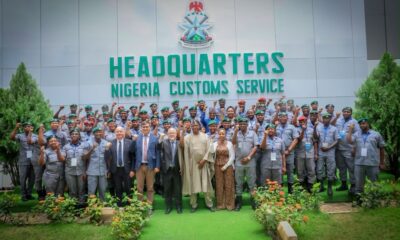

NCS, WCO, UK Intensify Anti-Corruption Drive, Strengthen Customs Integrity
Share By Tambaya Julius, Abuja The Nigeria Customs Service (NCS), in collaboration with the World Customs Organisation (WCO) and the...
Bayelsa Receives Twon-Brass Draft Constitution
ShareFrom Mike Tayese, Yenagoa The Bayelsa State Government has received the final draft copy of the constitution of Twon-Brass Kingdom...
Nigeria’s Reforms Must Now Deliver Jobs, Higher Incomes – CPPE
ShareCentre for the Promotion of Private Enterprise (CPPE) has urged the Federal Government to shift its economic reform focus from...
NICA Seeks N2trn Credit Guarantee Fund to Unlock Nigeria’s Economy
ShareThe National Institute of Credit Administration (NICA) has called for the immediate capitalisation of the Nigerian Credit Guarantee Company (NCGC)...
Aiyedatiwa Won’t Support Candidate against APC – Aide
ShareSteve Otaloro, the Senior Special Assistant (SSA) on Public Engagement to Gov. Lucky Aiyedatiwa of Ondo State, has dismissed rumours...

2027: NDC Affirms Sule-Garo as Kano North Senatorial Candidate
ShareThe Nigeria Democratic Congress (NDC) has affirmed Nasiru Sule-Garo as its senatorial candidate for Kano North Senatorial District in the...
Insecurity: Sokoto Gov’s Aide Urges Unity against Banditry
ShareThe Special Adviser on Security Matters to Sokoto State Governor Ahmed Aliyu, Col. Ahmed Usman (retd.), has called on political...
Lagos Community Seeks Intervention over Lingering Refuse
ShareSome residents and shop owners in Orile, Iganmu, Lagos, have appealed for urgent intervention over persistent refuse accumulation. They said...
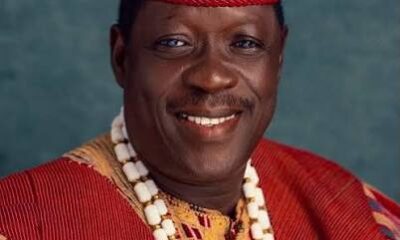

Nollywood Actor, Taiwo Hassan ‘Ogogo’ Dies
SharePopular Nollywood actor, Taiwo Hassan, better known as Ogogo, is dead. The news of the actor’s death was confirmed by...


FRSC Evacuates 15 to Hospital in Kano-Zaria Road Crash
ShareThe Federal Road Safety Corps (FRSC), Kano Sector Command, has rescued 15 persons following a lone road traffic crash involving...