
NEWS
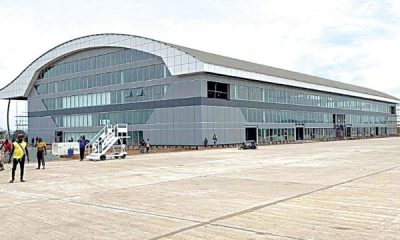
Beyond Runways: Nigeria’s Airport Revolution


By Itohan Abara-Laserian
For decades, Nigeria’s airports were viewed primarily as transport infrastructure, serving as gateways where aircraft landed and passengers began journeys.
That perception is changing rapidly as airports evolve into economic hubs, logistics centres, technology platforms and commercially driven engines of national development.
The transformation promises new employment opportunities, stronger trade connections, improved passenger experiences and greater contributions to Nigeria’s broader economic ambitions.
At the recently concluded Airport Business Summit 2026 in Lagos, industry leaders outlined a blueprint for building Nigeria’s airports differently.
Regulators, operators, consultants and other stakeholders agreed that future competitiveness would depend on intelligence, sustainability, commercial innovation and operational excellence.
Their message was clear: Nigeria can no longer design airports merely for today’s passengers, aircraft movements and traditional operational requirements.
The country must instead develop airport ecosystems capable of anticipating future demand while supporting trade, technology, investment and sustainable growth.
Global passenger traffic and air cargo demand are rising rapidly, placing Nigeria at a defining crossroads in its aviation development.
The challenge is no longer simply constructing terminals, expanding runways or increasing passenger capacity across existing airport facilities.
Nigeria must embrace smarter infrastructure, digital technology, operational efficiency and innovative financing to compete within an increasingly interconnected global aviation market.
Mr Remi Jibodu, Acting Chief Operating Officer of Bi-Courtney Aviation Services Ltd., operator of Murtala Muhammed Airport Terminal Two, captured the challenge.
“Airports must become smart businesses,” Jibodu said, arguing that future facilities would require commercial thinking alongside traditional aviation expertise.
His argument reflects a fundamental shift in how airports are increasingly understood worldwide: not merely as gateways, but economic ecosystems.
Jibodu cited International Civil Aviation Organisation projections indicating annual global passenger traffic could reach 12.4 billion by 2050.
Airports Council International, meanwhile, projects nearly 18.8 billion passengers by 2045, highlighting the extraordinary growth expected across global aviation markets.
Airbus estimates that more than 42,000 new aircraft will be required over the next two decades to satisfy rising demand.
For Nigeria, those projections represent both an opportunity and an urgent warning about the infrastructure choices being made today.
With its population projected to approach 400 million by 2050, Nigeria possesses the demographic foundation for substantial aviation growth.
The country is already West Africa’s largest domestic aviation market, while SAATM and AfCFTA create additional opportunities for regional connectivity.
“Demand is no longer the question; building the right airport terminals for the future is,” Jibodu said.
His assessment suggests Nigeria’s aviation debate must move beyond passenger numbers and focus increasingly on the quality of airport ecosystems.
Tomorrow’s airport, he argued, will no longer be defined simply by runways, terminals, control towers and aircraft parking positions.
Instead, airports will become intelligent ecosystems where digital technology, sustainability, operational efficiency and customer experience converge seamlessly.
Future terminals could feature biometric passenger processing, Artificial Intelligence-driven passenger-flow management, touchless check-in and automated resource-planning systems.
Collaborative airport decision-making platforms could also enable airlines, regulators, operators and security agencies to share information and coordinate responses.
Smart security systems, meanwhile, could improve safety while reducing unnecessary delays and creating more convenient passenger journeys through Nigerian airports.
Technology, however, will only deliver meaningful transformation if airport infrastructure is designed around efficiency, resilience and commercial sustainability.
Jibodu said modern airports increasingly depend on non-aeronautical revenues generated through retail, hospitality, logistics, digital commerce and premium services.
Airport cities and surrounding commercial developments could further transform airports into major economic centres beyond traditional aviation activities.
The commercial imperative is becoming increasingly important as passengers demand faster processing, better services and more sophisticated travel experiences.
Airports that fail to innovate could eventually lose airlines, passengers, investment and commercial opportunities to more efficient competitors across Africa.
Sustainability will also define the future airport, with renewable energy becoming increasingly central to long-term infrastructure planning and operations.
Jibodu identified circular-economy principles, energy-efficient buildings and autonomous ground vehicles as important components of sustainable airport development.
Environmentally responsible operations will become increasingly necessary as aviation faces growing pressure to reduce emissions and improve resource efficiency.
For Nigeria, green airport development could also reduce operating costs while creating opportunities for renewable-energy investment, innovation and employment.
If passenger aviation represents one side of future growth, air cargo may provide Nigeria with an even larger economic opportunity.
The Federal Airports Authority of Nigeria believes air cargo remains one of the country’s greatest untapped opportunities for diversification.
FAAN Deputy Director of Cargo Development Services, Mr Lekan Thomas, described air cargo as a critical economic growth driver.
Represented by Mrs Rakiya Alao, General Manager of Cargo Services, Thomas linked cargo expansion directly with trade, jobs and regional integration.
He said e-commerce, agricultural exports, pharmaceutical logistics and manufacturing supply chains were driving demand for efficient airfreight services.
The implementation of AfCFTA is also expected to increase demand for faster and more reliable cross-border movement of goods.
Nigeria’s four principal cargo gateways already handle growing volumes of imports, exports, perishables and express freight across several economic sectors.
They include Murtala Muhammed International Airport, Lagos; Nnamdi Azikiwe International Airport, Abuja; Mallam Aminu Kano International Airport, Kano.
Port Harcourt International Airport also remains strategically important, particularly because of the region’s energy, industrial and commercial activities.
However, Thomas acknowledged that existing infrastructure was struggling to keep pace with the country’s expanding cargo ambitions.
Limited terminal capacity, inadequate cold-chain facilities and manual documentation continue to create bottlenecks across Nigeria’s air-cargo ecosystem.
These weaknesses are particularly damaging for agricultural producers, pharmaceutical companies and exporters whose goods depend on speed and controlled conditions.
Thomas, therefore, proposed expanding cargo terminals and establishing dedicated export-processing centres to improve Nigeria’s international trade capacity.
He also advocated developing cargo villages and logistics parks capable of connecting airports directly with manufacturers, exporters and distribution networks.
Digitising cargo documentation and deploying electronic air waybills would reduce paperwork, improve transparency and accelerate cargo processing across Nigerian gateways.
Cargo community systems could further connect airlines, freight forwarders, customs authorities, handlers and other stakeholders through shared digital platforms.
Artificial Intelligence could also support demand forecasting, resource allocation and more efficient planning across Nigeria’s increasingly complex cargo operations.
“Efficient cargo logistics is far more than moving freight,” Thomas said, linking aviation directly with trade, employment and investment.
He argued that efficient cargo infrastructure could position Nigeria as West Africa’s leading logistics hub and strengthen regional economic integration.
That ambition, however, requires significant capital, creating another central question: who will finance the airports Nigeria needs for future growth?
Aviation Consultant, Dr Richard Aisuebeogun, said modern airport development required enormous financial resources beyond conventional government funding capabilities.
Consequently, governments worldwide are increasingly turning to Public-Private Partnerships and concession arrangements to bridge infrastructure-financing gaps.
Aisuebeogun argued that airport concessions were no longer radical experiments but established international models for infrastructure development.
Such arrangements enable governments to retain ownership while attracting private-sector investment, managerial expertise, technology and operational discipline.
Across Europe, airport ownership has shifted significantly during recent decades, with increasing private participation and commercialisation transforming airport operations.
Countries including Spain, Greece, Portugal, the United Kingdom and France have introduced concession models with varying degrees of success.
According to Aisuebeogun, these arrangements have helped improve operational efficiency, expand infrastructure and strengthen airport competitiveness in several markets.
Experiences from Brazil, Argentina, Bolivia and Mexico also demonstrate how carefully structured concessions can mobilise substantial infrastructure investment.
The critical distinction, he stressed, is between concession and outright privatisation of strategic national assets.
“A concession should not be confused with outright privatisation,” Aisuebeogun said, highlighting the importance of protecting public interests.
He acknowledged concerns surrounding airport charges, public accountability and long-term investment commitments under concession arrangements.
Nevertheless, international experience suggests that properly designed agreements can improve airport performance while preserving strategic government ownership.
For Nigeria, the success of any concession model will depend heavily on transparent contracts, effective regulation and enforceable performance obligations.
Infrastructure investment alone, however, cannot guarantee successful airports without equally strong operational management and institutional coordination.
Mr Ahmed Danjuma, Regional General Manager of NAIA, Abuja, identified several challenges confronting the country’s airport system.
Represented by International Terminal Manager, Abdullahi Lawal, Danjuma listed infrastructure constraints, limited funding and cybersecurity risks among major concerns.
Climate disruptions and regulatory complexity further complicate airport planning, particularly as aviation infrastructure faces increasingly unpredictable operating conditions.
Danjuma argued that operational efficiency was no longer simply about reducing costs or moving passengers through terminals faster.
Instead, he described efficiency as a strategic business asset capable of creating significant competitive advantages for airports.
Improved operations can strengthen airline confidence, increase passenger satisfaction, improve safety compliance and enhance long-term airport profitability.
Operational excellence can also support national economic development by making airports more reliable gateways for people, goods, investment and tourism.
Danjuma advocated Airport Operations Control Centres capable of coordinating activities, monitoring performance and responding rapidly to operational disruptions.
Digital transformation initiatives and real-time performance dashboards could provide managers with faster access to critical operational information.
Stronger collaboration among airlines, regulators, security agencies, ground handlers and airport operators would further improve decision-making and resilience.
Workforce development will also remain essential as airports adopt increasingly sophisticated technologies, automated systems and data-driven management practices.
Technology is already changing airport operations, with automation accelerating passenger processing and reducing dependence on manual procedures.
Artificial Intelligence is increasingly supporting predictive maintenance, helping operators identify potential equipment failures before they disrupt airport operations.
AI-powered planning tools can also improve resource allocation, passenger-flow management and decision-making during periods of heavy demand.
However, technology cannot replace the need for skilled professionals capable of interpreting data and managing complex airport ecosystems.
The future airport will therefore require a new generation of engineers, data specialists, aviation managers, cybersecurity experts and commercial professionals.
Nigeria’s airport transformation must consequently extend beyond physical infrastructure into education, workforce development and institutional capacity building.
As aviation demand accelerates across Africa, Nigeria’s choices will determine whether it merely participates in growth or leads it.
The country possesses enormous advantages, including population, market size, strategic geography, economic potential and significant regional aviation demand.
Yet, these advantages will produce limited benefits unless airport infrastructure and operations are designed around future realities rather than past assumptions.
The consensus emerging from planners, operators and infrastructure experts is therefore increasingly clear and strategically significant.
Future competitiveness will depend less on constructing more airport buildings and more on creating smarter, connected and commercially sustainable ecosystems.
Concession models could provide capital, intelligent terminals could improve passenger experiences and integrated cargo systems could unlock new trade opportunities.
Renewable energy and sustainable design could reduce environmental pressures while improving long-term operating efficiency across Nigeria’s airport network.
Artificial Intelligence and automation could transform how airports manage passengers, aircraft, cargo, resources, security and infrastructure.
The central question is whether Nigeria can translate these ideas into coordinated investments, accountable institutions and measurable operational improvements.
The airports built and managed during the next decade could determine Nigeria’s position within Africa’s aviation economy for generations.
Beyond runways and terminals, the country is now confronting a larger challenge: designing airports capable of powering national development.
Nigeria’s airport future will ultimately be measured not by concrete, steel or passenger numbers, but by economic value created.
If successfully executed, tomorrow’s airports could become intelligent gateways connecting Nigerian businesses, communities and industries with opportunities across Africa and beyond. (NAN)
From Sylvia Udegbunam, Enugu
The Enugu State Government will on Tuesday distribute farm inputs to 63,000 smallholder farmers across the state to boost agricultural production this farming season.
The government also approved the employment of 4,698 additional teachers for its Smart Green Schools, while also directing the activation of all its isolation centres following the outbreak of the Ebola in the Democratic Republic of the Congo and parts of Uganda, saying it did not want to be caught unawares.
These were made known to Government House correspondents after a meeting of the State Executive Council in Enugu at the weekend.
Briefing newsmen, the Commissioner for Information and Communication, Dr. Malachy Agbo; Commissioner for Agriculture and Agro-Industrialisation, Dr. Patrick Ubru; Commissioner for Education, Prof. Ndubueze Mbah; and Commissioner for Health, Prof. George Ugwu, said the Mbah Administration would continue to deliver optimal governance even during the campaign period, insisting that it has a mandate and vision to deliver.
The Commissioner for Agriculture and Agro-Industrialisation said, “Last year, about 40,000 farmers benefited. This year, it is even bigger and better, as the state has now approved for 63,000 farmers to receive free agricultural inputs as intervention, ranging from fertilisers to agrochemicals, free rice seeds, free maize seeds, and free pepper and tomato seeds.
“It is targeted at reducing the cost of agricultural production and ensuring that our smallholder farmers increase their income and improve their livelihoods.
“The Exco also directed that the beneficiaries of these farm inputs must be duly registered smallholder farmers who are identifiable, whose farms are captured, and can be monitored.
“So, on Tuesday, 21st July, the governor will flag off the distribution of farm inputs. Thereafter, the 260 wards will receive theirs under strict monitoring to ensure that only those identifiable as farmers benefit from the scheme to better their lives,” Ubru explained.
On his part, Prof. Mbah said the additional 4,698 teachers were to ensure that the standard for the 267 Smart Green Schools, as modelled at the Owo Campus, is fully and uniformly achieved across the state.
“Enugu State Government has further expanded and intensified its efforts to completely equip and operationalise the Centre for Experiential Learning and Innovation (CELI), which is situated within the Enugu State College of Education (Technical).
“This is a guaranteed strategy to institutionalise and ensure the sustainability of the Enugu education project, especially as it relates to the Smart Green Schools.
“This is a way to ensure that no teacher is left behind. It is also to ensure that every teacher in our Smart Green Schools passes through a thorough training programme at the centre and that they can effectively implement the type of education where our children acquire skills, not only memorise.
“CELI is also a way to support our young Enugu people who have talents, innovative skills, or who have come up with patentable ideas and solutions so that they get support to commercialise them,” Ndubueze stated.
The Commissioner for Health told newsmen that the state was taking proactive steps following the outbreak of Ebola in East Africa.
“Because countries are now regarded as a global village and considering the fact that Enugu is now a gateway state receiving direct international flights, the state government has now directed that all the isolation centres established during the time of COVID-19 should be immediately reactivated and made ready for service so that we will not have a situation we did not prepare for. This is a proactive measure for a better state of response,” he said.
He added that Exco also discussed and approved that all the expansion works going on in the state hospitals should be expedited and completed before the end of the year.
“For example, the new high-rise buildings at the Enugu State University Teaching Hospital Park Lane, the teaching hospital at the State University of Medical and Applied Sciences (SUMAS) at Igbo-Eno, among others, are now to receive extra attention, while the Enugu International Hospital will be commissioned in a matter of a few weeks,” he concluded.
Also at the press briefing were the Commissioner for Culture and Tourism, Dame Ugochi Madueke, and her Works and Infrastructure counterpart, Engr. Ben Osy Okoh.

A 13-year-old boy was killed after part of a fountain collapsed in Salamanca province, northwestern Spain, during the country’s World Cup victory celebrations.
Two other young people were injured, emergency services said, including one child who was taken to hospital with a possible broken bone in his leg.
People were celebrating Spain’s victory inside the Árbol Gordo fountain in Salamanca’s Ciudad Rodrigo, when it partially collapsed around 00:30 local time (23:30 BST).
“What was supposed to be a celebration for the victory in the Spanish National Football Team’s World Cup has turned into a tragedy,” Ciudad Rodrigo’s town hall posted on social media.
Emergency services for Castilla y León said it had received several calls about the collapse of the fountain. Part of the structure gave way after several people climbed on it to celebrate Spain’s win, local media reported.
The emergency service said it had notified the city’s local police, as well as Salamanca’s Civil Guard, its fire brigade and the local emergency medical service – which dispatched a mobile intensive care unit and a basic life support ambulance to the scene.
The emergency medical service later requested the presence of the Civil Guard at the local health centre to investigate the death of the boy who was treated there, the Castilla y León’s regional government’s website said.
It also requested the Civil Guard activate psychological support for the family.
The city’s council said it “hopes for a speedy recovery of the others who have been affected by the incident”.
Spain beat Argentina 1-0 in the World Cup final on Sunday after Ferran Torres scored in extra time.
It is the country’s second ever World Cup win, after their last victory in 2010.
Earlier this month, three people died from suffocation during World Cup celebrations in Mexico City, while a 30-year-old man also died in an epileptic crisis.

By Olumide Fred’ Adetiba
Some of us have consistently argued that many of the pressing challenges confronting Nigeria are rooted in the country’s governance structures. If we are serious about solving these challenges, then we must be equally serious about structural reforms.
That is why I am excited by some of the far-reaching reforms the present administration is pursuing, particularly the decentralisation of the Nigeria Police as a response to the country’s worsening security situation.
The debate over state police is not new. It has remained a recurring subject in Nigeria’s security discourse for more than four decades.
Before the military coup of 1966, Nigeria operated a decentralised policing system comprising the national police, regional police, and native authority police.Following the coup, however, the military abolished these structures and centralised policing under what became the Nigeria Police Force.
With Nigeria’s return to democratic rule in 1999 and the renewed calls for true federalism, the conversation around decentralising the police resurfaced. Over the years, the demand for state police has only grown stronger, driven largely by the country’s deteriorating security landscape and the limitations of a highly centralised policing system.
One of the strongest arguments for state police is the inability of the current Nigeria Police Force to effectively secure a country as vast and diverse as Nigeria. With a landmass of over 900,000 square kilometres and a population exceeding 200 million people, the country is simply too large for a centrally controlled police institution with inadequate personnel and resources.
The consequence is the emergence of vast ungoverned spaces that criminal elements have exploited with increasing sophistication.
Equally problematic is the concentration of command and decision-making at the centre. Although the police maintain commands across the federation, many critical operational decisions still require approval from Abuja. Such excessive centralisation often delays responses and weakens the effectiveness of policing at the state and community levels.
Opposition to state police has largely been driven by concerns that governors may abuse the institution for political purposes, much like some regional governments were reported to have done before the 1966 military coup.
While these concerns deserve attention, I do not believe they are sufficient grounds for maintaining the current centralised arrangement.
The truth is that no governance system is entirely abuse-proof. Even under the present structure, the police have at different times been used by powerful political actors, wealthy individuals, and influential interests to intimidate opponents and advance private agendas. The issue, therefore, is not whether abuse is possible, it always is.
The real question is whether we can design institutions with robust safeguards that make abuse more difficult, while ensuring that they remain accountable to the people they exist to serve.
After decades of debate, Nigeria now appears to have reached a historic turning point. The momentum has shifted decisively in favour of decentralised policing, and the government has initiated the constitutional amendment process required to establish a new federal and state policing architecture.
If successfully implemented, Nigeria will finally have a policing system that aligns more closely with its federal structure and is better positioned to respond to the unique security realities of each state.
One reform I particularly welcome is the proposal to change the nomenclature from the Nigeria Police Force to the Nigeria Police Service. While this may appear symbolic; symbols matter. The word “force” reflects the institution’s colonial and military heritage, whereas service speaks to its democratic responsibility to protect, assist, and serve the people.
A name change alone will not transform the institution, but it is an important first step in reshaping its culture and identity.
Having crossed the first hurdle by embracing decentralised policing, we must now focus on the second and perhaps more important challenge: designing an operational framework that guarantees effectiveness, professionalism, and accountability for both the Federal Police Service and the State Police Service.
This is why the ongoing constitutional amendment process deserves close public scrutiny. Beyond creating new policing structures, we must carefully examine the institutional arrangements being proposed, especially the mechanisms for democratic accountability. Weak accountability has been one of the defining weaknesses of many public institutions in Nigeria, and the police have not been an exception.
Public institutions exist to serve the people. To ensure they do so faithfully, democracies establish accountability systems that subject those institutions to public oversight, rather than leaving them accountable only to political office holders.
Under the proposed reforms, the Nigeria Police Council will be replaced by a National Police Council, with oversight responsibilities extending to both federal and state policing structures. However, the composition of this body deserves careful examination.
The existing Nigeria Police Council comprises the president, state governors, the chairman of the Police Service Commission, and the Inspector-General of Police. While these are important stakeholders, this arrangement cannot reasonably be described as a democratic accountability mechanism. It is essentially an internal governmental oversight structure with little or no direct representation of the broader society.
The version of the constitutional amendment bill earlier passed by the House of Representatives proposed a far more democratic model. It provided for the inclusion of representatives from the Nigeria Union of Journalists (NUJ), the Nigerian Bar Association (NBA), traditional rulers, the Nigeria Labour Congress (NLC), and two representatives of the National Human Rights Commission (NHRC). This is much closer to what democratic oversight should look like, because it broadens accountability beyond government and creates space for the organised civil society to participate in police governance.
Unfortunately, the Executive Bill subsequently transmitted by the president has weakened this framework. It removes the representatives of the NUJ and traditional rulers from the proposed National Police Council and reduces the representation of the National Human Rights Commission from two members to one. Even more concerning is the proposal regarding the State Police Service Commission.
Rather than constitutionally defining its composition, the Executive Bill leaves this critical issue to be determined by an Act of the National Assembly. I struggle to see the wisdom in postponing such a fundamental governance issue. If democratic accountability is essential at the federal level, it is equally indispensable at the state level.
For this reason, I believe the National Assembly should retain the broader and more representative framework originally proposed by the House of Representatives for both the National Police Council and the State Police Service Commission. Including organised civil society in the accountability structure of the new police service is not merely desirable, it is necessary.
It will strengthen public confidence in the institution, improve transparency, encourage better decision-making, and ensure that policing remains genuinely people-centred. Public institutions must be designed to serve citizens, not merely the political elites. They can only fulfil this mandate when they are themselves accountable to the people.
I would also make a strong case for the inclusion of youth representatives on both the National Police Council and the State Police Service Commission. There are compelling reasons for this. First, young people constitute the largest demographic segment of Nigeria’s population. Any accountability structure that excludes them cannot genuinely claim to be representative.
Second, young Nigerians interact with the police more frequently than perhaps any other demographic. They are therefore uniquely positioned to contribute valuable perspectives on police conduct, public trust, and community engagement.
Their inclusion would foster constructive dialogue between the police and the country’s largest population group, while improving the effectiveness and legitimacy of the new policing system.
Ultimately, democratic accountability should not be limited to the new Federal and State Police Service. It should become a defining principle for the governance of all public institutions in Nigeria. Our public institutions must reflect the diversity of the people they serve, especially those demographic groups that are often overlooked despite bearing the greatest impact of institutional failures. Accountability structures should intentionally create space for citizens, organised civil society, professional bodies, youth, labour, traditional institutions, and other critical stakeholders to participate in governance.
When public institutions are structured to be accountable to the people, they become more responsive, more transparent, and ultimately more effective. More importantly, they begin to rebuild the public trust that is indispensable to democratic governance.
As Nigeria undertakes this historic reform of its policing architecture, we must resist the temptation to focus only on decentralising power. Equally important is democratising accountability. A decentralised police system without democratic oversight merely relocates power; it does not necessarily make policing better.
But a decentralised police service anchored on broad-based democratic accountability has the potential to transform policing into what it ought to be, a truly public institution that exists to serve, protect, and earn the trust of the Nigerian people.
Olumide Fred’ Adetiba is a transformation architect whose work sits at the intersection of faith, leadership, governance, and development.


Enugu Distributes Agric Inputs for 63,000 Farmers
ShareFrom Sylvia Udegbunam, Enugu The Enugu State Government will on Tuesday distribute farm inputs to 63,000 smallholder farmers across the...


My Administration Remains Undeterred, Focused on Service – Alia
ShareBy Elijah Oguche, Abuja Benue state Governor, Hyacinth Alia has said his administration remains undeterred, focused, and deeply committed to...


Atiku, Obi Lack Northern Grassroot Support to Defeat Tinubu – Ganduje
ShareFrom Aliyu Askira, Kano The immediate past National Chairman of the All Progressives Congress (APC), Dr. Umar Abdullahi Ganduje, has...


World Cup: 13-years Boy Dies During Celebration in Spain
ShareA 13-year-old boy was killed after part of a fountain collapsed in Salamanca province, northwestern Spain, during the country’s World...
Eight worshippers Die in crush at Burundi Preacher’s Gathering
ShareEight people died and nine others were injured in a crush during an evangelical gathering in Burundi’s largest city, Bujumbura....


NABTEB Begins Technical College Placement Exercise Nationwide
ShareThe National Business and Technical Examinations Board on Monday announced the commencement of the 2026 selection and placement of qualified...

Beyond Runways: Nigeria’s Airport Revolution
ShareBy Itohan Abara-Laserian For decades, Nigeria’s airports were viewed primarily as transport infrastructure, serving as gateways where aircraft landed and...

Democratic Accountability: An Imperative for the New Federal, State Police Service
ShareBy Olumide Fred’ Adetiba Some of us have consistently argued that many of the pressing challenges confronting Nigeria are rooted...


Reconsidering The Rash Dismantling of Nigeria’s 6-3-3-4 System
ShareFrom one policy flip-flop to another, the Federal Government of Nigeria has scrapped the 6-3-3-4 system of education, which it...


Mandela we celebrate versus Mandela we practise
ShareBy Ebuka Ukoh The Mandela we celebrate changed history, not simply because he endured suffering. He changed history because he...