
Foreign News
Boosting Production, Crucial for Least Developed Countries, Post Pandemic – UNCTAD

The world’s poorest countries will remain on the margins of the global economy if States are unable to boost economic production, and the international community fails to provide more support, the UN Conference on Trade and Development (UNCTAD) has warned.
UNCTAD’s Least Developed Countries Report 2021, released on Monday noted that their ability to respond to and recover from crises such as COVID-19, and to advance towards sustainable development, is dependent on increasing production capacities.
The UN agency called specifically for increased investment in State and productive capacities for the Least Developed Countries (LDCs) grouping.
“Today LDCs find themselves at a critical juncture,” said UNCTAD Secretary-General Rebeca Grynspan.
“They need decisive support from the international community to develop their productive capacities and institutional capabilities to face traditional and new challenges.”
UNCTAD defines productive capacities as “the productive resources, entrepreneurial capabilities and production linkages that together determine the capacity of a country to produce goods and services and enable it to grow and develop.”
Developing production allows the world’s LDCs to foster structural economic transformation, which will in turn help reduce poverty and accelerate progress towards the UN Sustainable Development Goals (SDGs).
The report warns that reaching SDGs will require massive investment and spending, which go well beyond LDCs’ own financial means.
The UN established the LDC category 50 years ago. The grouping of the world’s weakest economies has expanded from an initial 25 countries in 1971, peaking at 52 in 1991, and stands at 46 today, with only six countries progressing enough to no longer be considered an LDC.
Over the last two decades, only a handful of LDCs have displayed encouraging signs of structural transformation and meaningful productivity improvements, the report said.
LCDs recorded the worst growth performance in about three decades during 2020. The COVID-19 pandemic has dramatically highlighted their institutional, economic and social shortcomings, the report highlights.
LDCs’ limited resilience is reflected in their low COVID-19 vaccination rates, as only two per cent of their population have managed to get shots, compared with 41 per cent in developed countries.
Grynspan urged LDCs’ development partners to consider the special needs of the more than one billion living in these countries during UNCTAD’s upcoming conference in October, under the theme, From inequality and vulnerability, to prosperity for all.
The UNCTAD report describes LDCs’ financing needs as ‘daunting’, especially in relation to structural transformation targets.
For example, the report estimated that the average annual investment required to reach the 7 per cent growth target (SDG 8.1) is around US$ 462 billion, while the average annual investment requirements to end extreme poverty (SDG 1.1) in LDCs, is estimated at US$ 485 billion.
The average annual investment required to double the share of manufacturing in GDP (SDG 9.2) is estimated at over US$ 1 trillion.
To generate sufficient development finance, LDCs will need to strengthen their fiscal capacities, increase domestic resource mobilization and improve the effectiveness of public expenditures, the report said but warned that even this will not be enough.
“The international community has an essential role to play in supporting LDCs in their efforts to mobilize adequate financing for their sustainable development needs,” the report said.
According to UNCTAD’s analysis, most LDCs will need three to five or more years, to recover the level of GDP per capita they had in 2019.
Domestic efforts to recover need to be supported by a new generation of international support measures that are more closely aligned to LDCs’ needs and 21st-century realities, Paul Akinwumi, director of UNCTAD’s division for Africa and least developed countries, said.
“A purposeful industrial policy should be at the core of LDCs’ pursuit of green growth and structural transformation because these countries need to urgently diversify from their overdependence on primary commodities.”
Akinwumi added that increasing investment in state capacity and productive capacities must be at the heart of the next programme of action for these countries for the decade 2022 to 2031, to be adopted at the Fifth UN Conference on LDCs in January 2022.
He also urged LDC governments to adapt programmes negotiated at the international level to their unique national conditions and to resolve trade-offs when formulating their national developments plans (NAN)




Australian researchers on Thursday revealed that alcohol consumption causes a higher proportion of cancers in Australia than previous estimates.
According to a statement of the University of Sydney, the study estimates that around 4.6 per cent of all cancers in Australia are caused by alcohol consumption, which also increases the risk of developing cancer by 19 per cent.
The research, published in the British Journal of Cancer, analyzed alcohol consumption behavior among 225,000 people in the Australian state of New South Wales’ 45 & Up Study.
The study’s lead author Peter Sarich from the University Of Sydney School Of Public Health said “cancer is the leading cause of premature death in Australia.
“While the science on the causes of cancer continues to evolve, the evidence is now clear that reducing alcohol consumption is an effective strategy for preventing cancer.’’
Researchers estimated that over 7,800 cancer cases diagnosed in Australia in 2024 were attributable to alcohol, exceeding earlier estimates of between 2.8 per cent and 4.1 per cent.
The study found cancer risk rises with increased alcohol intake. For every 10 drinks consumed per week, the risk of cancer increased by 19 per cent.
The risk rose by 46 per cent for liver cancer, 27 per cent for cancers of the mouth, throat, larynx and esophagus, 18 per cent for breast cancer, and 16 per cent for colorectal cancer, according to the study.
Sarich said if Australians followed national guidelines of no more than 10 drinks per week, more than 3,700 alcohol-related cancer cases annually could be prevented.
He added that only around half the population is aware that alcohol causes cancer.
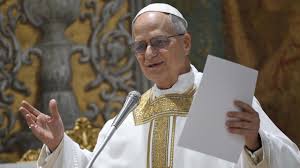
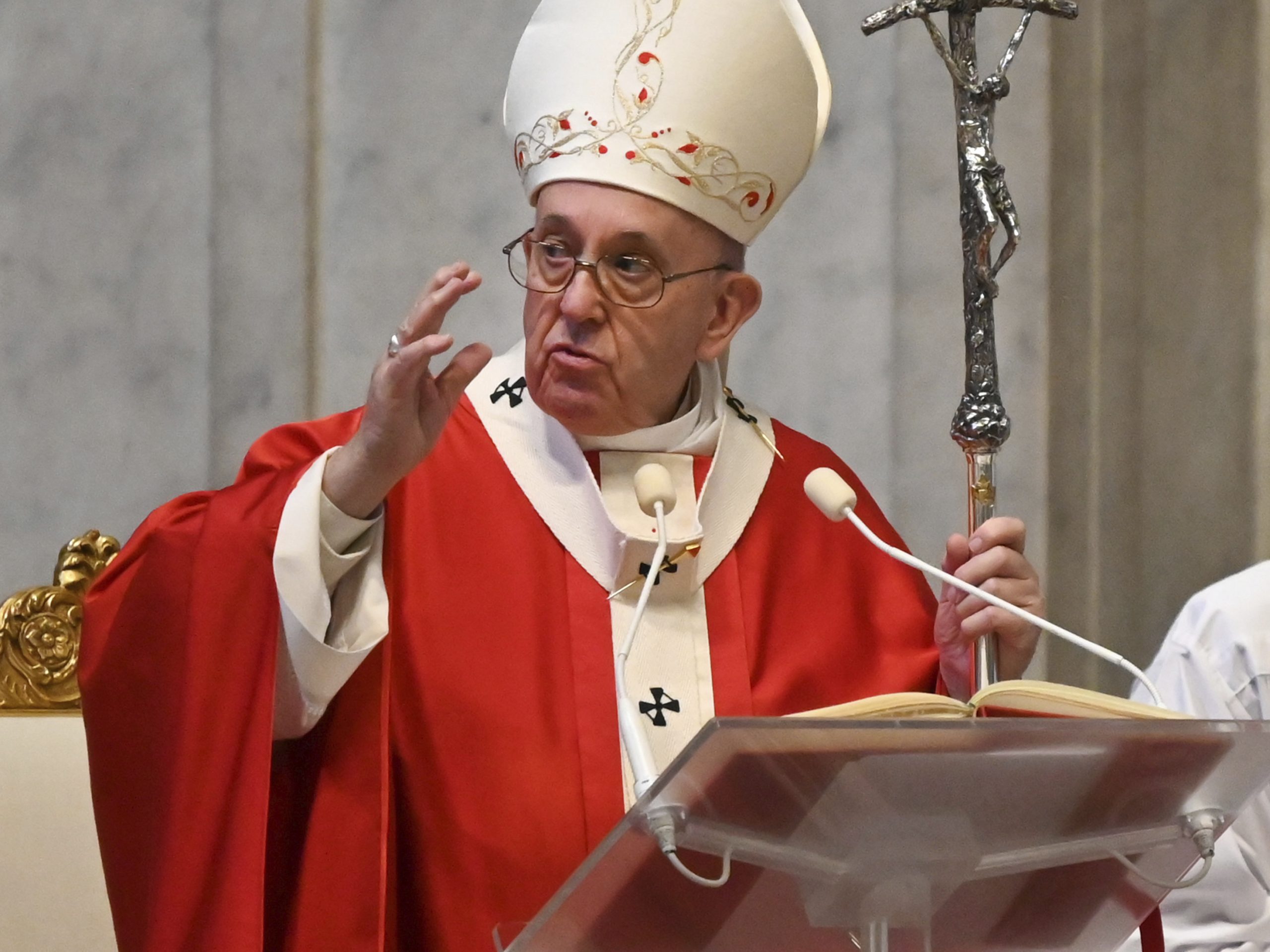
Pope Leo XIV commemorated the first anniversary of the death of his predecessor, Francis, as he addressed worshippers in Equatorial Guinea yesterday.
The pontiff paid tribute to his predecessor’s commitment to the most vulnerable and marginalised groups in society.
As he flew from Angola to Equatorial Guinea, Leo said Francis had given “his witness, his words, and his gestures.
He did so by truly living close to the poorest, to the least, to the sick, to children, and to the elderly.”
In tribute, Leo said, “Let us thank the Lord for the great gift of Francis’ life to the whole Church and to the whole world.
”As Pope, Francis headed the Catholic Church from 2013 to 2025. He died at the age of 88.
The current pope, who was the curia cardinal Robert Francis Prevost, a U.S. and Peruvian citizen, was then elected to succeed him.
Equatorial Guinea is the final stop on the pope’s 11-day tour.
Africa is one of the regions of the world where the Catholic Church is growing.
There are currently around 290 million Catholics living on the continent, and this could rise to more than 700 million by the end of this century, forecasts suggest.
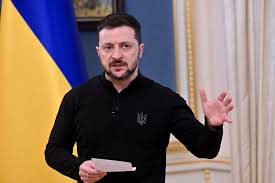
Ukraine’s President Volodymyr Zelensky has condemned a US decision to extend the period during which Russia is allowed to sell oil despite Western sanctions.
The move means countries can purchase Russian oil and petroleum products already loaded on vessels at sea until 16 May.
The US argues that the waiver is meant to ease the energy supply crunch sparked by the US-Israel war with Iran.
But in his remarks on Sunday, Zelensky said “every dollar paid for Russian oil is money for the war” in Ukraine. Widespread sanctions have been in place against Russia since President Vladimir Putin launched his full-scale invasion of its neighbour in February 2022.
The devastating US and Israel attacks against Iran have prompted it to retaliate not only against Israel and US military bases in the Gulf, but also against energy fatalities and other civilian sites across Arab allies of the US in the region.
Additionally, Iran has virtually shut the Strait of Hormuz – the narrow passage where some 20% of the world’s oil and liquefied natural gas (LNG) is usually transported through.
This has led to turmoil in energy markets, with fears that a world recession may ensue if it is not reopened soon.
The US move to ease Russian sanctions on 13 March was widely condemned by Zelensky as well as his European allies.
Extending the waiver on Friday, the US said it wanted “to ensure oil is available to those who need it” as negotiations to end the war “accelerate”.
The Ukrainian leader said Russia had more than 110 tankers from its “shadow fleet” – vessels with obscured ownership designed to help it bypass sanctions – with “over 12 million tons” of oil.
Their sale, he added, would bring $10bn (£7.4bn) to Moscow’s coffers as “a resource that is directly converted into new strikes against Ukraine”.
The Ukrainian leader did not explain what those figures were based on.
But he added that just over the past week, Russia had launched “over 2,360 attack drones, more than 1,320 guided aerial bombs, and nearly 60 missiles of various types at our cities and communities”.
That included the deadliest attack against Ukraine in months on 15 April during which more than 700 drones and missiles were used in multiple waves in one night, killing at least 18 people.
Ukraine has also attacked Russia, particularly focusing on energy facilities.
However, despite ongoing attacks, a stalemate has been reached in the war in Ukraine, with Russia in control of about 20% of Ukrainian territory.
Efforts led by the US to end the war have been put on hold as a result of the war in Iran.



OPay Leads Conversation on Africa’s Next Financial Frontier at Fintech Summit 2026
Share OPay, a leading financial technology company in Nigeria, took center stage as the Headline Sponsor of the inaugural BusinessDay...
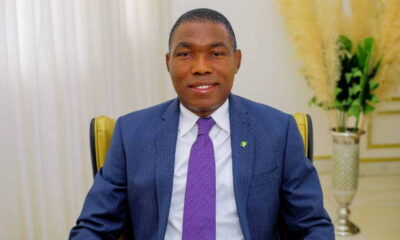

2027: Tinubu, INEC Working Against Opposition – Adebayo
ShareWhile many political actors insist that only a united front can unseat the ruling party, Prince Adewole Adebayo of the...
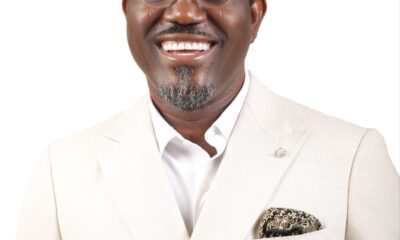

Agbomhere Declares Interest for Etsako Federal Constituency Seat
ShareBy Eze Okechukwu, Abuja Blessing Agbomhere, has declared his interest to represent the Etsako Federal Constituency, Edo State, under the platform of the All Progressives Congress...


Gov Alia Keeps Going to Abuja to Get Things for Benue People – Aide
ShareThe Technical Adviser to Benue State Governor on Media, Publicity and Strategic Communication, Solomon Iorpev, spoke with our correspondent, Attah...
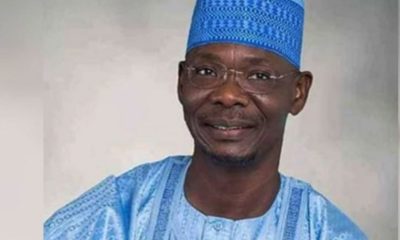

Sule Seeks Increased Dangote’s Investments in Nasarawa
ShareThe Governor of Nasarawa State, Abdullahi Sule, has urged the Dangote Group to scale up its investments by leveraging the state’s...
LBHF Tournament Honours Edun at 70 with Thrilling Bouts
ShareThe Lagos Boxing Hall of Fame (LBHF) monthly tournament returns on Saturday, celebrating founder Wale Edun’s 70th birthday marked on Monday, April...
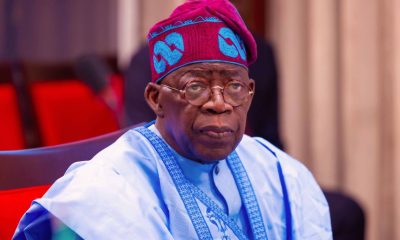

Tinubu Hails Nigerian-American Basketball Star Anosike on Historic Feats in China
SharePresident Bola Tinubu has congratulated Nigerian-American basketball star Ejimofor Anosike of the Hong Kong Bulls for his outstanding performance in the 2026...


NEMA Begins Massive Sensitisation on 2026 Flood Prediction in Anambra, Ebonyi, Enugu
ShareFrom Sylvia Udegbunam, Enugu The National Emergency Management Agency (NEMA) has concluded arrangements for a massive sensitisation in some council areas...

Kogi Pledges Support for Fight against Malaria
ShareFrom Joseph Amedu, Lokoja The Kogi State Government has assured residents of its commitment to providing the support and enabling environment needed to eliminate malaria in the state. Kogi State Commissioner for Health, Dr. Abdulazees Adeiza,...

FCT Teachers Suspend Strike
ShareThe Nigeria Union of Teachers (NUT), Federal Capital Territory (FCT), has suspended the ongoing strike by primary and secondary school...