
NEWS
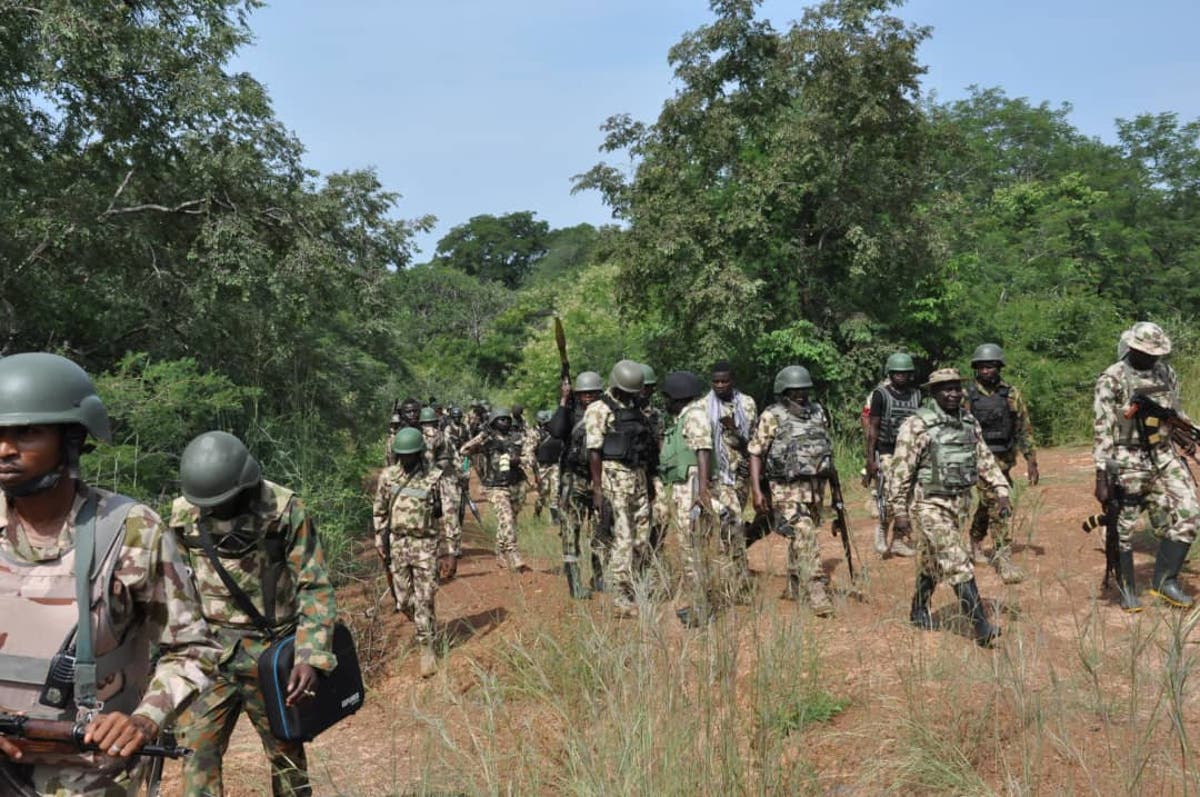
Buhari Condoles With Nigerien President Over Killing of 18 Soldiers

By Jude Opara
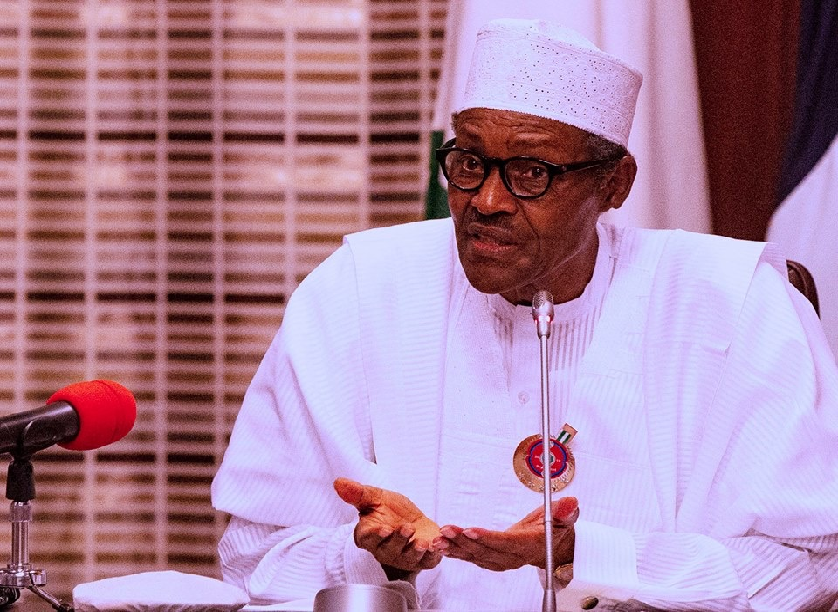
President Muhammadu Buhari has sent condolences to the authorities of Niger Republic “over the killing on 1st July, 2019 by an armed group of eighteen soldiers near Inates in the Western Region of the country.
”Buhari said in a letter to the Nigerien leader, Mahamadou Issoufou that “our thoughts and sympathies are with the families of the victims of this heinous crime.
Nigeria strongly condemns this act of terrorism and shares your pains over the enormous loss. As the nation mourns these heroes, we also pray that those reported missing would soon be found. It is also my hope that those behind the attack would be tracked and brought to justice.”








From Joseph Amedu, Lokoja
The Kogi State Government, in the wake of the new tax laws, has rolled out new tax rates for the State Ministries, Departments and Agencies (MDAs) in the State.
The State Internal Revenue Service on Wednesday convened a high‑level stakeholders’ engagement with the State MDAs to unveil the newly harmonized tax rates under the Tax Administration Act of 2025.
The Executive Chairman of the Revenue Service, Sule Salihu Enehe, while giving the comprehensive overview of the new tax law and its implications for Federal, States and Local Governments’ revenue streams, emphasised the national significance of the harmonized rates.
He described them as a critical step toward a more transparent, equitable and efficient tax system while declaring that printed copies of the updated rates will be distributed to all relevant MDAs to guarantee uniform implementation.
Dr. Enehe stressed that the fiscal landscape of Nigeria is evolving rapidly, and so States can no longer rely predominantly on federal allocations.
“To secure our economic future, we must strengthen our internally generated revenue base, making it the central pillar of our State’s sustainability”, he added.
Hassanat Enehezeyi Salawu, the Director of MDAs at KGIRS, delivered a technical briefing on the new tax rates as compiled by the Joint Revenue Board (JRB).
She noted that KGIRS has fully adopted and domesticated the rates, tailoring them to Kogi’s economic realities while preserving national consistency.
Held at the KGIRS Board Room, the meeting gathered senior government officials, policy‑makers, revenue‑generation experts, permanent secretaries, directors and heads of various MDAs and parastatals, signaling the State’s decisive move towards fiscal reform and a sustainable internally generated revenue of the State.
Hon. Timothy Ojomah, the State Commissioner for Agriculture and Food Security, speaking on behalf of the Stakeholders, expressed unequivocal support for the new tax regime while commending KGIRS for its proactive leadership and pledged close collaboration to ensure smooth adoption and compliance.
By Raphael Atuu, Abuja
The Federal Ministry of Livestock Development has pledged collaboration with the Nigerian Armed Forces to drive large-scale livestock production, strengthen food security, and support rural economic growth across Nigeria.
The Minister of Livestock Development, Idi Mukhtar Maiha, disclosed this in Abuja while receiving a delegation from the Defence Holding Company Limited.
He stated that the collaboration will begin with joint technical assessments of military farm formations nationwide to evaluate existing livestock operations, identify capacity gaps, and deploy targeted government support to boost productivity and self-sufficiency within military establishments.
“We will visit your farm formations, assess what is on ground and work with you to close the gaps. Our goal is to ensure proper standards, align with national food security objectives, and enable the Armed Forces to progressively produce their own food while contributing to national supply,” the Minister said.
Maiha emphasised that the initiative aligns with the Federal Government’s priorities of food sovereignty, job creation, and community stabilisation.
He further revealed that the Ministry has developed an integrated grazing reserve model, beginning with Wase, Plateau State, featuring internal road networks, residential settlements, schools, veterinary clinics, dams, and dedicated crop and pasture production zones designed to support modern ranching systems.
The Group Managing Director of Defence Holding Company Limited, Air Vice Marshal Anthony Ndace, explained that the organisation coordinates commercial and agricultural ventures of the Armed Forces and is expanding non-kinetic interventions such as livestock farming to promote food security, reduce insecurity, and support community reintegration.
He requested technical collaboration from the Ministry for the development of approximately 1,000 hectares of livestock and agricultural facilities in Wase, Plateau State.
The partnership is expected to create a replicable model integrating security institutions into national agricultural production and rural development frameworks.
By Tony Obiechina, Abuja
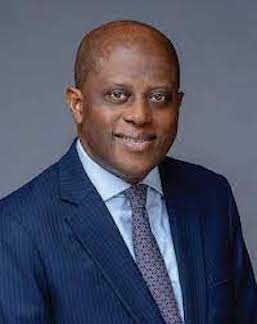
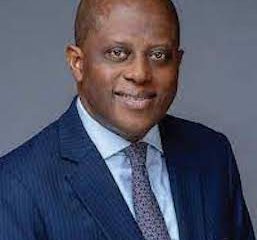
The governor of the Central Bank of Nigeria (CBN), Olayemi Cardoso said, with the diaspora remittance inflows now averaging $600 million per month, the apex bank is on course to achieve the $1 billion monthly target in the near term.
Cardoso stated this on Thursday at the 2026 G-24 Technical Group Meetings, held in Abuja, with the theme: “Mobilizing finance for sustainable, inclusive, and job‑rich transformation.
”He attributed this feat to the bold reforms introduced in the sector, which remove the long‑standing bottlenecks and expand efficient corridors.
The CBN Governor said, “On remittances, we worked with domestic and international stakeholders in 2024 to remove long‑standing bottlenecks and expand efficient corridors.
“This has led to the introduction of new instruments such as the Non‑Resident Nigerian Ordinary Account (NRNOA) for remittances and family support, the Non‑Resident Nigerian Investment Account (NRNIA) for diaspora investments, and the Non‑Resident BVN platform to allow Nigerians abroad to open and service accounts digitally.
“As a result of these reforms, remittance inflows now average about $600 million per month, and we are confident of reaching a $1 billion monthly milestone in the near term”.
On “Digital Cross-Border Payments, Global Finance, and Economic Transformation – Opportunities and Risks,” the CBN governor declared that an economy cannot be more inclusive than its payment system. Explaining that if people cannot move money easily, affordably, and safely, across towns, borders, and continents, then they cannot fully participate in modern economic life.
While applauding Nigeria’s Chairmanship under the strong leadership of the Minister of Finance and Coordinating Minister of the Economy, Wale Edun, for articulating a G-24 vision anchored on modernizing global finance, strengthening domestic capacities, and ensuring that the digital transition becomes a force for shared prosperity, Cardoso said the priorities resonate deeply with the mandate of central banks across the G-24 countries.
He said across the world, cross‑border payments are becoming the backbone of the international monetary and financial system. Noting that for G‑24 economies, inefficiencies in these systems translate directly into higher remittance costs, costly FX transactions, fragmented settlement processes, and barriers to Micro Small and Medium Enterprises’ (MSMEs) participation in global trade.
Cardoso submitted that improving cross‑border payments is not simply a technical reform, but a macroeconomic and development priority. Adding that the channels through which capital, remittances and trade flows move, now form a critical part of global financial stability architecture.
The apex bank governor insisted that cross‑border payments remain too slow, too costly, and too fragmented, especially for developing economies.
Affirming that with global remittance corridors costing over 6.0 percent, settlement lags of several days, and compliance burdens that exclude MSMEs, millions remain disconnected from global opportunity. Nevertheless, he said digital innovation presents a historic opportunity to correct these frictions.
“Modern payments infrastructure, instant payment systems, interoperable digital platforms, distributed ledger technology, and robust digital identity frameworks, can: Reduce transaction costs for remittances and trade, Shorten settlement times, Improve transparency, compliance, and auditability, and Expand access for households and MSMEs traditionally excluded from the formal financial system,” he said.
Cardoso noted that interoperable digital systems also strengthen the transmission of monetary policy, expand financial inclusion, and reduce informality, if designed with resilience and strong governance.
He informed the gathering that CBN has systematically modernized its regulatory and supervisory frameworks to keep pace with the rapidly evolving digital financial landscape.
“We strengthened operational oversight of switching and payment infrastructure providers, enhanced agent banking regulations to better address AML/CFT risks, and significantly improved interoperability across payment channels to support efficiency and scale.
“Building on these reforms, we are concluding work on the new Payment System Vision 2028, developed in close collaboration with industry stakeholders and built around five strategic priorities aimed at boosting innovation, strengthening system resilience, and advancing financial inclusion.
“A central part of this agenda is improving the cross‑border payments environment, where Nigeria has made concrete, measurable progress,” he said.
The governor also noted that to deepen regional integration, the CBN introduced the simplified KYC/AML requirements for low‑value cross‑border transactions to encourage broader participation in PAPSS.
This, according to him, has eased transaction processes for Nigerian SMEs by reducing paperwork and enabling faster, more seamless intra‑African trade payments.
“We have also embraced fintech innovation to drive the next generation of secure, instant cross‑border payments. Our Regulatory Sandbox now allows payment‑focused fintechs to test new cross‑border solutions under close CBN supervision, ensuring innovation proceeds without compromising stability,” he added.
Cardoso said in June 2025, Nigeria launched the National Payment Stack, the country’s next‑generation real‑time payment system built on ISO 20022 messaging and designed to support multi‑currency and cross‑border transactions.
“We have also strengthened our AML/CFT frameworks in line with FATF guidelines, requiring strict dual‑screening of cross‑border transactions to mitigate risks,” he said.
Concluding, the apex bank Governor said without coordination, digital cross-border payments risk becoming fragmented across jurisdictions, entrenching dominant currencies and platforms, reducing interoperability, increasing costs and undermining the ability of Emerging Market and Developing Economies (EMDEs) to safeguard monetary sovereignty.
He revealed that G‑24 countries, many with shallow markets and capacity constraints, face amplified vulnerabilities, underscoring the need for carefully sequenced and well‑regulated digital transition.

Troops Foil Suspected IPOB/ESN Kidnap Attempt, Rescue Five in Swift Night Operation
ShareBy David Torough, Abuja Troops of the Joint Task Force Southeast (JTF SE) Operation UDO KA have foiled a suspected...


New NSCDC Commandant Vows to Fight Crime in Kwara
ShareThe new Commandant, Nigeria Security and Civil Defence Corps (NSCDC) in Kwara, Bala Bodinga has pledged to fight crime in...


Olukoyede Emphasises Collaboration as Catalyst in Fight against Corruption
Share The Chairman, Economic and Financial Crimes Commission (EFCC), Ola Olukoyede, has called for closer collaboration among anti-corruption agencies in...
FOC Says Nigerian Navy Ranks 22nd Worldwide
ShareThe Flag Officer Commanding (FOC) Western Naval Command, Rear Adm. Abubakar Mustapha, has said that the Nigerian Navy has been...


Police Recover Three AK-47 Rifles, Others at Accident Scene in Niger
ShareFrom Dan Amasingha, Minna The Niger State Police Command has recovered three AK-47 rifles, six magazines and 104 rounds of ammunition following a motorcycle...

Kogi Rolls Out New Tax Rates to Boost Fiscal Reform
ShareFrom Joseph Amedu, Lokoja The Kogi State Government, in the wake of the new tax laws, has rolled out new tax rates for the State Ministries,...


Rapists Should be Castrated, Burnt Alive – Simi
ShareAfrobeats singer, Simisola Kosoko, popularly known as Simi, has sparked controversy after calling for capital punishment for rapists. Nigeria is currently in a...

Livestock Ministry Partners Military for National Food Security
ShareBy Raphael Atuu, Abuja The Federal Ministry of Livestock Development has pledged collaboration with the Nigerian Armed Forces to drive large-scale livestock production, strengthen food security,...

CBN Targets $1bn Diaspora Remittance Inflows – Cardoso
ShareBy Tony Obiechina, Abuja The governor of the Central Bank of Nigeria (CBN), Olayemi Cardoso said, with the diaspora remittance...


Terrorists Kill 34, Burn Villages in Kebbi Mid- day Attack
ShareBy David Torough, Abuja A wave of coordinated terror swept through parts of northwest Nigeria this week as suspected jihadist...