
Health
Buhari Leaves for Two Weeks Medical Treatment in the UK

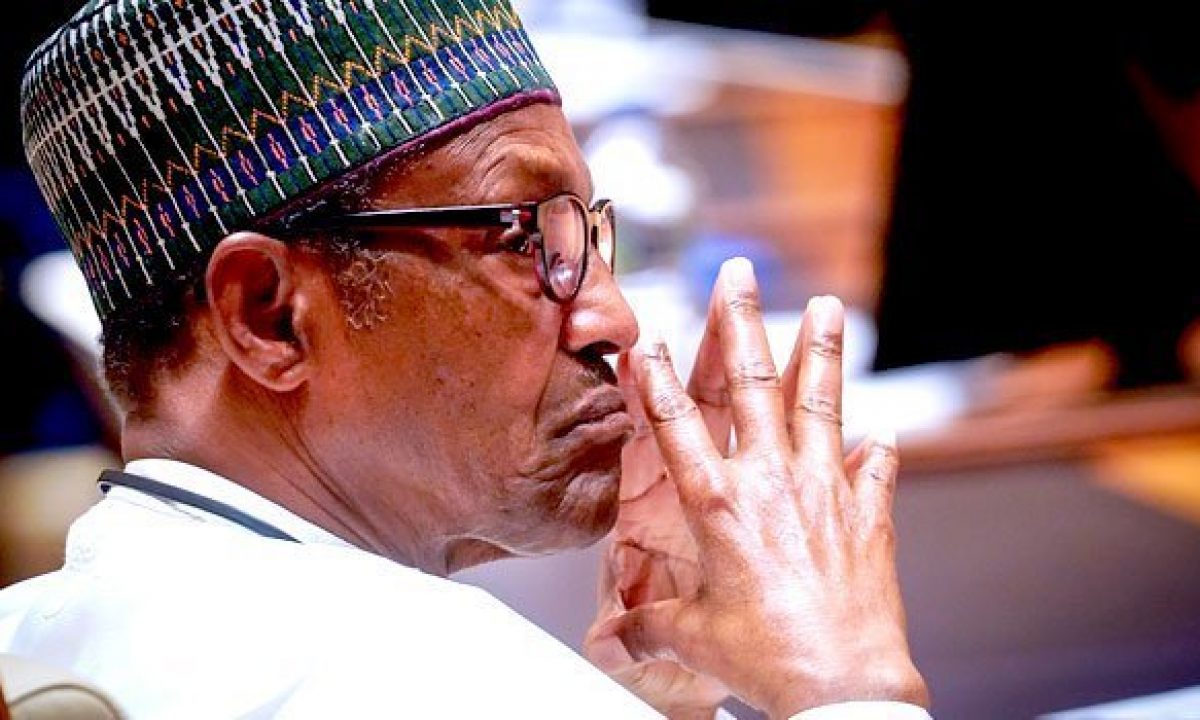
President Muhammadu Buhari will embark on two-week medical treatment in the United Kingdom. This was revealed by his Special Adviser on Media & Publicity, Mr Femi Adesina in a statement on Tuesday.
He said that the President will move to the UK from Kenya where he will attend the United Nations Environmental Programme at 50 special session.
He said that the President was expected to “deliver the National Statement of the country and participate in High Level Dialogue Sessions on the Environment at the event.
”According to him, the President will be accompanied in the visit “by the Minister of Foreign Affairs, Geoffrey Onyeama, Minister of State for the Environment, Sharon Ikeazor, National Security Adviser, Maj.
Gen Babagana Monguno (rtd), Director General, National Intelligence Agency, Amb. Ahmed Rufai Abubakar, and the Chief Executive Officer of Nigerians in Diaspora Commission, Abike Dabiri-Erewa.”He said that the theme of the special seesion is “Strengthening UNEP For The Implementation Of The Environmental Dimension Of The 2030 Agenda For Sustainable Development.”
“For 50 years, UNEP has coordinated a worldwide effort with Member States to address the world’s biggest environmental challenges. Member States are vital partners in formulating UNEP’s policy, implementing UNEP’s programme and championing solutions to our shared environmental challenges.
“UNEP@50 is a time to reflect on the past and envision the future. It provides an opportunity to reinvigorate international cooperation and spur collective action to address the triple planetary crisis of climate change, nature and biodiversity loss, and pollution and waste. No country or continent can solve these global crises alone. But each nation has a crucial role to play in protecting our people and planet.” He quoted the organizers as having said.
According to Adesina, “From Kenya, President Buhari will proceed to London for routine medical checks that will last for a maximum of two weeks.”

By Ubong Ukpong, Abuja
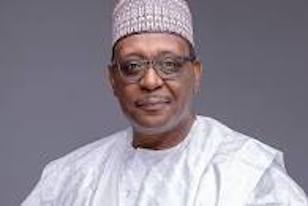
Association of Psychiatrists in Nigeria (APN) President, Prof. Taiwo James Obindo, has asked for the decriminalization of attempted suicide in the country.
He made the call at a stakeholders meeting organized by the House of Representatives Committee on Specialty Healthcare on the need to prioritize and implement the Mental Health Act.
Obindo said the establishment of the National Counselling Centers all over the country in an attempt to address mental health was like putting the cart before the horse, because suicide attempt was still a criminal offense in both the Criminal Act and the Penal Code.
“Hence the first step would be a move to decriminalize attempted suicide.
Criminalizing attempted Suicide has proven to be a major barrier for suicide prevention intervention service uptake.“The archaic law, inherited from our Colonial masters, in an attempt to stop the act of suicide did not address the thoughts and social determinants of Suicide. Significant evidence showed that 90% of those who take their lives through suicide had a background history of Mental Health Conditions; out of which 80% are attributable to Depression due to various bio-psycho-social aetiologies.
“Why do we, as a Nation, then punish individuals who are ill and need medical attention rather than prosecution? It will shock you to know that Nigeria, the giant of Africa, is lagging behind as quite a number of our neighbouring nations have abrogated that law.
“Establishing a Counselling center, without abrogating this archaic law would put, even the counselors at risk because the law also prescribes penalties for those who are aware of the plan but did not report,” he said.
The psychiatrists Association President called for the implementation of the Mental Health Act, which he said was a product of legislation that went through rigorous processes by the legislature, assented to by the President of the Federal Republic of Nigeria in 2022, and has been gazetted as a law in the Country.
This, he said, would address the “many years of neglect of this important aspect of our nationhood.”
Obindo said a requirement for the effective implementation of the Act was the establishment of a Mental Health Services Department in the Federal Ministry of Health.
“It will shock you to hear that, more than a year later, the department is yet to be established. Most of, if not all, the items in your plan are meant to be supervised by this department in obedience to the rule of law! Hence, the establishment of the department is germane to the success of all your plans,” he said.
He said the Association of Psychiatrists in Nigeria was an umbrella body of all Psychiatrists in the Country and other allied Practitioners.
He said they have been at the forefront of campaigns and advocacy for global best practices.
He lauded the Committee for the initiative, saying when well-implemented, would positively impact the hitherto neglected Mental Health, persons affected by Mental Health Conditions, and Mental Health Practitioners.
Chairman of the Committee on Special Healthcare, Dr Alex Egbona, said all stakeholders must partner to address mental health challenges and other related health cases.
The lawmaker said the committee was created to provide the requisite legislative frameworks for improved healthcare delivery in Nigeria.
He said the session was a collaborative initiative of the committee to share its mandate and planned activities with identified relevant institutions and organisations.
“I, therefore, solicit the support and partnership of all stakeholders, our development partners, international NGOs, and CSOs, you are all urged to take interest in building the capacity of the committee members and staff to enhance the efficacy of the committee.
“Consider our five thematic areas of Mental Health, Trauma and Obstetrics Fistula, Oral Health and ENT, Blood Transfusion, Blood and Management, Traditional Complementary and Alternative Medicine and engage the committee for maximum impact,” he said.
25,318 suspected cases of monkey pox, including 1,204 deaths, have been reported in the Democratic Republic of the Congo (DRC) since the declaration of monkey pox outbreak in December 2022.
The World Health Organisation (WHO) said on Tuesday.
According to the latest report, the outbreak, which was declared by the DRC Health Ministry on Dec.
16, 2022, was prompted by a notable surge in cases and fatalities associated with monkey pox as well as a fast spread to non-endemic provinces.Since the beginning of 2024, a total of 5,133 suspected cases, including 321 deaths, have been reported, according to the WHO report. It warns that the current situation of the outbreak in the DRC is of “grave concern” due to the sustained increase in suspected cases compared to previous years.
It added that with a significant burden in younger populations, particularly children under 15 years of age, who constitute the majority of both suspected cases and deaths.
In April 2024, a high-level emergency regional meeting on monkey pox in Africa was convened in DRC capital Kinshasa, gathering 12 health ministers of regional countries, aiming to develop common strategies to prevent and intervene effectively in the face of monkey pox in Africa.
“We must prevent the DRC from becoming the source of cross-border transmission, and our partnership must prioritise the health of those affected,’’ said Jean Kaseya, the director general of the African Centers for Disease Control and Prevention (Africa CDC) at the meeting.
“Over the years, monkey pox has become a real public health problem for our communities in the DRC, a regional threat and ultimately a global problem.
“We must now mobilise to resolve this crisis,” said Roger Kamba, DRC minister of public health, hygiene and prevention, said at the meeting.
Monkey pox, first detected in laboratory monkeys in 1958, is assumed to be transmitted from wild animals such as rodents to people or from human to human (Xinhua/NAN)
The World Health Organisation (WHO) has warned of dire consequences if Israel goes ahead with an impending military operation in Rafah.
The planned push into the southern border city of Rafah would lead to “a bloodbath,” the organization wrote on X, formerly twitter on Saturday
The WHO said that more than 1.
2 million people were currently sheltering in the area, many unable to move anywhere else.“A new wave of displacement would exacerbate overcrowding, further limiting access to food, water, health and sanitation services, leading to increased disease outbreaks, worsening levels of hunger, and additional loss of lives.
”According to the WHO, only 33 per cent of Gaza’s 36 hospitals and 30 per cent of primary health care Centre’s were functional in some capacity amid repeated attacks and shortages of vital medical supplies, fuel, and staff.
WHO calls for an immediate and lasting ceasefire and the removal of the obstacles to the delivery of urgent humanitarian assistance into and across Gaza, at the scale that is required.
Israeli Prime Minister, Benjamin Netanyahu is determined to launch an offensive in Rafah to eliminate the remaining strongholds of Hamas.
The organisation said that although Israel’s allies have repeatedly urged caution, as a large majority of the approximately 2.2 million inhabitants of the Gaza Strip have fled to the south during the war. (dpa/NAN)



Para Badminton: Bolaji, Chigozie qualify for Paris 2024 Paralympics
ShareThe duo of Mariam Eniola Bolaji and Jeremiah Chigozie have qualified for the Paris 2024 Paralympic Games coming up from...


FCTA Moves to Curb Medical Tourism
ShareBy Laide Akinboade, AbujaFederal capital Territory Administration (FCTA) has pledged to provide the necessary support for the successful completion and...


Ortom, Ode, Asemakaha Felicitates With Alia on 58th Birthday
ShareFrom Attah Ede, Makurdi Former Governor of Benue State, Chief Samuel Ortom, the incumbent Deputy Governor, Barr Sam Ode and...


NAICOM, RMAFC Collaborate on Economic Diversification
ShareBy Tony Obiechina, AbujaThe Commissioner for Insurance/CEO, Mr. Olusegun Ayo Omosehin, and his management team have met with the members...


22,000 Beneficiaries to Get N50,000 Nano Businesses Grant in Kogi
ShareFrom Joseph Amedu, LokojaNo fewer than 22,000 beneficiaries in Kogi will get N50,000 each, under the Presidential Conditional Grant Scheme...


CBN Unveils Strategy to Boost Remittances
ShareBy Tony Obiechina, AbujaThe Central Bank of Nigeria (CBN) has activated plans to double foreign-currency remittance flows through formal channels...


Accountant General Declares N318.5b Revenue Inflow in First Quarter
ShareBy Ubong Ukpong, AbujaThe Accountant General of the Federation, Mrs Oluwatoyin Madein on Wednesday said total revenue inflows to the...

Senate Charges Army, Police to Increase Presence in Uzo-Uwani to Forstall Peace
ShareBy Eze Okechukwu, AbujaThe Senate yesterday charged the Inspector General of Police (IGP) Kayode Egbetokun and Chief of Army Staff...


Ebonyi LG Polls: EBSIEC Gives 3rd June Ultimatum for Political Parties to Conclude Primaries
ShareBy Godwin Okeh, AbakalikiEbonyi State Independent Electoral Commission, EBSIEC, on Wednesday gave 3rd June 2024 ultimatum for all political parties...
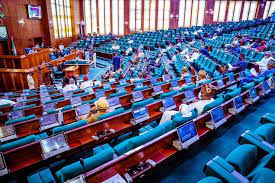

Reps Member Calls for Urgent Intervention in Federal Teaching Hospitals
ShareBy David Torough, AbujaThe Chairman, House of Representatives Committee on Health Institutions, Amos Magaji has called for an urgent financial...