
BUSINESS
Calabar, Kano FTZs Concession Remains FG’s Economic Solution to Industrialisation – NEPZA

Managing Director, Nigeria Export Processing Zones Authority (NEPZA), Prof. Adesoji Adesugba, says the planned concession of the country’s two public free trade zones remains government’s best economic approach to accelerate Nigeria’s industrialisation agenda.
A statement by Mr Martins Odey, Head, Corporate Communications, NEPZA, on Wednesday said Adesugba made the remark during a road-show for the concession of the two zones in Lagos.
The event was organized by the National Council on Privatisation through its secretariat, Bureau of Public Enterprises (BPE), with the Ministry of Industry, Trade & Investment and NEPZA.
It was aimed at further attracting investors and their sundry partners to take up the ownership of the zones.Adesugba said the planned handshake with the would-be concessionaires would positively impact on the operation of the 30-year old public facilities for global competition. “The two zones are highly viable because of many reasons, including their vital locations, easy access to raw materials, seaports, airports, outside infrastructure, labour and importantly the boisterous nature of the two commercial cities.
“The Authority is, therefore, available to support and assist the new owners, to speedily surmount challenges that may come with taking up the management of this kind of business. “I want to assure the private sector and particularly, companies that are set to file their bids, to count themselves lucky because of the great requisite return on investment the facilities will be offering,’’ he said.
Adesugba added that the scheme offered complete tax holiday from all Federal, State and Local Government taxes, rates, customs duties and levies. He said the duty-free on import of capital goods, consumer goods, machinery, equipment and furniture were guaranteed, adding that the scheme also permitted 100 per cent foreign ownership of investments.
The NEPZA MD said duty on exports into the customs territory was calculated on the value of originally imported component raw materials and not on the value of finished goods. He added that the scheme provided opportunity to export items on Nigeria’s import prohibition list, provided that it could be proven that at least 35 per cent value had been added to promote local content.
“The scheme offers permission to sell 100 per cent of manufactured, assembled or imported goods into the domestic market and it guarantees 100 per cent repatriation of capital and profit. “It was imperative for the private sector to now leverage on these incentives as the scheme allows them to ride on the Africa Continental Free Trade Agreement (AfCFTA) framework to freely access the continent’s huge market,” he said.
Otunba Adeniyi Adebayo, Minister of Industry, Trade and Investment, in an address, said the unrelenting efforts of the National Council on Privatization had made the process leading to the concession of the two zones seamless so far.
The minister said that the decision to privatise them was hinged on the Federal Government’s preparedness to produce world-class free zones that the country could use to solve some of it’s economic challenges.
“Government’s stance to allow for a transparent process that would bring up virile concessionaires, with the right capacity, expertise and finance to convert the zones to national economic asset, capable of generating employment for the teeming youth and Foreign Direct Investment (FDI) is topmost.”
Mr Alex Okoh, Director-General, Bureau of Public Enterprises (BPE), said the concession model to be used would be that of “build, rehabilitate, operate and handover,’” over a period. He added that the Lagos road-show was part of the process leading to the final concession of the two facilities by December. (NAN)


The Onitsha North Local Government Council of Anambra on Sunday commenced the demolition of some marked illegal structures at the Onitsha Main Market.
Recall that Gov. Chukwuma Soludo of Anambra said demolition of the illegal structures was aimed at restoring the original master plan of the market and thereby, improve its economic activities.
The development followed an earlier statement issued by the council through the Office of the Local Government Chairman of Onitsha North, Anthony Nwora, dated Feb.
26, notifying affected traders and occupants of the planned demolition.Nwora noted that the occupant were duly notified and the mission was to reclaim the original master plan, restore order for seamless trade and shop activities.
According to him, the council reminded owners and occupants of illegal structures located at Park 1, Park 2 and Park 3 of the Main Market, that the grace period granted to them had expired.
He explained that the Main Market, located in Onitsha, one of the largest commercial cities in southeastern Nigeria, had over the years, faced challenges related to congestion and unapproved structures.
However, what sounds as a relief to the traders was a court injunction that restrained Soludo from demolishing the market, a ruling that brought relief and jubilation to traders.
Justice Joseph Nweze of the Anambra State High Court in his ruling, ordered all parties to maintain the status quo and refrain from any form of self-help.
He instructed the counsels to formally notify the Attorney General of the proceedings and adjourned the substantive hearing to March 16.
Lamenting the demolition, the affected traders said that the government did not obey court order which refrained it from demolition of their stores.
When contacted for comment, the Anambra Commissioner for Information, Dr Law Mefor, explained that the state government was not aware of any court injunction restraining it from demolishing illegal structures in the market.
According to him, the state government is not carrying out any demolition in Onitsha, it is being done by the Onitsha North Local Government.
By David Torough, Abuja
Nigeria moved to reposition its economy at the weekend with the signing of a landmark $1.3 billion alumina refinery agreement, even as escalating tensions in the Middle East threaten to send global oil prices soaring above $100 per barrel.
In Abuja, the Federal Government and the African Finance Corporation (AFC) sealed a Memorandum of Understanding to jointly finance three strategic mining projects, a $1.
3 billion alumina refinery, a nationwide geoscience mapping initiative and the establishment of a special investment vehicle to unlock mineral assets.Minister of Solid Minerals Development, Dele Alake, described the agreement as “a landmark deal” that would transform the mining sector, deepen local value addition and significantly increase its contribution to Gross Domestic Product.
The refinery is designed to process approximately one million tonnes of bauxite annually using a modern Bayer-process flowsheet, supported by an on-site gas-fired cogeneration plant for steam and electricity. It is projected to operate for about 20 years at 95 per cent utilisation, producing an estimated 19 million tonnes of alumina over its lifespan.
Economic projections indicate an annual GDP contribution of $1.2 billion, over $25 billion in total economic value across the project lifecycle, and about $8 billion in foreign exchange earnings.
Executive Secretary of the Solid Minerals Development Fund, Fatima Shinkafi, described the transaction as the largest in the fund’s history, noting that the $1.3 billion capital expenditure signals renewed investor confidence in Nigeria’s mining reforms.
Beyond the refinery, the partners will embark on a comprehensive geoscience mapping exercise to generate credible data on Nigeria’s mineral deposits, long seen as a major constraint to large-scale investment. A joint strategic investment vehicle will also be created to accelerate exploration and development once mapping and feasibility studies are completed.
The signing ceremony was witnessed by AFC President and CEO, Samaila Zubairu, alongside senior government officials, reinforcing the administration’s push to diversify the economy away from crude oil and tap into deposits of bauxite, lithium, gold, iron ore and rare earth minerals.
However, while Nigeria seeks to reduce dependence on oil revenues, developments in the Middle East could once again underscore the economy’s vulnerability to global energy shocks.
Analysts predict oil prices will jump sharply when markets open following US and Israeli strikes against Iran, raising fears of a prolonged regional conflict. Brent crude, which traded above $72 on Friday, could surge to between $85 and $90 per barrel in early trading, according to energy analysts — with the possibility of breaching $100 if tensions escalate.
At the centre of concern is the Strait of Hormuz, the strategic maritime corridor that handles roughly 20 per cent of global oil consumption. While not formally closed, major shipping companies are reportedly suspending transit due to soaring insurance costs and security risks.
Energy consultancy Rystad Energy warned that a prolonged blockade could remove between eight and 10 million barrels per day of crude supply from global markets — a gap analysts say would be difficult to offset even with strategic reserves held by OECD countries.
The last comparable price spike occurred at the onset of the Russo-Ukrainian War, when crude surged above $100 per barrel, triggering global inflationary pressures.
Economists caution that sustained high oil and gas prices could dampen growth, raise inflation, and hurt sectors such as aviation, maritime transport and tourism. Gas markets are also expected to react strongly, given Qatar’s key role in global liquefied natural gas exports.
The potential energy shock presents a delicate balance for oil-importing nations and major economies heading into election cycles, as higher fuel costs threaten consumer confidence and economic stability.
For Nigeria, the refinery deal signals a long-term strategy to diversify and industrialise its solid minerals sector. Yet in the short term, the nation — like much of the world — may once again feel the ripple effects of turbulence in the global oil market.
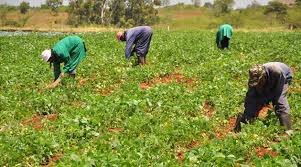
Wheat farmers in Gombe State have lamented the impact of climate change on wheat cultivation in the state, amid poor harvest.
Chairman, Gombe Chapter of the Wheat Farmers Association Bala Garba, said yesterday that many members of the association were expecting poor harvest in the state.
Garba said that the impact of climate change was increasingly becoming unbearable for most wheat farmers who often cultivated the commodity in the dry season between October and March.
According to him, many farmers are expecting a poor harvest as they begin harvesting due to the delayed harmattan season this year.
”The situation can threaten the cultivation of wheat as many farmers who recorded losses are already planning to abandon the commodity.
”This year, we didn’t see harmattan like we usually experienced in the past which helps us to cultivate wheat.
”You know the harmattan season is a good period for wheat cultivation, because of its cool, dry, and windy conditions which provide the necessary environment for wheat growing under irrigation.
”But this year is different as we didn’t witness any harmattan until slightly in February; making wheat farmers to suffer huge losses due to poor yield.
”Over 2,000 wheat farmers that planted the crop this year are lamenting because it is certain they won’t get value for their investments.”
Garba said there was a need for relevant stakeholders and the government to support wheat farmers with a view to encouraging its cultivation in the future.
He also appealed to both the state and the Federal Government to support farmers with climate resilient inputs to enable them tackle the impact of climate change on agriculture.
He further called on farmers to embrace climate smart agriculture practices and to seek extension services before carrying out farming activities to minimise losses associated with climate change.



Nasarawa Secures $1.008bn in Domestic, Foreign Investments
ShareFrom Abel Zwanke, Lafia Nasarawa State secured domestic and foreign direct investments totaling $1,008,529,220 between January and December 2025. The figure is separate from other investments attracted within the...


India, Canada Reset Ties with Landmark Nuclear Energy Deal
ShareIndia and Canada have announced a host of agreements, including a 10-year nuclear energy deal, after their prime ministers met in Delhi to reset ties that...


ASUU, Students Protest Alleged Move to Seize FUT Minna Bosso Campus.
ShareFrom Dan Amasingha, Minna. The Academic Staff Union of Universities (ASUU) at the Federal University of Technology, Minna (FUTMINNA) has strongly condemned what it described...


Niger Recruits 5,000 Health Workers, Commissions Specialist Hospital
ShareFrom Dan Amasingha, Minna The Niger State Government has announced plans to recruit up to 5,000 health workers as part of a sweeping reform of its healthcare delivery...


FCT-IRS Urges Residents to File Individual Returns before March 31
ShareBy Laide Akinboade, Abuja The Federal Capital Territory Internal Revenue Service (FCT-IRS) has advised all taxable individuals including those in employment, elected and appointed public...


Nigeria’s Net Reserves Rises to $34.8bn – Cardoso
ShareBy Tony Obiechina, Abuja The Governor of the Central Bank of Nigeria (CBN), Olayemi Cardoso, Nigeria’s gross and net foreign...

Benue Spends Over N1.2bn on Resettlement of Yelewata IDPs, Others
ShareFrom Attah Ede, Makurdi The Benue State Government on Monday said it has judiciously spent not more than N1.275 billion...

Executive Order: FG Begins Direct Remittance of Oil Revenues to FAAC
ShareBy Tony Obiechina, Abuja The Federal Government has begun implementing Executive Order 9 of 2026 mandating the direct remittance of...

Tinubu Needs Second Term to Complete Reforms, Says Oyetola
ShareThe Minister of Marine and Blue Economy, Dr. Adegboyega Oyetola, says President Bola Tinubu needs a second term to complete...


Oyo APC Urges Members to Disregard Fake Exco Lists in Circulation
ShareThe leadership of the All Progressives Congress (APC) in Oyo state has urged members and the general public to disregard...