
NEWS
Celebrating the Benue State Golden Jubilee

By Iyorwuese Hagher
I was present at the beginning.
On February 3, 1976, Benue State was created through the historic and heroic state-creation exercise carried out by the Military Administration of General Murtala Mohammed.
Born alongside second-generation states such as Bauchi, Borno, Imo, Niger, Ogun, Ondo, and the FCT, Benue entered the Nigerian Federation with hope, cultural confidence, and vast agricultural promise.Fifty years later, there is no mass celebration with jubilant dances, parties, and anthems to mark achievements or express hope, nor reflective publications, nor individuals honoured at public ceremonies for landmark achievements or contributions to the emergence of the present Benue State.
We expected the BNSG to rally the whole state to Makurdi for a weeklong stocktaking of the past 50 years, to celebrate our achievements and to decry our failures. Instead, there is underwhelming silence, deliberate looking away and looking down, yet revealing the tragedy of failed dreams, thwarted visions, and cascades of leadership failures.As one of the founders of Benue State and the founding Chairman of the Benue State Council for Arts and Culture, my task was clear: to help give a new state a new soul. We understood that development without culture is directionless and that people who forget their stories soon forget their responsibilities. The Arts Council moulded unity from the diverse ethnic tapestry: Etulo, Idoma, Igala, Igede and Tiv.
At the outset, we collectively envisioned a state with extraordinary advantages. There was fertile land, a vibrant agrarian economy, a rich intellectual tradition, and a culturally cohesive, non-Muslim, non-Hausa Fulani-conquered population. We boasted of ruling the nation through agricultural industrialisation, rural development, and educational leadership.
Over the decades, I have served Nigeria in many capacities – as a Senator, Minister, Ambassador to Mexico, Panama, Costa Rica, and Guatemala, and High Commissioner to Canada. From those vantage points, I watched Benue from afar, hoping that distance would clarify progress. It did not. I even came home to contest the Governorship. I failed. Then I saw a slow erosion of institutional memory, a persistent recycling of empty promises, and a political culture detached from the people’s realities.
At 50, there is little to celebrate. The Founding Fathers have been betrayed.
Infrastructure: Major road networks remain unfinished or dilapidated, and rural communities are cut off from markets. Industrial zones announced decades ago exist only on paper.
Education: Once home to respected public and private schools, including Government College Katsina-Ala, Mt. St. Michaels Secondary School, Aliade, W.M Bristow Secondary School, Gboko, Government College Utobi, Government College Makurdi, and Mt. St. Gabriel Secondary School, Makurdi, with a strong teaching and mentoring culture, Benue has seen declining educational outcomes, inadequate guidance, and rising illiteracy.
Despite a proliferation of doctoral degrees and professors from tertiary institutions (a bragging right), Benue State’s Human Development Index (HDI) remains a pitiful indicator of low literacy and school-environment rates, and even lower tertiary attainment. Benue youth are jobless, unemployed, and unemployable because they lack skills. In rural Benue communities, especially in conflict areas such as Kwande, Agatu, Apa, Gwer-West, Guma, Katsina-ala, Logo, Makurdi, and Ukum, the government seems to have abandoned governance, ceding it to herders and bandits.
Benue’s living standard metrics and Human Development Index (HDI) lag behind those of states created in 1976 and even those created twenty years later. For over twenty years, investment in people and services has been insufficient and ineffective.
In health care delivery, the state has fewer health resources per person and a weak health care system.
Benue State has the highest number of Internally Displaced Persons in Nigeria, reflecting repeated violence that disrupts livelihoods and public services. Repeated genocidal attacks from outside sources like Fulani Herdsmen and local politician-bred bandits have disproportionally displaced communities, damaged infrastructure and deterred investments. Insecurity has undermined all pillars of development, making the state one of the most unstable and unsafe places to live in Nigeria.
Amidst all this dystopia, the political class, especially the Benue State Government, is in denial. It refuses to engage with the pain and trauma of ordinary Benue people.
The Benue condition is a humanitarian crisis, a cesspool of persistent violence, displacement of farming communities, and prolonged insecurity. The Benue condition has eroded economic productivity and social and political trust.
I am an Internally Displaced Person, too. I come from a proud community in Kasar, Katsina-Ala. I have been displaced from Kasar, along with my kinsfolk, for over ten years. My family, like thousands of others, has fled for our lives, leaving the Fulani herdsmen and their local comprador bandits to take over our homes, farms, schools, churches, and community.
Our fate is now forgotten, and over five thousand graves in Sankera, since 2015, are merely a regretful reminder of vicious crimes against our people. Likewise, the recent genocidal attacks against our people in Kwande at Abende on the Benue-Cameroon border have not made the national headlines. The Government has turned its back on the people who elected it to power.
Our inability to host a public week-long jubilee celebration is, in itself, a silent admission and public confession that the State Government is more interested in politics, social travel, and capital flight than in governance. A celebration of our golden jubilee would have required bringing everybody together, a task the Benue State Government vehemently opposes. The posthumous award to the veteran journalist Dan Agbese, presented during a state broadcast by His Excellency, Governor Alia, is well deserved. We thank the governor, but sadly, it is too late and too little: Agbese died only recently, and his remains are yet to be interred.
BNSG is a systematic machine for the dismemberment of unity and cohesion. Bringing all of us together would have required an honest answer to the pathetic narrative of squandered goodwill and squandered opportunities, and the credibility gap between Benue’s potential and its tragic reality.
Beyond the Jubilee Celebration
Now that the failed expectations of a robust jubilee celebration have risen and ebbed, the Benue people must all rise and create history together. We must end this dystopia with new leadership in Benue. We must look beyond this failed jubilee celebration, look beyond leadership failure and lack of cohesion. The real question is whether the Benue people will continue to reward poor leadership and make poor choices that fail to translate memory into progress for our people, or whether, as the new circle of political recruitment looms, character, integrity, and public spirit will be our watchword.
Iyorwuese Hagher, OON.
On behalf of: The founders: J. S. Tarka, J.C. Obande, Aper Aku, Joseph Akperan Orshi, Isaac Shaahu, Paul Unongo, Suemo Chia, J. T. Akure, Toryima Orga, Gbihi Vembe, Acheme Paul Anyebe, Iyorwuese Hagher, Joe Omakwu, Oguji Ikongbe, Vincent Okwu, Simon Shango, Audu Ogbe, Jonah Elaigwu, Ode Obarike, Edwin Ogbu, Raymond Washima Erukaa, Mvendaga Jibo, Shima Gyoh, Chia Surma, Simeon Bai, Hemen Tyungu, Yongo Humbe, Jerome Tilley Gyado, Atim Atedze, Ugba Uye, Joseph T. Orkaa, Ameh Ebute, Paul Achimugu, Justin Tseayo, Francis Idachaba, Ochapa Onazi, Hindan Asa, Agan Dankaro, Abutu Obekpa Ogwuji Ikongbe, Bernard Omaye, Ahmadu Ali, Atom Kpera, Elizabeth Afadzwana Ivase, S.P.S. Gusah, Iyorgyer Katsina Alu, Ezekiel Akiga, Paul Belabo and Obadiah Tebu.
From Mike Tayese, Yenagoa
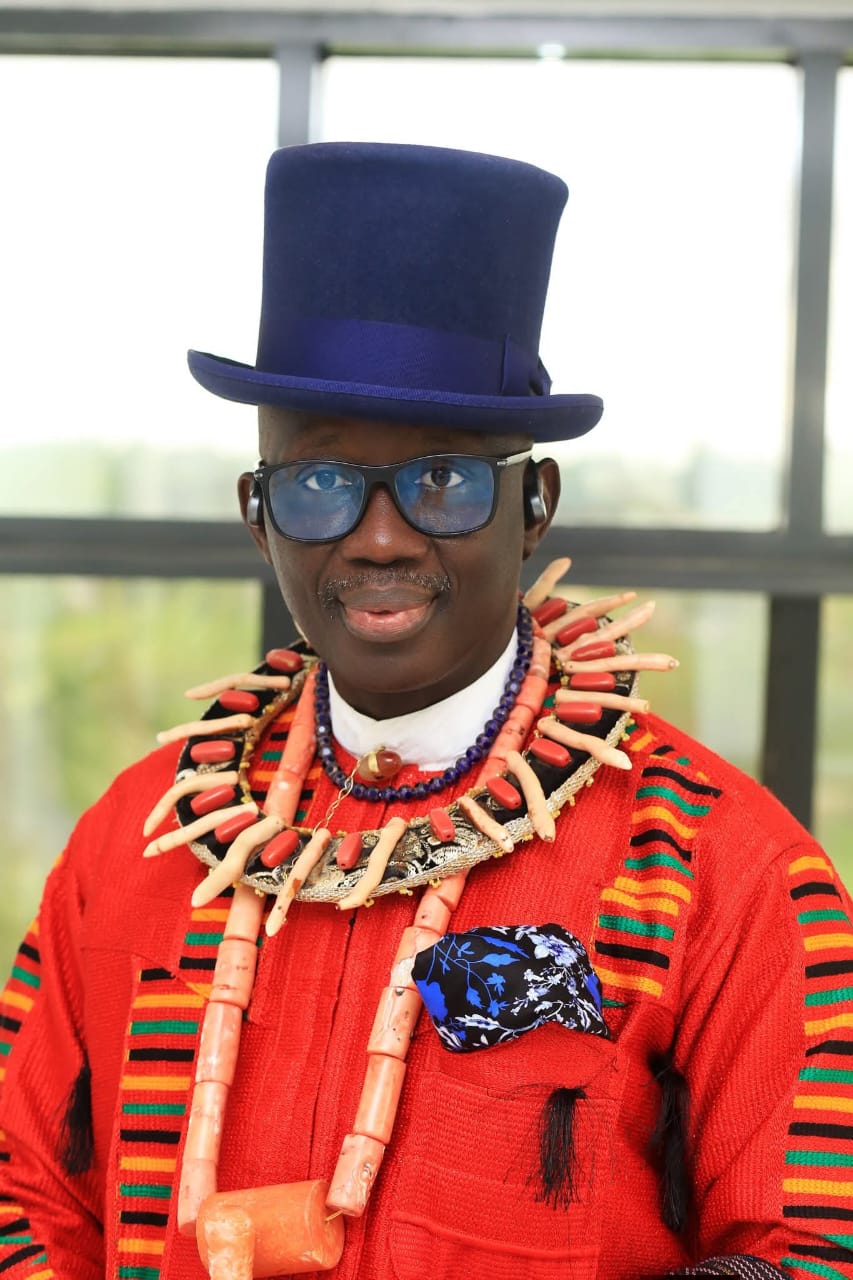
The Council of Ijaw Traditional Rulers and Elders (CITRE) has defended its action suspending the election into the executive positions of the Ijaw National Congress (INC), insisting on the guiding principles of the INC Constitution.
The Chairman of CITRE, HRM, King Bubaraye Dakolo Agada IV, Ibenanaowei of Ekpetiama Kingdom, Chairman of Bayelsa Traditional Rulers Council, in a statement on Saturday entitled ‘’On Constitutional Process and the INC Electoral Timeline’’ while noting the communications by various organs of the Ijaw National Congress (INC) concerning the forthcoming national elections, restated its position on the suspension of the election until all pending petitions arising from the elections are resolved.
CITRE stated that its action was guided by the INC Constitution and its responsibility to uphold order, balance, and continuity within the Congress.
According to King Dakolo, CITRE does not engage in the administrative conduct of elections, but it would ensure that all processes within the Congress must remain consistent with the Constitution from which they derive authority.
CITRE pointed out that where questions arise as to the constitutional integrity of any process, it is necessary that such questions are addressed within the institutional framework provided in order to preserve legitimacy and confidence.
It added that it was the context that informed CITRE’s constitution of a committee to review outstanding constitutional and procedural concerns relating to the electoral process.
CITRE assured that it remains committed to ensuring that the Congress continues to function within a framework that commands confidence, legitimacy, and order, adding that stakeholders must abide by procedures, and the constitution is unambiguous about what to do.
The statement read in part: ‘’Accordingly, CITRE reiterates that the electoral process remains in abeyance pending the Committee’s report. This position is guided solely by the need to preserve the integrity of a process under review. This does not detract from the roles of other organs of Congress. It affirms that constitutional compliance is foundational and that processes under review are best preserved until their validity is clarified.
‘’CITRE therefore urges all organs and stakeholders of Congress to act in a manner that supports institutional coherence, respects established processes, and avoids actions that may pre-empt or compromise ongoing efforts at doing things constitutionally. The Committee is expected to conclude its work within the stipulated timeframe, after which CITRE will consider its recommendations in the overall interest of the Ijaw Nation.
From Attah Ede Makurdi
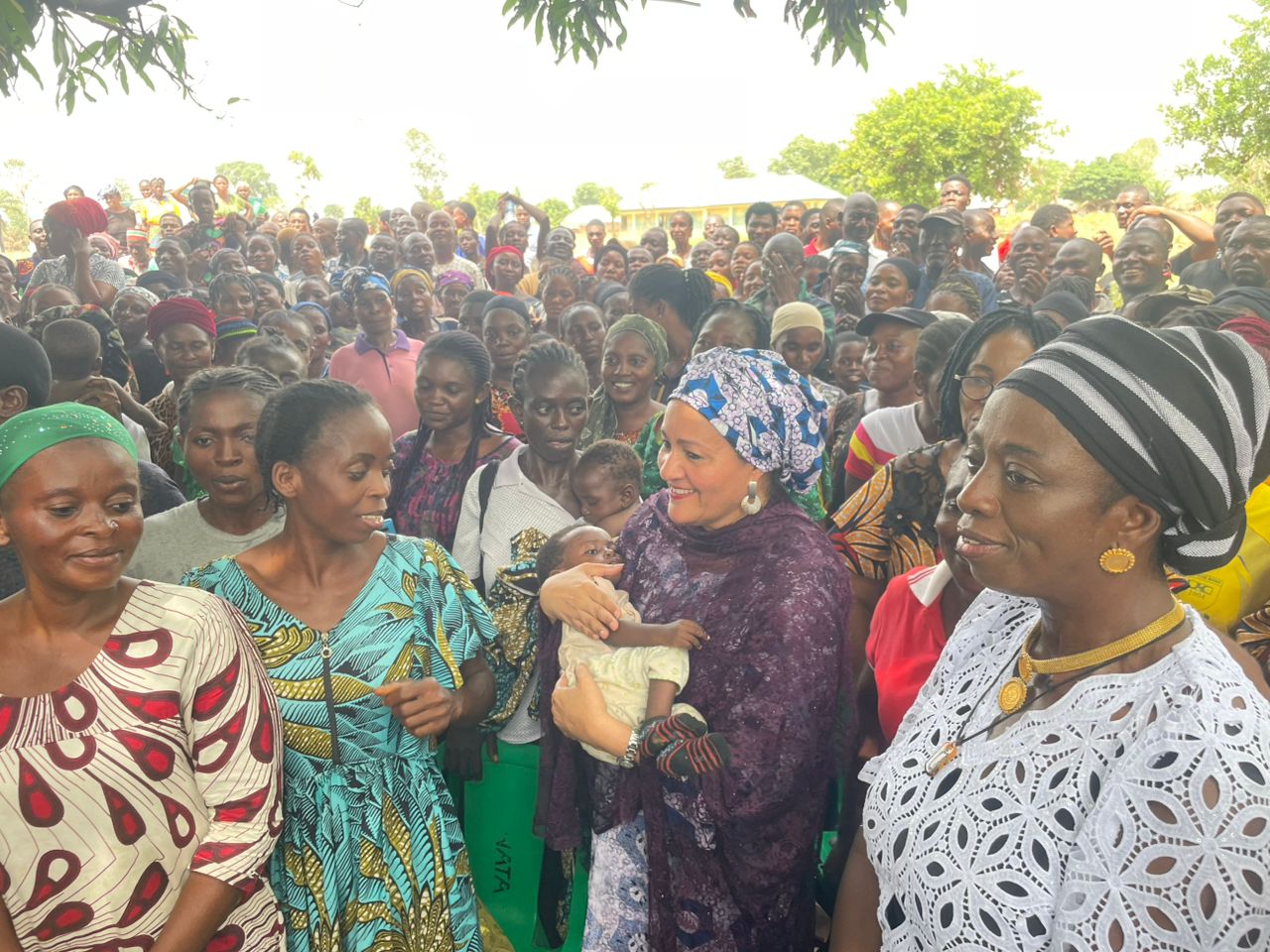
United Nations Deputy Secretary-General Dr. Amina Mohammed, on Friday condemned the incessant conflicts killings in Nigeria, particularly in Benue State, saying that it continue to cause wider pressures felt in very immediate ways, shaping the context in which communities are pursuing peace, recovery and resilience, progress, priorities and potentials.
Dr Mohammed made the remarks when she visited Yelewata and Mega camp Internally Displaced Persons(IDPs) in Mbayongo in Guma LGA of the State.
She particularly expressed condolences to the families of those killed in the recent attacks in Benue State, including in Mbalom, in Gwer East Local Government Area, and in Yelwata, and expressed solidarity with all affected communities, including those newly
displaced.
She lamented that at the moment, there is profound global uncertainty, as conflict, climate shocks, economic pressures and displacement are
converging and placing growing strain on communities around the world.
She noted that the war in Iran is a stark reminder of how quickly conflict can escalate, with consequences that reverberate far beyond any one country or region, stating thay UN welcomes the ceasefire as an important step towards deescalation and diplomacy.
According to her, across the region, these intersecting pressures
are testing resilience, deepening vulnerabilities and reinforcing the importance of inclusive development, strong institutions and social
cohesion.
The former Nigeria Minister for Environment observed that in spite of these challenging times, the direction, Benue State Government is setting deserves recognition, noting that the state 2026 Budget of Rural Development,
Livelihood Support and Sustained Growth sends an important signal of commitment to improving lives, expanding opportunity and anchoring development where it matters most.
Said she, “the human toll of insecurity is profound. Itdisrupts lives, weakens livelihoods, erodes trust and undermines the foundations for peace and development.
“What is required is not only a security
response, but a broader commitment to
peacebuilding that starts at the grassroots—strengthening early warning and early response, rebuilding trust across communities, and creating the conditions for reconciliation to take root”.
Dr. Amina stressed that Benue holds enormous potential as Nigeria’s
food basket, which plays a critical role
not only in feeding the country, but in
generating livelihoods, enterprise and broader prosperity.
The UN Deputy Secretary-General acknowledged the efforts being made to pursue durable solutions for displaced families—including through access to agricultural land and opportunities for self-reliance—reflect the kind of joined-up leadership this moment demands.
“This is how the Sustainable Development Goals, SDG are advanced in practice through integrated action that connects humanitarian response to long-term development, restores agency, reduces dependency and leaves no one behind.
“With sustained leadership, stronger partnerships and continued investment in livelihoods and value chains, Benue is well placed to translate its assets into more inclusive and resilient growth.
“The United Nations stands ready to support these efforts in ways that are practical, coordinated and aligned behind State priorities.Insecurity, reconciliation and peacebuilding.
“Justice and accountability are also essential.Without them, peace remains fragile and reconciliation incomplete.
We must also be mindful of the risks that come when complex crises are reduced to narrow or simplified narratives.
“Oversimplified narratives can inflame tensions, strain the social fabric and make the work of peacebuilding and reconciliation even harder.
“This is why responsible leadership, careful language and a commitment to dialogue and social cohesion are so important at this moment.
“Benue’s launch of the BRACE-UP initiative is an important step in bringing unenrolled children into school and protecting every child’s right to education. In communities affected by conflict and displacement, this imperative becomes even greater.
“Children who have already experienced
disruption and loss must not be left further behind, and continued support will be essential to ensure their safe integration into host schools and their access to learning materials and opportunity, She emphasized.
Speaking on the significance of the visit the United Nations Children’s Fund, UNICEF, Representative in Nigeria, Wafaa Saeed Abdelatef, said, “it is about the partnership between the United Nations team led by the Deputy Secretary General and the state government bringing hope, sustainable development to bring change. So we affirm our commitment to support to the state. And we really acknowledge the leadership of the Governor of the state”.
In his remark, Benue State Governor, Rev Fr Hyacinth Alia, noted that as the food basket of the nation, the state stability is directly linked to the stability of Nigeria’s food systems and, indeed, West Africa’s broader supply chains.
According to him, Benue people also at the frontline of complex challenges; farmer–herder conflicts, climate-induced vulnerabilities, and the realities of over 500,000 internally displaced persons across our communities”.
- From Seyi Tayese, Yenagoa
The National Conference of Ijaw Traditional Rulers and Elders (N-CITRE-INC) has suspended the Ijaw National Congress (INC) elections till further notice.
The N-CITRE, after its meeting in Yenagoa deliberated extensively on all issues that led to the impasse in the INC elections, including petitions received.
The group, therefore, unanimously agreed to suspend the conduct of the INC elections and directed the electoral committee to stop all forms of electoral duties.
N-CITRE, which is empowered by the INC constitution to resolve all disputes, has also set up a seven-man Dispute Resolution Committee (DRC) to investigate all petitions.
The resolutions read in part ‘’ That the elections into the National Executive Council of the Ijaw National Congress (NE-INC), which were rescheduled for Monday, 13th April, 2026, by the National Electoral Committee, Ijaw National Congress(N-ELECO-INC), have been temporarily suspended until N-CITRE directs further after all pending disputes have been settled. N-CITRE-INC, as the appointing authority for N-ELECO-INC, also holds the constitutional power to resolve all disputes within the Congress
‘’ Consequently, N-ELECO-INC has been directed to stop performing any electoral functions until otherwise subsequently directed by N-CITRE.’’
The N-CITRE has directed the DRC to resolve the lingering dispute and probe all petitions, including the petitions against the n-ELECO- INC.
The DRC is headed by HRM, King Bubaraye Dakolo Agada IV, Ibenanaowei of Ekpetiama Kingdom, Chairman of Bayelsa Traditional Rulers Council, and Chairman of N-CITRE.
Other members are HRM, King Dr. Brig-Gen Bright Ateke Fiboinumama (Rtd), Chief Dr. Silas Eneyo (representing Eastern Zone), Dr. Loveth Ige (representing Central Zone), HRM, Pere Luke Kalanama III, HRM, Dr. Ekiomi Oweigbe John (Gbisa I) representing Western Zone, and Zonal Chairman of N-CITRE.
N-CITRE, which reminded all stakeholders of the principle of honesty that guides the Ijaws, therefore appealed for cooperation to achieve peace.


INC Elections: CITRE defends suspension of polls, insists on constitutional order
Share From Mike Tayese, Yenagoa The Council of Ijaw Traditional Rulers and Elders (CITRE) has defended its action suspending the election...
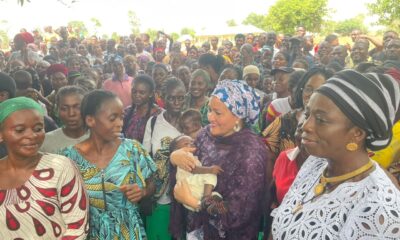

UN Secretary General Visits Benue Condemns Incessant Attacks On Communities, Killings.
ShareFrom Attah Ede Makurdi United Nations Deputy Secretary-General Dr. Amina Mohammed, on Friday condemned the incessant conflicts killings in Nigeria,...


President Tinubu commissions 60 megawatts gas turbine, other projects in bayelsa
ShareFrom Mike Tayese, Yenagoa The much awaited 60 megawatts Gas Turbine embarked upon by the administration of Governor Douye Diri...
Ijaw Traditional Rulers, elders suspend INC elections
Share The National Conference of Ijaw Traditional Rulers and Elders (N-CITRE-INC) has suspended the Ijaw National Congress (INC) elections till...
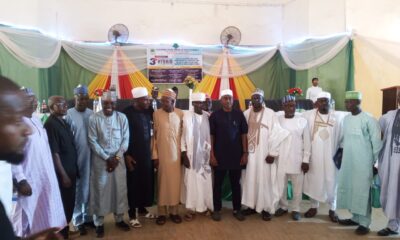

Experts Advocate Digital Economy, Governance Reforms as Pathway to Inclusive Growth
ShareBy David Torough, Abuja Stakeholders at the 2026 Academic Staff Union of Polytechnics (ASUP) International Conference in Bida have called...

Digital Economy, Good Governance Key to Unlocking Inclusive Growth in Developing Nations — Expert
ShareBy David Torough, Abuja At the 2026 Academic Staff Union of Polytechnics (ASUP) National Conference held at the Federal Polytechnic...
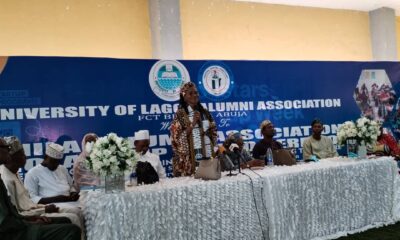

UNILAG Alumni awards scholarship to 28 indigent students
ShareBy Laide Akinboade, Abuja The University of Lagos Alumni Association, Federal Capital Territory (FCT), chapter on Thursday, awarded scholarship to...


JAMB Releases 2026 UTME Examination Slips for Candidates
ShareThe Joint Admissions and Matriculation Board (JAMB) has announced that candidates who registered for the 2026 Unified Tertiary Matriculation Examination (UTME) can now print...
Lobi Stars Target Promotion to NPFL in 2026/2027 Season
ShareThe Chairman of Lobi Stars Football Club of Makurdi, Simon Ikya, said the club’s sole target is to gain promotion...

Gambia Appoints British Barrister to Prosecute Gruesome Jammeh-era Crimes
ShareBritish barrister Martin Hackett has been appointed as The Gambia’s first special prosecutor to try those responsible for human rights abuses carried out...