
NEWS
Chief Steven Obekpa Lawani OFR, CON, Former Deputy Governor, Benue State as DAILY ASSET LIFETIME ACHIEVEMENT AWARD

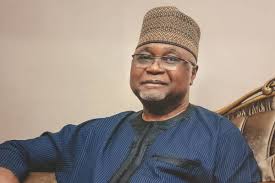
With tentacles spread across crucial sectors of the economy, including hospitality, banking, real estate and politics, Chief Steven Obekpa Lawani epitomizes the consummate entrepreneurial player.
Born on the 30th December 1947, Chief Lawani grew up in Abeokuta, Enugu, Kaduna and Otukpo, Nigeria urban centres where his father lived in the barracks as a 2nd World War soldier.
In 1962, young Lawani entered Mount Saint Michael’s Secondary School, Aliade, which was one of the elite schools of choice in the lower Benue Plateau at the time.
At Aliade, Chief Lawani was a keen sportsman serving as the school’s goalkeeper.The educational journey continued to Ahmadu Bello University (ABU)Zaria, through Government College Kaduna, where he underwent his Higher School Certificate (HSC) in 1968 and 1969.
With a bachelor’s degree in economics in 1973, he was in the first batch of the then newly introduced one-year compulsory national service for Nigerian graduates (NYSC).Chief Lawani pursued further studies at the Manchester Polytechnic, UK from 1975 to 1976 and obtained an Advanced Diploma in Hotel Management. He also attended Cambridge University in 1980 and obtained a Diploma in Management Development.
Chief Lawani is a company director by profession. He has for many years been and continues to be a Director and Chairman of several companies.
Formerly, he was chairman of Nigerian Hotels Limited and Savannah Bank of Nigeria Limited, both state-owned companies that have since been privatized. He was also Chairman of the state-owned Aluminium Company – Aluminium Smelter Company of Nigeria Limited (ALSCON). He also served as Chairman of a publicly quoted Nigerian bank, MannyBank PLC, which because of the 2004 bank consolidation policy, was merged into Fidelity Bank PLC. He became a Director of Fidelity bank PLC until he had to relinquish the position when he was elected into public office as Deputy Governor of Benue State.
In addition to his directorships of various companies, he also has various private business interests, including a Property Development Company of which he is the Chairman/CEO – Abuja Land Development (ALD) Limited. He is also the Franchisee and Founder of Orkin Nigeria Limited, a franchise of the Atlanta based Orkin Pest Control. Orkin Nigeria Limited was the First Orkin Franchise in Africa, preceding Franchises in Kenya, Cote d’Ivoire. Ghana and Libya.
Politically, Chief Lawani was one of the leaders of one of Nigeria’s main political parties in the third Republic – he was the Deputy National Chairman of the defunct National Republican Convention (NRC).He served as an elected member of the Constitutional Conference between 1994 and 1995 and was elected a Senator under the defunct United Nigeria Congress Party, (UNCP) in 1997. He was elected as Deputy Governor of Benue state for two terms from 2007 – 2015.
The Administration he served as Deputy Governor left indelible marks on the development of Benue state as it recorded significant milestones in Education, Health, Agriculture, infrastructure development and the socio-economic sectors of the state. He remains an influential political leader. Although he unsuccessfully tried to to be elected Governor of the State on three occasions, he remains undaunted as he continues to offer political leadership at various levels.
Chief Lawani is a recipient of honours and awards, two of which are most appropriate to mention here. He was conferred with the national honour of Order of the Federal Republic (OFR) in 2002. In 2023, he was conferred with the Commander of the Order of Niger (CON). He is a traditional title holder of the Ochagwu K’Idoma conferred on him by the Idoma Traditional Council (ITC) in 1988.
He remains active in politics, especially in matters concerning the interest of Benue state in Nigeria politics. With a vast national and global outreach, he remains a veritable resource person for the management of complexity.
Chief Lawani is married to Chief (Mrs) Margaret Enumule Lawani and has four children.
For all his outstanding accomplishments in his career in the Banking industry, as Chairman of three different banks at various times; his exploits in the corporate World especially in the in the real estate sector; His imprints on international business; His philanthropic engagements and community service and the contributions to nation building in politics and governance, Chief Steven Lawani is selected for DAILY ASSET LIFE TIME ACHIEVEMENT AWARD.

From Mike Tayese, Yenagoa
The Joint Health Sector Union (JOHESU) and Assembly of Health Professionals of Nigeria (AHPN) on Tuesday staged a protest over the non-adjustment of the Consolidated Health Salary Structure (CONHESS).
The unions held the protest at the premises of Federal Medical Center (FMC) in Yenagoa following directives from the national body after embarking on an indefinite strike in 2025.
JOHESU had embarked on an indefinite nationwide strike on Nov.
15, 2025 over the non-adjustment of CONHESS and other welfare issues.Speaking, the state Chairman, JOHESU FMC, Celestine Onoyina, said that in 2021 an inter-ministerial committee was set up to adjust CONHESS and all work and reports were completed in 2023.
Onoyina said that the Ministry of Health acknowledged the report and wrote to the Ministry of Budget for implementation.
‘’However, along the line, the Federal Government of Nigeria stopped the implementation of CONHESS, which agreement has already been reached and signed.
‘’The struggle for the CONHESS adjustment started since 2014 and for more than 10 years now the government is still adamant about it.
“We are here with the circular from the Ministry of Health to the Director General of Budget, tell them about CONHESS that has already been implemented, ‘’ he said.
Onoyino said that the strike would continue until their demand to implement the CONHESS was met.
“We want to use this opportunity to thank our national body for standing by us and not betraying us.
From Mike Tayese, Yenagoa
The Albinism Association of Nigeria (AAN) has called for urgent, inclusive and sustained action to address the disproportionate burden of skin cancer among persons with Albinism (PWAs) in Nigeria.
National President of AAN, Dr.
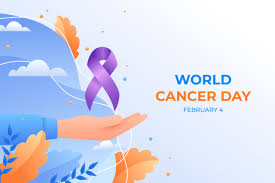
Bisi Bamishe made the call on Wednesday, as the global community commemorates World Cancer Day.Feb.
4 is set aside to commemorate World Cancer Day to mark the anniversary of the signing of the Charter of Paris Against Cancer. This historic document was signed on Feb. 4, 2000, at the World Summit Against Cancer for the New Millennium in Paris, France.The 2026 edition has the theme, “United by Unique” (part of the 2025–2027 global campaign.
According to Bamishe, World Cancer Day is a global initiative aimed at raising awareness, strengthening prevention efforts, promoting early detection and mobilising collective action against cancer.
”The theme United by Unique recognises that while every cancer experience is different, unity and equity remain central to effective response and care.”
She noted that for persons with albinism, skin cancer was a daily and life-threatening reality, adding that due to the absence of melanin, their skin was highly sensitive to ultraviolet (UV) radiation, placing them at extreme risk of UV-induced skin cancer.
”Skin cancer can affect anyone at any age and on any part of the body, its impact on persons with albinism is particularly severe and often fatal when access to care is delayed.
”Across Nigeria and many other countries, the challenge is not the absence of prevention or early-detection knowledge, but the lack of access.
”Many persons with albinism have never seen a dermatologist, and far too many cases are detected late when treatment becomes more complex, expensive, and less effective. This should no longer be the norm.”
The AAN national president however acknowledged and commended ongoing government efforts, particularly the planned inauguration of free skin cancer screening centres for persons with albinism.
She noted that early detection was a critical step toward reducing cancer-related deaths within the community and emphasised that screening without access to treatment was inadequate.
”Early detection saves lives, but screening alone is not enough.
”The high cost of skin cancer treatment remains a major barrier. We therefore call on the Federal Government to include free skin cancer treatment for persons with albinism under the National Health Insurance Scheme (NHIS) so that no one is denied care because of poverty.” she said.
She further urged that as part of a comprehensive prevention strategy, the Federal and State Governments should institutionalise the provision of free UV-protective umbrellas, sunscreen, and wide-brimmed hats for persons with albinism.
Bamishe also called on government institutions, development partners, civil society organisations, the media, and members of the public to stand in solidarity with persons affected by cancer.
She urged them to support research, advocate for inclusive and accessible healthcare, and strengthen policies that protect vulnerable populations.
The Federal Government has operationalised oncology-preventive clinics in eight tertiary hospitals, strengthening Nigeria’s cancer prevention, screening and early-detection capacity nationwide.
Minister of State for Health, Dr Iziaq Salako, confirmed this on Wednesday in Abuja at the 2026 World Cancer Day commemoration.
The event, with the theme ‘United by Unique,’ highlighted collective responsibility among government, institutions and citizens in tackling Nigeria’s growing cancer burden.
He said the newly activated clinics would significantly expand access to early screening services and reduce late cancer presentation and mortality.
Others are University of Benin Teaching Hospital and University of Nigeria Teaching Hospital, Enugu.
The remaining centres are Usman Danfodiyo University Teaching Hospital, Sokoto, Federal Teaching Hospital, Gombe, and Aminu Kano Teaching Hospital, Kano.
Salako also named Obafemi Awolowo University Teaching Hospital, Ile-Ife, as part of the newly operational centres.
He urged Nigerians to embrace routine screening and early presentation at health facilities when symptoms first appear.
According to him, the National Institute for Cancer Research and Treatment (NICRAT) has provided mammogram machines to support early breast-cancer detection at selected centres.
He also launched the Nigerian Nuclear Medicine Strategic Plan to strengthen diagnostic and therapeutic cancer services.
The minister unveiled the National Cancer Control Plan for 2026–2030 to guide investments in prevention, diagnosis, treatment and patient-centred research.
He said the plan aligned with the National Health Act 2014 and international frameworks on cancer control.
Salako added that it reflected commitments under the Union for International Cancer Control Declaration 2035.
He said the plan also aligned with the World Health Organisation Global Cancer Strategy, including childhood and breast-cancer initiatives.
Salako stressed that integrating cancer screening into routine healthcare services remained critical for reducing avoidable deaths.
He said the new plan prioritised early detection and aimed to establish a functional national cancer screening programme.
On the suspended Cancer Health Fund, Salako said the government was introducing a more sustainable financing approach.
He explained that Catastrophic Health Insurance would provide stronger coverage for Nigerians facing life-threatening medical conditions.
He projected that the Catastrophic Health Insurance scheme would be operational before the end of 2026.
Salako also confirmed ongoing investments in cancer equipment and specialised treatment facilities nationwide.
According to him, the Federal Executive Council plans to procure 35 radiotherapy machines between 2026 and 2028.
He said the procurement aimed to close existing treatment gaps and reduce patient travel abroad.
The minister revealed that the African Oncology Collaborative Network would be unveiled before the third quarter of 2026.
He said the network would strengthen continent-wide collaboration led by African institutions on cancer research and care.
Salako commended federal agencies for progress in vaccination-based cancer prevention programmes.
He cited human papillomavirus vaccination for cervical cancer and hepatitis immunisation to reduce liver-cancer incidence.
Director-General of NICRAT, Prof Usman Aliyu, said cancer remained a major public-health challenge in Nigeria.
Aliyu noted that many Nigerians faced barriers to prevention, early detection, treatment and palliative care services.
According to him, NICRAT is strengthening research capacity through the Strengthening Institutional Capacity for Cancer Research Project.
Aliyu said the initiative aimed to generate robust local evidence for effective national cancer-control policies.
He stressed that improving the national cancer registry system remained a priority for the institute.
“Reliable data is the backbone of effective cancer control,” Aliyu said, citing ongoing registry expansion nationwide.
He added that NICRAT was revitalising radiotherapy services across all geopolitical zones.
Aliyu said the effort would reduce medical travel and ensure equitable access to modern oncology treatment.
President of the Nigerian Cancer Society, Prof Abidemi Omonisi, commended government efforts in cancer control.
However, he appealed for stronger financial support to ease high chemotherapy and treatment costs.
Omonisi said many cancer survivors faced severe financial and social challenges during treatment.
He urged the reinstatement of the National Cancer Health Fund to support vulnerable patients.
Chairman of the Nigerian Medical Association, Prof Bala Audu, reaffirmed doctors’ commitment to cancer prevention and care.
According to him, doctors support early diagnosis, treatment, rehabilitation and palliation nationwide.
Audu praised improvements in infrastructure and upgraded cancer centres across the country.
He said the work of NICRAT strengthened both research and treatment capacity in Nigeria.
Audu expressed optimism that Nigeria’s cancer-care future “looks bright” with sustained investment and collaboration.
World Cancer Day is marked annually to raise awareness globally.
It also promotes education and encourages coordinated action against the growing burden of cancer worldwide.




Benue PDP condemns Kwande Killings, Demands Alia’s Urgent Action over Worsening Insecurity
ShareFrom Attah Ede, Makurdi The main opposition Peoples Democratic Party, PDP, Benue North East (Zone A), has strongly condemned what...

Health Workers Protest in FMC Yenagoa over CONHESS
ShareFrom Mike Tayese, Yenagoa The Joint Health Sector Union (JOHESU) and Assembly of Health Professionals of Nigeria (AHPN) on Tuesday...

World Cancer Day: Albinism Association Seeks Free Skin Treatment for Members
ShareFrom Mike Tayese, Yenagoa The Albinism Association of Nigeria (AAN) has called for urgent, inclusive and sustained action to address...


Essence of DAILY ASSET Awards
ShareAchievers are people willing to go the extra mile to make things happen. They do this both for the sake...


Snooker Legend Virgo Dies at 79
ShareSnooker legend and BBC commentator John Virgo has died, aged 79. Virgo enjoyed an 18-year professional career, winning the UK Championship and reaching...

FG Activates Eight Oncology Clinics, Unveils New Cancer Plans
ShareThe Federal Government has operationalised oncology-preventive clinics in eight tertiary hospitals, strengthening Nigeria’s cancer prevention, screening and early-detection capacity nationwide....
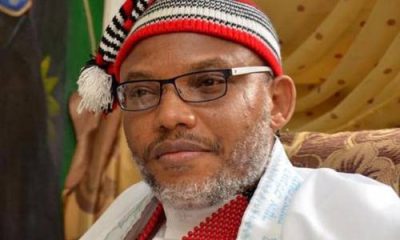

Nnamdi Kanu Appeals Conviction, Faults Terrorism Trial
ShareThe detained leader of the Indigenous People of Biafra, Nnamdi Kanu, has filed a notice of appeal challenging his conviction...


Electoral Act: Senate Cuts INEC Election Notice Window to 180 Days
ShareThe Senate on Wednesday approved a major adjustment to Nigeria’s electoral timetable, reducing the period within which the Independent National...
Eminent Persons Converge on Abuja as DAILY ASSET holds 9th Annual Awards
ShareBy David Torough, Abuja Eminent Personalities are converging on Abuja as all is now set for the much anticipated DAILY ASSET 9th Annual Awards holds today to honour...


NVMA Benue Appoints Tor Tiv Grand Patron
ShareThe Nigerian Veterinary Medical Association (NVMA), Benue Chapter, has appointed the Tor Tiv, Prof. James Ayatse, as Grand Patron of...