
Metro
CITN Commends FCT-IRS over Revenue Generation


By Laide Akinboade, Abuja
The Chattered Institute of Taxation of Nigeria (CITN) has commended the Federal Capital Territory Internal Revenue Service (FCT-IRS) over the huge revenue it generated in 2021.
In a statement issued by FCT-IRS at the weekend, and signed by Mustapha Sumaila, Head, Corporate, Communications, FCT-IRS, in Abuja said the President of the Institute, Mr Adesina Adedayo made the commendation when he led a team of tax experts consisting of two former presidents of the institute, executives and members for a courtesy visit to the Acting Executive Chairman of FCT-IRS, Mr Haruna Abdullahi on Friday.
He said the visit was to formally inform and seek for support of the Service on the forthcoming 40th anniversary of the institute as well as the 24th annual Tax Conference scheduled to take place in Abuja and Lagos, on 1st and 5th February, 2022.
Adedayo who expressed joy on the achievement recorded by FCT-IRS said it was commendable that the Service surpassed its target of N109Bn by 108 per cent as at the end of November 2021, which according to him, is a laudable feat to attain in spite the COVID-19 and economic challenges posed on business and revenue generation in the country.
The President whose visit coincided with the last day of a four day week long Tax Drive activities organised by FCT-IRS to create awareness, applauded the strategic approach deployed by the Service for the sensitisation campaign with a road show, as an enlightenment strategy which is meant to awaken and increase the tax paying culture from both individuals and organizations.
Adedayo also stated that he would be looking forward for more collaboration with FCT-IRS in fostering a better working relationship. He said he would put in place a joint technical committee for the purpose of advancing the revenue performance of the FCT-IRS through peer review and strategy session as well as consultative briefings.
In his remark, former President of the Institute and also the former Executive Chairman of Federal Inland Revenue Service, Dr. JK Naiyeju also commended the leadership of the FCT-IRS for providing a conducive environment for the tax payers adding that such environment would excite those coming around to pay their taxes.
“I was excited when I came in to the premises because of how beautiful and well organised it is. Every taxpayer that walks into this building will be happy to have business with FCT-IRS”
Responding, the Acting Executive Chairman, FCT-IRS, Mr. Haruna Abullahi reiterated the service’ commitment in partnering with CITN and other relevant organisations to empower the personnel for effective service delivery.
Abdullahi added that he would always welcome any form of partnership that would help to build the capacity of his staff with a view to attain improved performance in the Service.
According to him, FCT-IRS gives much priority to training and he always be willing and welcome any organisation, institute or individual that will collaborate in building the skills and capacities of his personnel.
On the institute’s 40th anniversary and Tax Conference, Abdullahi pledged to give necessary support and also mobilise the staff of the Service to participate in the historical events.
He expressed happiness over the visit of the CITN delegation led by its president, saying that FCT-IRS has been in partnership with the institute and would continue to work to sustain such collaboration for the betterment of FCT and the country in general.
Meanwhile, the Acting Executive Chairman described Naiyeju as a mentor, teacher and expert as far as field of taxation is concerned pointing out that being part of the delegation was a big motivation for him and indeed the Service.



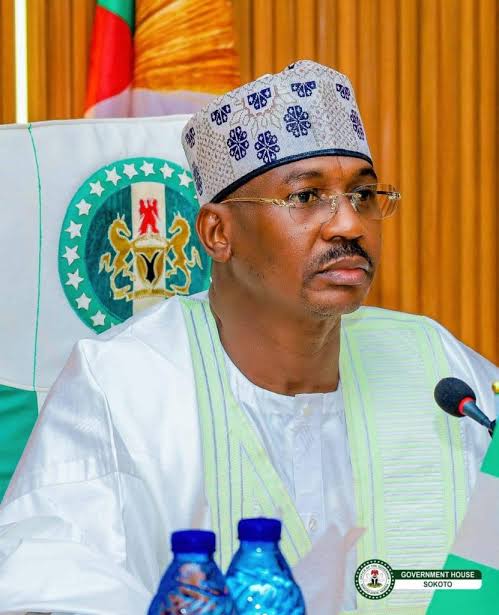
Sokoto State Governor, Ahmed Aliyu has approved the appointment of Hayatu Dallatu and seven others as District Heads to fill vacant positions in the Sultanate Council of Sokoto.
The Secretary to the Sultanate Council, Alhaji Sa’idu Maccido, disclosed this in a statement issued to journalists in Sokoto on Monday.
Maccido said the appointments were based on recommendations of the Sultanate Council.
He added that the formal turbaning ceremony for the new district heads would be performed by the Sultan of Sokoto, Alhaji Sa’ad Abubakar, at a later date.
“His Eminence, the Sultan of Sokoto and the Sultanate Council congratulate the appointees on their well-deserved appointments and wish them a successful tenure and God’s guidance,” he said.
Dallatu, a member of the Nigeria Union of Journalists (NUJ), was appointed district head of Tudun Wada in Sokoto South Local Government Area.
He is a journalist and media administrator who has worked with Rima Television, Sokoto, and the Voice of Nigeria (VON).
Until his appointment, Dallatu was the General Manager of Alu FM, Sokoto.
Other appointees include Salihu Kadadi, district head of Kadadi; Isah Daudu, district head of Gidan Madi; and Gidado Muhammad, district head of Dabagin Ardo.
Others are Abdullahi Muhammed, district head of Danchadi; Umar Shehu, district head of Goronyo; Kabiru Marafa, district head of Tsaki; and Muhammadu Buhari, district head of Wajake.(NAN)

The Director-General of the National Health Insurance Authority (NHIA), Dr Kelechi Ohiri, says Nigeria must take charge of its health financing research agenda to sustain reforms, strengthen evidence-based policymaking and improve health outcomes nationwide.
Ohiri said this at the inaugural Nigeria Health Financing Research and Learning Forum in Abuja, themed: “Evidence and Learning for Nigeria’s Health Financing Future: Building a Locally Led Research and Learning Ecosystem.
”He said the forum was designed to leverage evidence to advance Nigeria’s health financing agenda while addressing limitations associated with episodic research and strengthening institutional capacity for continuous learning and reform.
“For too long, our health financing initiatives in Nigeria have been shaped by well-meant studies designed, commissioned, analysed, reported, synthesised, and presented to us at the finish line,” he said.
Ohiri said although such studies had provided valuable insights, episodic research could not establish the enduring policy foundation needed to sustain reforms and inform long-term decision-making effectively nationwide.
He said research sovereignty did not mean isolating Nigeria from global support but placing the country “in the driver’s seat” in defining questions, commissioning studies and embedding learning implementation.
“International partnerships remain vital, and the work must focus on building domestic capacity and also supporting domestic priorities,” Ohiri said, emphasising the importance of balancing collaboration with national ownership.
He said the NHIA would review five commissioned studies on embedded learning during the two-day forum and examine lessons from Ethiopia, Ghana and India to strengthen policy implementation.
Ohiri said evidence must serve reforms, noting that Nigeria’s health financing agenda focused on mandatory health insurance coverage, equity, quality healthcare delivery and long-term sustainability across the country.
He said Nigeria’s health insurance landscape remained fragmented, comprising 37 government insurance schemes and more than 95 private health insurance schemes operating across different segments of the population.
According to him, the fragmentation raises important questions about sustainability and highlights the need for robust research to generate evidence capable of guiding future reforms effectively nationwide.
Ohiri said the NHIA had identified 15 studies linked to its strategic priorities and was working to build research ecosystems involving national institutions, universities and other stakeholders.
He said the authority was also pursuing a national health financing observatory, 15 research action plans, a national research agenda and regional collaboration frameworks to strengthen evidence generation.
The World Health Organization (WHO) Representative in Nigeria, Dr Pavel Ursu, said health financing remained foundational to Universal Health Coverage and required implementation research to support reforms.
Ursu said global commitments on sustainable health financing and Universal Health Coverage must translate into concrete and transformative actions capable of improving healthcare access and outcomes at country level.
He said establishing the Nigeria Health Financing Research and Learning Forum provided an institutional opportunity to unpack research questions and increasingly drive national policy and implementation processes.
Ursu said WHO hoped the forum would mark the beginning of a sustained and nationally owned health financing research and learning movement capable of influencing future reforms.
Executive Director of the Alliance for Health Policy and Systems Research, WHO, Dr Kumanan Rasanathan, said research and learning should not be treated as luxuries in health systems.
“If you don’t have your own knowledge, if you don’t know your own problems, if that is not preserved for future generations, you cannot be sovereign,” Rasanathan said.
He said many institutions across Africa remained heavily dependent on external funding, warning that shrinking financial support could weaken organisations responsible for generating critical knowledge and evidence.
Rasanathan said countries needed domestically driven learning agendas capable of connecting knowledge, communities and decision-makers while strengthening national ownership of research and policy development processes.
He said researchers should move beyond identifying problems and focus on developing practical solutions that could be implemented effectively within the contexts under investigation and evaluation.
According to him, countries also require domestic institutions that are sustainably financed and linked to national processes while retaining the independence to provide objective advice.
Dr Yetunde Aluko, representing the Nigerian Institute of Social and Economic Research (NISER), said Nigeria needed more locally developed and relevant evidence to guide health financing reforms.
Aluko said Nigeria should establish an enduring national system where policymakers, researchers, implementers, communities and practitioners jointly identify priority questions and continuously learn from implementation experiences.
“Health financing research should therefore not be viewed simply as a production of reports or academic publications,” she said.
She said such research should function as part of a national learning system capable of showing what worked, for whom, under what circumstances and at what cost.
The system, she added, should also generate evidence on implications for equity, sustainability and effectiveness, helping policymakers make informed decisions that improve healthcare financing outcomes nationwide.
Fatima Zannah, Cluster Manager and Head of Programme, German Development Cooperation (GIZ), said locally generated evidence was critical for designing health financing approaches reflecting Nigerians’ realities and needs.
Zannah said health financing decisions could not be made in isolation from factors influencing healthcare-seeking behaviour, including culture, religion, geography, income, education, gender and social networks.
“This is why locally generated evidence matters. It allows us to move beyond assumptions, and better understand the diversity of experiences across Nigeria,” she said.
She said Nigeria could also learn from countries facing similar challenges, adapt relevant lessons and build on their experiences to strengthen health financing reforms and implementation.
Zannah urged participants to view evidence as a tool for decision-making, policy development, transparency, equity and accountability within the health sector and broader governance systems.
She said development partners looked forward to supporting the initiative and seeing evidence generated through the process translated into better decisions and improved health outcomes nationwide.
The forum, which began on Monday, is expected to conclude on Tuesday after deliberations focused on strengthening health financing research, learning systems and evidence-informed reforms across Nigeria.(NAN)

Guaranty Trust Holding Company Plc (GTCO) reported N603.03 billion Profit Before Tax (PBT) for the half year ended June 30.
The financial services group also declared an interim dividend of N1 per share for the period under review.
GTCO disclosed this in its audited consolidated and separate financial statements released to the Nigerian Exchange Ltd.
(NGX) and London Stock Exchange (LSE) on Monday.The PBT represented a marginal 0.4 per cent increase from the N600.6 billion recorded in the corresponding period of 2025.
The group said the performance was driven by growth in interest and trading income, which increased by 7.
5 per cent and 24.7 per cent, respectively.It, however, said a N46.2 billion fair value loss recognised during the first half moderated growth in earnings.
GTCO said its total assets rose to N18.6 trillion, while shareholders’ funds stood at N3.3 trillion at the end of June.
The group’s capital adequacy ratio stood at 34.9 per cent, compared with 29.2 per cent for its banking business.
It also reported improved asset quality, with IFRS 9 Stage 3 loans standing at 3.5 per cent at bank level and 4.6 per cent at group level.
The cost of risk also improved to 0.6 per cent, from 2.2 per cent recorded in the corresponding period.
The group’s net loan book grew marginally by 0.5 per cent to N3.15 trillion, from N3.13 trillion at the end of December 2025.
Deposits, however, recorded stronger growth, rising by 10.3 per cent to N14.19 trillion, from N12.87 trillion during the same period.
Commenting on the results, GTCO Group Chief Executive Officer, Mr Segun Agbaje, said the results reflected the strength of the group’s business.
“Our half-year results speak to the strength of what we have built: a resilient franchise, a strong balance sheet and a business that no longer depends on banking alone.
“Fair value movements weighed on reported earnings, but the core business held firm. Interest and trading income grew, deposits strengthened, and asset quality improved at Group level,” Agbaje said.
He said the group’s priority was to execute with discipline, grow responsibly and use digital technology to scale its businesses.
“Digital is our lever for scaling across Banking, Payments, Pension and Funds Management, and for building a more diversified and resilient financial services group,” he said.
GTCO also reported a pre-tax return on equity of 35.9 per cent, pre-tax return on assets of 6.6 per cent and a cost-to-income ratio of 31.5 per cent.
The holding company operates banking and non-banking financial services across Africa and the United Kingdom. (NAN)




Tinubu Submits NDDC 2026 Appropriation Bill
SharePresident Bola Tinubu has submitted the 2026 Statutory Budget Proposal of the Niger Delta Development Commission (NDDC) to the House...


Senate Passes Bill Extending 2025 Capital Budget Implementation to Dec 31
ShareThe Senate on Tuesday passed a bill extending the implementation of the capital component of the 2025 Appropriation Act from...
CANEX 2026 to Unlock Investment, Jobs in Nigeria’s Creative Economy — FG
ShareThe Federal Government said Nigeria’s hosting of the 2026 Creative Africa Nexus (CANEX) Weekend will attract investment, deepen market access...


NNPC Posts N7.2trn Profit amid Revenue Decline
ShareThe Nigerian National Petroleum Company Ltd. (NNPC Ltd.) recorded N7.2 trillion Profit After Tax (PAT) in 2025, a 33 per...

Wike Approves Contracts for Digitization of FCT High Courts
ShareThe Minister of the Federal Capital Territory (FCT), Nyesom Wike, has approved the award of contracts for the digitisation of...

OPay Names Top 10 Teams in N18m National Innovation Challenge
ShareIn a bid to empower young Nigerians with the skills, opportunities and support needed to build solutions for real-world challenges,...


CBN Sets Agenda for Post-Recapitalisation Banking
ShareBy Tony Obiechina, Abuja The Central Bank of Nigeria (CBN) said recent reforms in the foreign exchange market, monetary policy...

Gunmen Abduct 18 Women in Benue, 47 Niger Farmers
ShareFrom Attah Ede, Makurdi, and Dan Amasingha, Minna Fresh fears over the worsening insecurity across the country emerged on Tuesday...


NASS Extends 2025 Capital Budget Again, Adjourns to Oct 13
ShareBy David Torough, Abuja The National Assembly on Tuesday extended the implementation of the capital component of the 2025 Appropriation...


Police Detain Woman for Alleged Killing of Co-wife in Bauchi
ShareThe police command in Bauchi State, said it has apprehended a housewife over alleged killing of her co-wife following a...