
Education
Commencement Speech AUN 2023

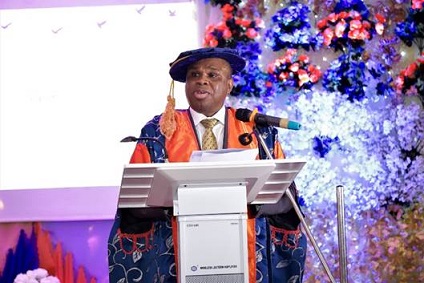
I am highly honoured by the opportunity to deliver the 2023 commencement address of this highly respected University. Many thanks to the Founder and former Vice President of the Federal Republic of Nigeria, H.E Atiku Abubakar, for the wisdom of establishing this university and making it a beacon of hope for the minds willing and able to explore the unknown.
I thank him for his vision in setting up a university of this excellence and also in the decision to focus the University on development issues. His support for education in Nigeria is legendary. In addition to this University, I am also aware of the AUN Academy as well as his advocacy work for improvements in the education sector overall.Special appreciation to Senator Ben Obi, members of the Board of Trustees and members of the Governing Council for this privilege and for finding me deserving of the very high honor of the award of an honorary degree of Doctor of Human Letters of this Prestigious University.
To you, the graduands, whom we are all gathered here to celebrate, I say “Congratulations”! I am sure your years at this great University have severely tested your talents, perseverance and your commitment to hard work. You sit in this hall today, hooded, because you all passed the tests. Now that it is all over and you step into a new beginning, I am sure some of you will do so with trepidation, unsure of what the future holds. That is understandable because as you look into the horizon, you see thickening clouds of uncertainty and few rays of hope. Wars, hunger, violence, terrorism, climate change, poverty and overall economic malaise define your daily encounter with the news and present a most daunting environment for any young graduand. As difficult as it may sound, I want you to know that the situation is not unique to you. I want you to know that like the legendary Egyptian bird, Phoenix, that got burnt and rose from its ashes, you too can emerge as a star out of the violent cacophony of today’s turbulent world.
As you ponder your future, I will like you to listen to my own story. Forty years ago, back in 1983, I was like you, a young graduate full of life, ideas and aspirations. I also graduated into a Nigeria that was going through its worst economic crisis in decades. The economy was in a very bad shape. A crash in oil prices exposed macroeconomic management weaknesses, which tipped the economy into recession; the economy contracted by more than 10%; there was massive unemployment, inflation soared as import licensing and, price controls led to unprecedented scarcity of basic supplies. Citizens queued for hours to buy simple cooking oil, for instance. The environment was most daunting for a young man fresh out of school, with big ideas about how to contribute to society.
In the midst of the challenges, I saw an opportunity and invested my time and energy in it. I chose not to be controlled by development I had no control over. I charted my own course in the midst of the turbulence. And today, I stand before you, 40 years later as President of African Export-Import Bank, a bank that has become a critical piece of Africa’s financial architecture. So, dear graduands, I want to assure you that you can be all you want to be; you are the author of your destiny, dream big dreams and allow your aspirations to roam. You will soon find that as you turn the corner of any adversity, an opportunity may beckon.
And the opportunity for you today may be found in the story of my life I just narrated. If you listened carefully, you would have noticed that, as it was forty years ago, so it is today. I am sure you will be wondering whether time stood still in Nigeria.
Over-dependence on crude oil was at the root of the economic crisis in 1983; it is the same today. And therein lies the opportunity, the chance to contribute in building an economy that is diversified, resilient and dynamic so that in 40 years’ time we will have a transformed, more modern society.
The African Continental Free Trade Agreement and Digital technology have provided platforms that are helping to unleash the power and creativity of our youth, even in the midst of difficulties. A quiet revolution that will redefine our future is in the offing.
So, graduands, you have your destiny in your hands; your future is yours to shape. American Philosopher, Eric Hoffer, once wrote that those with skills to move mountains do not need the faith that moves mountains. Your training in this university has prepared you for the future. There is no “mountain” you cannot move; there is no challenge you cannot overcome.
Today, we must celebrate not just the end of your most recent academic journey, but the beginning of a life-long commitment to making a difference. The core of my message today is focused on the latter. Making a difference means more when you are from a continent where young and able people believe that they have no better option but to attempt to cross the Mediterranean Sea in search of greener pastures, despite the high probability of death. It means more when you are from a continent that is home to more than 60% of the world’s arable land but can’t feed itself. It means more when we are home to much of the world’s remaining mineral resources but account for only 3% of global trade and 3% of Global GDP. It means more when you are from a continent that accounts for 17% of the world’s population and 66% of all young people globally yet contributes almost 40% of the global poor. Making a difference means abandoning all those evils that hold us back as a people. You must say no to tribalism, religious bigotry and extremism, greed and selfishness. You must always strive to rise above the self and protect the collective interest because in an interconnected world, you will prosper when the group prospers.
You have all acquired an important asset, namely education. However, I would like you to see education from perspective offered by the Irish poet William Butler Yeats who noted that “Education is not about filling a bucket but lighting a fire”. I hope that your time over the last few years at AUN has lit a fire in you, a fire to go and change the world, starting with Africa. I would also like to emphasize that education is not a finite destination, rather it is a lifelong pursuit.
While hard work and education are critical, they are not enough. I can’t think of anything more important than love for country and continent. It is through the love for country and continent that we develop the deep passion that is required to drive change.
I would also like to remind you that those who fought for the independence of African nations, did so as young people. As I said in another speech, Kwame Nkrumah and his contemporaries “invested their youth in that project. Instead of the luxury of serving the colonial masters, they chose deprivation that came with agitation for independence; instead of the safety that subservience would have assured them, they chose the danger that littered the path to political independence; instead of living for the present, many sacrificed their present for a better future for all Africans”.
While they won the battle for political independence, which you and I enjoy today, we are deep into another struggle, the fight for economic independence. How would we fight this raging battle? The leaders of my generation have made efforts in this regard but have had limited success. It is You, the educated African youth in this arena and similar universities around the world, that can help us to eventually win the battle. And it is a battle we must engage in and win as it will define the future of the African. Otherwise, we will remain at the periphery of the global scheme of things. It is because of the new knowledge economy that Apple has a valuation today that is almost the size of Africa’s GDP. And as Artificial Intelligence and other technology gain ground, it is you, our youth that will ensure that this time, the country is not left behind and that we take control of our destiny and compete effectively globally. In this new world we are in, a new struggle is raging.
As I had said in the past and repeat here in quote “A revolution is sweeping across the African continent without bloodshed or conflict. It is peaceful and will fundamentally alter our world, shatter old assumptions and reshape our lives. It is easy to underestimate as it is not accompanied by banners or fanfare. The revolutionaries are of a different breed. Instead of being trained in military camps, the freedom fighters for this new battle are being trained in technical schools and universities; instead of fighting in trenches, this battle will be fought in factory floors and tech incubation centres; instead of guns, the battle will be fought with ideas, hard work and investments. While bravery was required for the political struggle, courage is a necessity for the economic liberation struggle. Tech, and not armed guerrillas; ideas and not bullets will constitute the potent forces for victory in this new struggle. And as with the political struggle, Africa needs partners that can support it to prevail. The partnership we seek is one beyond aid and grant, but one founded on mutual respect and trust, win-win economic cooperation and pursuit of shared prosperity.”
We will know we are winning when we produce as many tech Unicorns as other parts of the world. We will know we are winning when we have mechanisms for control of our intellectual property. There is still some way to go to arrive at the promised land but the journey has commenced.
To be clear, it is not all doom and gloom, there are some examples we can look at. Despite infrastructural challenges, the youth-led entertainment industry in Nigeria has achieved tremendous success over the last two decades. Nigerian movies have now become a staple on Netflix and Amazon Prime and watched across the globe. Nigerian artistes have become household names and now play in the topmost arenas and events around the world, including World Cup Finals, Champions League Finals amongst others. It is no longer rare to have Nigerian artistes nominated for most respected entertainment awards. The entertainment industry now contributes more than 5% to Nigeria’s GDP and is growing at a fast pace.
Nigeria has also produced a few Unicorns, such as Flutterwave, Interswitch, Opay and Andela. And in the old economy sphere, the gigantic Dangote Refinery and Petrochemical Plant was commissioned just a few days ago placing Nigeria in the global map of serious players in petrochemical and petroleum refining industries.
Nigeria also has a significant pool of entrepreneurs and bankers who made the most of what Nigeria has to offer. As you graduate today, you must set your goals clearly and keep your eyes on the ball. The quality of education you received in this University has prepared you for the World. You will always aim for the best and never be content with substitutes. You must never allow yourself to be consumed by those negative attributes that divide us as a people because you can thrive without them and help us to build a better Nigeria.
As I close, I will like to once again congratulate all graduands for making a huge success of their endeavors in this great university. Congrats are also in order for your parents and guardians for their support and commitment to your success.
As you enter the world, I will like to inform you that Afreximbank, the Bank that I lead offers a comprehensive suite of products that can support you as you build your career. For those of you intent on pursuing higher degrees who will like to be considered for internship positions, the opportunities abound.
Finally, I would like to convey my appreciation to the Founder, H.E Alhaji Atiku Abubakar, as well as to Senator Ben Obi, Chairman of the Board of Trustees, members of the Board of Trustees and Governing Council and the Interim President for the honour to address you today. I am in particular very grateful for the high honor of the Honorary Degree of Doctor of Human Letters awarded me. I will cherish it throughout my life. And as this University has proven itself in the fields of development, we will explore other support and linkages we can develop, such as sabbatical opportunities, internships, research grants etc. We look forward to a deeper and broader partnership.
Thank you for your kind attention.
Speech delivered by B. O. Oramah, President and Chairman of the Board of Directors , Afreximbank on the Occasion of the Fourteenth Graduation Ceremony of the American University of Nigeria and Receiving a Honorary Degree of Doctor Commencement Speech Delivered by Prof. Benedict Oramah, President and Chairman of thr of Human Letters on 27 May 2023


The National Examinations Council (NECO) has re-scheduled the 2024 National Common Entrance Examination into Federal Unity Colleges and the entrance examination into Federal Government Academy, Suleja.
This is contained in a statement made available to newsmen in Abuja on Tuesday by Azeez Sani, acting Director, Information and Digital Communication of the council.
Sani stated that the common entrance examination earlier scheduled for April 20, 2024, would now hold on June 1, 2024.
He also said that the entrance examination for Gifted and Talented Children into Federal Government Academy, Suleja, earlier scheduled to hold on May 4,
2024 would now hold on May 25, 2024.
He added that the rescheduling of the two examinations was due to low enrollment of candidates.
He enjoined candidates, parents, guardians, schools and relevant stakeholders to take note of the new dates.
Sani said that registration of candidates would continue till the new dates of the examinations. (NAN)
By Eddy Ochigbo
No fewer than six Nigerian Universities have been selected to benefit from the 15 Intra-Africa Mobility Scheme Projects funded by the European Union (EU) with €27 million under the flagship Youth Mobility for Africa.
Permanent Secretary, of the Federal Ministry of Education, Mrs.
Didi Walson-Jack, who signed the agreement at the Global Gateway High-Level Event on Education in Brussels, said Nigeria would also benefit from the regional Team Europe Initiative on Opportunity-driven Skills, Vocational Education and Training in AfricaUnder the initiative, the European Union would spend €27 million, allocating €1.
8 million to each of the Projects in the education and healthcare sectors in Africa.These Projects, which are to be facilitated by various Universities, aim to enhance learning mobility opportunities for Students, Trainees, and Staff across the Continent, focusing on developing high-level green and digital skills.
The participating Universities include the University of Lagos, the University of Port-Harcourt, Ebonyi State University, the Federal University of Technology, and the University of Nigeria.
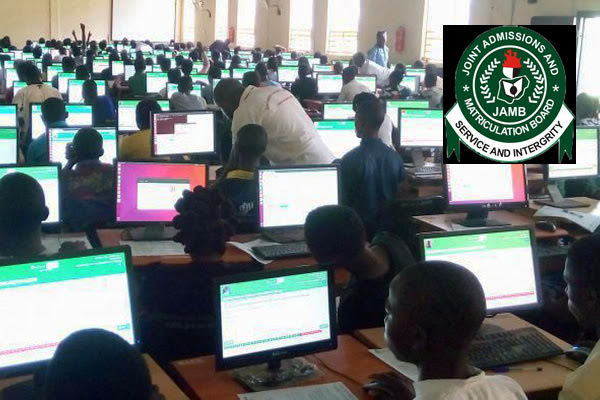
The Joint Admissions and Matriculation Board (JAMB) and the police have warned candidates preparing for the 2024 Unified Tertiary Matriculation Examination (UTME) against patronising fake websites.
The two bodies gave the warning at a joint news conference in Abuja on Saturday.
The Force Public Relations Officer, ACP Olumuyiwa Adejobi, said there were several fake websites created by unscrupulous individuals with the intention of misleading candidates.
He urged candidates to be wary of their tactics, saying the fake web sites were designed to deceive innocent candidates into providing personal details such as registration numbers, email addresses, and phone numbers.
“Both JAMB and the Nigeria Police Force condemn these fraudulent activities and hereby reiterate the readiness to safeguard the interests of candidates and maintain the integrity of the examination process.
“We urge parents, guardians, and all stakeholders to ensure that candidates print their UTME Notification Slips only from the Board’s approved website: www.jamb.gov.ng.
“Candidates can print their slips from the comfort of their homes or visit any of the over 700 accredited Computer-Based Test (CBT) centres nationwide,” he said.
Adejobi explained that the force was familiar with the tactics employed by fraudsters, especially during the annual assessment and admission exercises.
He, therefore, said that both organisations was actively sensitising candidates and the public about these deceptive practices.
“Any candidate who visits these fake sites will definitely have unreliable information and thereby miss out in the forthcoming exams.
“Candidates are advised to print their UTME Notification Slips before Friday, 19th April, 2024, to access vital information about their examinations.
“Any website other than www.jamb.gov.ng offering UTME slip printing services is fake and designed to defraud candidates,” he said.
He also called on candidates to beware of web sites offering ‘live’ questions and answers, as they were false and deceptive, saying that accessing such materials was prohibited.
He further said the board was partnering with the Nigeria Police Force National Cyber Crime Centre (NPF-NCCC) to address online scam-related issues seamlessly.
He assured candidates and the public of the force firm dedication to ensuring a fair and transparent examination process.
He also stressed that the Inspector General of Police had ordered the NPF-NCCC to go after scammers and fraudsters who engage in cyber related crimes and create phishing sites/portals.
On his part, the JAMB spokesperson, Dr Fabian Benjamin, pledged the Board’s commitment to continue in playing its role
He, therefore, urged candidates to ignore any unsolicited messages noting that they were from elements who aim at defrauding candidates.
The 2024 UTME is scheduled to commence on Friday, April 19, and end on April 29. (NAN)


Disability Act: Stakeholders Worry Over Delayed Domestication in Benue
ShareBy David Torough, Abuja Stakeholders have expressed concern over delay in the domestication of Disability Act in Benue state and...


Enugu Embarks on Inspection of Smart Schools, Healthcare Projects Across State
ShareFrom Sylvia Udegbunam, Enugu Governor of Enugu State, Peter Mbah has charged contractors and the site engineers handling construction of...

Benue Govt Abandoned Foreign Exchange Programme Due to N3mn Bursary – DG BEQA
ShareFrom Attah Ede, Makurdi The Director-General, Benue State Education Quality Assurance Agency, BEQA, Dr. Terna Francis, on Thursday, said the...


Tinubu Establishes National Education Data System
SharePresident Bola Tinubu has approved system-wide policies to comprehensively overhaul the education sector to improve learning and skill development, increase...
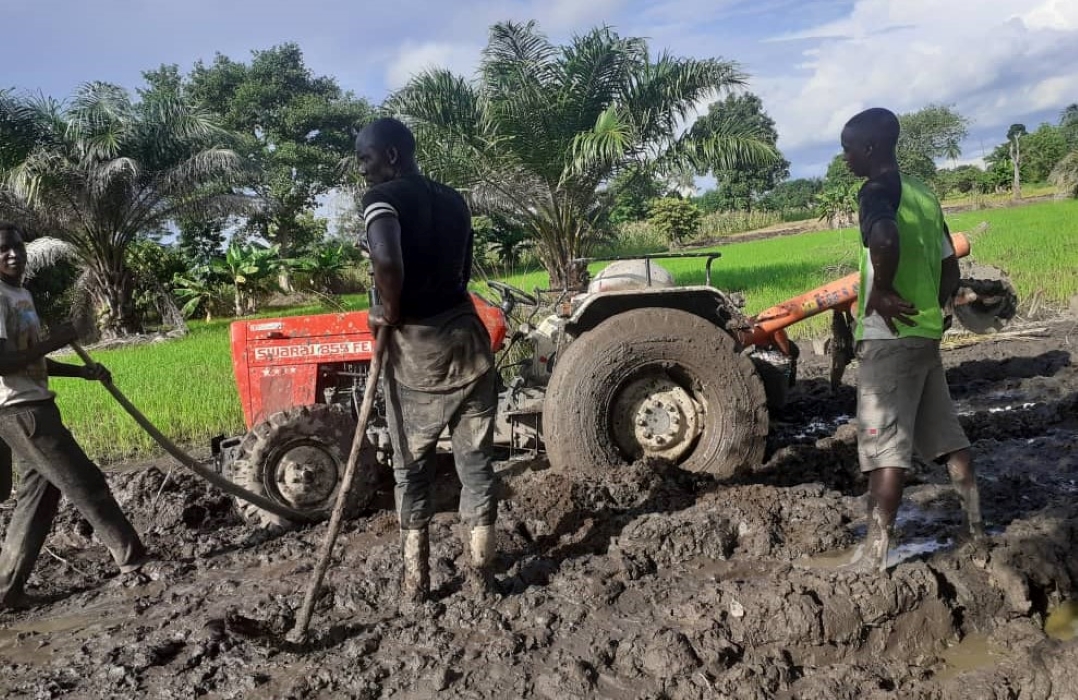
ADAS Programmes Set to Establish Digital Structure, Database for Farmers, Farmlands
ShareFrom Yagana Ali, Yola The Adamawa State Agribusiness Support Programme ADAS-P has concluded arrangements to establish standard & digital structure/database...

Absence of Diplomacy Responsible for Secessionist Agitations in Nigeria – INM
ShareFrom Marcel Duru, Owerri Igbo National Movement, a sociopolitical pressure group, has said that absence of diplomacy is responsible for...


N20m Bounty on Kidnappers: Wike Fulfills Promise to FCT Police Command
ShareBy Laide Akinboade, Abuja The Commissioner of Police, FCT, CP Benneth C. Igweh, expresses heartfelt gratitude on behalf of the...

Presidential Amnesty: Bank Accepts Responsibility for Stipends Delay
ShareFrom Mike Tayese, Yenagoa One of the Bank offering services to the Presidential Amnesty Programme (PAP) has explained the reason...


Enugu State Justice Reform Team Commends Mbah, Calls for Enhance Justice System
ShareFrom Sylvia Udegbunam, Enugu The Enugu State Justice Reform Team (ESJRT) has commended the administration of Dr. Peter Ndubuisi Mbah...


I Didn’t Abandon Mandate – LP Candidate
ShareFrom Marcel Duru, Owerri The Labour Party Candidate in the 2023 general elections for Mbaitoli-Ikeduru Federal Constituency, Rt Hon Uche...