
NEWS
Concrete Pavements and Tinubu’s Road Transformation Agenda


A good road network plays a vital role the social economic life of any nation.
By linking producers to markets, workers to jobs, students to school, and the sick to hospitals, roads are vital to any development agenda, says the World Bank.
Unfortunately, in spite of the efforts of different tiers of government to provide this important infrastructure, poorly maintained roads, be it Federal High Ways (Trunk A), state government roads (Trunk B) or local government ones (Trunk C) bad roads still dot the length and breadth of the country.
Successive administrations made efforts to fix the state of the nation’s road infrastructure but their attempts did not yielded the desired results.
One of the most audacious efforts to ensure a well maintained road network and construction of new ones in the country was through the Directorate of Food, Road and Rural Infrastructure of the then Gen. Ibrahim Babangida regime.
The late Gen. Sani Abaja regime also had a special intervention fund, the Petroleum Trust Fund whose mandate also covered road repairs.
Perhaps what seems to be the most sustainable effort to that effect came in the shape of Federal Road Maintenance Agency.
The past administration of Muhammadu Buhari also had its own intervention plans through the Presidential Infrastructure Development Fund (PIDF); the Presidential Infrastructure Development Fund, Sukuk Fund.
There was also the Road Infrastructure Tax Credit Scheme in addition to other multilateral loans/grants and collaboration with other government agencies such as the North East Development Commission as well as the Highway Development Management Initiative (HDMI).
The poor state of the roads which has defied these solutions has caused untold hardship to Nigerians as many met their untimely death as a result of avoidable accidents caused by failed portions of roads.
In some instances, criminals such as kidnappers and armed robbers take advantage of such portions to attack motorists.
According to media reports, in 2019, Nigeria ranked 191 out of 192 on deaths by road accidents in a World Health Organisation’s statistics.
The Officer, Federal Road Safety Corps says its operations have road accidents in the country, including bad road-induced one.
Road accident data for first six months of the year 2023, showed a total of 2,850 fatalities as against 3,375 in the same period in 2022, representing 15.5 per cent drop, according to Mr Bisi Kazeem, Assistant Corps Marshal, Corps Public Education, Federal Road Safety Corps.
One of the reasons advanced for the poor state of the roads is lack of durability. The President Bola Tinubu administration has promised to address this through the use of concrete pavement in road construction and repairs.
According to the Minister of Works, Sen. Dave Umahi concrete pavements have a 50-year guarantee, exposure of subgrade, sub-base and base course to 60 days vehicular movement and continuous sheep-foot rolling before requiring placement.
He assured that in adopting the initiative, there would be effective design of road infrastructure anchored on detailed report of environmental site conditions and geotechnical report.
Because of the faith the administration has in concrete pavement as a road construction option, Umahi further warned expatriate contractors that no shoddy job would be tolerated again in Nigeria.
“Concrete roads have a longer lifespan; it can withstand heavy traffic loads, low maintenance, less affected by temperature fluctuations.
“A lot of advantages accrue to the use of concrete to construct roads, concrete roads last longer, compared to asphalt roads, reducing the need for frequent repairs and maintenance.
“It is stronger and can withstand heavy traffic loads, it also has low maintenance,” Umahi said.
Umahi, however, stated that nobody was insisting that all ongoing road construction in the nation should be changed to concrete.
He said such could happen under some conditions, including roads constructed with asphalt pavement must be on concrete shoulder, with an alternative design on the road shoulder.
Mr Hassan Saidu, National Chairman, Nigerian Institution of Highway and Transportation Engineers, shares the same views as Umahi though with some caveats.
“Rigid pavements are not totally strange in Nigeria’s Highway practice. Both flexible pavements and rigid pavements have their advantages and disadvantage, adding both them should be used where it is absolutely necessary.
“The choice of pavement should be based on engineering judgement, at the moment there are about 2,604 road projects totally about 18,000km at a total cost of N14 trillion according to the minister of works.
“For such a number of projects to be truncated and suddenly converted to rigid pavement projects, there will certainly be floodgates of litigations by contractors on the violation of contractual agreements.
“The experiences garnered over asphalt plants and other items of equipment used for the construction of flexible pavements would be discarded and this will amount to huge loss to the country’’, he cautioned.
Saidu said the challenges face by road infrastructure in the country transcended the materials used in road construction and urged the Legislature and the Executive to ensure that Road Sector Reform Bill was signed into law.
The bill, he said provides a broader and more pragmatic solution to Nigeria’s road infrastructure deficiencies.
Mr Chukwudi Ezugu, the National Chairman, Nigerian Institution of Civil Engineers (NICE), in conscious of the cost of embarking on concrete pavement road construction and maintenance.
“If the load on the road is quite high concrete pavement would be preferable, it is also more durable but the cost is much higher but flexible pavement also has a life span of 20-25 years.
“So, basically there are some roads which are arterial for high traffic you may have to make that decision to do that investment.
“This will depend on the study, because there are experts that study each of this situation with the client agreeing based on the economies and its serviceability.
“Nothing is actually permanent so, if you have to do a project that has to last for 20 to 25 years, it is possible that after that, you may even like to restructure the project in itself, redesign for one thing or the other,’’ Ezugu said.
As the debate for concrete and asphalt roads continues many Nigerians say their desire is to have roads that are in good condition and would guarantee safety and ease of doing businesses. (NANFeatures)
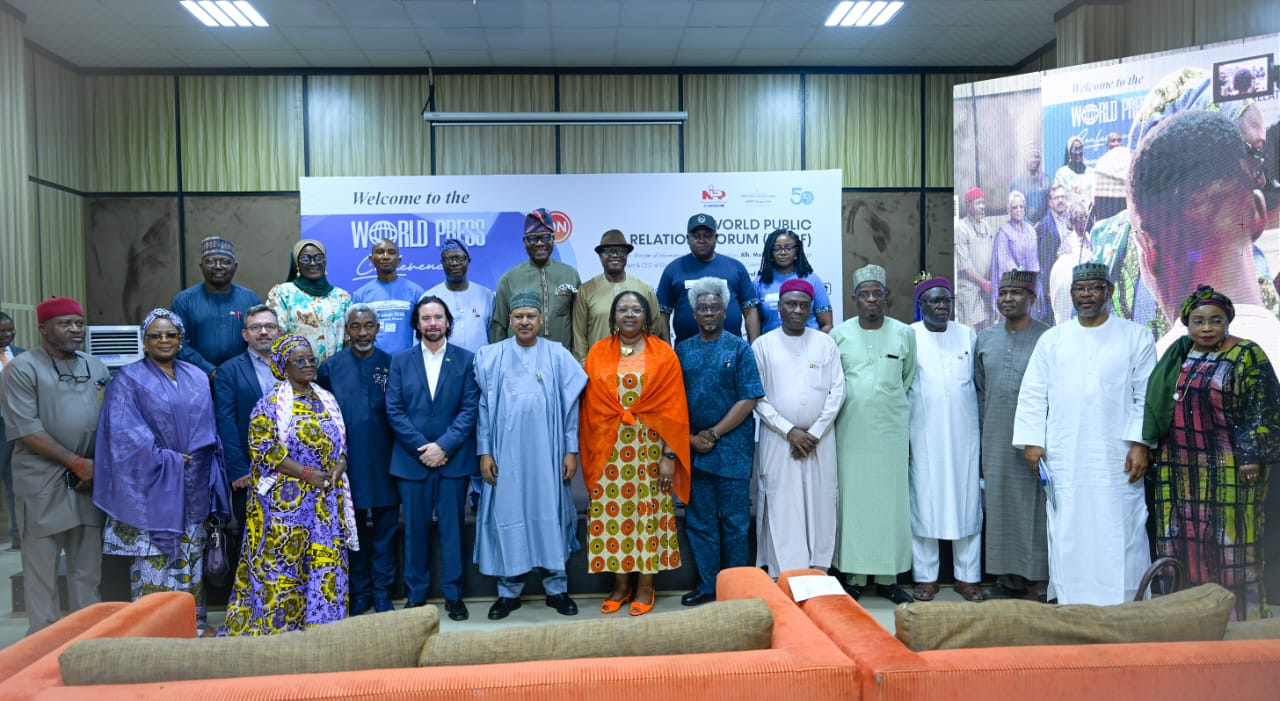
By David Torough, Abuja
The Federal Government has declared its readiness to host the 2026 World Public Relations Forum (WPRF), assuring the international community of Nigeria’s capacity to deliver a successful event.
The Minister of Information and National Orientation, Mohammed Idris, gave the assurance on Wednesday, at a world press conference in Abuja, ahead of the Forum scheduled for November 15–22, with President Bola Tinubu serving as Chief Host.
Over 126 countries and leading international institutions are expected to participate.Idris described the Forum as an opportunity to showcase Nigeria’s capacity and strengthen its role in global communication discourse.
He thanked the Global Alliance for Public Relations and Communication Management and the African Public Relations Association (APRA) for selecting Nigeria to host the global and continental gatherings simultaneously. He noted that Nigeria is the first country in West Africa and the second in Africa to host the WPRF.
“On behalf of the Federal Government of Nigeria, and particularly His Excellency, President Bola Ahmed Tinubu, who is the Chief Host of the historic 2026 World Public Relations Forum, I wish to express our profound appreciation to the Global Alliance for Public Relations and Communication Management and the African Public Relations Association for the confidence reposed in Nigeria,” the Minister said.
Speaking on the theme, “Responsible Communication: The Voice of the World,” Idris said the rapid transformation of the information ecosystem through digital platforms, artificial intelligence and emerging technologies had heightened concerns around misinformation, disinformation and declining public trust. He urged public relations professionals to uphold truth, accuracy, transparency, ethical standards and the public interest.
“Public relations professionals must recognise that their responsibility goes beyond managing reputations or promoting institutional interests. They have a duty to uphold truth, accuracy, transparency, ethical standards and the public interest,” he stated.
The Minister also highlighted the Federal Government’s support for the establishment of the UNESCO Category 2 International Media and Information Literacy Institute (IMILI) in Abuja, describing it as a strategic intervention to equip citizens, particularly young people, with the skills to identify misleading information and navigate the digital environment responsibly.
He stressed that government communication must go beyond explaining policies to listening to citizens, addressing legitimate concerns and providing credible information that builds public trust.
“For governments, communication must be a two-way process. It must not only explain policies and programmes but also listen to citizens, address legitimate concerns and provide accurate information that enables people to make informed decisions,” he said.
Idris said the Ministry was working with NIPR and relevant institutions to coordinate protocol, security, logistics, hospitality and stakeholder engagement for the Forum. He welcomed delegates to Nigeria and urged them to explore the country’s cultural heritage, hospitality and economic opportunities.
“The 2026 World Public Relations Forum is an opportunity for Nigeria to demonstrate its capacity, strengthen its international partnerships, and help shape the future of responsible communication. We are ready, our doors are open, our people are welcoming, and the Federal Government stands firmly behind this important undertaking,” the Minister declared.
Earlier, the President of the Nigerian Institute of Public Relations (NIPR), Dr Ike Neliaku, commended Idris for his support during Nigeria’s bid and preparations for the Forum. He recalled the Minister’s directive to the team to secure the hosting right and praised the contributions of government agencies and Ministry officials.
“You said, ‘Go, don’t come back without result.’ You gave us that marching order, and we made sure that we started it from there,” Neliaku recalled.
The Secretary-General of APRA, Dr Omoniyi P. Ibietan, described Nigeria’s hosting of the WPRF alongside the 37th APRA Conference as a historic opportunity for Africa to strengthen its collective voice and influence global communication discourse. He commended the Minister’s leadership and support, noting the importance of the continent’s participation.
“We want to speak with one voice as a continent,” Ibietan said.
The President and Chief Executive Officer of the Global Alliance for Public Relations and Communication Management, Professor Justin Green, disclosed that more than 126 countries were expected at the Forum, alongside representatives of the United Nations, World Bank, African Union and European Commission.
He praised President Tinubu and Minister Idris for their support, describing the Minister’s commitment as crucial to bringing the event to Nigeria.
“Your minister, your minister, because without him, this event would not be happening,” Green declared.
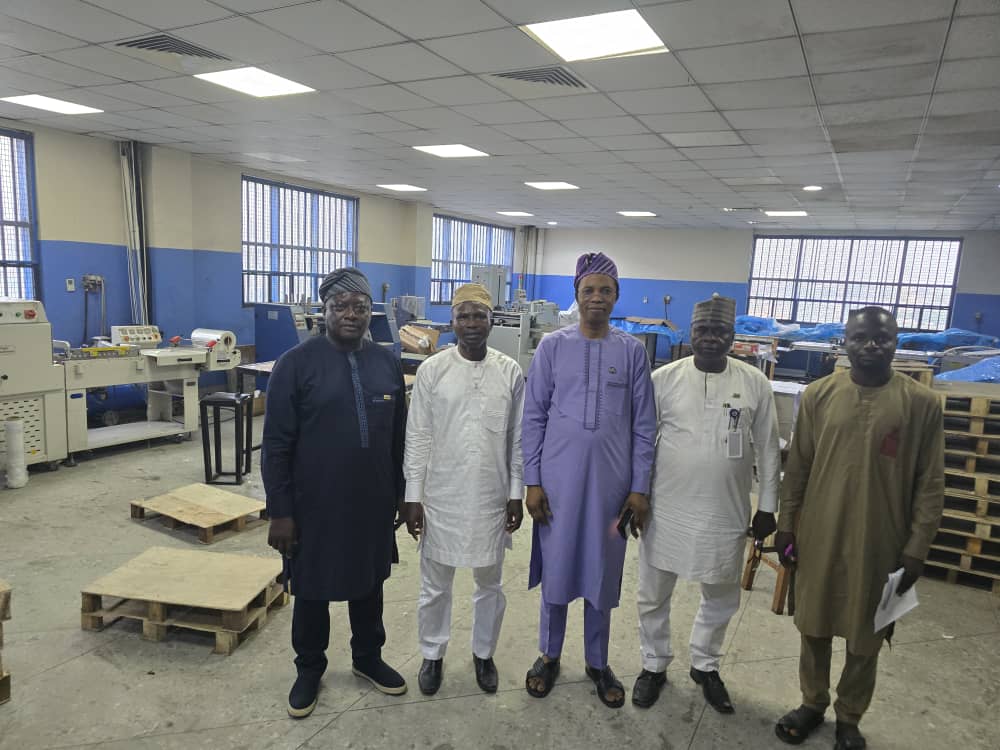
By David Torough, Abuja
The Chartered Institute of Professional Printers of Nigeria (CIPPON) has renewed its call on the Federal Government to introduce targeted incentives for the printing industry, enforce local content policies and establish the Office of the Printer General of the Federation (PGF), following an assessment visit to the state-of-the-art facilities of Marvelous Mike Press Limited in Abuja.
The call followed an inspection tour by the Industrial Development and Export Concessions (IDEC) Committee of CIPPON, led by the Institute’s President, Koko T.
Clement, alongside the Ex-Officio, Dr. Samson Omoniyi Adesoye, and members of the Industry, Trade and Investment Committee, headed by Suleiman Usman Olowoniyi.The visit formed part of CIPPON’s nationwide assessment of printing facilities to determine the industry’s investment capacity and identify operators eligible for available industrial development and export concessions.
At Marvelous Mike Press Limited, the delegation was received by the company’s Managing Director, Printer Michael Akinola, who conducted the team around the facility and showcased its extensive production infrastructure and advanced printing technologies.
The delegation expressed amazement at the scale of investment and technological sophistication deployed by a single Nigerian-owned printing company without significant government incentives.
The facilities inspected demonstrated the industry’s capacity to handle large-scale printing, packaging and security document production to international standards.
Speaking after the inspection, CIPPON President, Koko Clement, described the investment as a strong indication that Nigeria possesses the resources, technology and professional expertise required to meet its domestic printing needs and compete effectively in the international market.
He said the experience had strengthened the Institute’s resolve to intensify its engagement with the Federal Government, particularly on the need to ensure that educational books and other government-related printing jobs are undertaken within Nigeria.
“What we have witnessed at Marvelous Mike Press is beyond imagination. The scale of investment by a single Nigerian entrepreneur, without government incentives, demonstrates the enormous capacity and readiness of our printing industry. If government recognises and supports this capacity, there will be no justification for taking our educational book printing jobs outside the country,” Koko stated.
He expressed concern that despite its enormous economic potential, employment opportunities and contribution to national development, the printing industry has continued to receive inadequate attention in government incentive programmes, concessions and industrial interventions.
According to him, the facilities visited possess modern technologies capable of producing millions of copies of books, packaging materials and security documents while meeting internationally recognised quality standards.
Koko further disclosed that Nigerian printing companies are already undertaking substantial printing and packaging contracts for other African countries, demonstrating their competitiveness and readiness to serve wider regional markets.
“This is not just about printing. We have facilities in Nigeria handling high-volume printing and packaging assignments for other African countries with precision and quality comparable to the best in the world. Nigerian printers are not asking government to create capacity for them.
“We already have the technology, expertise, manpower and investment. What we need is the right policy framework and political will to unlock this potential,” he said.
The CIPPON President explained that retaining printing contracts within Nigeria would generate far-reaching economic benefits beyond the printing companies themselves. Such a policy, he noted, would stimulate demand for locally produced paper, printing inks, finishing materials and packaging products, thereby strengthening several interconnected industries.
He maintained that the initiative would advance the local content objectives of President Bola Ahmed Tinubu’s Renewed Hope Agenda while reducing capital flight, conserving foreign exchange and expanding employment opportunities for Nigerian youths.
In a major policy recommendation, CIPPON urged President Bola Ahmed Tinubu to consider establishing the Office of the Printer General of the Federation (PGF) or the Printers Commission of Nigeria (PCN) to provide institutional leadership, coordination and effective regulation of the country’s printing industry.
The Institute believes that such an institution would provide a dedicated government framework for developing printing policies, promoting local production, protecting domestic printing jobs, coordinating industry stakeholders and strengthening the entire printing value chain.
“The establishment of the Printer General of the Federation will give the Federal Government a focused institutional structure for coordinating printing policies, enforcing local printing requirements, protecting employment and ensuring that printing contracts generated in Nigeria are retained for Nigerian printers. This is the missing link in building a productive and globally competitive printing economy,” Koko added.
CIPPON also called on the Federal Ministry of Education, the Universal Basic Education Commission (UBEC), Tertiary Education Trust Fund (TETFund) and all state governments to immediately strengthen the implementation of local content policies by ensuring that educational books at primary, secondary and tertiary levels are printed in Nigeria.
The Institute stressed that the country stands to save billions of naira in foreign exchange, create hundreds of thousands of employment opportunities, expand the operations of local paper mills, stimulate ink and packaging manufacturing, and accelerate economic growth if printing activities are domiciled within the country.
Koko therefore appealed to the Federal Government to recognise the printing industry as a strategic pillar of national industrialisation and give Nigerian printers the necessary policy support to maximise its potential.
“Printing in Nigeria is a huge economic opportunity. It can save billions of naira in foreign exchange, create jobs for our youths, revive our paper mills, strengthen manufacturing and grow the national economy. It is time for government to believe in Nigerian printers and give them the opportunity to handle the country’s printing needs. Nigerian printing jobs must remain in Nigeria for Nigerians,” he declared.
Meanwhile, CIPPON disclosed that the IDEC assessment exercise would continue across other printing facilities nationwide as part of efforts to identify investments and operators that can benefit from the scheme.
The Institute consequently appealed to printing companies and individual practitioners who have invested in modern printing equipment and machinery to contact the CIPPON President to initiate the necessary IDEC assessment processes and procedures.
The Institute reaffirmed its commitment to promoting investment, strengthening professional standards, expanding local printing capacity and positioning Nigeria as a major printing and packaging hub in Africa.

By David Torough, Abuja
A call has been made on the Nigerian Government to engage prominent Nigerian Christian leaders, including the Founder and Presiding Bishop of Living Faith Church Worldwide, Bishop David Oyedepo, alongside his spiritual sons, Pastor David Ibiyeomie, Dr Paul Enenche and Pastor Korede Komaiya, to explore how their institutions could contribute to addressing some of Nigeria’s development challenges.
The call, contained in an opinion article titled “Why the Nigerian Government Must Invite Bishop David Oyedepo and His Spiritual Sons Immediately,” argues that the churches led by the four clerics have established institutional structures and community-based initiatives that could provide useful lessons for national development.
According to the article, the ministries have made contributions in areas such as education, healthcare, transportation, employment generation, infrastructure development, poverty reduction and human capital development.
It noted that their respective church organisations operate transportation arrangements that enable worshippers and other participants to attend services and programmes without paying transport fares, describing the initiative as an example of organised social support.
The article also highlighted their investments in education, particularly the establishment of primary and secondary schools as well as universities, with modern learning facilities aimed at developing academic excellence and character among young Nigerians.
On healthcare, it cited medical outreaches, financial assistance for patients, support for surgeries and sponsorship of individuals requiring specialised medical treatment outside Nigeria as some of the interventions attributed to the ministries.
The opinion further drew attention to scholarship programmes operated by the churches, arguing that educational support has created opportunities for young people from disadvantaged backgrounds to acquire professional qualifications and improve their economic circumstances.
It also identified electricity generation and infrastructure development as areas where the religious institutions have demonstrated capacity, pointing to their investments in uninterrupted power arrangements, roads, pedestrian bridges and water facilities within their operational environments.
On employment, the article claimed that the four church organisations collectively provide jobs for more than 300,000 people, describing them as significant employers whose activities extend beyond religious services into administration, education, healthcare, hospitality, logistics and other sectors.
It further argued that their large-scale conventions and international conferences attract participants from different parts of the world, creating economic opportunities for hotels, transport operators, traders, food vendors and other businesses in host communities.
Beyond physical infrastructure and economic activities, the article emphasised the role of religious institutions in social transformation, particularly through counselling, moral instruction, family development, entrepreneurship training and programmes aimed at discouraging destructive lifestyles.
It maintained that these activities could offer useful insights into addressing social challenges, strengthening families and promoting responsible citizenship.
The article also acknowledged the importance of resource management, institutional discipline and long-term planning, arguing that the sustainability of large religious organisations could provide useful case studies for public administrators and development practitioners.
It therefore proposed that the Federal Government initiate a structured engagement with Bishop Oyedepo and the other three clerics to examine their institutional experiences, identify transferable practices and explore possible areas of collaboration in national development.
The proposed engagement, according to the article, should not be politically motivated or limited to ceremonial recognition, but should focus on practical discussions around education, healthcare delivery, employment, infrastructure, social welfare, entrepreneurship and community development.
It concluded that Nigeria could benefit from drawing lessons from successful non-governmental institutions, faith-based organisations and private-sector initiatives, particularly where their experiences offer approaches that can complement existing public development programmes.
The proposal comes amid continuing national conversations about the role of religious organisations, private institutions and civil society in supporting government efforts to improve living conditions and expand development opportunities across the country.



FG Hosts World Public Relations Forum as Delegates from over 126 Countries Set to Attend
ShareBy David Torough, Abuja The Federal Government has declared its readiness to host the 2026 World Public Relations Forum (WPRF),...

CIPPON Urges FG to Protect Nigerian Printing Industry
ShareBy David Torough, Abuja The Chartered Institute of Professional Printers of Nigeria (CIPPON) has renewed its call on the Federal...


FG Urged to Engage Bishop Oyedepo, Spiritual Sons Leadership Models on National Development
ShareBy David Torough, Abuja A call has been made on the Nigerian Government to engage prominent Nigerian Christian leaders, including...

Regional Devt Ministry Trains Commissions’ Officers on Digital Quarterly Reporting Template
ShareBy David Torough, Abuja The Ministry of Regional Development has commenced a capacity-building training programme for desk officers from the...


Actress Ademoye Rejects Apology over Movie Demonetization
ShareNollywood actress and filmmaker, Bimbo Ademoye, has rejected an apology from a man who filed a copyright claim against her...


Army Rescues 21 Kidnap Victims after Gun Battle with Terrorists in Niger
ShareBy David Torough, Abuja Troops of the Nigerian Army’s 18 Brigade have rescued 21 kidnapped victims following a fierce gun...


CBN Digitalises Fiscal Data Reporting Across 36 States, FCT
ShareBy Tony Obiechina, Abuja The Central Bank of Nigeria (CBN) has commenced the digitalisation of sub-national fiscal data reporting across...


NNPC Audit: Kyari Denies N210trn Missing Funds
ShareBy David Torough, Abuja Former Group Chief Executive Officer of the Nigerian National Petroleum Company Limited (NNPCL), Mele Kyari, has...

2027: APC Bets on Reforms, Unveils Tinubu’s Blueprint
ShareBy Eddy Ochigbo, Abuja The All Progressives Congress (APC) has unveiled an ambitious four-pillar manifesto for President Bola Tinubu’s proposed...


Troops Neutralise over 60 Terrorists, Rescue70 Kidnap Victims in One Week
Share By David Torough, Abuja The Armed Forces of Nigeria (AFN) have neutralised more than 60 terrorists and rescued at...