
COVER
Constitution Amendment: 25 Govs Move to Truncate Process over LG Autonomy – NASS

By Ubong Ukpong, Eze Okechukwu, Abuja
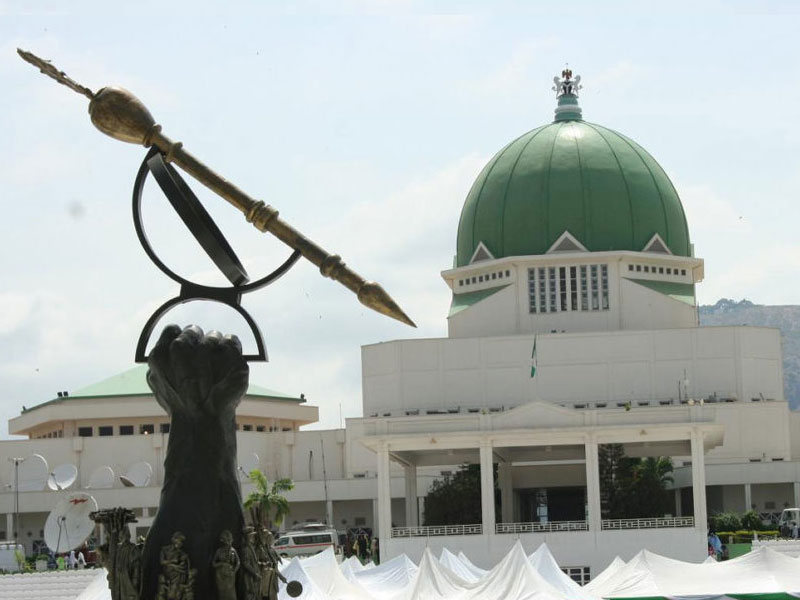
The National Assembly yesterday, unequivocally, accused Governors of 25 states in the country, of masterminding moves to frustrate the ongoing efforts to amend the 1999 constitution, over their bias against Local Government autonomy.
Joint Committees of the federal legislature on Constitution Amendment at a press briefing in Abuja, told Newsmen that it received a letter from the Conference of Speakers, informing that 25 states have vowed not to consider the amendments if four of their demands including state police were not met.
The Committee said however, that 11 states had performed their constitutional duty on the bills.
In another development, The Independent National Electoral Commission (INEC) has said the use of Bimodal Voter Accreditation System (BVAS) and Result Viewing (IReV) portal for accreditation and transmission of election results, has come to stay in Nigeria.
Chairman of the joint Committee and Deputy Senate President, Senator Ovie Omo-Agege, who addressed Newsmen on behalf of his Co-Chairman and Deputy Speaker of the House of Representatives, Rt. Hon. Ahmed Idris Wase, said it was clear that the Speakers were not speaking for themselves but under pressure from their Governors, who were opposed to local government autonomy.
“Recently, the National Assembly has been inundated with calls and messages from the public, and subjected to intense pressure by well-meaning citizens to update Nigerians on the status of the 44 Constitution amendment Bills transmitted to the 36 State Houses of Assembly. It is in response to these calls that we have convened this briefing.
“First, let us make a few quick points, and then we will answer your questions. Understandably, we will speak a bit about how far we have come regarding Constitution Alteration in the 9t National Assembly.
“Learning from the botched attempt by the National Assembly to rewrite the Constitution in one fell swoop. between 2003 and 2007, successive Assemblies have employed an incremental approach to altering the Constitution. Hence, the First, Second, Third and Fourth Constitution (Alteration) Acts were passed and enacted. These amendments undoubtedly improved our electoral management and adjudication systems, fostered political participation and addressed other fundamental good governance issues.
” The current Constitution alteration exercise is a legislative response to relentless agitations by Nigerians to address contemporary constitutional issues. Throughout the Constitution alteration process, the National Assembly adhered to the time-tested participatory approach to constitution amendment. That is why from the process’s inception, we invited written submissions from citizens, interest groups, socio-cultural organizations and civil society organizations. Subsequently, we held zonal public hearings at 12 centres across the six geo-political zones; and a national public hearing in Abuja.
“Furthermore, after several meetings and engagements with the State Houses of Assembly, the Joint Committee of the Senate and the House of Representatives recommended 66 Constitution Alteration Bills for passage. We considered that those 66 bills have a considerable level of national consensus as garnered from public consultations. Out of the 66 Bills, 44 were approved by the Senate and House of Representatives. Subsequently, the 44 Bills were transmitted to the 36 State House of Assembly on 29th March 2022 for approval in line with Section 9(2) stipulations of the Constitution.
“The 44 Bills transmitted to the State Houses of Assembly seek to, amongst others: strengthen the legislature’s authority to enable it to serve as an effective pillar of checks and balance to the executive; strengthen independent constitutional bodies; create and strengthen a culture of good governance; address issues of revenue leakages and unbridled government spending, and enhance effective administration of justice in Nigeria”, Omo-Agege stated.
He gave a rundown on some of the bills to include, “Constitution of the Federal Republic of Nigeria, 1999 (Fifth Alteration) Bill, No. 1, 2022 (Local Government Financial Autonomy). The Bill seeks to entrench financial autonomy for Local government councils: by abolishing the State Joint Local Government: Account and providing for a particular account into which shall be directly paid all allocations due to Local Government councils from the Federation Account and the internally generated revenue of the State Government. In addition, the Bill provides for the payment of teachers’ salaries to be shared between the three tiers of Government, such that the amount to be deducted from the Local Government Councils is the least.
“Constitution of the Federal Republic of Nigeria, 1999 (Fifth Alteration) Bill, No. 2, 2022 (Local Government Administrative Autonomy). This Bill seeks to establish Local Government Councils as a substantive tier of Government in the Constitution and guarantee their democratic existence and tenure by entrenching .the fundamental. governance structure of the Local Government Councils in the Constitution. It prohibits the exercise of council powers by any entity other than democratically elected council members.
“Constitution of the Federal Republic of Nigeria, 1999 (Fifth Alteration) Bill, No. 11, 2022 (Inauguration of Senators and MembersElect). This Bill seeks to provide the quorum of members-elect required for the first and inaugural session of members-elect of the National and State Houses of Assembly as a two-thirds majority of members-elect.
“Constitution of the Federal Republic of Nigeria, 1999 (Fifth Alteration) Bill, No. 26, 2022 (Fair Hearing in the Process of Recommending the Removal of Judicial Officers). The Bill requires a fair hearing in recommending the removal of judicial officers by the State Judicial Service Commission.
“Constitution of the Federal Republic of Nigeria, 1999 (Fifth Alteration) Bill, Nos. 29, 30, 31, 32,33, and 34, 2022 (Devolution of Powers). These Bills intend to decongest the Exclusive Legislative List by moving some items to the. Concurrent Legislative List, thereby giving more legislative. powers to States.. The items include Airports; Fingerprints, Identification and Criminal Records; prisons and railways. These amendments strengthen the federal system and ensure that governance responsibilities are efficiently allocated to the level of Government best able to manage them. It also allows states – to generate, transmit and distribute electricity in areas covered by the national grid within their respective domains.
“Constitution of the Federal Republic of Nigeria, 1999 (Fifth Alteration) Bill, No. 39, 2022 (Power to Enforce Compliance of Remittance of Accruals into the Federation Account and Review of Revenue Allocation Formula). It empowers’ the Revenue Mobilization, Allocation, and Fiscal Commission to enforce compliance with the remittance of accruals into and disbursement of revenue from the Federation Account and streamline the procedure for reviewing the revenue allocation formula.
“Constitution of theFederal Republic of Nigeria, 1999 (Fifth Alteration) Bill, No. 45, 2022 (Timeframe for the Submission of the Names of Ministerial or Commissioner Nominees). This Bill provides a timeframe within which the President or a Governor shall forward to the Senate or State House of Assembly names of nominees for confirmation as Ministers or Commissioners.
“Constitution of the Federal Republic of Nigeria, 1999 (Fifth Alteration) Bill, No. 47, 2022 (Establishment of State Security Council). The Bill establishes a State Security Council to advise the Governor on matters relating to public security.
“Constitution of the Federal Republic of Nigeria, 1999 (Fifth Alteration): Bill, No. 48, 2022 (Power to Summon the President and Governors). The amendment grants the National Assembly and State Houses of Assembly the powers to summon the President and Governors, respectively; to answer questions on issues of national security or any matter over which the National Assembly and States Houses of Assembly have the power to make laws.
“Constitution of the Federal Republic of Nigeria, 1999 (Fifth Alteration) Bill, No. 51, 2022 (Creation of the Office of the AccountantGeneral of the Federal Government). It establishes the office of the Accountant-General of the Federal Government as distinct from the office of the Accountant-General of the Federation. It aims to ensure ease of administration by enabling the Federal Government to have its accounting officer separate from the accounting officer dealing with the other government tiers;
“Constitution of the Federal Republic of Nigeria, 1999 (Fifth Alteration) Bill, No. 53, 2022 (Separation of the Office of the AttorneyGeneral of the Federation and the State from the Office of the Minister or Commissioner for Justice). It makes the office of the AttorneyGeneral independent and insulated from partisanship by separating it from the office of the Minister of Justice or Commissioner for Justice; and
“Constitution of the Federal Republic of Nigeria, 1999 (Fifth Alteration) Bill, No. 58, 2022 (Independent Candidacy), The Bill seeks to alter the Constitution to allow an independent candidate to contest for an elective position. This amendment expands the space for democratic participation by providing a platform outside political parties for persons to participate in and contest elections,” he said.
On the status of the bills, the Chairman said, “six months after the transmission of these Bills to State Assemblies, it is most disheartening to inform you that only 11 State Houses of Assembly have demonstrated their independence and loyalty to the Constitution regarding the 44 bills. 25 State Houses of Assembly are yet to consider and vote on these bills.
“So far, only Abia, Akwa-Ibom, Anambra, Delta, Edo, Kaduna, Katsina, Kogi, Lagos, Ogun and Osun States have successfully considered, voted on, and forwarded their resolutions on the 44 bills to the National Assembly.
“More worrisome is that while we are still expecting the receipt of the resolutions of the remaining Houses of Assembly, we received a letter from the Conference of Speakers of State Assemblies informing the National Assembly that the remaining states will not act on the 44 Bills unless the National Assembly passes four new Bills they have proposed in the letter.
“The Bills they propose seek to amend the Constitution to: Establish State Police; Establish State Judicial Council;
Streamline the procedure for removing Presiding Officers of State Houses of Assembly; and, Institutionalize Legislative Bureaucracy in the Constitution.
“We want to ensure everyone understands this: the National Assembly is in no way averse to acting on any proposed Bill or memoranda appropriately tabled before it, at any time in its life. However, it is legally inappropriate for the Conference of Speakers to use the four Bills as a quid pro quo to act on the 44 Bills the National Assembly 44 Bills transmitted. It is clear, and we cannot overstate, that this letter is not in keeping with the obligation the Constitution has placed on them regarding the Constitutional amendment”, the Deputy Senate President said.
He clarified that the Bills the National Assembly transmitted to the State Houses of Assembly as required by the Constitution were not about members of the National Assembly, stressing that it transcended their personal and political interests. .
“Although the Conference of Speakers did not allude to it in their letter, we are aware of the undue interference with legislative processes and the political capture of some State Houses of Assembly by some State Governors. No doubt, some State Governors have worked tirelessly to turn the Conference of Speakers and some State Assemblies into political puppets, thereby undermining and delegitimizing the legislative institution at the state level. This interference has been ramped up, especially in opposition to the Bills granting financial and administrative autonomy to Local Governments.
“An independent state legislature is essential to the well-being of Nigeria’s constitutional democracy. That is why the ongoing attempt by some State Governors, with the support of some Speakers and allies in the State Houses of Assembly, to eliminate that independence should alarm all Nigerians. This posturing by the Conference of Speakers of State Assemblies should be shown for what it truly is — a total disregard for the Nigerian constitutional system.
“It remains true that each State House of Assembly is independent of the other. However, Constitution amendment Bills require the approval of twothirds (24) of the 36 States House of Assembly before they can be presented for the President’s assent. Therefore, how a State Assembly decides on each of the Bills is its prerogative. But, there must be a decision for citizens to know where each State House of Assembly stand on the issues the Bills seek to address”, he stated.
He appealed to citizens, civil society organizations, interest/professional groups and institutions to prevail on the Conference of Speakers to withdraw their threat to truncate the constitution amendment process and instead, should all speak up to defend, our Constitution and democracy.
The federal lawmakers said that during committee meetings with the states Houses of Assembly Speakers, they never insisted on state police and other demands they now raised, and were prepared to vote on all the bills as transmitted to them, either for or against.
However, the Committee was in shock that some of the same people who assured of cooperation have now bowed to pressures from their Governors.
“While we use this medium to applaud all State Houses of Assembly that have successfully considered and approved the Constitution Alteration Bills, we also urge the remaining 25 State Houses of Assembly to keep faith with Nigerians and the Constitution they swore to uphold, he appealed.”
INEC:Use Of BVAS, Result Viewing Portal Has Come To Stay
The Independent National Electoral Commission (INEC) has said the use of Bimodal Voter Accreditation System (BVAS) and Result Viewing (IReV) portal for accreditation and transmission of election results, has come to stay in Nigeria.
INEC Chairman, Prof. Mahmood Yakubu said this at the opening of a training for 82 master trainers on election technology for 2023 general election in Abuja on Tuesday.
He said that INEC needed to build the capacity of its staff not only to competently handle the devices during the accreditation process but to also respond effectively to any glitche that may occur during election.
“Over the last two years, the commission has increased the deployment of technology in the elections in Nigeria.
“Systems and portals have been designed and developed to cater for different electoral activities ranging from voter registration and accreditation, result transmission from the polling units, the nomination of candidates by political parties to the accreditation of polling agents, observers and journalists for election.
“Of these innovations, most Nigerians are more familiar with the BVAS which doubles as a device for accreditation as well as the upload of the Polling Unit level result sheets to the INEC Result Viewing (IReV) portal in real-time on election day.
“These innovations have increased transparency and public confidence in the electoral process. They are also part of the legal requirements for conducting elections in Nigeria,” he said.
Yakubu said that from the experiences in the recent off-cycle election, INEC was convinced that a critical factor in the deployment of technology in election was training.
“Our plan for the 2023 general election is to commence the training of election officials early and for a longer period of time for optimal understanding of the processes and procedures in order to serve Nigerians better.
“A key component of this effort is election technology.
“Today, we begin the process with the training of master trainers to serve as Registration Area Technical Support (RATECH).
“A total of 82 officials drawn from our offices nationwide will form the nucleus of the training. Over the next three days, they will receive intensive hands-on training on the new technology,” he said.
Yakubu added:“Thereafter, they will train more officials at zonal level to cover all the 8,809 Registration Areas (or Wards). In turn, these officials will be involved in the training ad hoc staff for the 176,846 Polling Units nationwide.’’
He urged the 82 INEC staff involved in the training to pay special attention adding that the commission would not accept laxity on their part.
Prof. Abdullahi Zuru, the Chairman, The Electoral Institute (TEI), said it was necessary for electoral officers to know and understand how to use the technology devices.
Zuru said that INEC underlying philosophy was to ensure that Election officials imbibe the right knowledge, skill sets and attitude needed for the discharge of their duties and responsibilities towards the conduct of free, fair, credible, inclusive and transparent election.
“As we are all aware, the Commission will deploy several technologies in the conduct of the 2023 General elections in compliance with Sections 47(2), 60(4) and 64(4) of the Electoral Act 2022 and the INEC Regulations and Guidelines for the conduct of election.
“Therefore, this training is of utmost significance as it further builds your capacity as the Commission’s Master Trainers who coordinate training at strategic levels, thereby enhancing the credibility and integrity of the electoral process.
“Particularly significant are the Electronic Voters Register (EVR), Permanent Voters Card (PVC), Bimodal Voters Accreditation System (BVAS) and the INEC Results Viewing Portal (IReV) which are the determinants of the true winner of an election:
“They ensure that every valid vote counts,’’ Zuru said.(NAN)

By Tony Obiechina, Abuja
The Development Bank of Nigeria Plc (DBN) has launched DAWN: DBN Action for Women in Nigeria, unveiled its Impact Report and presented MSME Data Assets at the seventh edition of Annual Lecture held in Abuja.
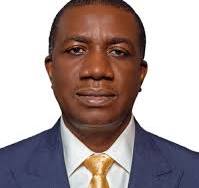
DBN, in a statement on Thursday, said while delivering a welcome address, its Managing Director and Chief Executive Officer, Dr Tony Okpanachi, said the central challenge was no longer reforms themselves but ensuring benefits reach businesses at end of the chain.
He asked how to make sure benefits reach traders in Onitsha, fabricator in Aba, farmer in Kebbi and young founder in Yaba, noting that MSMEs accounted for about half of Nigeria’s GDP and more than eight in every ten jobs, adding that when reform works for MSMEs it works for most Nigerians.
He explained that reform becomes prosperity only when entrepreneurs can act on it whether through long tenor loans to buy equipment, banks willing to take risk or skills and records needed to grow.
He said working through Participating Financial Institutions DBN provides longer term funding, partial credit guarantees through subsidiary Impact Credit Guarantee Limited and capacity building including Entrepreneurship Training Programme.
He disclosed that as at December 2025 DBN had disbursed a cumulative N1.4 trillion to MSMEs through 84 Participating Financial Institutions creating about 1.6 million jobs nationwide.
Under the new five year strategy, the Bank aims to reach more than two million MSMEs with deliberate targets for women led businesses, youth led businesses and underserved states.
On DAWN, Okpanachi said finance alone had not enabled enough women-led businesses to scale.
He said initiative brings together financing, guarantees and credit support, technical assistance, outcome linked grants and market linkages delivered through banks, microfinance institutions, fintechs, aggregators, cooperatives and direct channels.
Its priority sectors are agriculture and exports, healthcare, arts and creatives, technology and green business.
He said DAWN is about moving gender focused lending beyond intention and turning access into opportunity.
On the sidelines of the lecture DBN and African Development Bank held a signing ceremony of AfDB DBN 61 million United States dollars Gender Line of Credit development that reinforces Bank commitment to women led enterprises.
Okpanachi urged Participating Financial Institutions to extend lending into sectors and states where access to finance has been limited, policymakers and regulators to measure reform by what changes for business at end of chain and MSMEs to formalise, keep good records and use support now available.
The Vice President as Special Guest of Honour was represented by Dr Fred Iklaga Senior Technical Adviser in the Office of Special Adviser to the President on Economy.
Keynote speakers were Chief Executive Officer of MTN Nigeria, Dr Karl Toriola, and Chairman of Nigeria Sovereign Investment Authority, Dr Segun Ogunsanya.
Fireside chat featured Chief Executive Officer of Sterling Bank Abubakar Suleiman, manufacturing and trade entrepreneur Mrs Omoyemi Chukwurah and by video Kola Masha of Babban Gona.
The Secretary to the Government of Federation, represented by Augusta Warren Bekaredebo, said 2026 tax reforms would bring relief to many small businesses expressing optimism that a lot of businesses will be smiling by next year because they will be exempted from tax.
By Tambaya Julius, Abuja
The Nigeria Labour Congress (NLC) has threatened possible nationwide industrial action following the failure of talks with the Federal Government over workers’ welfare, petrol prices and other outstanding labour demands.
The warning came after a meeting between the government and organised labour at the Ministry of Labour in Abuja on Thursday, October 22, ended without an agreement.
The congress has given the Federal Government until Tuesday, October 27, to make meaningful progress on the issues, warning that its relevant organs would decide the next line of action if the next meeting fails to produce concrete commitments.
The NLC has also directed its affiliates, state councils and civil society allies to begin mobilising members for possible nationwide action.
In a statement issued after the meeting, the NLC Acting General Secretary, Benson Upah, expressed disappointment over what he described as the government delegation’s lack of preparedness for the negotiations.
According to the congress, organised labour presented its demands in good faith but left the meeting without any concrete commitments from the government.
The demands include a reduction in petrol prices to 2024 levels, renegotiation of the national minimum wage, implementation of agreed tax relief measures and resolution of the terms of settlement involving the Joint Health Sector Unions (JOHESU).
The congress also called for the resolution of issues raised by the Joint Public Service Negotiating Council (JPSNC) over peculiar allowances, wage awards and hazard allowances.
The NLC said the government delegation lacked the necessary authority to engage meaningfully on the issues presented by labour representatives.
“The meeting between the Federal Government and organised labour, convened at the Ministry of Labour in Abuja on 22nd October 2026, has ended without resolution,” the statement said.
It added that the Minister of Labour requested that the meeting be adjourned until October 27 to allow the government to prepare adequately for further discussions.
The preparations, according to the statement, would include bringing relevant ministers and heads of departments and agencies to the negotiating table.
The congress said it remained open to dialogue but would not accept continued delays in addressing workers’ concerns.
“We will report back to our organs, and if no meaningful progress is made on Tuesday, the relevant organs of the NLC will decide the next line of action,” it said.
The labour body urged workers and members of the public to remain calm while the negotiations continue, even as it directed its affiliates and allies to prepare for possible industrial action.
“However, we urge all affiliates of NLC and TUC; all state councils and our civil society allies to be alert and start mobilising for a possible action across the nation while we hope that the tenets of our demands are met by the government,” the statement added.
The October 27 meeting is expected to provide another opportunity for both sides to address the outstanding issues and prevent a possible escalation of the dispute.
However, the NLC’s decision to begin mobilisation suggests that tensions could rise if the next round of talks fails to produce meaningful progress.
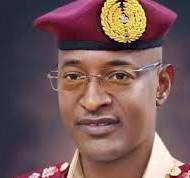
The Federal Road Safety Corps (FRSC) has barred its personnel from escorting politicians during campaigns for the 2027 general elections.
Zonal Commanding Officer, RS6, ACM Abimbola Owolabi, gave the directive during her maiden visit to the Cross River Command in Calabar on Wednesday.
Owolabi said patrol vehicles and sirens must not be used for political activities or private engagements, including weddings and funeral processions.
She directed officers deployed to campaign venues to focus exclusively on traffic management to prevent congestion and road crashes.
The zonal head warned personnel against leading political convoys or providing escorts for politicians, stressing that official vehicles must not be used for unauthorised purposes.


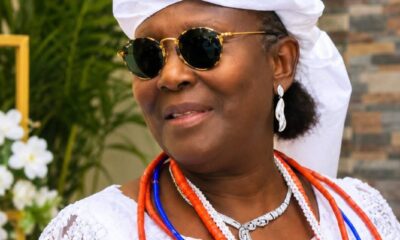

2027: FOOG Women Coordinator Urges Nigerians to Support Tinubu’s Re-election Bid
ShareBy Francis Sadhere, Warri Chief (Mrs) Esther Orighomisan Okotie-Eboh, Coordinator of Felix Omagbemi Ogbe Group (FOOG) Women Support Group for...
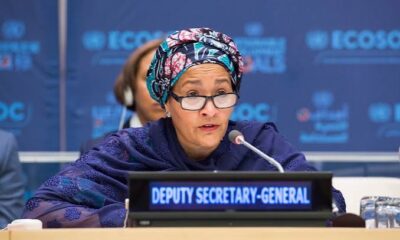

UN, EU Seek Trust, Technology to Strengthen Africa’s Counter-Terrorism Fight
ShareUN Deputy Secretary-General Amina Mohammed, has called for stronger intelligence sharing, public trust and responsible use of emerging technologies to...


University of Agriculture, Orerokpe Bill, Passes Third Reading in Senate
ShareThe University of Agriculture, Orerokpe Bill, sponsored by Senator Ede Dafinone, representing Delta Central Senatorial District, has passed through its...

Ishowo Urges Kwara to Convert KWASUED to Medical Varsity
ShareA Kwara based Public Affairs Analyst, Comrade Ishowo Olanrewaju, weekend called on the Kwara State government to urgently convert the...
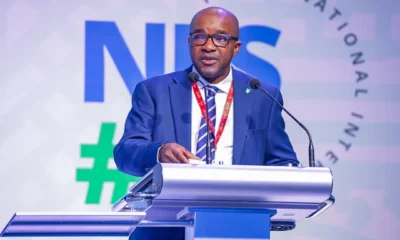

NESG Chairman Urges Shift from Economic Reforms
ShareChairman, Nigerian Economic Summit Group (NESG), Olaniyi Yusuf has urged the Federal Government to translate economic reforms into tangible results,...
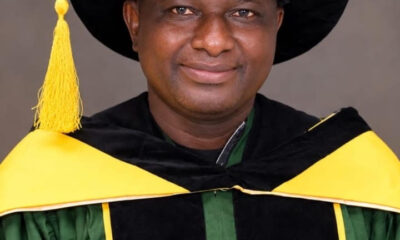

Yakubu Receives Fellowship Of Nigerian Institute Of Town Planners
ShareBy Raphael Atuu, Abuja TPL Chief Amb Hon. Stephen Shekwonce Yakubu, the District Head (Hakimi of Garki Shekwope), had his...


Much Ado About the PBAT Door-to-Door Movement
ShareBy Catherine Agbo In the unfolding drama of Nigerian political discourse, few things excite the commentary circuit quite like a...

WAHO, ECOWAS Countries Move to Tackle Health Worker Shortages, Brain Drain
ShareBy David Torough, Abuja The West African Health Organization (WAHO) has called for stronger regional collaboration and practical policy interventions...
Afreximbank’s Net Income Rises 24 Per Cent to $813.5 Million in Nine Months
ShareThe African Export-Import Bank (Afreximbank) and its subsidiaries have reported a 24 per cent increase in net income for the...

Wike-Led FCTA Committed to Quality Healthcare, Stronger Medical Institutions – Mahmoud
ShareBy Laide Akinboade, Abuja The Minister of State, Federal Capital Territory (FCT), Dr. Mariya Mahmoud, has reaffirmed the commitment of...