
NEWS
Constitutional Review: Groups Seek Stronger, Autonomous NBC

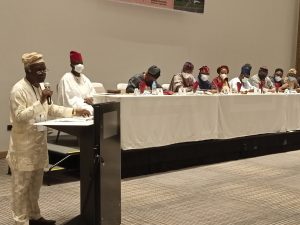
The civil society organisation, community, media and professional groups in Lagos are seeking a more effective and stronger National Broadcasting Corporation (NBC).
The groups made the appeal in a memorandum jointly submitted to the National Assembly during the South-West Zonal Public Hearing on the 1999 Constitutional Review in Lagos on Thursday.
The memorandum was signed Mr Lanre Arogundade, the Executive Director, International Press Centre (IPC) Lagos, on behalf of the over 30 groups.
Arogundade said the need to guarantee media freedom to ensure that the mandate given to the media to monitor the governance and uphold the accountability of the government to the people as enshrined in Section 22 of the Constitution, was enforced.
He recommended the abolishment of presidential involvement in licensing of broadcasting stations, saying amendment should vest the power to authorise licences in the regulatory body, NBC.
Arogundade said that the regulatory body in charge of broadcasting, should be made one of the federal executive bodies recognised in Section 153 and listed in the 3rd Schedule of the 1999 Constitution to enhance independence.
He said the confirmation of the appointment and removal of the board members and director general of the regulatory agency should involve the participation of the National Assembly to make the process more transparent.
According to him, the provision in Section 22 (under Chapter 2) be moved to Chapter 4 which will enable journalists and the media to enforce rights.
“The mandate given to the media in section 22 is not justiciable because it is currently housed in Chapter 2 of the Constitution which deals with socio-economic rights.
“As things stand, journalists and media cannot approach the courts to enforce rights emanating from the provision, especially when they are violated.
“Section 39 (2) of the Constitution currently vests the power of approval of broadcasting licences in the president.
“The consequence of this is that the regulatory body in charge of broadcasting has been denied its full regulatory powers and there is political interference in regulatory functions,” Arogundade said.
He said that the 4th Schedule of the Constitution vests the power to collect radio and television set ownership fees in Local Governments.
“This issue was addressed in 1999 in the NBC (Amendment) Act which vests this power in the NBC.
“However, the military government which enacted the amendment forgot to do a corresponding amendment in the 4th Schedule of the Constitution.
“Since constitutional provisions override those statutes, the collection and management of those resources (which long to the broadcasting industry) remain in the hands of local governments,” he said.
Arogundade said that section 1(b) of the 4th Schedule of the Constitution, which empowers local government to collect radio and television licence fees should be repealed and re-worded to give the power to the regulatory body.
He said that government budgetary appropriation to the regulatory body should be from the first line charge directly from the consolidated fund and not subsumed under the funding of any agency.
“There is the need to guarantee financial independence of the broadcast regulatory body,” he said.
Reports said that several other groups at the two-day public hearing advocated electoral reforms, gender equality and opportunity for women and vulnerable groups.
The Public Hearing was held nationwide to amend Nigeria’s 1999 Constitution. (NAN)

Confederation of African Football (CAF) President Patrice Motsepe has said that the Africa Cup of Nations could be expanded from 24 to 28 teams.
Motsepe made the remarks at a press conference following a CAF executive committee meeting, but did not specify how the tournament structure would change or when the expansion might take effect.
The Africa Cup of Nations was expanded from 16 to 24 teams in 2019.
Motsepe also confirmed that the 2027 tournament will go ahead as planned in Kenya, Tanzania and Uganda.
After an additional edition in 2028, the competition is expected to move to a four-year cycle.
He added that CAF plans to launch a new national league competition in 2029, to be played annually, with a 16-team finals tournament staged every two years.
“The adjustments reflect CAF’s commitment to developing world-class football with the best African players from all over the world returning to compete on the continent,” Motsepe said.
Motsepe, who was elected CAF president in 2021 and re-elected in 2025, is the first South African to lead the continental soccer governing body.
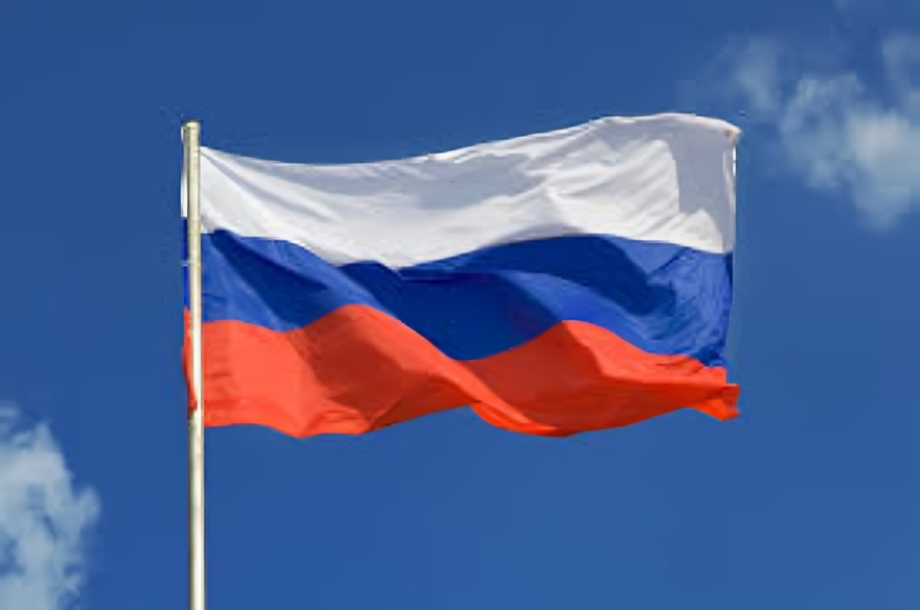
A Russian tanker carrying oil to Cuba has entered the waters off the Communist-run Island, Russia’s Interfax.
The oil shipment – the first to reach Cuba since January – comes hours after US President Donald Trump said that he had no problem with countries, including Russia, sending supplies to the island.
Trump’s remark appeared to signal a loosening of a de facto oil blockade his administration had imposed on Cuba since January.
Cuba has been experiencing a series of nation-wide blackouts as the blockade exacerbated existing shortages.
According to Interfax, the Russian tanker Anatoly Kolodkin is carrying a “humanitarian shipment” of 100,000 tonnes of crude oil.
Last week, the World Health Organization (WHO) had warned that severe fuel shortages meant that Cuban hospitals were struggling to maintain emergency and intensive care services.
Cuba’s situation has deteriorated rapidly since 3 January, when US forces seized Venezuelan leader Nicolás Maduro – a staunch ally of the Cuban government – who had been providing the island with oil under highly preferential terms.
Trump also threatened to impose tariffs on any nation sending oil to Cuba.
Russian Minister of Energy Sergei Tsivilev said on Wednesday that Cuba “had found itself in a difficult situation as a result of sanctions pressure”.
“That is why we are currently sending humanitarian supplies to Cuba,” he added.
Just over a week ago, the US Treasury department added Cuba to a list of countries barred from receiving oil deliveries from Russia.
But in an apparent reversal of his strategy, Trump told journalists on board of Air Force One on Sunday that he had “no problem” with Russia delivering oil to Cuba.
“We have a tanker out there. We don’t mind having somebody get a boatload because they need (…) they have to survive,” he said.
It was not clear from Trump’s comment if this represented a reversal of the fuel blockade policy or just a temporary softening.
The Russian tanker is expected to offload the oil in Matanzas terminal in the coming hours.
The oil it carries is expected to provide Cuba with a short-term lifeline.
Its Communist government, led by President Miguel Díaz Canel, has been in talks with the Trump administration to find a route out of the crisis.
But both sides have publicly set out a number of political and economic red lines which make it hard to see where they could find common ground.
President Trump recently said he could “take” Cuba while the island’s leadership has said it refuses to accept any enforced changes to the personnel or political direction of its government.
Cuba was already facing its worst economic and energy crisis since the end of the Cold War, because of a combination of a fall in tourism after the coronavirus pandemic and government economic mismanagement.
This crisis has been further worsened by the de facto fuel blockade.

Commercial drivers operating along Upper Sakponba Road in Benin, Edo State, on Monday blocked sections of the busy road in protest against the recent increase in petrol prices.
The protesting drivers also urged their colleagues to immediately increase transport fares, warning that passengers who boarded buses at old rates would be forced to pay additional charges or be dropped midway.
The protest caused significant disruption, leaving many commuters stranded along Upper Sakponba Road.
Several passengers were seen trekking long distances to navigate through two roadblocks mounted by the drivers at Aifuwa Street and Pioneer Junction.One of the protesting drivers, who identified himself simply as John, said the demonstration was necessary for their survival, noting that the price of Premium Motor Spirit had risen sharply from about N870 to N1,350 per litre.
He said, “We were buying fuel for N870 before the increment, and we carry passengers for N500, but now fuel is N1,350 and we still carry passengers for the same amount. How do you expect us to survive?
“You buy fuel worth N25,000 for a day and settle the owner of the bus; how do you make money to take care of your family?”
A passenger, who pleaded anonymity, said she was travelling from Ring Road when she discovered that the road had been blocked, forcing drivers to discharge passengers.
“I was coming from Ring Road this morning. On getting to Oka Market, I discovered that the road was blocked by drivers who are agitating for an increase in transport fares due to the current rise in fuel prices.
“When they started forcing people to come down, I just parked my loads and got down. I want to cross the roadblock before I board another bus to Idogbo,” she said.
The rising cost of petroleum products has already triggered higher transport fares across parts of Benin City.
A trip from Idogbo, Upper Sakponba to Ring Road, which previously cost between N500 and N700, now ranges from N800 to N1,000.
Similarly, fares from Ikpoba Hill to Ring Road, which used to cost between N500 and N700, have increased to between N800 and N1,000.


AFN Reports Major Gains against Terrorists, Rescues Over 800 Victims in Q1 2026
ShareBy David Torough, Abuja The Armed Forces of Nigeria (AFN) has announced significant operational successes across multiple conflict zones in...


Palm Sunday Killings in Jos: Nigeria Cannot Keep Bleeding Like This, CAN, insist
ShareBy Laide Akinboade, Abuja The Christian Association of Nigeria (CAN),condemned, in the strongest possible terms, the horrific attack that took...

Nasarawa Accountant General Resigns Declares for 2027 Governorship
ShareFrom Abel Zwanke, Lafia The Nasarawa state Accountant General Rt. Hon. Musa Ahmed Mohammed, has resigned his position and declared his intention to contest the 2027 governorship election....
CAF Considers Africa Cup of Nations Expansion to 28 Teams
ShareConfederation of African Football (CAF) President Patrice Motsepe has said that the Africa Cup of Nations could be expanded from 24 to 28 teams. Motsepe made the...
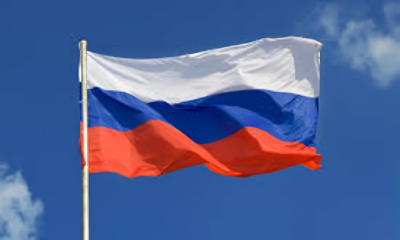

Russian Oil Tanker Reaches Cuba after Trump Appears to Loosen Blockade
ShareA Russian tanker carrying oil to Cuba has entered the waters off the Communist-run Island, Russia’s Interfax. The oil shipment – the first to reach Cuba since January – comes hours after US...

Drivers Protest Fuel Price Hike, Block road in Edo
ShareCommercial drivers operating along Upper Sakponba Road in Benin, Edo State, on Monday blocked sections of the busy road in protest against the recent increase in petrol prices. The protesting drivers also...

WAEC Releases 2026 WASSCE Timetable
ShareThe West African Examinations Council has released the official timetable for the 2026 West African Senior School Certificate Examination for...
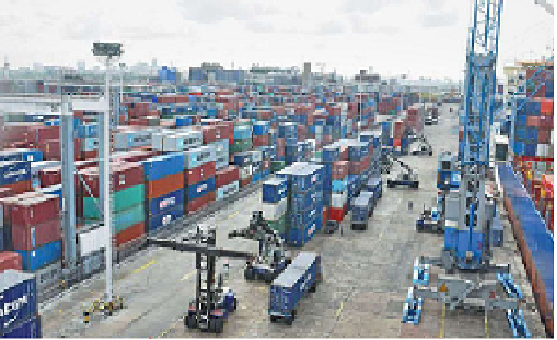
NPA Targets N1.489tn Revenue for 2026
Share The Nigerian Ports Authority (NPA) has set N1.489 trillion as its Internally Generated Revenue (IGR) target for the 2026...
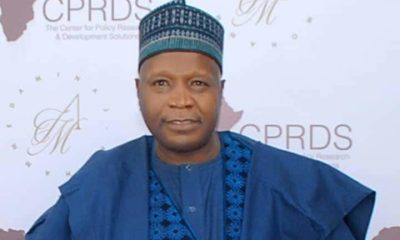

Northern Govs Approve N500m Each for Secretariat Project
ShareBy David Torough, Abuja The Chairman of the Northern States Governors’ Forum (NSGF) and Governor of Hombe State, Muhammadu Inuwa...
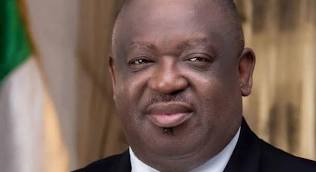

Plateau Attack: Mutfwang Orders Crackdown on Suspects, Imposes Curfew in Jos
ShareFrom Jude Dangwam, Jos and Laide Akinboade, Abuja Nigeria’s fragile security landscape came under renewed strain on Sunday and Monday...