
DEFENCE
COSP: EFCC Boss Seeks Return of Stolen Assets Stashed Abroad


The Chairman of the Economic and Financial Crimes Commission (EFCC), Mr Ola Olukoyede, has called for urgent and unconditional return of Nigerian stolen assets stashed in foreign countries.
Olukoyede said this in a statement in Abuja on Wednesday by EFCC Spokesperson, Dele Oyewale.
Oyewale said that Olukoyede made this call at the ongoing 10th session of the Conference of State Parties (COSP), to the UN Convention Against Corruption (UNCAC) at the Georgia World Congress Centre, Atlanta, U.
S.According to him, the return of stolen assets warehoused in foreign countries, has become imperative for the growth of the economy and expansion of frontiers of development within and outside Nigeria.
He stated that economic and financial crimes have become transnational crimes and no nation serving as a custodian of stolen assets should hold on to them.
“We need the cooperation of all the countries that are custodians or in charge of warehousing all these stolen assets from Africa.
“It has become extremely important for us to see you as our collaborators, as countries that support us in the fight against corruption. Now, when you look at corruption, it has become a transnational crime.
“ If you are holding on to those assets, you are creating very difficult legal hurdles in recovering those assets. You are indirectly encouraging the perpetrators of the crimes we are talking about.
“And, when you encourage it in Africa, it has a tendency of affecting you too, because the kind of financial crimes we are talking about have become global in nature.
“So, it has become important for you to cooperate with us,” he said.
The EFCC’s boss, in a presentation made before a global audience on asset recovery efforts and successes of Nigeria so far, pointed out that Nigeria had “probably done much more than any other country, perhaps the whole world, in the area of asset recovery.
“We have been able to achieve something because of the legal and regulatory framework that the government of Nigeria has been able to put in place”.
He listed measures already taken to include, the enactment of the Proceeds of Crimes( Prevention and Prohibition) Act, 2022, use of extant laws on civil forfeiture of assets,
Others, he said, were banking reforms mandating bank customers to have a Bank Verification Number (BVN) for all transactions.
This, he said, would enable the professional activities of the EFCC and other anti-corruption agencies to trace, investigate and prosecute ill-gotten assets within and beyond Nigeria, as potent measures yielding optimal results in asset recovery.
“There is an aspect of our law that allows for civil forfeiture.
“Civil forfeiture is a situation where you will not necessarily get a criminal conviction of an offender but you can easily attach assets and forfeit the assets and that has greatly assisted us in asset recovery.
“There is another aspect that we have tried to put in place, a year ago.
“It is the enactment of the Proceeds of Crime Act which has created legal and regulatory regimes for asset recovery by various agencies in Nigeria.
“Also, our ability to cooperate and collaborate with the rest of the world to drive home the fact that both the people that have stolen money and the countries that have received the money are also culpable,” he said.
He reiterated the need for the global community to support Nigeria’s efforts towards asset recovery.
“We will only be able to see you as a friend if you are willing to support us in recovering such assets that have been traced to your jurisdiction,” he said.
He lauded the courage and commitment of President Bola Tinubu in driving the asset recovery initiatives of the EFCC and other anti-graft agencies.
He assured the world that stronger financial discipline was now in place in Nigeria.
“President Bola Tinubu has promised the whole world that we are ready to run our financial system in Nigeria in such a way that is transparent and responsible,” he said.
Olukoyede harped on his preventive framework as a new modality capable of yielding impactful results in the fight against corruption.
“I can also pledge that on our part, we are ready to adopt very strict preventive measures which we have started in Nigeria now.
“As a matter of fact , it was one of my policy objectives when I assumed office over a month ago, to use the instrumentality of prevention as one of the major forces to fight financial crimes and corruption in Nigeria.
“ It costs less for you to prevent than for you to enforce .
“We are holding on to that. Again, I want to pledge that going forward, we will ensure that there is accountability and transparency in application of whatever asset is recovered”, he said.
Earlier, the Nigerian Country Director, UN Office on Drugs and Crime, Oliver Stolpe, lauded Nigeria on its asset recovery efforts, describing her as “ world’s champion in asset recovery”.
“Nigeria in many ways has been leading the asset recovery efforts on the African continent and I like to refer to Nigeria as the world’s champion in asset recovery because, certainly in African comparison, you have more cases and recovered large amounts,” he said. (NAN)
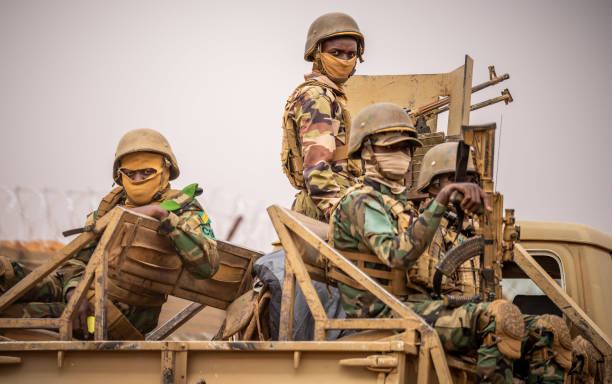
The Nigerian Army has reiterated the need for intensified training to enhance operational effectiveness and sustain battlefield readiness across all formations.
The Director, Support Services, Defence Headquarters, Maj.-Gen. Isiaka Olatunji, said this at the opening of the 2026 Guards Brigade Corporals and Below Competition on Monday in Abuja.
Olatunji said training remained the backbone of military efficiency, stressing that no army could succeed in contemporary security operations without continuous skill development and rigorous field exercises.
He explained that the competition was designed to test the physical, mental and tactical proficiency of junior soldiers who form the backbone of operational execution within the Nigerian Army.
He said “we must train harder to ensure operational effectiveness. Training is not optional; it is essential for survival and success on the battlefield.”
According to him, corporals and below represent the category of personnel who directly execute missions in the field, often in close contact with adversaries.
“You are the ones who execute missions. You come face to face with the enemy at the tactical level,” he added.
The director noted that the exercise would strengthen resilience, discipline, teamwork and combat readiness among participating troops.
He said the Guards Brigade, known for its ceremonial and operational responsibilities in the Federal Capital Territory, remained a critical formation in the defence architecture of the country.
Olatunji urged participants to embrace the training opportunities provided by the competition, describing excellence as “a product of continuous challenge and discipline.”
He also charged troops to uphold professionalism and demonstrate a high level of competence throughout the exercise.
On his part, the Commander, Guards Brigade, Brig.-Gen. Adebisi Onasanya, said “the competition aligns with the Chief of Army Staff’s vision of building a more adaptive, resilient and combat-ready force.”
Onasanya said the exercise would assess weapon handling skills, physical fitness and decision-making abilities of participants.
He added that the outcome of the competition would contribute significantly to determining troop readiness for operational deployments.
The annual Guards Brigade Corporals and Below Competition brings together units for intensive drills and tactical exercises, aimed at improving efficiency and professionalism within the Nigerian Army.
Inspector General of Police, Olatunji Disu, academics and other security professionals have advocated transition from heavy reliance on physical personnel to technology innovation in tackling insecurity in the country.
They stated the position in Abuja on Monday, at an event to celebrate Peter Olumuji, who bagged a Doctors of Philosophy (PhD) in Security and Strategic Studies, from Nasarawa State University, Keffi.
Olumuji is the Secretary of the FCT Administration Command and Control Centre.
The centre was established to improve security in the FCT by collating and analysing security intelligence feeds from drones, Closed-Circuit Television cameras and other technological devices.
The IGP, who chaired the event, said academic certification was crucial for modern security personnel and urged officers to get certified for the specialised roles they perform.
He commended Olumuji, fondly called “Mr Sharp Sharp”, for always getting any job assigned to him done with speed.
“He is a paragon of honesty and professional persistence. Whenever there is a task, he stays on your neck to ensure it is completed.
“I learned this from him: start a job, put a plan to it, and follow it to the end,” he said.
The Vice-Chancellor of Bingham University, Prof. Haruna Ayuba, who supervised Olumuji’s thesis, said that the security and strategic studies programme was vital to winning the war against insecurity.
Ayuba said, “Training experts at this level is now essential to nip security challenges in the bud”.
He praised the celebrant’s dedication to genuine learning saying; “while some students wanted to get a degree by any means, Olumuji was ready to learn.
“We didn’t just work together; we published research papers together,” Ayuba noted.
Similarly, Dr Stephen Okore of the Nigerian Army University, Biu, stressed the need for professionalism in security agencies to ensure competency in tackling insecurity.
Okore described Olumuji as a “gentleman and a good leader” who served as their class governor throughout their master’s and PhD programmes.
On his part, Adamu Gwary, Director of the FCTA Security Services Department, said that Olumuji’s academic achievement was the outcome of FCT Minister Nyesom Wike’s transformation of the FCT security architecture.
Gwary noted that the department was being increasingly populated by holders of PhD, which he said would inject logical thinking in tackling security challenges in the FCT.
“This means that security matters will be handled with innovative responsiveness.
“With the current security situation, this intellectual capacity will ensure that the security department provides the needed expertise in tackling insecurity,” he said.
Responding, Olumuji said that his doctoral research underscored the need for a critical shift in Nigeria’s security strategy.
He emphasised the need for the transition from heavy reliance on physical personnel to the integration of advanced technology.
“By introducing more technology, we reduce the reliance on manpower.
“This is more effective in saving the lives of our gallant men and women in the military and law enforcement, who face risks in the field,” he said.
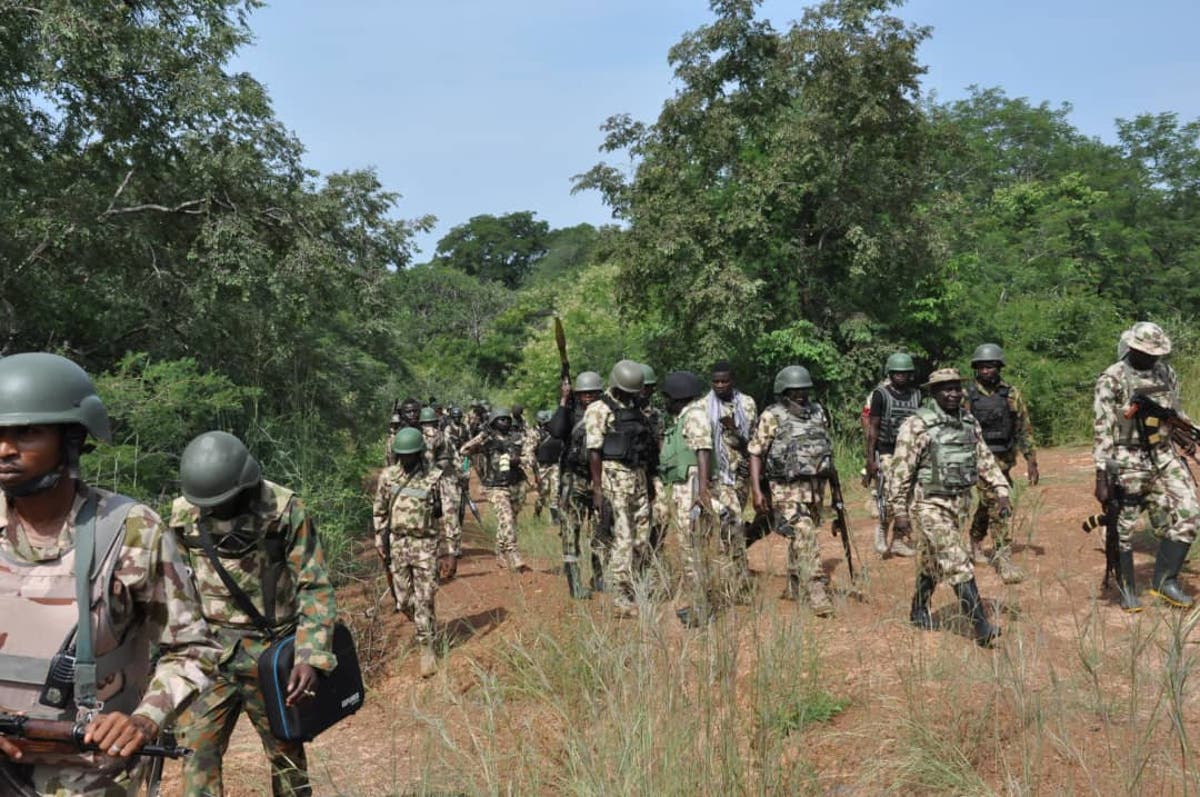
The Nigerian Army said troops recorded major operational gains, including interception of suspected logistics supplies, foiling terrorist attacks and rescuing kidnapped victims across theatres in the last 24 hours.
Operational report on Monday, revealed that troops of Operation Hadin Kai (OPHK) intercepted a truck conveying large quantities of medical supplies suspected to be meant for terrorist elements in the North-East.
The report said the interception occurred at a checkpoint in Nguru, Yobe, where the driver initially presented a waybill for beverages and household items.
According to the report, a detailed search revealed hundreds of cartons of drugs, including antibiotics, injections, bandages and other medical items.
The report said the driver and three occupants were apprehended, adding that the suspect later confessed the consignment was bound for the Republic of Chad through Geidam.
“In a related development, troops arrested a suspected ISWAP/JAS terrorist in Ngamdu, Borno, who confessed he was sent from Jilli to procure food items for insurgents.
“The suspect disclosed that terrorists were currently converging around Gubio and Magumeri areas.
“Troops also arrested two suspected terrorist collaborators in Monguno, who were allegedly facilitating movement of a terrorist’s family members.
“Items recovered from them included mobile phones, cash and other personal effects, while a woman and her three children linked to a terrorist kingpin were later apprehended,” the report said.
It also revealed that troops foiled an attempted infiltration by terrorists in Askira Uba Local Government Area of Borno.
The report added that troops engaged the insurgents during an ambush, forcing them to flee and abandoning weapons and other items, adding that follow-up operations led to rescue of three kidnapped victims from a terrorist enclave.
“In Bama Local Government Area, troops destroyed a terrorist camp during clearance operations, forcing insurgents to withdraw under pressure.
“Similarly, troops of Operation Safe Haven recovered weapons from suspects during stop-and-search operations in Plateau.
“They also arrested a suspected gunrunner and rescued additional kidnapped victims in Bauchi following exploitation of earlier airstrikes.
“In the Federal Capital Territory, troops conducting anti-illegal mining operations raided a site in Gwagwalada, recovering mining equipment, while suspects fled,” it added.
In the Southern part of the country, the report said troops of Operation Delta Safe responded to a communal clash in Delta, restoring normalcy after one person was killed.
It said troops also intensified anti-illegal bunkering operations in Rivers, destroying illegal refining sites and recovering large volumes of stolen crude oil and refined products.
Military authorities reiterated their commitment to sustaining offensive operations, disrupting logistics networks and ensuring security across the country.

FG begins Nationwide Review of Outdated Agric Curricula
ShareThe Federal Government has commenced a comprehensive review of agricultural curricula in polytechnics and colleges of education to address widening skills gaps and revive...

NCS First Female Pilot Gets U.S. Commercial Licence
ShareThe first female pilot of the Nigeria Customs Service (NCS), Nafisat Balogun, has secured a commercial multi-engine pilot licence in the United States of...


FirstBank Backs GTR West Africa 2026 Conference in Lagos
Share FirstBank has confirmed its sponsorship of the Global Trade Review (GTR) West Africa 2026 conference scheduled for Wednesday and...

Forensic Audit Dismisses Social Media Claims on INEC Chair
ShareBy David Torough, Abuja The Independent National Electoral Commission has confirmed it will pursue the arrest of individuals behind the...

Tinubu Expands Police Academy, Approves N15bn Take-Off Grant
ShareBy David Torough, Abuja President Bola Tinubu has approved a sweeping expansion and restructuring of the Nigeria Police Academy, signalling...


FCT Primary School Teachers Commence Indefinite Strike Today
ShareBy Laide Akinboade, Abuja The Nigeria Union of Teachers (NUT) FCT Wing, at the weekend said it has concluded an arrangement to commence indefinite strike over...
U-17 WWCQ: Guinea Thrash Niger to Set up Clash with Flamingos
ShareGuinea will face Nigeria’s Flamingos in the final qualifying round for the 2026 FIFA U-17 Women’s World Cup. The Guineans defeated...
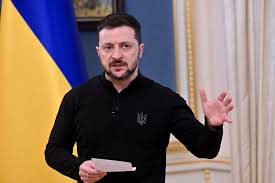

Zelensky Condemns US Extension of Russian Sanctions Waiver
ShareUkraine’s President Volodymyr Zelensky has condemned a US decision to extend the period during which Russia is allowed to sell oil despite Western sanctions. The move means countries can...


Delta Unveils Plan to Tackle Hunger, Boost Food Security by 2030
ShareFrom Francis Sadhere, Delta The Delta State Government has reaffirmed its commitment to boosting food security through the development of a clear and practical implementation work plan aimed...

FG Debunks False Allegation on Hidden Agenda, Federal Revenue Diversion
ShareBy Tony Obiechina, Abuja The federal government has refuted media reports to the effect that a significant portion of federation earnings is...