
Foreign News
Court Sentences Ex-Japanese PM Abe’s Killer to Life in Prison


A Japanese court on Wednesday sentenced the man accused of assassinating former prime minister Shinzo Abe to life in prison.
Tetsuya Yamagami, 45, had admitted shooting Japan’s longest-serving post-war prime minister with a homemade firearm during an election campaign speech in July 2022.
Abe’s violent death caused worldwide shock.
Yamagami was overpowered and arrested in front of cameras after the killing.
Yamagami reportedly told investigators that he acted out of hatred for the controversial Unification Church, which was founded in South Korea in 1954 by staunch anti-communist Sun Myung Moon.
It was supported in Japan by Abe’s grandfather, former Prime Minister, Nobusuke Kishi.
Yamagami’s mother had donated large sums of money to the religious organisation, which had left the family in financial ruin.
Abe’s assassination brought to light the connections between the Unification Church and members of his ruling Liberal Democratic Party.
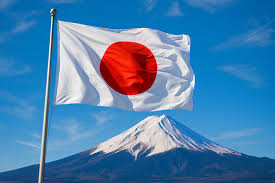
Japan has restarted a reactor at the world’s largest nuclear plant nearly 15 years after a disaster at the Fukushima power plant forced the country to shut all its nuclear reactors.
Reactor no.6 at the Kashiwazaki-Kariwa plant located northwest of Tokyo was restarted on Wednesday.
It was delayed by one day because of an alarm malfunction and is expected to begin operating commercially next month.This is the latest installment in Japan’s nuclear power reboot, which still has a long way to go.
The seventh reactor is not expected to come back on until 2030, and the remaining five could be decommissioned. That leaves the plant with far less capacity than it once had when all seven reactors were operational: 8.2 gigawatts.Japan, which had always heavily relied on energy imports, was an early adopter of nuclear power. But these ambitions were scuppered in 2011 by what is now remembered as one of the worst nuclear disasters in history.
Triggered by the most powerful earthquake ever recorded in Japan, the meltdown in the reactors at Fukushima Daiichi led to radioactive leakage. It traumatised local communities that were evacuated, and many have not returned despite official assurances that it was safe to do so.
Still the fear and lack of trust fuelled public opposition to nuclear power and Japan suspended its entire fleet of 54 reactors shortly after the Fukushima disaster.
It has now spent the past decade trying to wake up those power plants, as it tries to expand its source of clean energy to reach net zero emissions by 2050.
Since 2015, it has restarted 15 out of its 33 operable reactors. The Kashiwazaki-Kariwa plant is the first of those owned by Tepco to be turned back on.
Before 2011, nuclear power accounted for nearly 30% of Japan’s electricity and the country planned to get that up to 50% by 2030. Its energy plan last year unveiled a tamer goal: it wants nuclear power to provide 20% of its electricity needs by 2040.
Global momentum is building around nuclear energy, with the International Atomic Energy Agency estimating that the world’s nuclear power capacity could more than double by 2050. In Japan, as of 2023, nuclear power accounted for just 8.5% of electricity.
Prime Minister Sanae Takaichi, who took office in October, has emphasised the importance of nuclear power for Japan’s energy self-sufficiency. Especially as it expects energy demand to surge because of data centres and semiconductor manufacturing.
Japan’s leaders and its energy companies have long pushed for nuclear power. They say it’s more reliable than renewable energy like solar and wind, and better suited for Japan’s mountainous terrain. But critics say the emphasis on nuclear energy has come at the cost of investing in renewables and cutting emissions.
Now, as Japan tries to revive its nuclear power ambitions, the costs of running the reactors have surged, partly because of new safety checks that require hefty investments from companies trying to restart plants.
The government could subsidise the costs, or pass them on to consumers – both unpalatable options for Japan’s leaders, who have for decades been hailing the affordability of nuclear power. An expensive energy bill could also hurt the government at a time when households are protesting about rising costs.
The government’s “hands are tied when it comes to financially supporting nuclear power, unless it’s willing to go back on one of the main selling points”, Koppenborg said.
Beyond the fear of another disaster like Fuksuhima, a series of scandals have also rattled public trust.
The Kashiwazaki-Kariwa plant in particular found itself embroiled in a couple of them. In 2023, one of its employees lost a stack of documents after placing it on top of their car and forgetting it there before driving away. In November, another was found to have mishandled confidential documents.
A TEPCO spokesperson said the company reported the incidents to the Nuclear Regulation Authority (NRA), adding that it aimed to continue improving security management.
These revelations are “a good sign” for transparency, says Koppenborg. But they also reveal that “Tepco is struggling to change its ways and the way it approaches safety”.
Hisanori Nei, a former senior nuclear safety official said he was “surprised” by the scandal at Hamaoka, he believed the harsh penalty dealt to its operator should deter other companies from doing the same.
What happened at Fukushima turned Japanese public opinion against what had been hailed as an affordable and sustainable form of energy.
Thousands of residents filed class action lawsuits against Tepco and the Japanese government, demanding compensation for property damage, emotional distress and health problems allegedly linked to radiation exposure.
In the weeks after the March 2011 disaster, 44% of Japanese thought the use of nuclear power should be reduced, according to a survey by Pew Research Center. That figure jumped to 70% by 2012. But then polls by the Japanese business publication Nikkei in 2022 showed that more than 50% of people supported nuclear power if safety was ensured.
But there is fear and mistrust. In 2023, the release of treated radioactive water from the Fukushima Daiichi nuclear plant sparked anxiety and anger both at home and abroad.
And many still remain opposed to restarting nuclear plants. In December, hundreds of protesters gathered outside the Niigata prefectural assembly where Kashiwazaki-Kariwa is located, voicing safety concerns.
Last week, ahead of Kashiwazaki-Kariwa’s restart, a small crowd gathered in front of Tepco’s headquarters to protest again.
Nuclear safety standards have been ramped up after Fukushima. The NRA, a cabinet body established in 2012, now oversees the restarting of the country’s nuclear plants.
At Kashiwazaki-Kariwa, 15-metre-high (49ft) seawalls have been built to guard against large tsunamis; watertight doors now protect critical equipment at the facility.
“Based on the new safety standards, [Japan’s nuclear plants] could survive even a similar earthquake and tsunami like the one we had in 2011,” says Nei, the former senior nuclear safety official.
But what worries Dr. Florentine Koppenborg, a senior researcher at the Technical University of Munich is, “They’re preparing for the worst they’ve seen in the past but not for what is to come.”
Some experts worry that these policies are not planning enough to account for rising sea levels due to climate change, or the once-in-a-century megaquake that Japan has been anticipating.
“If the past repeats itself, Japan is super well-prepared,” Koppenborg said. “If something really unexpected happens and a bigger than expected tsunami comes along, we don’t know.”

Germany has become the world’s largest buyer of coffee from Brazil in 2025, overtaking the United States (U.S.), which slipped to second place after imposing steep import tariffs.
Germany imported 5.4 million 60-kilogram bags of Brazilian coffee last year, accounting for 13.
5per cent of Brazil’s total exports, the Brazilian coffee exporters’ association Cecafé said on Wednesday.The U.
S., traditionally Brazil’s largest coffee customer, fell to second place with imports of 5.3 million bags, down 33 per cent from the previous year.Márcio Ferreira, Cecafé head, said the decline was largely driven by temporary tariffs of up to 50 per cent imposed by U.
S. President Donald Trump.Ferreira said shipments to the U.S. fell by 55 per cent during the period from early August to late November when high tariffs were imposed on all Brazilian coffee varieties.
Trump had imposed tariffs on a range of Brazilian food products in response to criminal proceedings against former Brazilian president Jair Bolsonaro, a political ally of the U.S. president.
Bolsonaro has since been convicted and is serving a prison sentence of more than 27 years for attempting a coup.
As food prices in the U.S. rose, Trump largely rolled back the tariffs in November.
Brazil exported a total of 40 million bags of coffee last year, down about 20 per cent from the previous year.
In spite of the lower volume, export revenues jumped 24 per cent to a record 15.5 billion dollars.
Ferreira said weaker shipments also reflected lower stockpiles after record exports a year earlier and weather-related losses, adding that stronger global prices more than offset the decline.
Brazil is the only producing country that exports coffee to more than 120 countries and accounts for over one-third of the global market.
After Germany and the U.S., major buyers include Italy, Japan and Belgium.
 | ReplyReply allForwardAdd reaction |
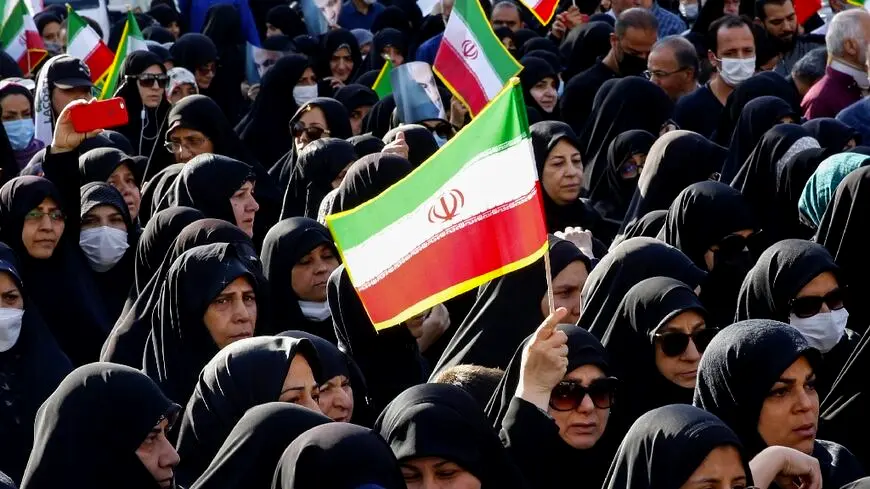
Not less than 4,500 people have been killed in Iran since the outbreak of protests at the end of December.
Activists said on Wednesday, as new figures emerged.
The group said it had so far verified 4,519 deaths, with more than 9,000 additional cases still under investigation.
Those killed included 4,251 demonstrators and 197 security forces, HRANA said.
Iran’s internet shutdown remained in place, with only limited images slowly emerging that were beginning to reveal the full scale of the violent crackdown on the mass protests on Jan.
8 and 9.In their report, activists pointed to disturbing footage analyzed by medical professionals, who said that some of the demonstrators who were killed had previously received medical treatment.
The presence of medical equipment such as catheters and breathing tubes on bodies found outside medical settings has raised suspicions that injured protesters died after treatment had begun.
It also said the deaths would have occurred after the injured persons were removed from medical facilities without any formal confirmation of death, according to the report.
Iran’s leadership has blamed what it described as “terrorist elements” as well as its arch-enemies, the United States and Israel, for the violence during the protests.
The claims, however, cannot be independently verified, partly due to the ongoing communications blackout.


False claim against Tinubu: DSS tenders Sowore’s post, plays video evidence in court
ShareThe Department of State Services (DSS), on Thursday, tendered a generated copy of the message posted by Omoyele Sowore on...

Kaduna council boss pays WAEC fees for 250 indigent students
Share The Chairman of Jema’a Local Government Area of Kaduna State, Mr Peter Tanko, has paid the 2026 West Africa Examination...


Imo records over $1m from non-oil exports in 2025 – NEPC
ShareThe Nigerian Export Promotion Council (NEPC) says exporters in Imo generated a total of 1,244,095 dollars as proceeds from export...


NSCDC decorates 265 newly promoted officers in Kano
ShareThe Nigerian Security and Civil Defence Corps (NSCDC), Kano State Command, on Thursday decorated 265 newly promoted officers of the...


EFCC implicates banks, Fintechs in N162bn financial scams
ShareThe Economic and Financial Crimes Commission (EFCC) has implicated a new generation bank, six Fintechs and microfinance banks in major...


Replacing Shettima will Jeopardize Tinubu’s Reelection – APC Chieftain Warns
ShareA chieftain of the All Progressives Congress, APC, Abayomi Mumuni, has warned against any attempt to replace Vice President Kashim...

Why We Suspended Investment in Oil Exploration in Senegal – Oranto Petroleum
Share…Says it Has Committed Over US$45 Million in Expenditures in Senegal By Mike Odiakose, Abuja The management of Oranto Petroleum,...
NAFDAC begins enforcement of ban on sachet alcohol
Share The National Agency for Food and Drug Administration and Control (NAFDAC) says it has began enforcement on the ban of...
PDP will soon Return to its Winning Days Says Turaki
ShareSpeaking to newsmen after the closed-door meeting, Turaki said that the party was being repositioned to reclaim its status as...


Police Arrest Bus Driver over Girlfriend’s Death in Edo
ShareThe Edo State Police Command has arrested a 42-year-old commercial bus driver, Osabohien Ogieva, in connection with the death of...