
NEWS
Why We Suspended Investment in Oil Exploration in Senegal – Oranto Petroleum

…Says it Has Committed Over US$45 Million in Expenditures in Senegal
By Mike Odiakose, Abuja
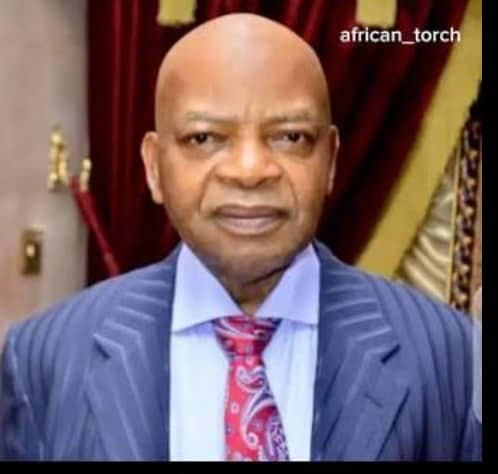
The management of Oranto Petroleum, the firm owned by Nigerian billionaire and philanthropist Prince Arthur Eze, has shed light on why it suspended any further investments in the St Louis & Cayar Licenses in Senegal.
The Senegalese government had in January 2026 officially revoked an offshore oil exploration license held by Atlas Oranto Petroleum.
The Senegalese government alleged that the holder had failed to provide the required bank guarantees and carried out only minimal exploration work since the block was awarded.
Responding to the revocation of the license, the management of Oranto Petroleum declared the government of Senegal insisted on US$ 25 Million Bank Guarantee as against agreed Corporate Guarantee as being provided by other Operators in Senegal.
According to the management, “till date, Oranto Petroleum has committed over US$45 Million in expenditures in Senegal covering activities such as seismic acquisition & interpretation, acreage rental, social projects and training of Senegalese locals as stipulated in the contract.
“Oranto Petroleum remains a foremost player in Hydrocarbon Exploration in Africa having committed over US$500 Million in exploration and development of hydrocarbon in Africa.”
The company expressed reservations on why the Senegalese government will single it out for false narratives which it classified as “unfair, unjustified and targeted.”
Part of the statement read: “Oranto Petroleum would like to use this opportunity to respond to the false narrative currently being perpetuated by the Government of Senegal on the St Louis & Cayar Offshore Licenses previously operated by Oranto Petroleum.
“As a matter of fact, Oranto Petroleum in 2025 decided to suspend any further investments in the St Louis & Cayar Licenses in Senegal after the Government of Senegal insisted on US$ 25 Million Bank Guarantee as against agreed Corporate Guarantee as being provided by other Operators in Senegal.
“For record purposes, till date, Oranto Petroleum has committed over US$45 Million in expenditures in Senegal covering activities such as seismic acquisition & interpretation, acreage rental, social projects and training of Senegalese locals as stipulated in the contract. These records exist and can be fact checked.
“It is worth mentioning that for reasons best known to the Government of Senegal, Oranto Petroleum has been singled out in this false narrative – this we classify as unfair, unjustified and targeted.
“We would like to use this opportunity to state that other foreign entities operating in Senegal are also facing challenges doing business in Senegal and this calls for concern.
Some of those include: Woodside currently in court of Arbitration with Government of Senegal on issues bothering
around back costs for the Sangomar Development –
https://www.africabusinessplus.com/en/829378/woodside-vs-dakar-arbitration-proceedings-can
2. Alleged plans by the Government of Senegal to nationalise Kosmos-run Yakaar-Teranga Gas
Project – https://www.reuters.com/business/energy/senegal-plans-nationalise-kosmos-run
yakaar-teranga-gas-project-2025-12-10/
and 3. British Petroleum’s exit from Senegal over disagreement with Government – https://www.offshore
technology.com/news/bp-exits-senegal-gas-field/
“It is worth noting that Oranto Petroleum remains a foremost player in Hydrocarbon Exploration in Africa having committed over US$500 Million in exploration and development of hydrocarbon in Africa.
“OrantoPetroleum as per business model remains an early explorationist focused on acreage derisking and later stage development in collaboration with third party Operators.
“Oranto Petroleum remains respectful for the rule of law in all jurisdictions where it operates and urges the public to disregard any narratives that continuously focuses on demarketing African investment opportunities geared towards the greater good of Africa and her citizens.
By Tony Obiechina, Abuja
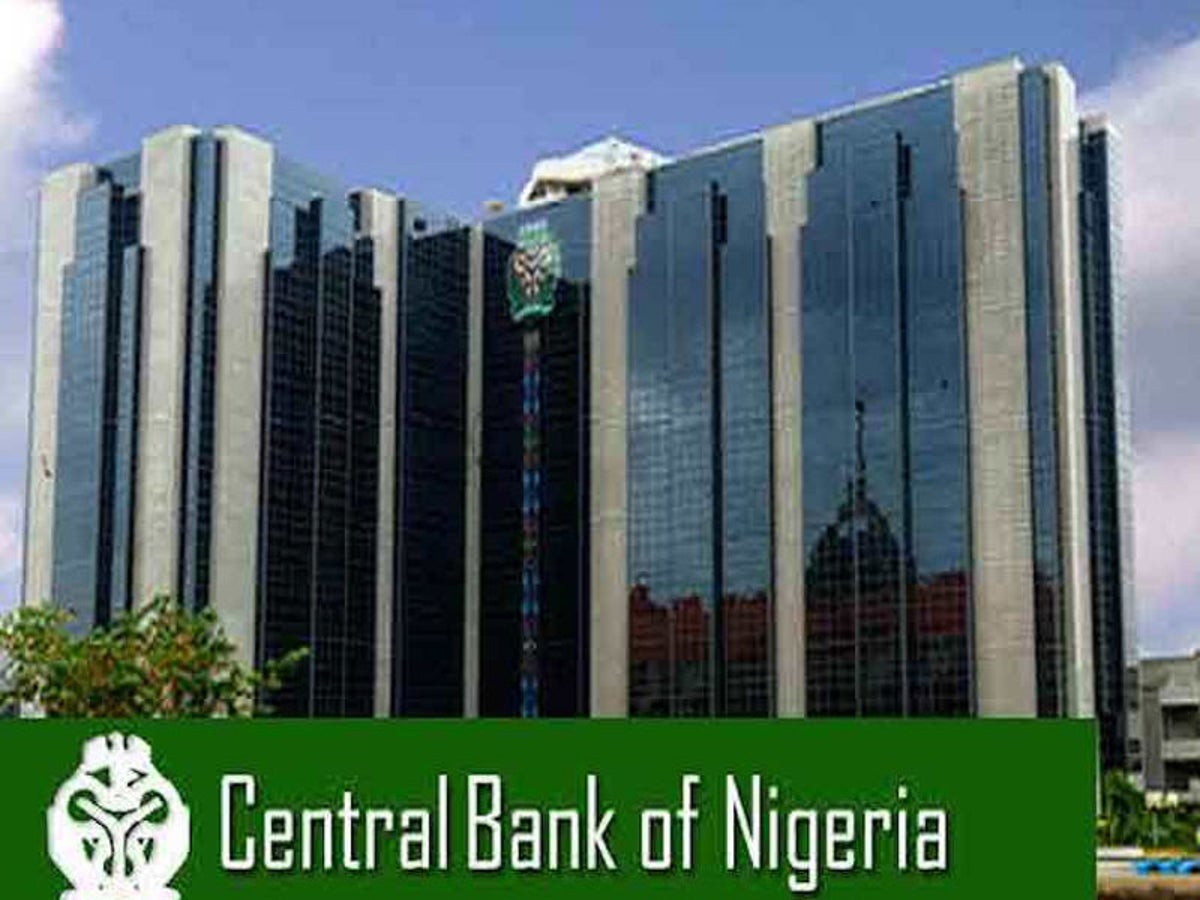
The Central Bank of Nigeria (CBN) had directed refunds of N19.2 billion and $329.3 million to bank customers in 2025 as more customers turned to the apex bank for resolution of various complaints against banks.
In its annual report and statement of accounts for the year ended December 31, 2025 released on Tuesday, the CBN reported that a total of 23,129 complaints were received from consumers of financial services in 2025, 10.
53 per cent above 20,925 recorded in 2024.From these, a total of 18,824 complaints were resolved, indicating a 9.
36 per cent increase over the 17,213 complaints resolved in 2024.According to the report, total claims in local currency increased to N40.61 billion in 2025 from N17.13 billion in 2024 while foreign currency claims also rose to $344.2 million compared with $1.06 million in the preceding year.
Based on resolved complaints, the report indicated that N19.12 billion and $329.3 million were refunded in 2025 compared with N9.66 billion and $0.67 million in 2024.
The apex bank stated that the growing recourse to it reflected increased awareness and improved confidence in its consumer complaint resolution process.
During the review period, the CBN also imposed 11 penalties on financial institutions totalling N1.26 billion, for infractions ranging from regulatory breaches and failure to respond to regulatory queries In addition, the apex bank imposed 21 penalties on financial institutions to the tune of N430 million, for infractions ranging from delays in resolving customer complaints to failure to comply with the bank’s directives.
The CBN Group reported N9.86 trillion total income in its audited consolidated and separate financial statements for last year. It further indicated that the total income for the bank was N9.76 trillion.
The bank and the group recorded a surplus of N86.81 billion and N108.13 billion, compared with the surplus of N165.69 billion for the Bank and N38.84 billion for the Group in the preceding year.
“In accordance with the provisions of Section 22(1) and (2) of the Fiscal Responsibility Act (FRA), 2007, the sum of N69.45 billion (80 per cent of 2025 operating surplus) was due to the Federal Government, while the balance accrued to general reserve,” the report, signed by CBN Governor, Olayemi Cardoso said.
He also attributed the sterling performance to President Bola Ahmed Tinubu’s support. “The Bank’s achievements in 2025 would not have been possible without the continued support of President Bola Ahmed Tinubu. This is much appreciated,” he said.
Further analysis of the results showed that the value of the Group and the Bank’s balance sheet increased in 2025 as total assets increased by 18 per cent to N138.86 trillion for the Group and N138.66 trillion for the Bank
“The assets position reflected an increase in external reserves (11.9 per cent) and other assets (299.7 per cent). The increase in total assets was compensated for on the liabilities side by a rise in the CBN instruments issued (100.7 per cent), while the paid-up capital and reserves of the Bank stood at N599.24 billion,” the results said. The CBN approved a currency indent of 5,706.8 million pieces across the various denominations for 2025.
This represented an increase of 20.5 per cent, from the 4,737.5 million pieces, approved in 2024. Of this amount, the NSPM Plc was allocated 2.0 billion pieces (35.0 per cent), while foreign High Security Printers (HSPs) were alloted the balance of 65 per cent.
“As of 31st December 2025, the NSPM Plc delivered 1,239.24 million pieces (62.0 per cent) with a face value of N368.83 billion, leaving 760.76 million pieces (38.0 percent) outstanding. Foreign printers completed the delivery of 2,206 million pieces across the N1,000, N500, and N200 denominations
From Joseph Amedu, Lokoja
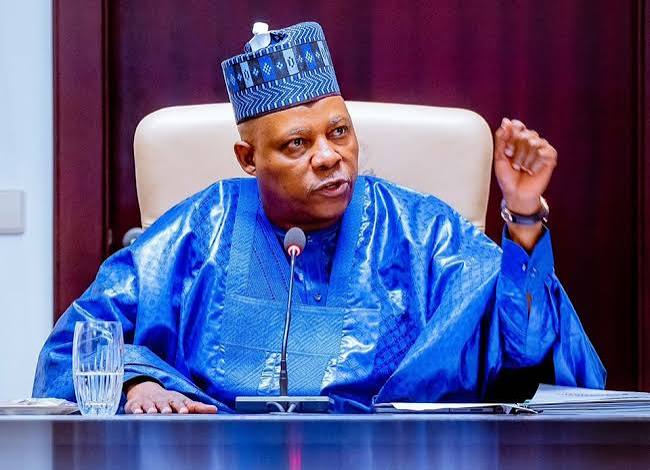
President Bola Tinubu on Tuesday declared that Nigeria has taken the lead in Africa’s renewable energy revolution with the commissioning of the continent’s first Barefoot Renewable Energy College and the Green Hydrogen Research and Demonstration Pilot Plant in Osara, Kogi State.
Represented by Vice President Kashim Shettima, the President described the new institution as a landmark investment designed to transform Nigeria’s abundant renewable energy resources into economic opportunities through the training of skilled manpower.
According to Tinubu, the college is a direct response to the shortage of technical expertise that has slowed Africa’s energy transition, stressing that it will produce technicians, installers, operators and maintenance professionals equipped with internationally recognised certifications.
He said the institution, modelled after India’s successful Barefoot College initiative, would position Nigeria as Africa’s hub for renewable energy capacity development and provide graduates with skills that are competitive in the global labour market.
The President also praised the speed of execution of the project, noting that it was completed within two years, unlike many public projects that remain unfinished for decades. He urged development partners, research institutions and the private sector to collaborate with the college, assuring them of Nigeria’s readiness to lead renewable energy partnerships on the continent.
Tinubu commended the Minister of Innovation, Science and Technology, Dr. Kingsley Udeh, the Director-General of the Energy Commission of Nigeria, Dr. Mustapha Abdullahi, and Kogi State Governor Ahmed Usman Ododo for their roles in delivering the project.
Governor Ododo described the college as a strategic investment in human capital that would strengthen Nigeria’s energy sector, attract investments and create employment opportunities for young people.
Udeh said the project aligns with the Federal Government’s vision of building a knowledge-driven economy, noting that a skilled workforce in renewable energy is essential to Nigeria’s ambition of becoming a one-trillion-dollar economy.
The Director-General of the Energy Commission of Nigeria, Dr. Mustapha Abdullahi, said the institution is equipped with smart classrooms, battery energy laboratories, a mini-grid simulation centre and other state-of-the-art facilities to train professionals in renewable energy technologies.
The Ohinoyi of Ebiraland, Dr. Ahmed Anaje, welcomed the project, saying it would empower youths with technical skills and contribute significantly to national development.
By David Torough, Abuja
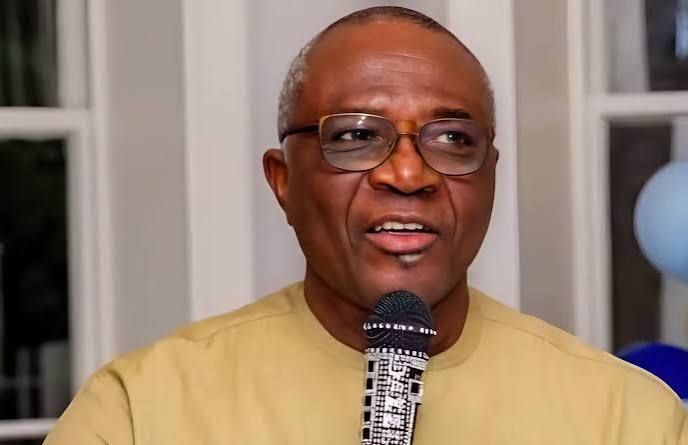
President Bola Tinubu has unveiled a major package aimed at strengthening Nigeria’s armed forces through improved welfare and enhanced defence capability, approving a substantial salary increase for military personnel while reaffirming support for indigenous defence production.
The President approved a pay rise of between 30 and 80 per cent for approximately 250,000 personnel of the Armed Forces of Nigeria, with the new salary structure taking effect from September 1, 2026.
According to a statement by the Special Adviser to the President on Information and Strategy, Bayo Onanuga, the salary adjustment is structured to favour junior personnel, with the highest percentage increases going to the lower ranks.
Under the new arrangement, officers above the rank of colonel—including brigadier-generals, major-generals, lieutenant-generals and generals—will receive a 30 per cent increase, while personnel from colonel to warrant officer will earn a 50 per cent raise. Soldiers from private to staff sergeant will benefit from an 80 per cent increase.
The new pay package will increase the military’s annual wage bill from N660 billion to N924 billion, representing an additional N264 billion in government spending.
President Tinubu said the salary review reflects his administration’s appreciation of the sacrifices made by troops in the fight against terrorism, banditry and kidnapping, stressing that personnel welfare and military modernisation remain central to his security agenda.
“The men and women who help to keep us safe in our homes must be supported and appreciated,” the President said, pledging continued investment in modern weapons, technology and other operational capabilities to enable the armed forces to effectively protect lives and property across the country.
Meanwhile, the Chief of Army Staff, Lieutenant General Waidi Shaibu, has called for deeper collaboration between the Nigerian Army and indigenous defence manufacturers to strengthen national security and reduce dependence on foreign military equipment.
Receiving the management of Proforce Group during a courtesy visit to the Army Headquarters in Abuja, Shaibu described the indigenous defence company as a source of national pride and urged greater local production to support the Army’s ongoing expansion from eight to 12 divisions.
He identified areas requiring stronger collaboration, including Counter-Improvised Explosive Device systems, ground-penetrating radar, foliage-penetrating surveillance technology, signal intelligence, facial recognition, unmanned systems and dark web exploitation to enhance intelligence-driven operations against criminal and terrorist groups.
The Proforce Group Managing Director, Ade Ogundeyin, reaffirmed the company’s commitment to advancing indigenous defence technology, noting that local manufacturing improves operational security, shortens logistics timelines and provides faster technical support for the Armed Forces of Nigeria.
The latest initiatives underscore the Federal Government’s twin strategy of improving troop welfare while building a stronger domestic defence industry to enhance the country’s security architecture.




CBN Resolves 23, 129 Complaints, Orders N19.2b, Refund to Bank Customers
ShareBy Tony Obiechina, Abuja The Central Bank of Nigeria (CBN) had directed refunds of N19.2 billion and $329.3 million to...

FG Launches Africa’s First Renewable Energy College in Kogi
ShareFrom Joseph Amedu, Lokoja President Bola Tinubu on Tuesday declared that Nigeria has taken the lead in Africa’s renewable energy...

Tinubu Approves Salary Increase for 250,000 Armed Forces Personnel
ShareBy David Torough, Abuja President Bola Tinubu has unveiled a major package aimed at strengthening Nigeria’s armed forces through improved...


Project Gazelle 2: Commending Better Terms; Demanding Greater Transparency
ShareBy Uche Uwaleke The decision of the National Economic Council (NEC) to approve the refinancing of the US$3.3 billion Project...

How South African Leaders throughout History Have Openly and Tacitly Promoted Xenophobia
ShareBy Isaac Asabor One cannot examine the evolution of xenophobia in South Africa without looking beyond the obvious perpetrators on...
Youths Laud Borno Skills Programme
ShareYouths in Borno South have commended the Borno State Government’s vocational training and starter packs distribution programme, describing it as...
FG Empowers Jigawa Women, Youth with 100 Bullocks Heifers, Others
ShareBy Raphael Atuu, Abuja The Federal Ministry of Livestock Development, has distributed 100 bullocks, heifers and livestock production ancillaries to...


FCTA Set to Upgrade Life Camp Recreation Park
ShareBy Laide Akinboade, Abuja The Federal Capital Territory Administration (FCTA), on Monday, said it has concluded an arrangement to transform...
Viral Hepatitis: A Silent Threat Nigeria Cannot Ignore
ShareBy Abiemwense Moru For millions of Nigerians, viral hepatitis remains a silent health threat, progressing unnoticed for years without obvious...
M’East Crises: Egyptian FM Discusses De-escalation Efforts with U.S. Envoy
ShareEgyptian Foreign Minister Badr Abdelatty has held talks with U.S. Special Envoy Steve Witkoff and other foreign ministers as Cairo...